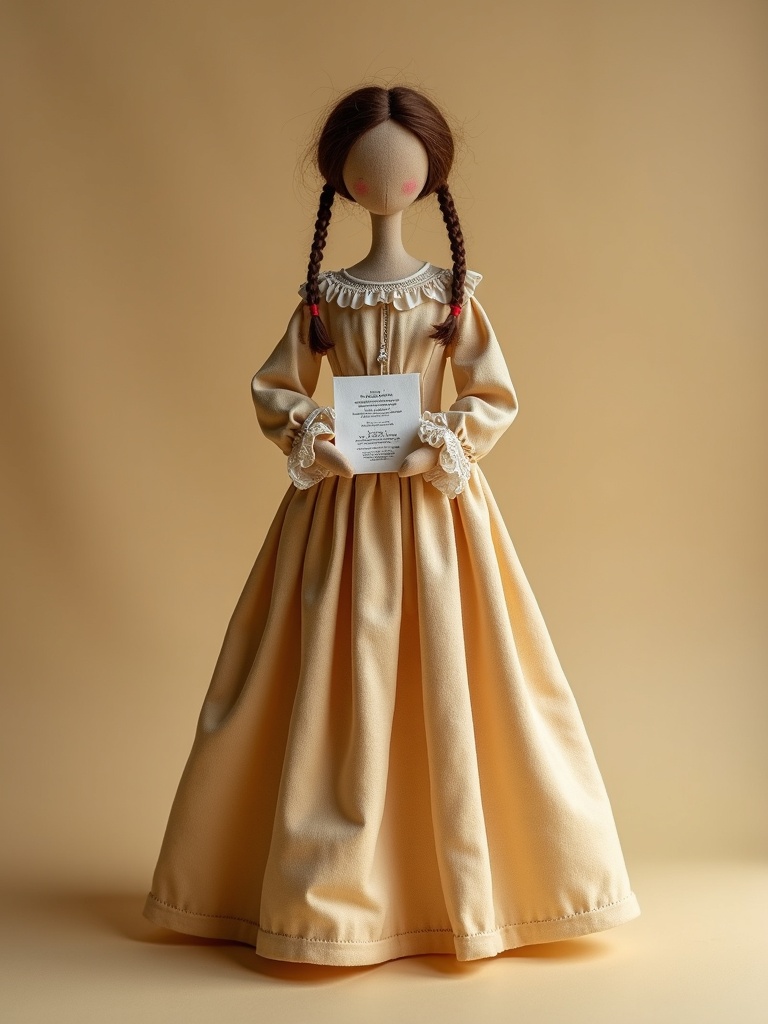
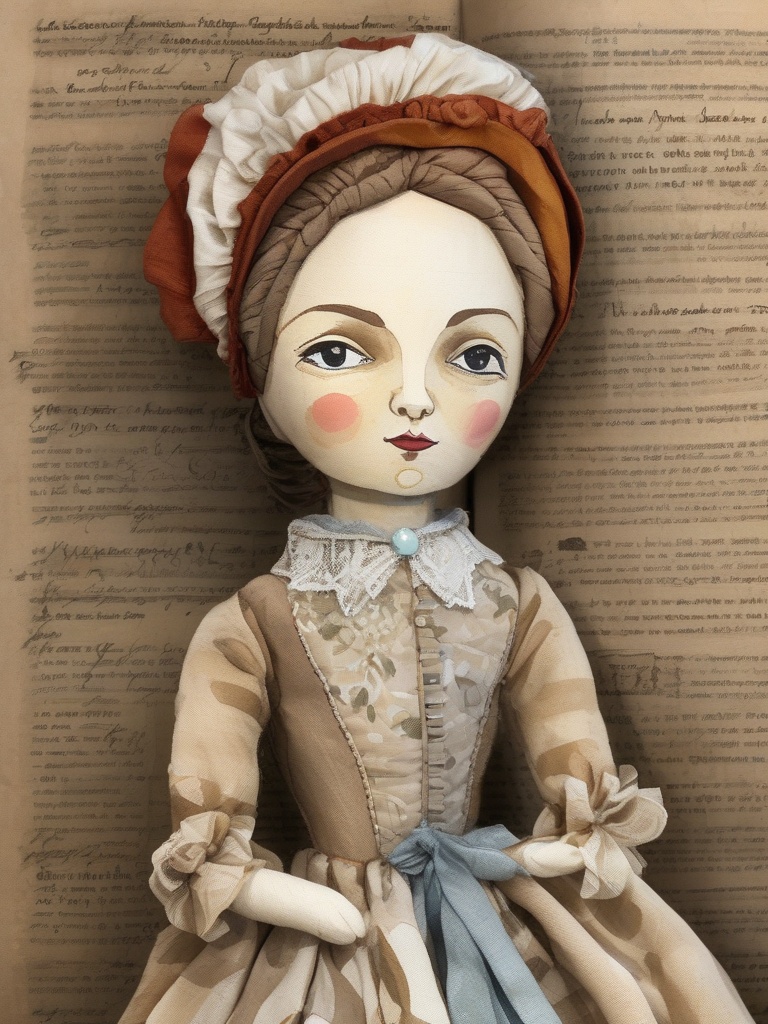
AI design preview — not a photo of the finished handmade doll
Justice & Women's Rights
Olympe de Gouges
A self-taught butcher's daughter looked at a revolution that promised the rights of 'man', noticed it had forgotten half of humanity, and wrote the rights of woman herself — then paid for it with her life.
- People
- French (Occitan-born, from Montauban)
- Country
- France
- Region
- Western Europe
- Era
- 1748–1793
- Theme
- Justice & Women's Rights
Make your own
Design your Olympe de Gouges
Pick a garment, a hairstyle and a scene, enter the PIN and generate a fresh image of Olympe de Gouges with AI.
⚖ AI homage concept — not a likeness of the real person.
Each image is generated live with fal.ai.
Generated images
AI design preview — not a photo of the finished handmade doll
No images generated yet — be the first.
Tradition & Origin
A self-taught butcher's daughter looked at a revolution that promised the rights of 'man', noticed it had forgotten half of humanity, and wrote the rights of woman herself — then paid for it with her life.
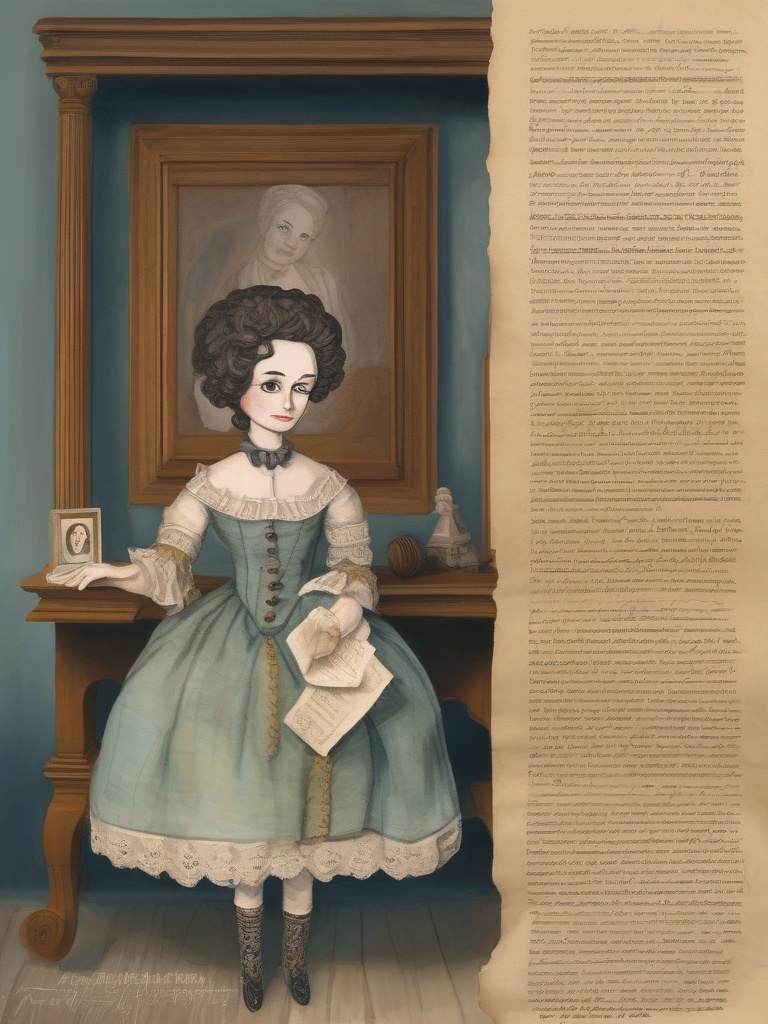
Her Declaration matched the men's 1789 text article for article — 17 to 17. Yet French women would not actually vote until 1944, more than 150 years after she asked why they could not.
DetailsENOlympe de Gouges was born Marie Gouze in 1748 in Montauban, in the Occitan south of France. She had little formal schooling, yet she taught herself to write and, in Paris, reinvented herself as a playwright and a relentless pamphleteer who signed her work and stood behind it.
Before she wrote her famous Declaration, she had already used the theatre to attack slavery: her play L'Esclavage des Noirs put the suffering of enslaved people before the audience of the Comédie-Française — a rare and risky stand in 1780s France.
When the Revolution of 1789 proclaimed the Declaration of the Rights of Man and of the Citizen and left women with no political rights, de Gouges answered in September 1791 with her own Declaration of the Rights of Woman and of the Female Citizen — seventeen articles mirroring the men's, opening with the claim that woman is born free and equal in rights, and dedicated, audaciously, to Queen Marie Antoinette.
She was no extremist of the Terror's kind. She opposed the execution of the king and openly criticised Robespierre and the bloodshed of the Reign of Terror. For her writings she was arrested and, on 3 November 1793, guillotined. Her Declaration had warned that a woman with the right to mount the scaffold should also have the right to mount the tribune — and her own words long outlived the blade.
Timeline
- 1748born Marie Gouze in Montauban, southern France, a butcher's daughter
- 1785her anti-slavery play L'Esclavage des Noirs is taken up by the Comédie-Française
- 1789the Revolution proclaims the Declaration of the Rights of Man — but not of woman
- 14 Sept 1791she writes the Declaration of the Rights of Woman, dedicated to Marie Antoinette
- 1792–1793opposes the king's execution and the violence of the Terror in her pamphlets
- 3 Nov 1793arrested for her writings, she is condemned and guillotined in Paris
Did you know?
- She dedicated her Declaration of the Rights of Woman to Queen Marie Antoinette — a daring choice that linked the cause of women to the most watched woman in France.DetailsEN
- A butcher's daughter who taught herself to write, she attacked slavery as founded on greed and blind prejudice — and put enslaved characters on stage to say so in the first person.DetailsEN
- In her own Declaration she wrote that a woman has the right to mount the scaffold and must equally have the right to mount the rostrum — two years before she herself was guillotined.DetailsEN
If something is unfair and nobody is fixing it, could you be the one — like Olympe — who writes down a better way?
Values & Capabilities
Capabilities
◆◆◆◆◆ shows how central a gift is — five diamonds mark a signature strength, fewer mark a supporting one.
In 1791 she wrote, article by article, a Declaration of the Rights of Woman to mirror the men's Declaration of 1789 — insisting that women are born free and equal in rights, and asking why the Revolution had forgotten them.
A butcher's daughter who taught herself to write, she put enslaved people on the stage of the Comédie-Française and attacked slavery as built on greed and prejudice — one of the first French voices to do so in the theatre.
Self-educated and writing in a man's world, she poured out plays, posters and pamphlets on slavery, women, the poor, divorce and the rights of children, signing them and standing behind every word.
When the Revolution turned to bloodshed, she opposed the execution of the king and criticised the violence of Robespierre and the Terror, defending mercy and the rule of law even as it grew dangerous to do so.
Arrested for her writings and condemned, she met the guillotine in 1793 with composure — the very fate she had named in her own Declaration: a woman with the right to mount the scaffold, who had claimed the right to mount the tribune.
Development
1 of 3 stages unlocked
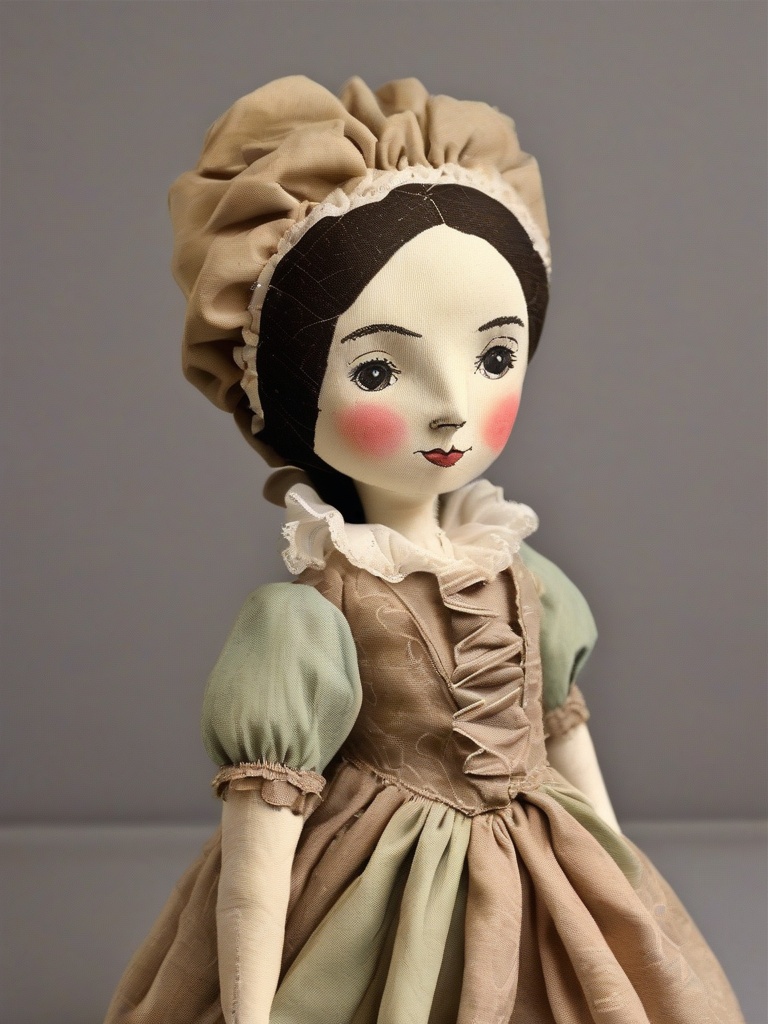
A butcher's daughter in provincial Montauban who taught herself far beyond what a girl of her station was meant to learn — the first quiet act of a life of claiming what was not offered.
Answer all three to unlock this stage.
Unlock the previous stage first.
Crafting the doll
Garment: a robe à la française in silk-look fabric, open at the front over a decorated stomacher and petticoat, with a soft white cotton/linen fichu at the neck and frilled engageantes at the elbow; for the writer look, a striped cream-and-rose cotton day dress; a lace-trimmed linen cap over dressed-up hair. Signature attribute: a tiny goose-feather quill and inkwell, plus a folded printed 'Déclaration des droits de la femme' and a small blue-white-red cockade (felt). Education card: explains the French Revolution, the 1789 Declaration of the Rights of Man, and how Olympe de Gouges wrote a parallel Declaration for women that the Revolution had forgotten. Sizes Classic 32 / Kidogo 18–20 / Shule 28. Proceeds → girls' literacy and women's-rights education programmes.
How this doll is made
Made authentically as a poised late-18th-century Frenchwoman of letters: a robe à la française over a white fichu, hair under a lace cap, and a quill that is the true heart of the doll.
- Garments 2
- Accessories 4
- Materials 1
- Techniques 1
Garments
- Robe à la française (sack-back gown)An open-fronted gown with box-pleated fabric falling from the shoulders, worn over a decorated stomacher and petticoat — the standard fashionable French women's dress of the later 18th century.DetailsEN
- Stomacher & petticoatA decorative stomacher fills the open bodice and a matching petticoat shows at the front — shape these from the same silk-look fabric, trimmed with ribbon or lace.DetailsEN
Accessories
- White fichuA soft white linen or cotton fichu draped around the neckline and tucked into the bodice — modest, everyday, and very period-correct for a working writer.DetailsEN
- Engageantes (frilled cuffs)Separate frilled cuffs at the elbow-length sleeves, a hallmark of the robe à la française — small ruffles of fine white fabric.DetailsEN
- Quill, inkwell & printed DeclarationHer signature attribute: a tiny goose-feather quill and inkwell with a folded printed 'Déclaration des droits de la femme' — the pen and pamphlet that define her far more than any costume.DetailsEN
- Lace-trimmed cap & tricolour cockadeDress the hair up under a lace-trimmed linen cap of the period; add a small blue-white-red felt cockade for the revolutionary citizen look.DetailsEN
Materials
- Silk-look fabric, fine linen & cottonPeriod-true materials: a silk-look fabric for the gown, fine white linen/cotton for the fichu and cap, and a striped cotton for the plainer writer's day dress.DetailsEN
Techniques
- Dressed-up 18th-century hairHand-stitch hair swept up and softly curled in the lighter late-1780s style, framing a calm, intelligent face under the cap — articulate, never theatrical.DetailsEN
Origin & Ethics
How we know this
On honesty: very well documented — her printed plays and pamphlets survive (above all the 1791 Declaration), as do the records of her 1793 trial and execution. Homage, not likeness: no portrait was painted from life with certainty, so the doll's face is invented and stylised — an honour, not an exact likeness. We tell her death plainly but gently: she was guillotined in 1793 for her ideas, and we frame this as the cost of conscience rather than dwelling on the violence.
Committee: French heritage and literary bodies (Montauban / Occitanie cultural heritage; specialists in the French Revolution and in the history of women's rights); historians of the Revolution and of abolition. 5-step protocol as standard; the trial and execution are handled with dignity, age-appropriately and without gore.
Sources
- Declaration of the Rights of Woman (Wikipedia)
- Britannica — Declaration of the Rights of Woman
- Olympe de Gouges (Wikipedia)
- Gouges, Olympe de (Internet Encyclopedia of Philosophy)
- Liberty, Equality, Fraternity (Roy Rosenzweig Center, George Mason University)
- Sack-back gown / robe à la française (Wikipedia)