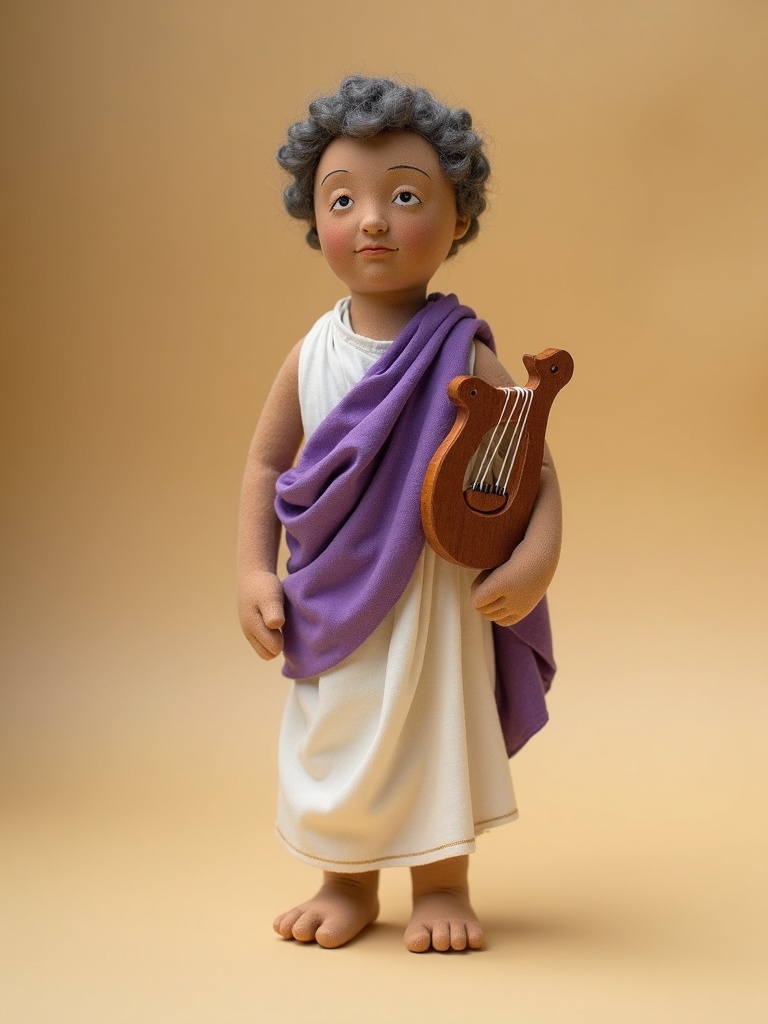
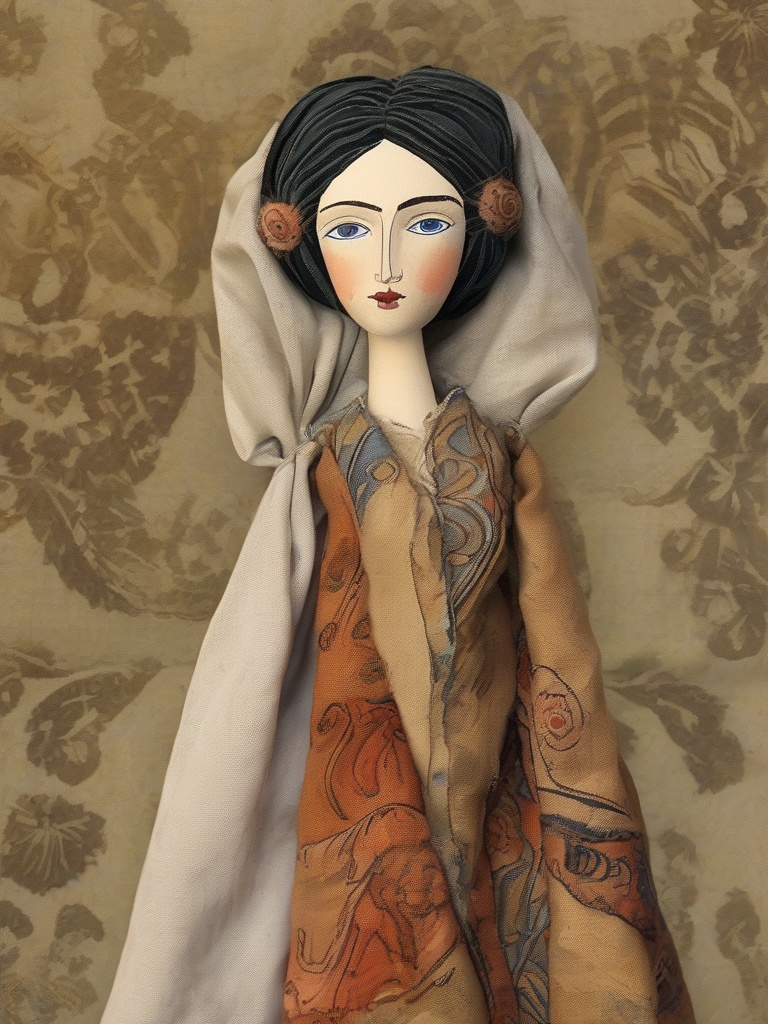
AI design preview — not a photo of the finished handmade doll
Lyric Poetry & the Inner Life
Sappho
A poet of one small Greek island who turned song inward to the human heart — and whose voice, though shattered into fragments, still reaches us 2,600 years later.
- People
- Ancient Greek (Aeolian, of Lesbos)
- Country
- Greece
- Region
- Southern Europe
- Era
- c.630–c.570 BCE
- Theme
- Lyric Poetry & the Inner Life
Make your own
Design your Sappho
Pick a garment, a hairstyle and a scene, enter the PIN and generate a fresh image of Sappho with AI.
⚖ AI homage concept — not a likeness of the real person.
Each image is generated live with fal.ai.
Generated images
AI design preview — not a photo of the finished handmade doll
No images generated yet — be the first.
Tradition & Origin
A poet of one small Greek island who turned song inward to the human heart — and whose voice, though shattered into fragments, still reaches us 2,600 years later.
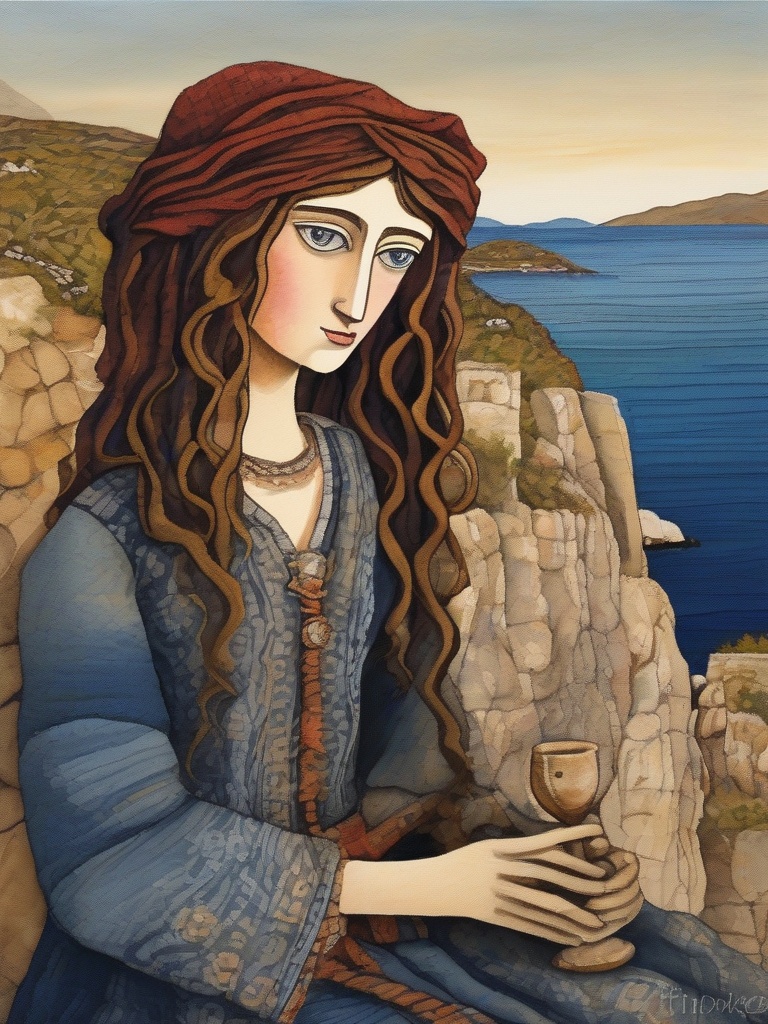
Of roughly 10,000 lines Sappho is thought to have written, only about 650 reach us — about one line in fifteen.
DetailsENSappho was born around 630 BCE on Lesbos, an island in the Aegean off the coast of Asia Minor, in the city of Mytilene (some sources say Eresos). She came from an aristocratic family and wrote in Aeolic Greek, the dialect of her island. While the older epic tradition of Homer sang of war, gods and heroes, Sappho did something newer and more intimate: she made poetry of personal feeling — desire, jealousy, tenderness, the ache of separation, the joy of a wedding. Her poems were lyric in the original sense: songs performed to the lyre.
Ancient readers adored her. The scholars of the Library of Alexandria gathered her work into nine books, perhaps around 10,000 lines, and counted her among the Nine Lyric Poets; Plato is said to have called her the 'tenth Muse'. She also gave poetry one of its most enduring forms — the Sapphic stanza, three long lines and a short fourth line — which the Roman poets Catullus and Horace later carried into Latin and which poets still write in today. Her own life, by contrast, is barely documented: dates, a supposed exile to Sicily, and her family are all debated, and the famous picture of her as a schoolmistress to girls is largely a later invention.
Then most of her was lost. Of all those thousands of lines only about 650 survive, and just one complete poem — the Ode to Aphrodite, a prayer to the goddess of love. The rest comes to us as quotations in other authors and as torn scraps of papyrus excavated at Oxyrhynchus in Egypt; some fragments are a single word. Yet her voice keeps returning: as recently as 2014 a papyrus yielded the 'Brothers Poem', naming her brothers Charaxos and Larichos. Even broken, her lines still strike readers as astonishingly alive — proof that a true voice can survive in pieces.
Timeline
- c.630 BCEborn on the island of Lesbos, at Mytilene or Eresos
- early 6th c. BCEcomposes lyric songs of love, friendship and weddings, sung to the lyre
- c.600 BCEtradition says she was exiled for a time to Sicily amid Lesbos's politics
- c.570 BCEdies; her fame as a poet only grows after her
- 3rd c. BCEAlexandrian scholars collect her work into nine books
- 1897 onward / 2014papyrus fragments recovered at Oxyrhynchus; the 'Brothers Poem' published in 2014
Did you know?
- The Sapphic stanza is named after Sappho; the Roman poets Catullus and Horace later wrote in it, and it is the longest-lived of the classical lyric forms in the West.DetailsEN
- Her one complete surviving poem, the Ode to Aphrodite, is a prayer asking the goddess of love for help, written in seven Sapphic stanzas.DetailsEN
- Centuries after her death the city of Mytilene honoured Sappho by minting coins bearing her name and image.DetailsEN
If almost all of a poet's words were lost, what makes the few that remain feel so alive — and what would you most want to leave behind?
Values & Capabilities
Capabilities
◆◆◆◆◆ shows how central a gift is — five diamonds mark a signature strength, fewer mark a supporting one.
Where epic sang of armies and gods, Sappho turned poetry inward — to love, longing and the human heart — so beautifully that Plato is said to have called her the 'tenth Muse'.
She shaped a four-line metre — three long lines and a short closing line — so durable that Catullus and Horace borrowed it for Latin and poets still use it today; it carries her name.
Her poems were not read but sung, to the plucked strings of the lyre and the barbitos — songs for weddings, friendship and a circle of young women on Lesbos.
She wrote around 10,000 lines, gathered into nine books at the Library of Alexandria; only about 650 lines and a single complete poem reach us — yet even her broken lines still move readers.
Lost for centuries, her words keep returning — recovered from papyrus scraps at Oxyrhynchus in Egypt, including the 'Brothers Poem' published as recently as 2014.
Development
1 of 3 stages unlocked
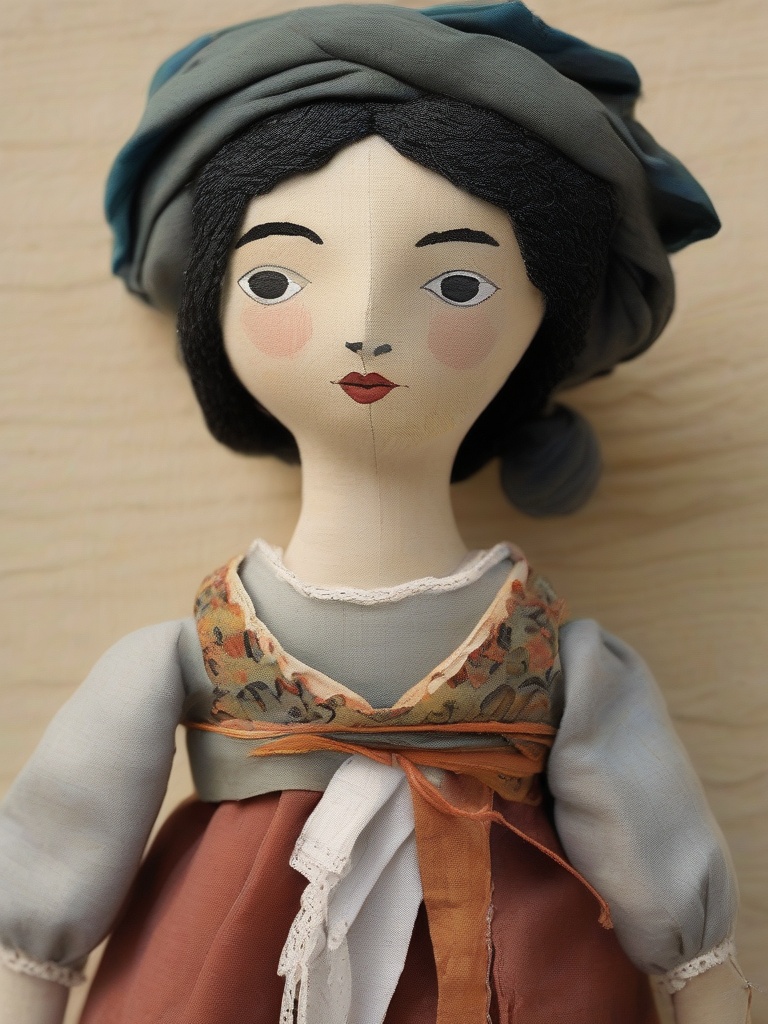
Young Sappho on her island in the Aegean, in an aristocratic family, learning the songs and the lyre that filled Aeolian Lesbos.
Answer all three to unlock this stage.
Unlock the previous stage first.
Crafting the doll
Garment: a long pleated linen Ionic chiton or a draped woollen Doric peplos, pinned at the shoulders with small bronze fibulae and belted at the waist, with a soft himation cloak; an alternate saffron wedding-song robe with a violet sash. Signature attribute: a small wooden lyre with a tortoiseshell sound-box (felt and craft-wood), a papyrus verse-scroll, and a garland of roses and violets. Education card: explains what 'lyric' poetry is (sung to the lyre), that Egypt-papyrus finds still recover her lost lines, and that almost nothing of her life is documented. Sizes Classic 32 / Kidogo 18–20 / Shule 28. Proceeds → classics and literacy education and the conservation of ancient papyri.
How this doll is made
Make her as an archaic-Greek lyric poet of Lesbos: draped linen and wool, bronze pins, a small lyre and a garland — graceful and timeless, not theatrical.
- Garments 3
- Accessories 3
- Materials 1
- Techniques 1
Garments
- Ionic chitonA long tunic of fine linen, draped without a fold and pinned along the arms with several small pins or buttons from neck to wrist; let it fall in soft pleats.DetailsEN
- Doric peplos (alternate)A single rectangle of woollen cloth folded over at the top, draped and fastened at each shoulder with bronze pins — a simpler, heavier alternate to the chiton.DetailsEN
- Himation cloakA heavier rectangle of cloth worn over the chiton as a cloak, draped across the body and over one shoulder for a dignified silhouette.DetailsEN
Accessories
- Bronze fibulae & a girdleUse small bronze pins or brooches (fibulae) at the shoulders and along the arms, and a belt (zoster) at or under the waist — the authentic way Greek dress was fastened.DetailsEN
- The lyreA small lyre with a hollow sound-box (anciently a turtle shell), two raised arms joined by a crossbar, and gut strings plucked with a plektron — the instrument that gave lyric poetry its name.DetailsEN
- Papyrus verse-scrollA tiny unrolled papyrus scroll with a few lines of Greek lettering recalls how her work survives — in scrolls and torn papyrus fragments rather than whole books.DetailsEN
Materials
- Linen, wool & a filletUse light linen for the chiton and soft wool for the peplos and himation; bind the hair with a simple cloth fillet. Saffron and violet dyes echo the flowers of her wedding songs.DetailsEN
Techniques
- Hand-stitched, no exact likenessEmbroider calm, thoughtful features: no authentic portrait of Sappho survives — later busts and vase images are imagined — so stylise a lyrical expression rather than attempting a true likeness.DetailsEN
Origin & Ethics
How we know this
On honesty: her poetry is very well documented as a corpus (the Ode to Aphrodite, ~650 surviving lines, the Sapphic stanza, papyrus finds through 2014), but her life is not — dates, exile and family details are debated, and the 'girls' school' image is partly a later invention. Homage, not likeness — no authentic portrait of Sappho survives (later busts and vase images are imagined), so the doll stylises rather than depicts her.
Committee: Greek Ministry of Culture and the Mytilene/Lesbos cultural authorities; classicists, papyrologists and historians of ancient Greek literature; museums holding Greek lyric and instrument collections. Treat the ancient material with care and frame uncertain biography honestly.