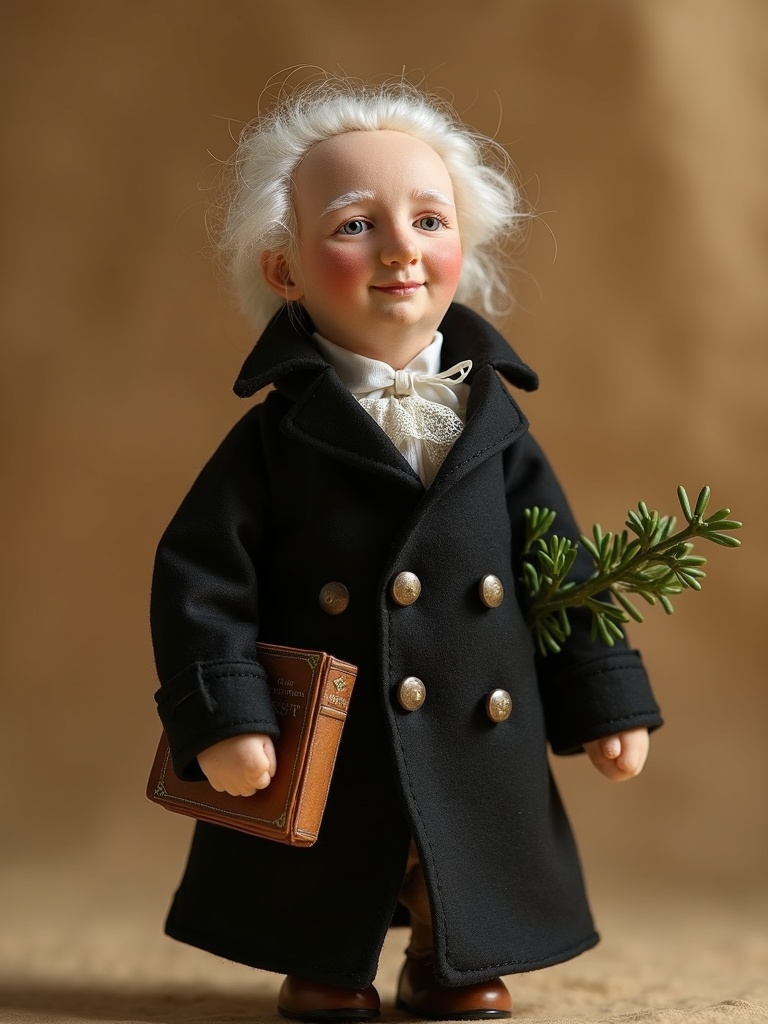
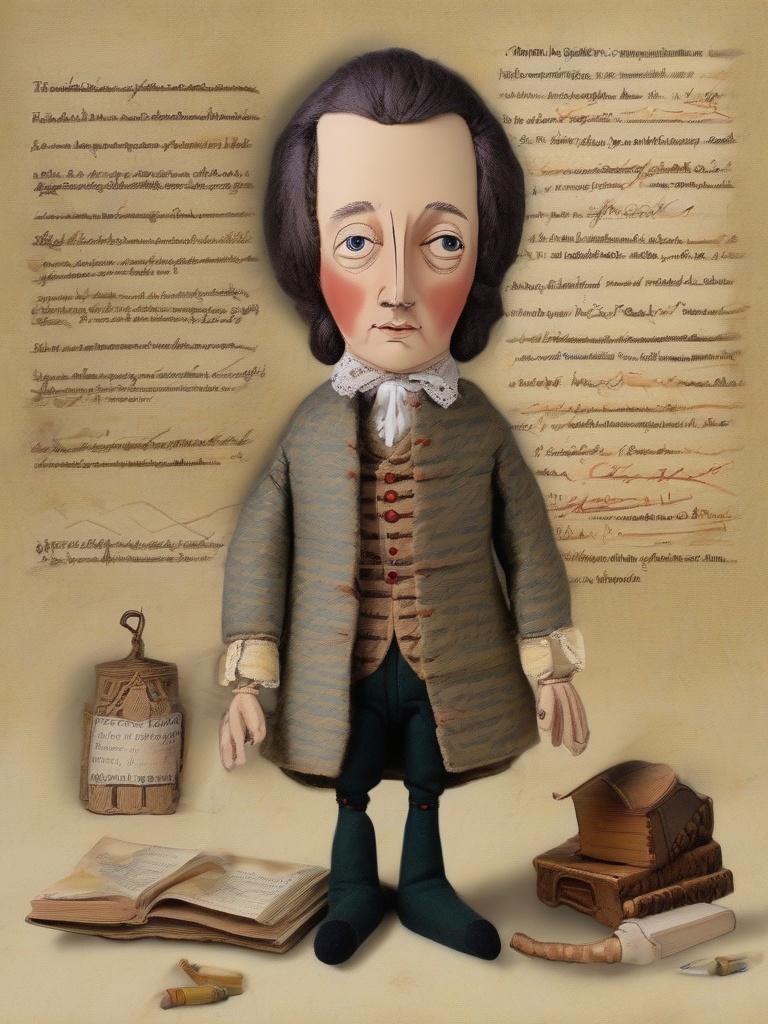
AI design preview — not a photo of the finished handmade doll
Dialect Poetry & Warm Storytelling
Johann Peter Hebel
A homesick poet who turned his Black Forest dialect into great literature — and a humble farmers' calendar into a treasure chest of stories.
- People
- Alemannic German (Baden, Black Forest / Wiesental)
- Country
- Germany
- Region
- Central Europe
- Era
- 1760–1826
- Theme
- Dialect Poetry & Warm Storytelling
Make your own
Design your Johann Peter Hebel
Pick a garment, a hairstyle and a scene, enter the PIN and generate a fresh image of Johann Peter Hebel with AI.
⚖ AI homage concept — not a likeness of the real person.
Each image is generated live with fal.ai.
Generated images
AI design preview — not a photo of the finished handmade doll
No images generated yet — be the first.
Tradition & Origin
A homesick poet who turned his Black Forest dialect into great literature — and a humble farmers' calendar into a treasure chest of stories.
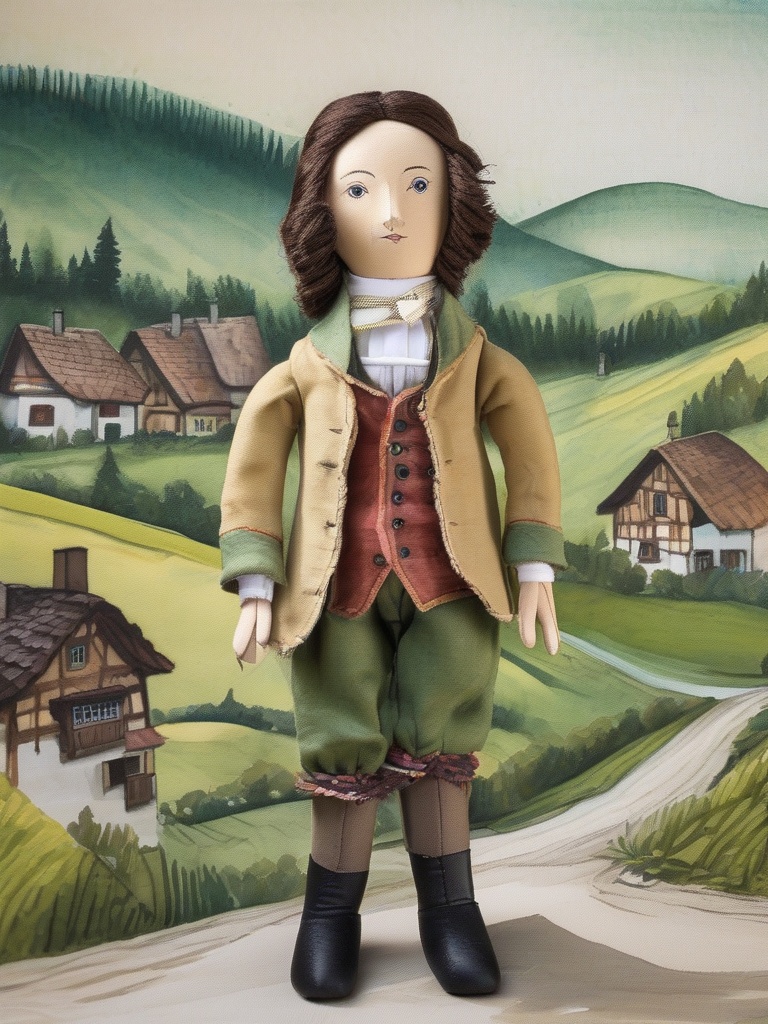
Key milestones: the Alemannic poems (1803), the calendar editorship (1808), and the Schatzkästlein (1811).
DetailsENJohann Peter Hebel was born in Basel in 1760 and spent his childhood half there and half in the village of Hausen im Wiesental, deep in the southern Black Forest. There he absorbed the warm, melodic Alemannic dialect that would become his life's instrument. As an adult he had to live and work in distant Karlsruhe, and his longing for that green valley grew into poetry: the Alemannische Gedichte of 1803, 32 poems that gave a small regional dialect the dignity of art.
From 1808 he edited a plain almanac, the Rheinländischer Hausfreund, writing short, witty, kind-hearted tales of fate and cleverness for ordinary readers. Collected as the Schatzkästlein des rheinischen Hausfreundes (1811), they became some of the most beloved prose in the German language. One tale, 'Unverhofftes Wiedersehen', a bride faithful for half a century, was hailed by Franz Kafka as the most wonderful story in the world; the philosopher Ernst Bloch called it the most beautiful story ever written.
Hebel was also a Lutheran pastor and a respected teacher who rose to direct the Karlsruhe Gymnasium and, in 1819, to become the first Prelate of the Protestant church of Baden — a seat in the regional parliament. Goethe himself admired him, praising how Hebel 'countrified the universe' and insisting such a poet be read only in the original. He died in 1826 in Schwetzingen, the gentle 'house-friend' of a whole region.
Timeline
- 1760born 10 May in Basel; childhood also in Hausen im Wiesental
- 1778–1780schooling in Karlsruhe, then studies theology in Erlangen
- 1803publishes the Alemannische Gedichte — 32 dialect poems
- 1808edits the Rheinländischer Hausfreund calendar; becomes Gymnasium director in Karlsruhe
- 1811the Schatzkästlein des rheinischen Hausfreundes appears
- 1819 / 1826made first Prelate of Baden; dies 22 September 1826 in Schwetzingen
Did you know?
- Goethe loved Hebel's dialect poems so much he said Hebel 'countrified the universe in the most naive, graceful fashion' — and that such a poet should be read only in the original.DetailsEN
- Franz Kafka called Hebel's calendar tale 'Unverhofftes Wiedersehen' the most wonderful story in the world; Ernst Bloch called it the most beautiful story ever written.DetailsDE
- He wrote the Alemannische Gedichte out of homesickness for the Wiesental while living in Karlsruhe around 1799–1802.DetailsDE
Hebel missed his home so much that he wrote it down in its own words — and showed that even the smallest language can hold the biggest feelings.
Values & Capabilities
Capabilities
◆◆◆◆◆ shows how central a gift is — five diamonds mark a signature strength, fewer mark a supporting one.
Homesick in the city, he wrote 32 poems in his home Alemannic dialect — making everyday Black Forest speech into great literature.
He turned a humble farmers' almanac into beloved literature, gathering his best calendar tales into the Schatzkästlein des rheinischen Hausfreundes.
Goethe loved his poems, saying Hebel "countrified the universe in the most naive, graceful fashion" — and that such a poet should be read in the original.
His tale 'Unverhofftes Wiedersehen' — a bride who waits fifty years — was called by Kafka the most wonderful story in the world.
A Lutheran pastor and teacher who became the first Prelate of Baden — yet always wrote as the friendly 'house-friend' of common folk.
Development
1 of 3 stages unlocked
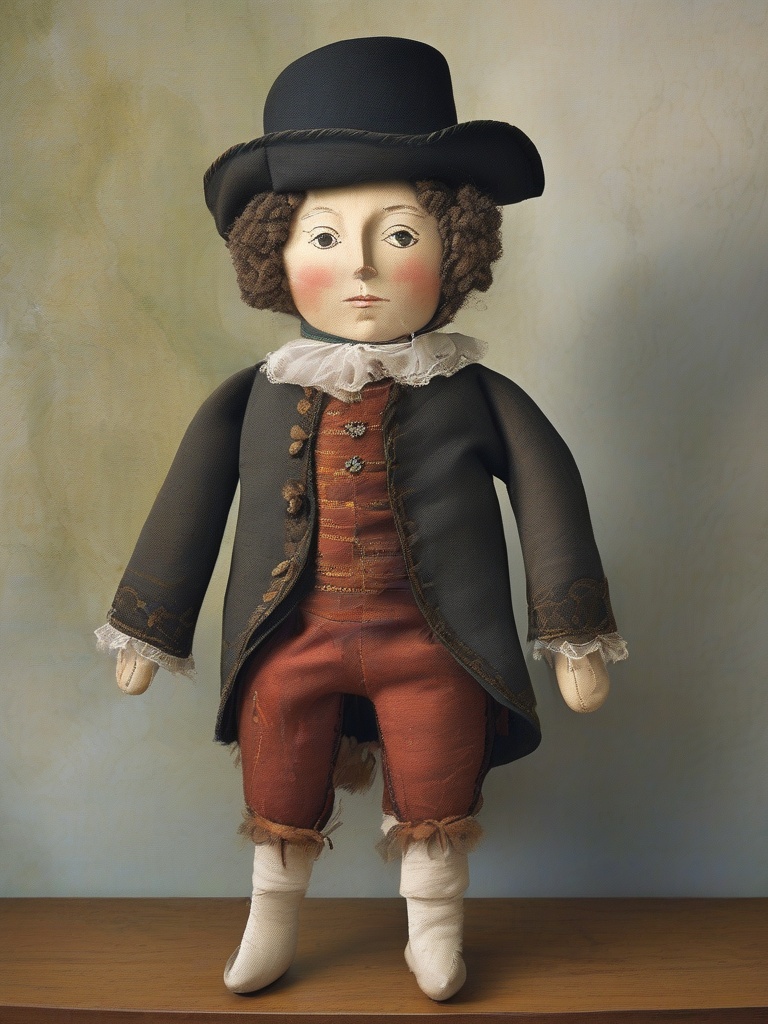
Young Johann Peter, dividing his childhood between busy Basel and the green Wiesental village of Hausen, soaking up the Alemannic speech he will one day immortalise.
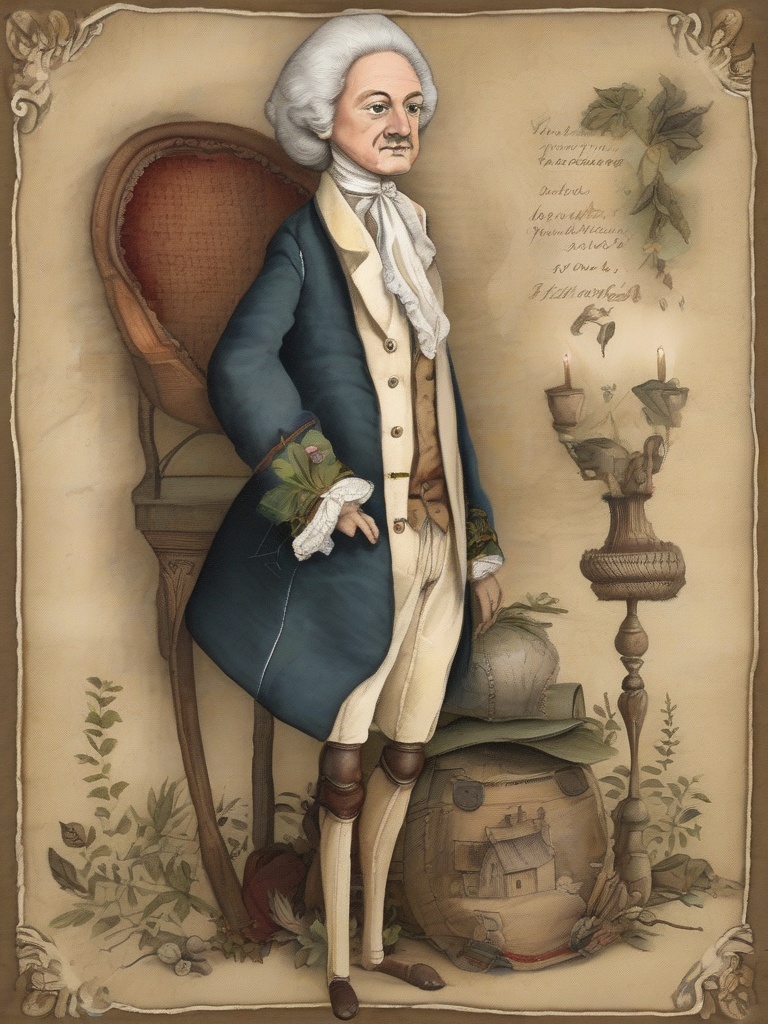
Answer all three to unlock this stage.
Unlock the previous stage first.
Crafting the doll
Garment: a sober black clerical coat in fine cotton/wool felt with crisp white preaching bands, a dark waistcoat and cravat; for the country look, a brown woollen Black Forest coat and broad-brimmed hat. Signature attribute: a tiny stitched almanac booklet (the 'Hausfreund' calendar) and a goose-quill (felt). Education card: explains that Hebel made a small regional dialect into world-class literature, and that a story can be tiny yet immortal. Sizes Classic 32 / Kidogo 18–20 / Shule 28. Part of proceeds → Alemannic-dialect & Black-Forest literary heritage (Hebelbund / regional libraries).
How this doll is made
Dress this doll as a warm-hearted Baden poet-pastor of around 1800–1820: sober clerical black, a touch of the Black Forest countryside, and the little almanac that made him famous.
- Garments 3
- Accessories 3
- Materials 1
- Techniques 1
Garments
- Lutheran clerical coat & preaching bandsA long sober black coat (Talar/clerical frock) with two white linen preaching bands (Beffchen) at the throat — the dress of an early-19th-century Protestant prelate of Baden. Keep it plain and dignified.DetailsDE
- Biedermeier-era gentleman's dressBeneath the office, a man of letters c.1800–1826 wore a dark tailcoat, high-collared shirt, knotted cravat, light breeches and buckled shoes — the everyday look outside the pulpit.DetailsEN
- Black Forest country coat & hatFor the 'walk home to the Wiesental' look, a plain brown woollen coat and broad-brimmed hat — modest rural Baden dress of the southern Black Forest.DetailsDE
Accessories
- The almanac booklet (Rheinländischer Hausfreund)A small worn calendar/almanac booklet — the popular yearly 'Rheinländischer Hausfreund' he edited from 1808 — is his defining prop, recreated as stitched paper or printed felt.DetailsDE
- Goose quill, ink-pot & verse notebookA writing quill, small ink-pot and an open notebook of handwritten Alemannic verses evoke the homesick poet at work on the Alemannische Gedichte.DetailsEN
- Small black Bible & round spectaclesA pocket Bible and simple round wire spectacles mark the pastor and teacher; both suit the calm, learned bearing of the figure.DetailsDE
Materials
- Wool felt, linen & sober coloursUse matte black wool felt for the coat, crisp white linen for the bands, and forest-green and amber accents drawn from the Wiesental landscape — natural, un-shiny fabrics fit the period and the man.DetailsEN
Techniques
- Dialect detail on the education cardStitch or print a short Alemannic line from the poems onto the card so children hear the dialect Hebel saved — the craft carries the language, not just the costume.DetailsDE
Origin & Ethics
How we know this
On honesty: very well documented (his dated published works, his church and school offices, a wealth of scholarly biography). Homage, not likeness — the doll stylises a friendly 18th–19th-century poet-pastor rather than copying any portrait; the Alemannic dialect and clerical dress are presented with respect, not as costume.
Committee: the Hebelbund and Hebel research centres; Deutsche Biographie / German literary scholars; the Protestant regional church of Baden (Evangelische Landeskirche in Baden); Black Forest / Wiesental cultural bodies. 5-step protocol as standard; respect his clerical office and dialect heritage.