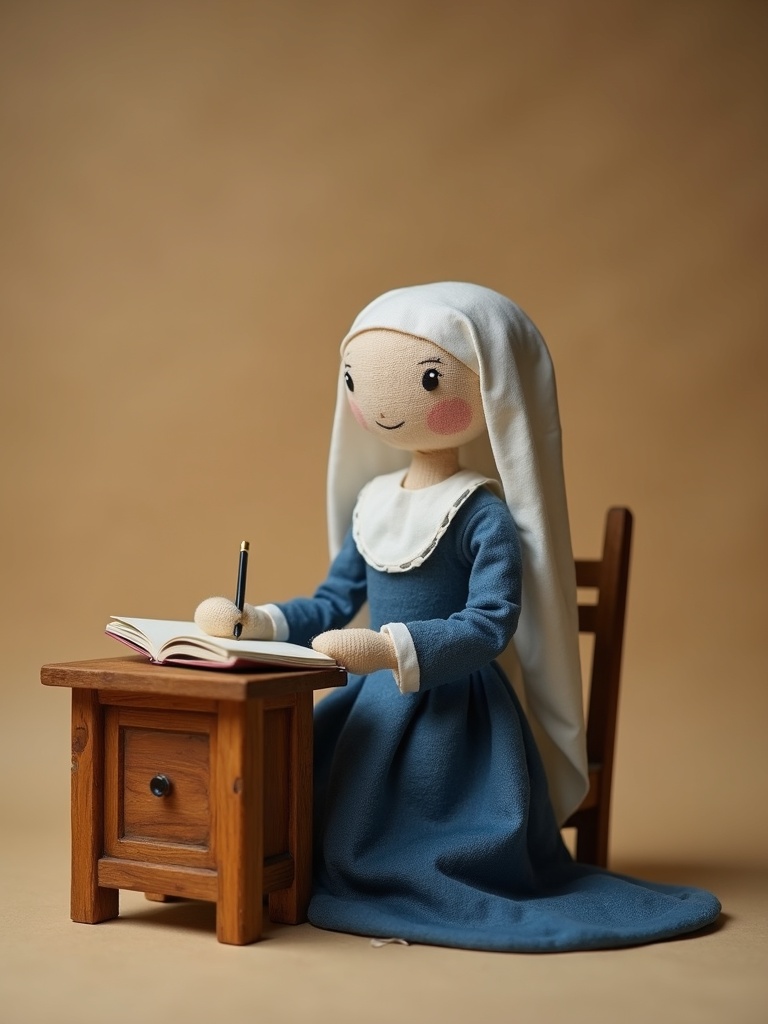
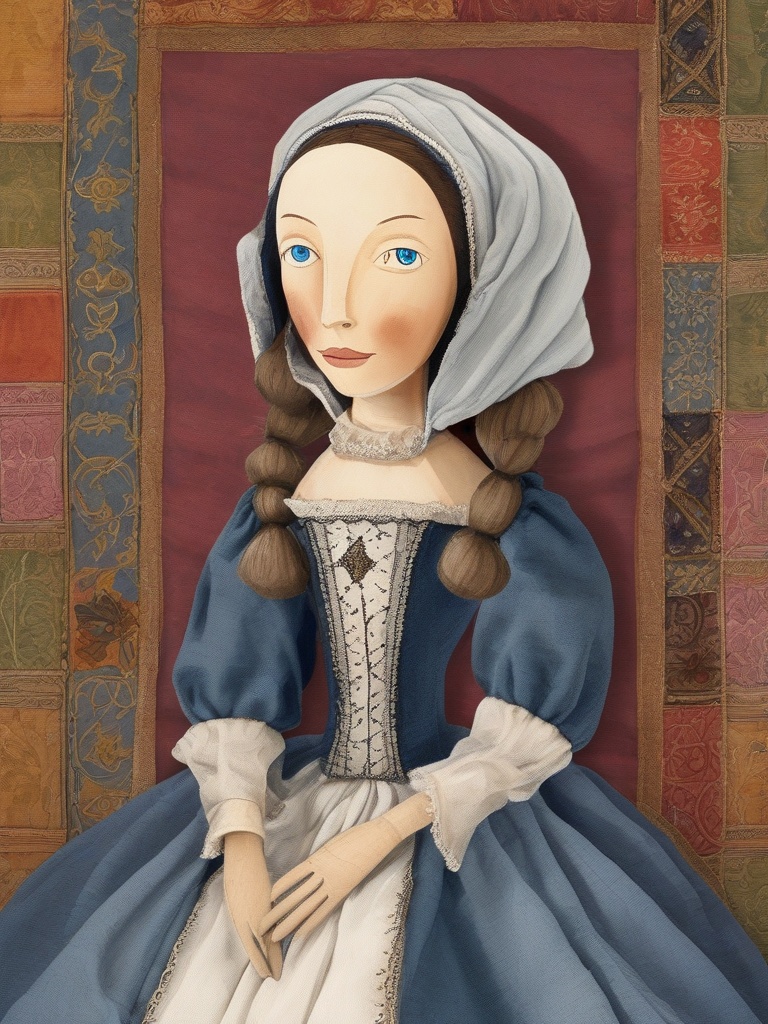
AI design preview — not a photo of the finished handmade doll
Letters & the Defence of Women
Christine de Pizan
A young widow in plague-struck Paris picked up her dead husband's pen and became the first woman in Europe to make writing her living — and her cause.
- People
- Venetian-born French (Italian by birth, of Bologna/Pizzano descent)
- Country
- France
- Region
- Western Europe
- Era
- c.1364–1430
- Theme
- Letters & the Defence of Women
Make your own
Design your Christine de Pizan
Pick a garment, a hairstyle and a scene, enter the PIN and generate a fresh image of Christine de Pizan with AI.
⚖ AI homage concept — not a likeness of the real person.
Each image is generated live with fal.ai.
Generated images
AI design preview — not a photo of the finished handmade doll
No images generated yet — be the first.
Tradition & Origin
A young widow in plague-struck Paris picked up her dead husband's pen and became the first woman in Europe to make writing her living — and her cause.
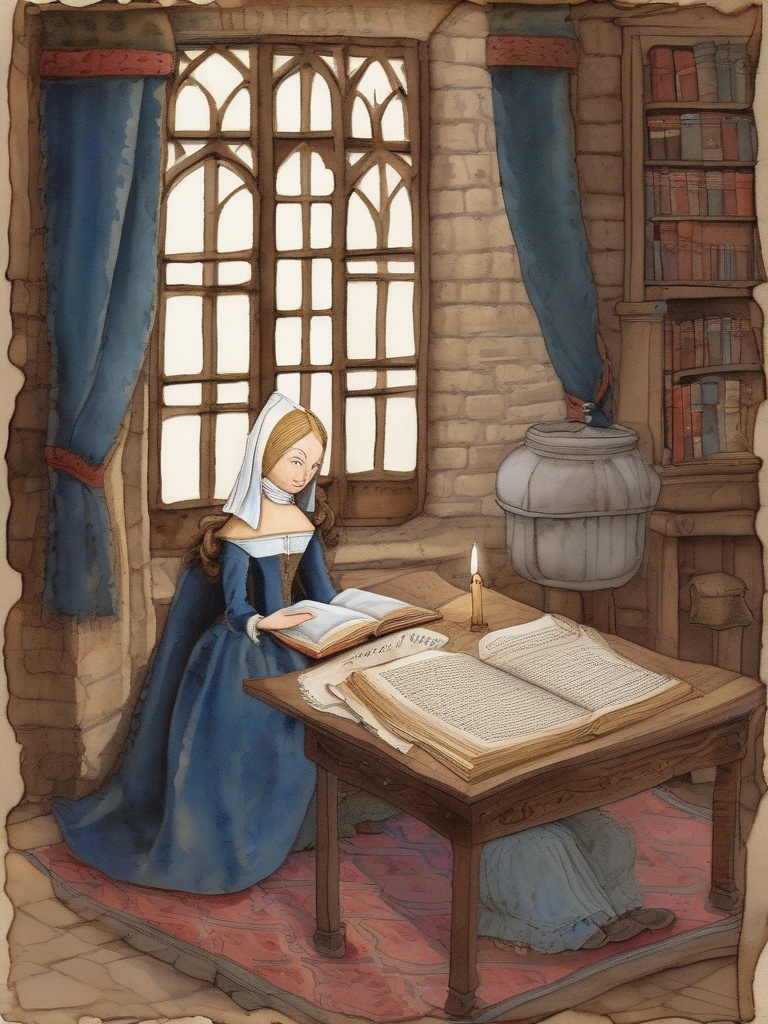
Of all the writing about Joan of Arc, only Christine's 1429 'Ditié' was composed during Joan's own lifetime — a single contemporary French voice.
DetailsENChristine was born in Venice around 1364 and brought to Paris as a small child when her father Tommaso da Pizzano was made astrologer and physician to King Charles V. She grew up inside one of the great book-courts of Europe, married a royal secretary at fifteen, and by her own account was content. Then in 1389 plague killed her husband, leaving her at about twenty-five to support her mother and three children, while she fought to recover money owed to him.
Rather than remarry or beg, she wrote. Beginning with love ballads around 1393 that won her wealthy patrons, she went on to produce roughly forty-one works of poetry and prose over three decades — the first professional woman of letters in Europe.
She also fought with her pen. In the famous 'Querelle du Roman de la Rose' she challenged the way the hugely popular Romance of the Rose, and the sour Lamentations of Matheolus, slandered women. Her answer came in 1405 as The Book of the City of Ladies, where three crowned virtues — Reason, Rectitude and Justice — build an allegorical city from the true stories of about 165 notable women, proving by example what insult denied.
Christine did not merely write; she had her books copied and richly illuminated by the best Paris workshops, presenting a luxury collection to Queen Isabeau (now the British Library's Harley MS 4431). Her final work, in 1429, was a joyful poem celebrating Joan of Arc — the only French poem about Joan written while she still lived. She died around 1430, probably at the convent of Poissy.
Timeline
- c.1364born in Venice as Cristina da Pizzano
- c.1368moves to Paris; her father becomes astrologer to Charles V
- 1379/80marries the royal secretary Étienne du Castel
- 1389widowed by plague; turns to writing to support her family
- 1405writes The Book of the City of Ladies and the Treasure of the City of Ladies
- 1429writes her last work, a poem in praise of Joan of Arc
- c.1430dies, probably at the Dominican convent of Poissy
Did you know?
- She is recognised as 'the first professional woman of letters in Europe', writing to support her mother and three children after she was widowed.DetailsEN
- In The Book of the City of Ladies she argued that girls would learn 'as perfectly' as boys if only they were sent to school — written around the year 1405.DetailsEN
- She oversaw the copying and gilding of her own manuscripts and presented a lavish collection of her works to Queen Isabeau in 1414 — now Harley MS 4431, 'The Book of the Queen'.DetailsEN
When someone says you cannot do a thing, you can answer with proof — and sometimes the strongest answer is something you build.
Values & Capabilities
Capabilities
◆◆◆◆◆ shows how central a gift is — five diamonds mark a signature strength, fewer mark a supporting one.
Widowed young with three children and a mother to support, she became the first woman in Europe to earn her living entirely by her pen — about 41 works of poetry and prose in some thirty years.
In 1405 she built an allegorical city in words, where three crowned virtues — Reason, Rectitude and Justice — raise walls from the true stories of great women across history.
She entered the famous debate over the popular Romance of the Rose, refusing to let learned men slander women unanswered — one of recorded Europe's earliest public defences of her sex.
She did not just write; she oversaw the copying and illumination of her manuscripts, hiring fine Paris workshops and women collaborators — and is shown in them seated at her writing desk.
Aged and in retreat at a convent, she broke years of silence in 1429 to praise Joan of Arc — the only French poem about Joan written while Joan still lived.
Development
1 of 3 stages unlocked
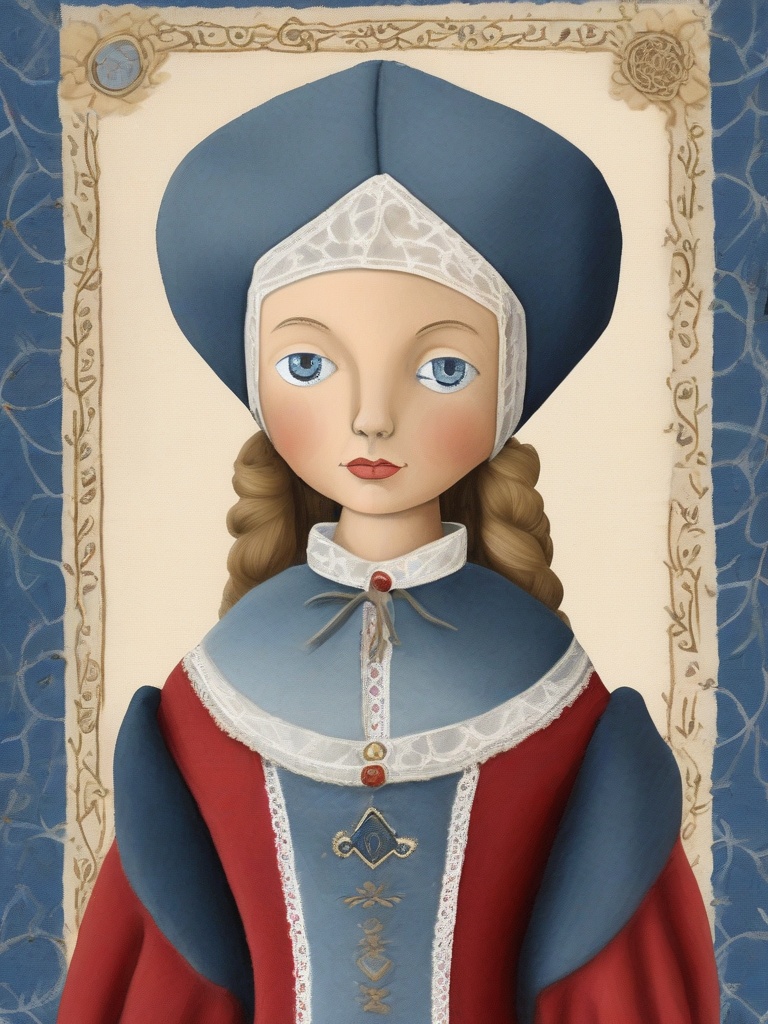
A bright Venetian-born girl growing up in the bookish court of Charles V in Paris, where her astrologer father lets her learn.
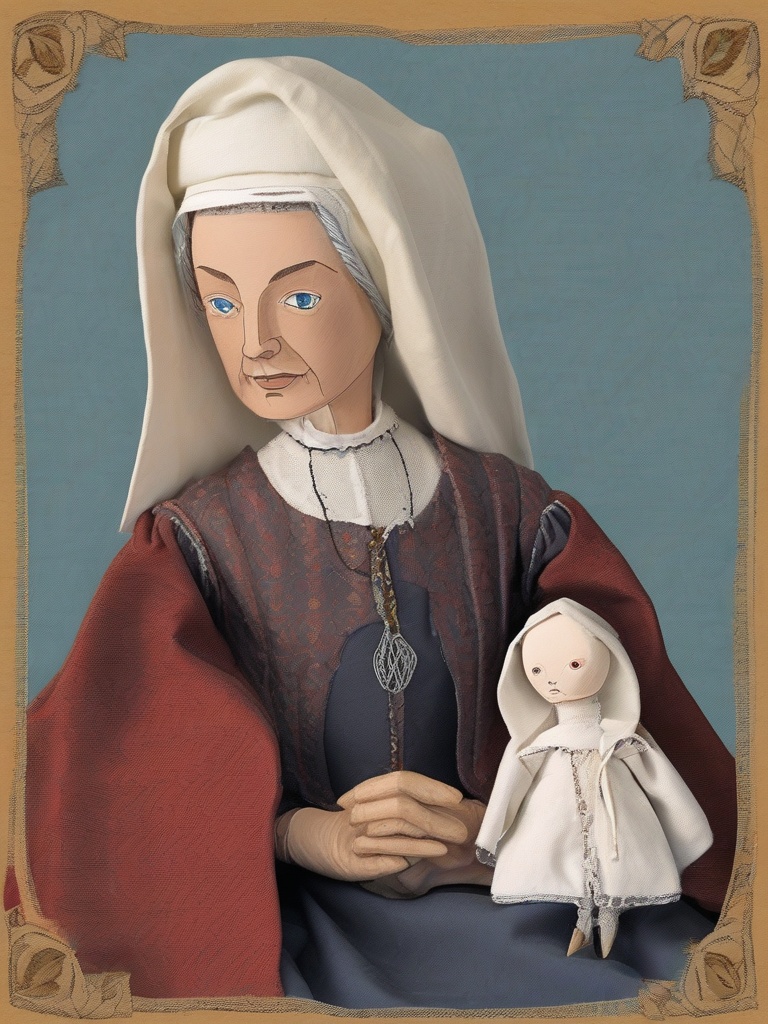
Answer all three to unlock this stage.
Unlock the previous stage first.
Crafting the doll
Garment: a long dark-blue houppelande gown in cotton or fine wool with fitted sleeves, and a white horned headdress (hennin) with a wimple framing the face, in the respectable early-15th-century Parisian widow's style; an optional crimson-and-gold court gown. Signature attribute: a tiny goose-feather quill, a felt inkhorn and a little 'illuminated' book with gold-thread trim. Education card: explains that she was Europe's first professional woman writer and wrote a whole book to defend women's worth. Sizes Classic 32 / Kidogo 18–20 / Shule 28. Part of proceeds → girls' literacy and writing programmes and medieval-manuscript heritage (the Book of the Queen / Harley MS 4431).
How this doll is made
Make this doll as a learned late-medieval Parisian widow: sober, fine fabrics, the horned headdress of her time, and the tools of a writer — dignified, never a costume.
- Garments 2
- Accessories 3
- Materials 2
- Techniques 1
Garments
- Dark-blue houppelande gownA long, full early-15th-century gown with fitted sleeves in deep blue cotton or fine wool — the respectable dress of a working woman author, as she is shown in her own manuscripts.DetailsEN
- White horned headdress & wimpleA two-horned hennin with a white wimple framing the face — the recognisable widow's headdress in the famous study-portrait miniatures of Harley MS 4431.DetailsEN
Accessories
- Goose-feather quill & inkhornA small white quill pen with a felt or horn inkpot, fixed to the hand or resting on a desk — the signature tool of the first professional woman writer.DetailsEN
- Illuminated book propA tiny stitched book with gold-thread trim and a painted 'miniature' on the cover, recalling the lavishly illuminated Book of the Queen she had made by hand.DetailsEN
- Writing desk & lecternA small wooden writing desk or sloped lectern with a half-written parchment leaf and a little curled-up dog at her feet, recreating her famous study scene.DetailsEN
Materials
- Sober scholar's paletteDeep blue, white and a single muted crimson-and-gold accent for the court gown — the dignified, unflashy colours of a learned widow, no bright modern shades.DetailsEN
- Gold-thread 'illumination'Fine gold thread or gilt trim on the book and gown border, a safe stand-in for the real gold-leaf illumination of her manuscripts — used sparingly.DetailsEN
Techniques
- Hand-stitched, study-scene setKeep seams plain and sturdy and build her as a small tableau at her desk; a miniature walled-city prop with three tiny crowned figures can teach the Book of the City of Ladies.DetailsEN
Origin & Ethics
How we know this
On honesty: very well documented (her own dated, signed and illuminated manuscripts survive, several supervised by Christine herself; modern scholarly editions and translations exist). Homage, not likeness; her birth and death years are given as 'c.1364' and 'c.1430' because the exact dates are not recorded, and the doll's face and dress are a respectful late-medieval reconstruction, not a portrait from life.
Committee: the Bibliothèque nationale de France (Gallica / BnF) and the British Library (Harley MS 4431 'Book of the Queen'); medievalists and historians of women's writing; French literary-heritage bodies. 5-step protocol; the doll stylises a real person — homage, not likeness.