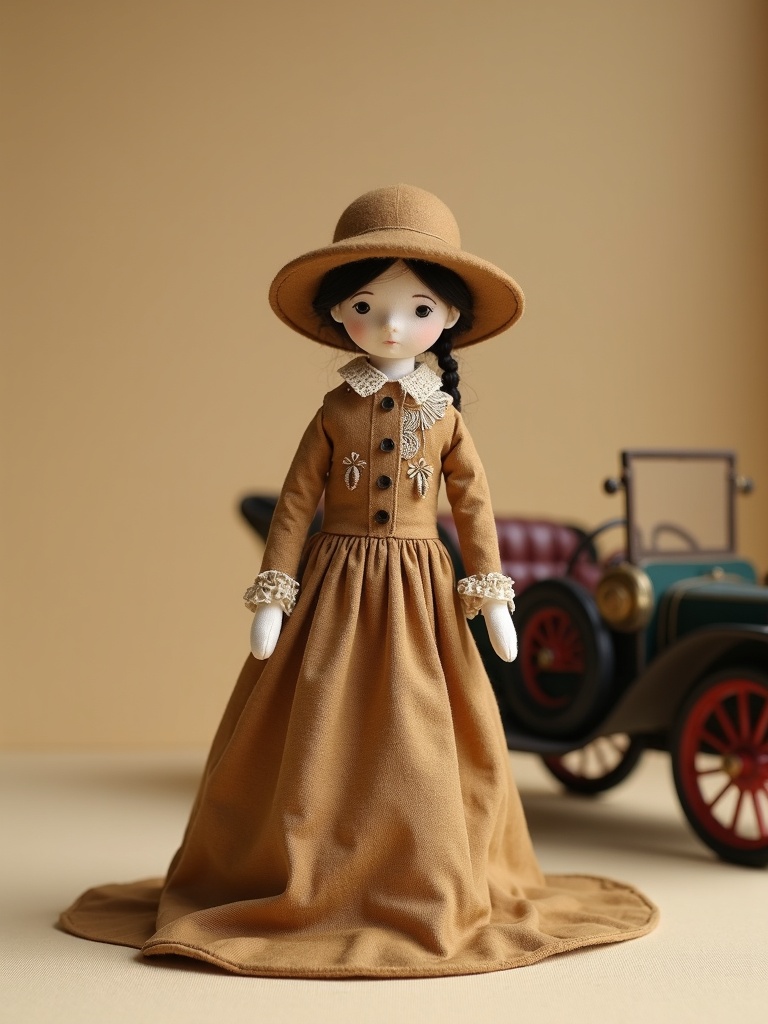
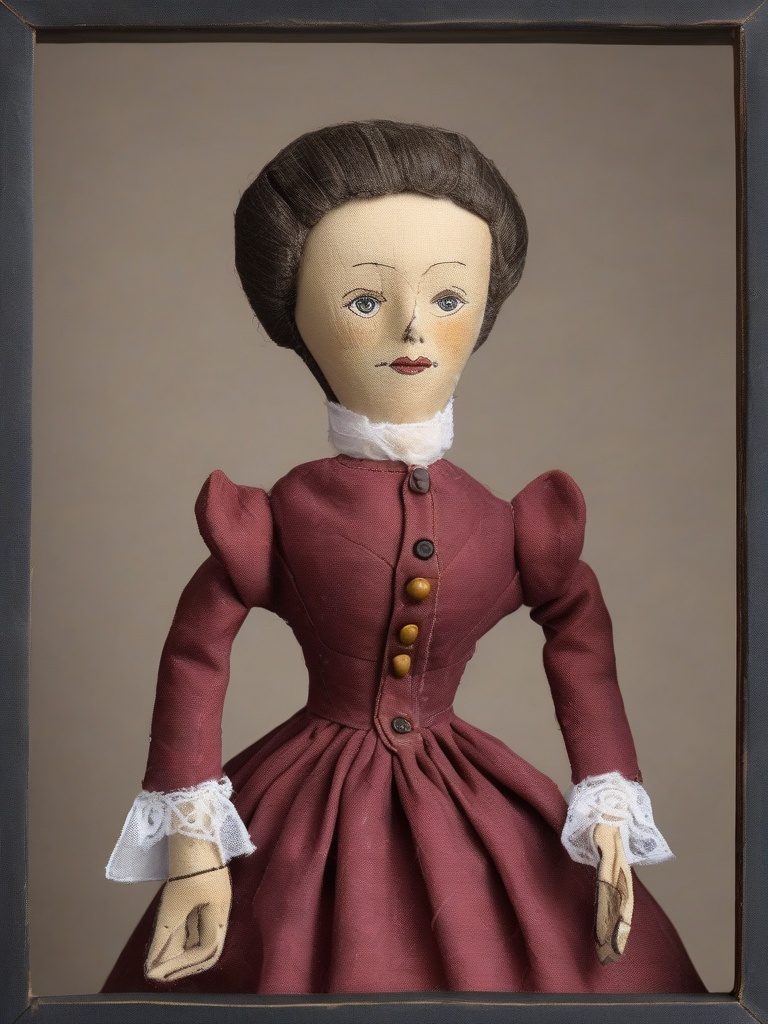
AI design preview — not a photo of the finished handmade doll
Courage & the First Road Trip
Bertha Benz
A wife who refused to let an idea die quietly drove it 106 kilometres into history — and fixed it with a hatpin on the way.
- People
- German (Badener, Mannheim/Pforzheim)
- Country
- Germany
- Region
- Central Europe
- Era
- 1849–1944
- Theme
- Courage & the First Road Trip
Make your own
Design your Bertha Benz
Pick a garment, a hairstyle and a scene, enter the PIN and generate a fresh image of Bertha Benz with AI.
⚖ AI homage concept — not a likeness of the real person.
Each image is generated live with fal.ai.
Generated images
AI design preview — not a photo of the finished handmade doll
No images generated yet — be the first.
Tradition & Origin
A wife who refused to let an idea die quietly drove it 106 kilometres into history — and fixed it with a hatpin on the way.
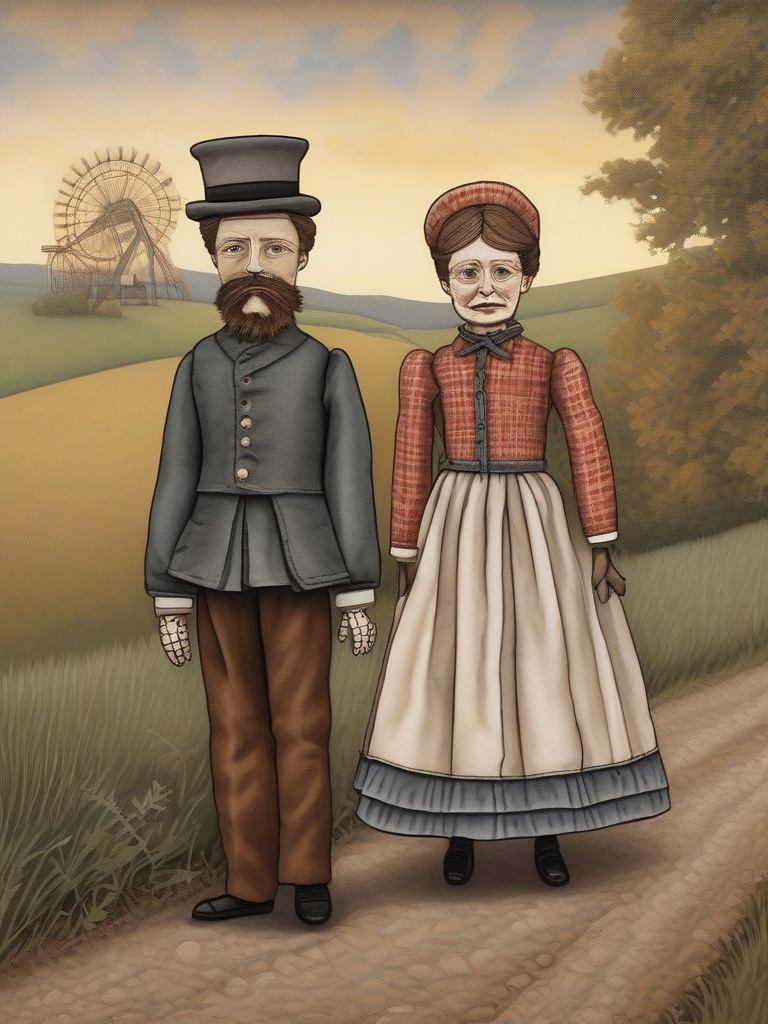
Three improvised repairs that kept the first road trip alive: garter, hatpin and leather brakes.
DetailsENIn the 1880s nobody believed a horseless carriage could be useful. Carl Benz had built and patented his three-wheeled Patent-Motorwagen, but it sputtered around his Mannheim yard while the money ran out and the press shrugged. Carl was a brilliant engineer and a poor salesman, too cautious to drive his machine far from home.
His wife Bertha was neither cautious nor patient. Early one August morning in 1888 she woke her teenage sons Eugen and Richard, pushed the Model III out of the workshop so the noise would not wake Carl, and set off for her mother's house in Pforzheim, about 106 km away. She had no driving lessons, no maps for cars, no fuel stations and no permission.
The journey turned her into the world's first motoring engineer. She unblocked a clogged fuel line with a hatpin, insulated a short-circuiting ignition wire with a garter, bought ligroin at the pharmacy in Wiesloch when the tank ran dry, and had a village cobbler nail leather strips to the worn wooden brakes — the first brake linings. Her sons pushed the underpowered car up the steepest hills, and she later told Carl the Motorwagen needed a lower gear for climbing. He added one.
By the time she sent a triumphant telegram from Pforzheim, the drive had done what no advertisement could: it proved the automobile was practical and made headlines across Germany. Orders followed. A note left on a dining table had launched an industry.
Timeline
- 1849born Cäcilie Bertha Ringer in Pforzheim, Grand Duchy of Baden
- 1872marries Carl Benz after investing her dowry in his workshop
- 1886Carl Benz patents the Benz Patent-Motorwagen (DRP 37435)
- 5 Aug 1888drives Mannheim→Pforzheim, ~106 km — the first long car journey
- 1888the trip wins press attention and brings Benz his first sales
- 1944dies in Ladenburg, aged 95; 2008 the Memorial Route is opened
Did you know?
- Did you know? She cleared a blocked fuel line with a hatpin and insulated the ignition with her garter — improvised tools that kept the first road trip going.DetailsEN
- Did you know? When the wooden brakes wore out, a cobbler nailed leather strips onto them — widely credited as the world's first brake linings.DetailsEN
- Did you know? Because she married, German law of the time barred her from being named as an investor in the company her dowry had helped save.DetailsEN
If you really believe something works, sometimes the bravest thing is just to start the engine and go.
Values & Capabilities
Capabilities
◆◆◆◆◆ shows how central a gift is — five diamonds mark a signature strength, fewer mark a supporting one.
On 5 August 1888 she drove ~106 km from Mannheim to Pforzheim with her two sons — the world's first long-distance automobile journey — without telling her husband or asking the authorities.
When the car broke down she fixed it: a garter to insulate the ignition, a hatpin to clear a blocked fuel line, and a cobbler's leather strips on the brakes — the first brake linings.
She had her dowry paid out early and put it into Carl Benz's struggling workshop, keeping the dream of the motor car alive through lean years.
Out of fuel, she bought ligroin (petroleum spirit) at the town pharmacy in Wiesloch — which the world now remembers as its first 'filling station'.
Her trip was the field test Carl never dared: it proved the Motorwagen worked over distance, won press attention, and brought the company its first sales — she even urged adding a third gear for hills.
Development
1 of 3 stages unlocked
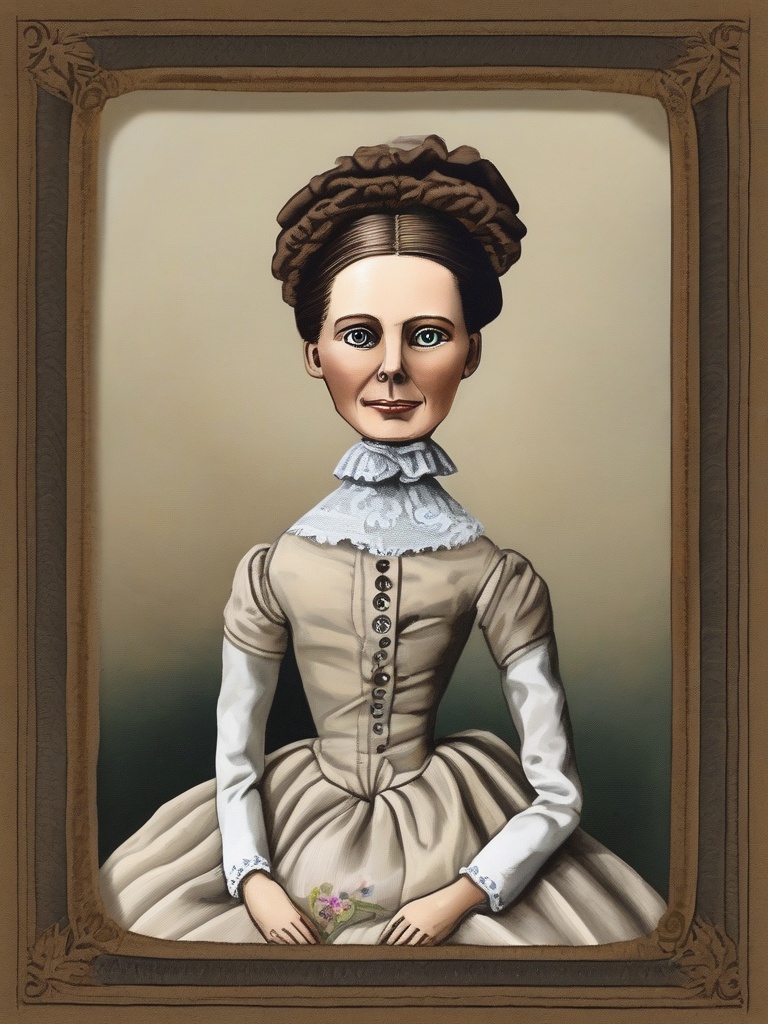
Young Bertha invests her dowry in Carl Benz's workshop and marries him, betting everything on a machine no one has yet seen run.
Answer all three to unlock this stage.
Unlock the previous stage first.
Crafting the doll
Garment: high-necked late-1880s travelling dress in blue-grey wool/cotton, fitted bodice, modest bustle skirt, a small lace collar and brooch; leather gloves; a beige travelling dust-coat and ribboned hat. Signature attribute: a long hatpin, a ribbon garter, a tiny three-wheeled Benz Patent-Motorwagen and a strip of cobbler's leather (felt & wire). Education card: explains the first long-distance car trip (5 Aug 1888, ~106 km), the roadside fixes, and the first 'filling station' at Wiesloch. Sizes Classic 32 / Kidogo 18–20 / Shule 28. Part of proceeds → STEM education for girls / automotive heritage.
How this doll is made
Make her as a practical, dignified late-1880s traveller, with the small tools and the little motor car that tell her story.
- Garments 2
- Accessories 3
- Materials 2
- Techniques 1
Garments
- 1880s bustle travelling dressA high-necked, long-sleeved day dress with a fitted bodice and a modest bustle skirt in blue-grey wool or cotton — typical respectable middle-class dress of late-1880s Baden. Add a small white lace collar.DetailsEN
- Travelling dust-coat & hatA long beige dust-coat over the dress and a wide-brimmed ribboned hat protected open-car travellers from road dust — the practical kit of her 1888 journey.DetailsEN
Accessories
- The hatpinA long metal hatpin, the tool she used to clear the blocked fuel line — make it as a stiff wire pin with a beaded head, tucked in her hat or held in hand.DetailsEN
- The ribbon garterA simple ribbon garter she used to insulate the ignition — render as a small loop of trim, a quiet nod to her improvised engineering.DetailsEN
- Model Patent-MotorwagenA tiny three-wheeled Benz Patent-Motorwagen with one small steered front wheel, two large spoked rear wheels and a tubular frame — build from wire and felt as her signature companion piece.DetailsEN
Materials
- Cobbler's leather brake stripA small strip of real leather standing for the first brake lining — pair it with a little wooden brake block to teach how the fix worked.DetailsEN
- Apothecary ligroin bottleA small clear glass bottle labelled like a 19th-century pharmacy, for the ligroin she bought in Wiesloch — the world's first car refuelling.DetailsEN
Techniques
- Period-correct hand stitchingUse simple period-honest stitching, jet or fabric buttons and muted natural dyes (wool blue-grey, ochre, brown) to match 1880s German town dress rather than modern bright synthetics.DetailsEN
Origin & Ethics
How we know this
On honesty: very well documented (Daimler/Mercedes-Benz heritage, DPMA, Automotive Hall of Fame, contemporary records). Homage, not likeness — the doll stylises Bertha Benz rather than copying her appearance. Carl Benz invented and patented the Motorwagen; Bertha did not invent the car, but she financed it, made the historic first long-distance drive, and the roadside leather brakes are commonly credited as the first brake linings.
Committee: Mercedes-Benz / Daimler heritage archive; German Patent and Trade Mark Office (DPMA); the city museums of Mannheim, Ladenburg and Pforzheim; historians of technology along the Bertha Benz Memorial Route. 5-step protocol; homage, not likeness.