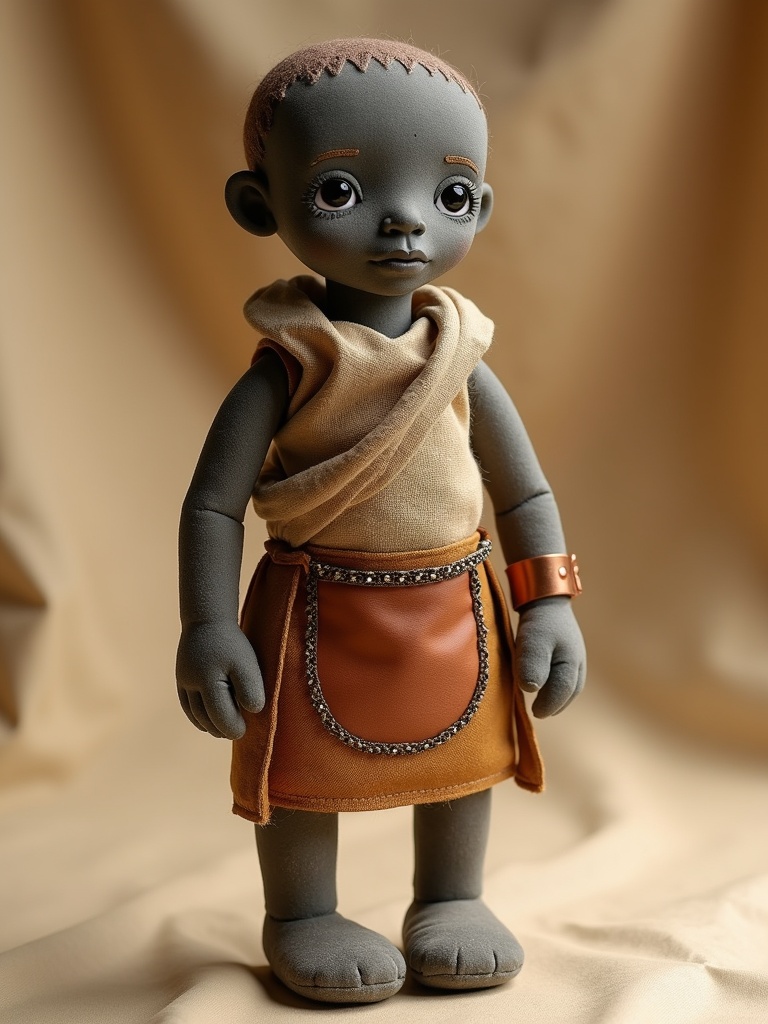
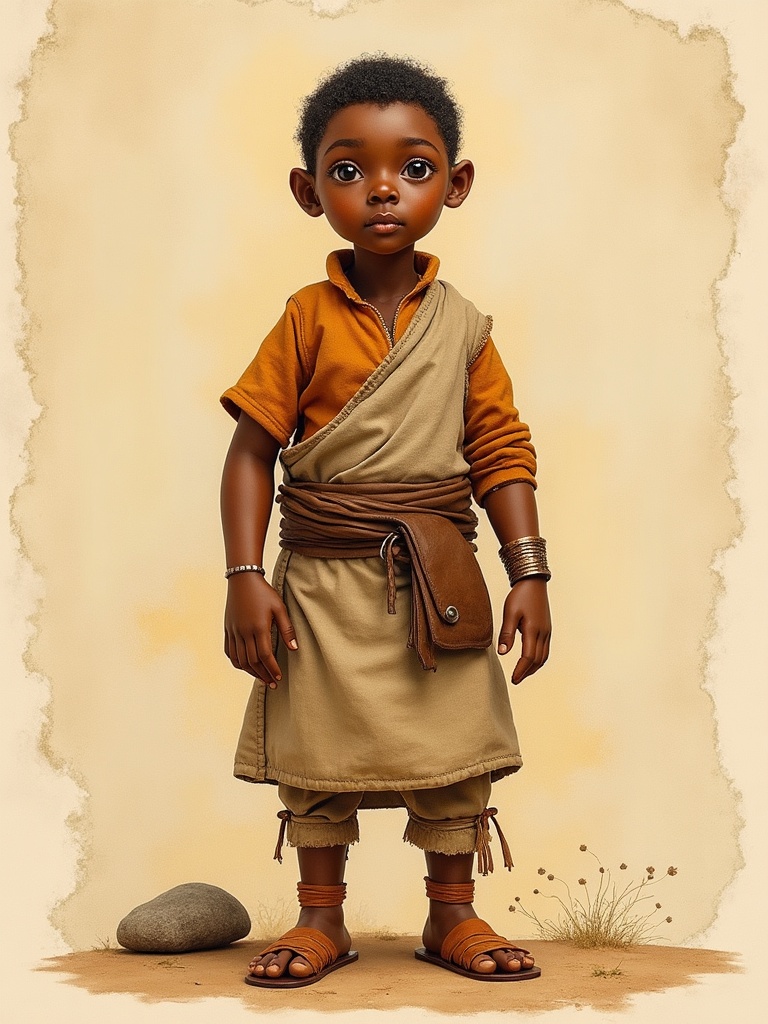
AI design preview — not a photo of the finished handmade doll
Craft & the Nameless
The Builder of Great Zimbabwe
He has no name and no grave — because he is thousands of hands at once. The Builder of Great Zimbabwe is the archetype of the Shona masons who raised Africa's largest ancient stone city, fitting granite to granite without a single drop of mortar.
- People
- Shona
- Country
- Zimbabwe
- Region
- Southern Africa
- Era
- 11th–15th c.
- Theme
- Craft & the Nameless
Make your own
Design your The Builder of Great Zimbabwe
Pick a garment, a hairstyle and a scene, enter the PIN and generate a fresh image of The Builder of Great Zimbabwe with AI.
Each image is generated live with fal.ai.
Generated images
AI design preview — not a photo of the finished handmade doll
No images generated yet — be the first.
Tradition & Origin
He has no name and no grave — because he is thousands of hands at once. The Builder of Great Zimbabwe is the archetype of the Shona masons who raised Africa's largest ancient stone city, fitting granite to granite without a single drop of mortar.
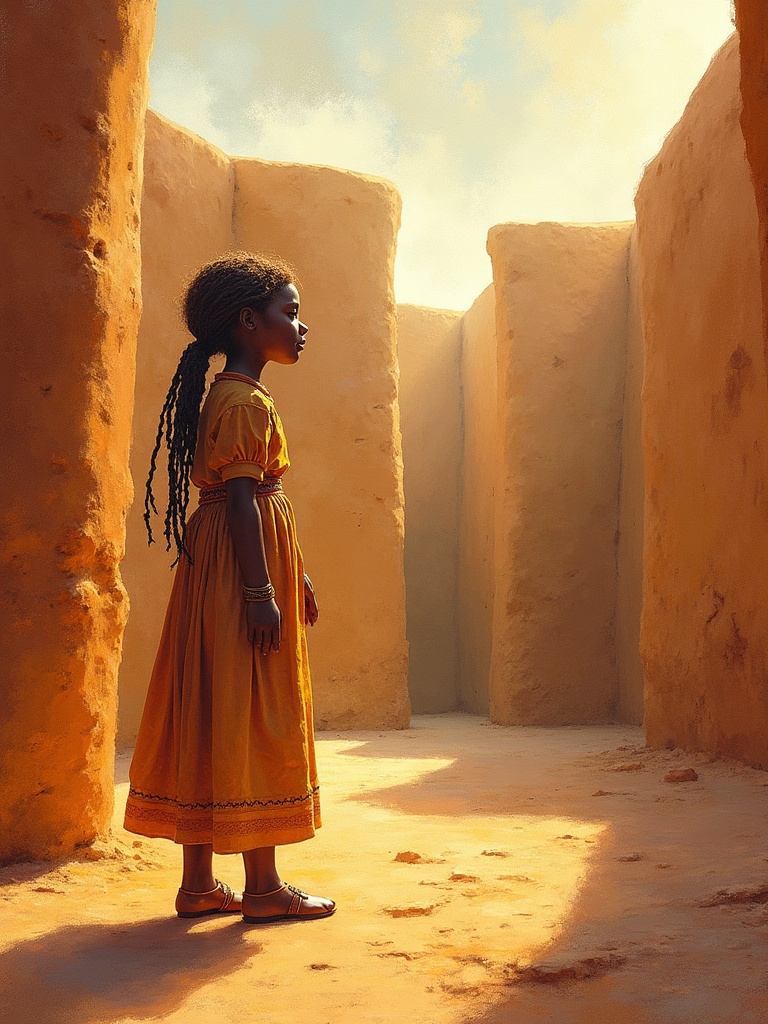
The Great Enclosure's dry-stone walls rise to about 11 m and are up to 5 m thick at the base, with the solid Conical Tower standing some 9 m high — all laid in mortarless granite that has held for over 500 years.
DetailsENAt its height Great Zimbabwe may have held up to ~18,000 people, making it one of the great urban centres of medieval Africa.
DetailsENThere is no single biography to tell here, and that is the point. The Builder of Great Zimbabwe is a nameless archetype — a face given to the generations of Shona-ancestral masons who, beginning in the 11th century and continuing for more than 300 years, raised a stone capital in the granite hills of what is now southeastern Zimbabwe. The word zimbabwe itself comes from the Shona dzimba dza mabwe, "houses of stone." Their craft was so refined that early European visitors refused to believe Africans had built it, and invented Phoenicians and Queens of Sheba to explain it away — a colonial fiction archaeology has long since buried.
The signature of this builder is in the stone. The famous Great Enclosure — the largest ancient structure south of the Sahara — curves for roughly 250 metres, with walls reaching as high as 11 metres and up to 5 metres thick at the base, laid entirely in dry-stone masonry: granite blocks split from the surrounding kopjes, dressed into even courses, and stacked without mortar so precisely that they have stood for over half a millennium. Inside rises the enigmatic Conical Tower, about 9 metres high and 5.5 metres across, solid and purposeless except as a statement — perhaps a granary writ large, perhaps a symbol of plenty and power.
These builders did not work in isolation. Great Zimbabwe sat at the inland heart of a vast Indian Ocean trade network: gold mined in the interior travelled to the Swahili port of Sofala and on to Kilwa, returning as Chinese porcelain, Persian glass, Arabian coins and glass beads — fragments of which archaeologists still pull from the soil. At its height the city may have held up to 18,000–20,000 people (some recent models argue fewer), making it one of the great urban centres of medieval Africa, and the political and religious capital of a kingdom whose wealth flowed from cattle, crops and gold.
And then there is the soul carved in soapstone: the eight Zimbabwe Birds, each perched atop a column more than a metre tall, blending human and avian features — lips for beaks, toes for talons. Read as emblems of royal and ancestral authority, one of them still flies on the modern Zimbabwean flag. Several were looted in the colonial era and only repatriated in the 20th and 21st centuries. The Builder represents all of this: the anonymous, ancestral genius of a people who left no signature but the stone itself — which is, in the end, the most enduring signature of all.
Timeline
- ~1100Bantu-sprechende Vorfahren der Shona beginnen, Groß-Simbabwe zu errichten.
- 1200–1450Blütezeit: Hauptstadt des Königreichs Simbabwe, bis zu 18.000 Einwohner, Zentrum des Goldhandels.
- 14. Jh.Die Große Einfriedung & der Kegelturm entstehen; Handel bis Kilwa, Indien, China.
- ~1450Niedergang (Bodenerschöpfung, verlagerte Handelswege); Nachfolgestaat Mutapa entsteht.
- 19. Jh.Koloniale Leugnung der afrikanischen Urheberschaft; fünf Zimbabwe-Vögel werden geraubt.
- 1980Das unabhängige Simbabwe nimmt Namen & Vogel der Ruinen als Nationalsymbole — Rückeroberung des Erbes.
Did you know?
- The walls were built without any mortar — granite blocks split from the surrounding hills were dressed and stacked so precisely in even courses that they have held for over 500 years.DetailsEN
- Chinese porcelain, Persian glass, Arabian coins and glass beads have been excavated at Great Zimbabwe — proof that this inland city was woven into the gold-fuelled Indian Ocean trade reaching China and the Middle East.DetailsEN
- Colonial-era writers refused to credit Africans with the city and invented foreign builders to explain it; modern archaeology has firmly established that the ancestral Shona built Great Zimbabwe themselves.DetailsEN
- Several of the eight Zimbabwe Birds were taken to Europe during colonial rule; their long campaign of repatriation continued into the 21st century, returning the kingdom's emblems to their stone home.DetailsEN
He left no name in the stone — only the stone, which remembers for him.
Values & Capabilities
Capabilities
◆◆◆◆◆ shows how central a gift is — five diamonds mark a signature strength, fewer mark a supporting one.
The highest art of building: stacking 900,000 blocks so precisely that they hold entirely without any binding agent — for 800 years. In the game: whoever holds the Builder can erect something that survives all storms.
Great Zimbabwe grew over more than 300 years — no single person saw it completed. He teaches: Some works are built for the grandchildren, not for oneself. True greatness requires patience that reaches beyond one's own life.
He was not only a mason, but an artist: from soft soapstone he created birds with a soul, which became the symbol of an entire nation. He teaches that craft and art can be one.
His city grew rich because it mined gold and traded across the sea — as far as India and China. He teaches that the work of one's hands can connect an entire world.
He built great things without writing his name on them. His strongest lesson: You don't have to be famous to be important. The work counts, not the fame.
Development
1 of 3 stages unlocked
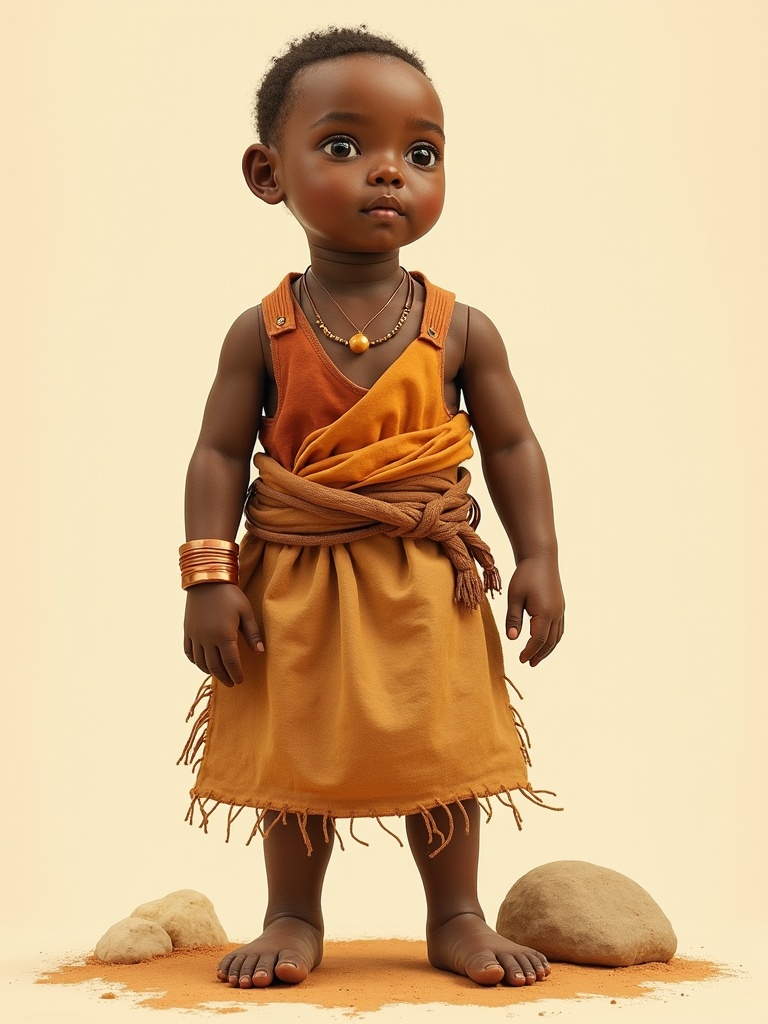
A young person who carries stones and watches the masters layer them — learning, marveling, with his own first attempts. Simple work clothes, a small hammerstone. Gift: Stone upon stone (in the making).
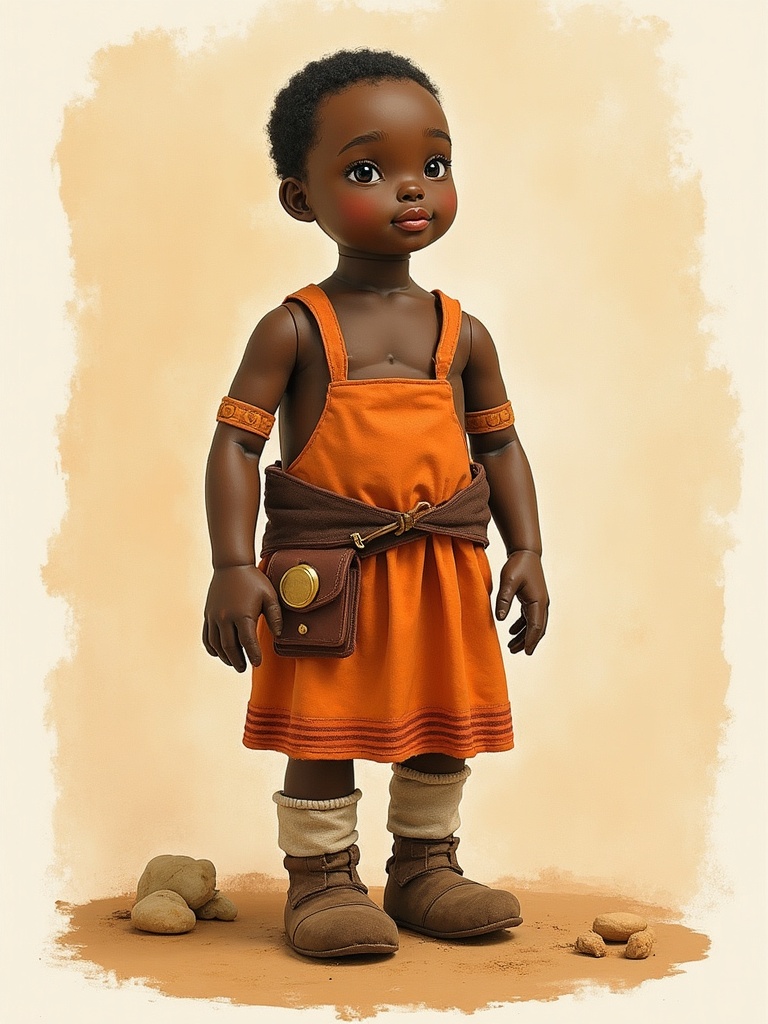
Answer all three to unlock this stage.
Unlock the previous stage first.
Crafting the doll
Fabrics & Production Notes
Real natural fibers, honest craftsmanship, lifelong repairability — and with this figure a tiny masterpiece: a real little soapstone bird.
The Materials List
The Robe: Plain Dignity
Unlike the magnificent royal robes, the Builder deliberately wears plain, dignified work clothing: a wrapped earth/granite cloth of 100% cotton, a small leather/felt apron, a copper bracelet. The simplicity is the statement — dignity lies in skill, not in pomp. Granite-gray „dust" tones on the hands can be embroidered on.
The Signature Attribute: the Soapstone Bird
The centerpiece: a tiny, real soapstone bird (or of wood/felt), modeled on the Zimbabwe Bird — ideally crafted by a Shona sculptors' cooperative made. This way every doll carries a real piece of Zimbabwean craftsmanship and creates income for living stone artists. Plus a mini granite block and a blunt hammerstone (felt/wood). No small, swallowable parts in the school/toddler line.
Signature & Education Card
Embroidered into the hem: „Vakavaki" („the builders") instead of a personal name — and the name of the seamstress. Enclosed is an Education Card about Great Zimbabwe, the drystone-walling technique and the history of the refuted colonial lie. Optional QR thread to the history page.
Production Stages & Effort
Work garb, apron, real mini soapstone bird, granite block, education card. Plainer than the royal figures — and special for precisely that reason.
Simplified garment, wooden bird instead of soapstone. The most affordable entry point of the Ten.
Washable, reinforced seams, sturdy wooden bird. With an educational card for history/technology lessons.
How this doll is made
The anonymous master builder of Great Zimbabwe belongs to the Bantu-speaking ancestors of the Shona, who between the 11th and 15th centuries raised mortarless granite walls in flowing curves and supported a kingdom rich in gold, copper, woven cotton and carved soapstone. The look is grounded in real Great Zimbabwe material culture: hand-shaped granite tools, woven cotton and bark wraps, metal wire ornaments, the ndoro shell pendant, and the soapstone Zimbabwe Bird.
- Garments 2
- Accessories 3
- Materials 1
- Techniques 4
Garments
- Woven cotton wrap (machira)A length of locally spun and woven cotton cloth wrapped around the body, worn over the shoulder or waist. Great Zimbabwe yielded hundreds of ceramic spindle whorls, showing cotton was spun on a large scale on the plateau well before European contact, the raw cloth for everyday and prestige wear.DetailsEN
- Bark-cloth and animal-skin garmentsBeaten bark cloth and dressed animal hides formed the older layer of Shona dress, worn as wraps, cloaks or aprons. Bark cloth is made by stripping the inner bark of certain trees and beating it with wooden mallets until it becomes a soft, flexible sheet, a craft widespread across sub-Saharan Africa.DetailsEN
Accessories
- Ndoro (conus-shell pendant)A polished disc cut from the base of a large conus sea shell, worn on the forehead or at the neck as a high-status pendant. At Great Zimbabwe the ndoro was a prestige and currency object; demand was so great that Portuguese traders later made glazed white ceramic imitations of it.DetailsEN
- Gold and copper wire banglesBracelets and armbands made by drawing metal into fine wire and coiling it into helices around the limb. Wire-drawing equipment was recovered inside the Great Enclosure at Great Zimbabwe, and the closely related Mapungubwe burials held over a hundred coiled gold-wire bangles, the technique the doll's metal ornaments should reflect.DetailsEN
- Glass trade beadsStrings of imported glass beads worn at the neck and wrists, evidence of Great Zimbabwe's Indian Ocean trade. Beads and Chinese porcelain found at the site show the wealth that flowed in exchange for the kingdom's gold and ivory, beadwork is an authentic prestige accent for the figure.DetailsEN
Materials
- Granite, soapstone, gold and copperThe core materials of the builder's world: hard local granite for walls, soft soapstone (steatite) for carving, and gold and copper for ornament and trade. Surfaces and tools on the doll should read as stone, hide, woven cotton and burnished metal rather than synthetic fabrics.DetailsEN
Techniques
- Dry-stone granite masonryWalls were built without any mortar: granite was loosened from outcrops by fire-setting (heating then rapidly cooling the rock so it splits), broken into roughly brick-sized blocks, sorted into face and core stone, and then stacked in two parallel double skins with a rubble fill between. The skill is in selecting and placing each block so friction and gravity alone hold the softly curved, batter-faced walls, knowledge handed down from the ancestral builders.DetailsEN
- Soapstone carving (the Zimbabwe Bird)Soapstone (steatite) is soft enough to shape with iron blades and abrasive stones. Carvers cut, incised and smoothed it into the famous bird sculptures, about 40 cm tall on tall columns, that stood on walls and monoliths within the city as royal and ancestral emblems. The technique is subtractive: roughing out the block, refining the form, then polishing the surface.DetailsEN
- Gold and copper smithing and wire-drawingGold dust was melted and refined in small purpose-made crucibles and consolidated into standardised ingots, then worked by the same households that worked copper and bronze. Metal was beaten into thin sheet for cladding and beads, or pulled through a draw-plate into wire that was coiled into bangles, an integrated, home-based metal craft rather than a separate specialist industry.DetailsEN
- Cotton spinning and ground-loom weavingCotton was hand-spun using a spindle weighted by a ceramic spindle whorl, then woven on a horizontal ground loom: warp threads stretched on a wooden frame, alternate threads lifted with a shed stick, and a weft shuttle passed back and forth, intricate cloth could take many months. Hundreds of spindle whorls at Great Zimbabwe confirm this was a major local craft.DetailsEN
How it's made
Every doll is sewn by hand from natural materials — built to last a lifetime and to be repaired, not replaced. Here is the shopping list and the work steps. Sizes: Classic 32 cm (heirloom) · Kidogo 18–20 cm (toddlers, no small parts) · Shule 28 cm (school edition).
Shopping list
- Natural cotton or linen for the body (skin tone), ~0.5 m
- Wool or cotton stuffing — no plastic
- Cotton thread and embroidery floss in matching colours
- Garment fabric in this doll's colours (see the fabrics above)
- Yarn for the hairstyle
- Beads, cowrie shells and trims as shown
- Sharps and embroidery needles, pins, fabric scissors, fabric marker
Work instructions
- Trace and cut the body pattern at your chosen size (Classic 32 cm / Kidogo 18–20 cm / Shule 28 cm).
- Sew the body pieces right sides together, leave an opening, turn and stuff firmly with natural fibre, then close by hand.
- Embroider the face gently and with dignity — no plastic parts for the toddler line.
- Make the hair from yarn following the chosen hairstyle and attach it securely.
- Cut and sew the garment from this doll's fabric, then dress the doll.
- Add the beadwork, shells, trims and any attribute by hand.
- Check every seam and reinforce it — the doll should be lifelong and repairable, with no loose small parts for small children.
Ten Name suggestions
Since the figure is nameless, these Shona names are a loving suggestion — every child may give their own master builder one. Many carry meanings around building, giving and staying. To be confirmed with Shona authorities before use.
Nice for the classroom: Because this figure has no historical name, children may give her one — and explain why. A whole lesson about appreciation and the meaning of names.
Origin & Ethics
How we know this
On honesty: This figure is the only one of the Ten that does not portray a named historical individual, but is deliberately an archetype — it honors the nameless builders of Great Zimbabwe. The structure and its Shona authorship are archaeologically unambiguously attested (★★★★★); what we do not know are the names and life histories of individual builders — this gap is not filled with invention, but is honored as a deliberate core of the figure. The "quote" is a modern, paraphrased voice in the spirit of Shona remembrance, not a historical quotation. The Kingdom of Zimbabwe, too, was a society with the hierarchies of its time. Since Great Zimbabwe is a national symbol & UNESCO World Heritage Site and the Zimbabwe Bird is protected, the final approval rests with the Zimbabwean cultural, community, and craft authorities.
Elder Approval & Sources to Watch
A special note: Since this figure is an Archetype and not a named human being, this is less about the dignity of an individual than about the dignity of a whole people and its heritage. Great Zimbabwe is the national symbol of Zimbabwe — its depiction belongs under the blessing of Zimbabwean and Shona authorities.
The Approval Body
The five-step protocol
Contact through official channels (National Museums and Monuments of Zimbabwe, UNESCO World Heritage Site Great Zimbabwe, Shona sculptor cooperatives). Presentation of the vision, the 42% rule, veto right.
Hand over this compendium as a draft — particularly the archetype idea, the depiction of the Zimbabwe Bird and the narrative of the colonial lie, for review.
Cultural heritage authorities for the World Heritage Site & the Bird, the Shona community for dignity, sculptors for the soapstone Bird, historians for facts.
Written approval per element. The Zimbabwe Bird is a national symbol & sensitive — its reproduction only with explicit consent.
Shona sculptor cooperatives & community funds receive a share (42% also for the maker of the Bird); a portion of the proceeds supports the preservation of the World Heritage Site.
Most sensitive areas: the Zimbabwe Bird as a protected national symbol (reproduce only with consent), the dignified portrayal of the artisan (master craftsman, never “labour slave”), and the correct, clear narrative of the colonial denial (fact, not opinion) — as well as the honest labeling that this is an archetype figure is.
Sources to observe
Sources
- Great Zimbabwe was built by the Shona-speaking ancestors of today's Shona — documented through archaeology, orality & cultural continuity; the builders are individually nameless. sciencenewstoday.org: The Great Zimbabwe Ruins' Original Builders.
- The massive conical tower (~10 m, solid) as a possible symbol of granary/prosperity; curving, symbolic architecture. sciencenewstoday.org: Great Zimbabwe, Stone City of Africa.
- Early foreign theories refuted; locally quarried granite & dry-stone technique; builders = ancestors of the Shona, Bantu speakers. tvi.show: The Builders of the Great Enclosure.
- (Context: significance & location in Masvingo; national symbol of pride.) zimbabwetravelhub.com: Great Zimbabwe Ruins Guide.
- Largest stone structure south of the Sahara; Great Enclosure (wall up to 11 m, perimeter ~250 m), ~900,000 granite blocks, without mortar; up to ~18,000 inhabitants in the 14th c. afrodeities.org: Great Zimbabwe — Who Really Built It.
- "Dzimbabwe" = "House of Stone"; construction from ~1100, heyday 1200–1450; name & bird national symbols from 1980. zimbabwetravelhub.com; avacarts.com.
- Eight soapstone Zimbabwe birds (~40 cm) on columns, signs of royal/spiritual power; five were looted during the colonial era. avacarts.com: History of Zimbabwe Shona Stone Sculpturing; thinkafrica.net.
- Trade in gold, ivory; routes via Sofala & Kilwa as far as India/China; imported porcelain, glass, beads found on site. thinkafrica.net: Kingdom of Zimbabwe; mysticryst.com.
- Colonial denial (Sheba, Solomon, Phoenicians) out of racist reluctance; radiocarbon, soapstone birds, danga granite & pottery prove Shona authorship. thingsevolve.substack.com: Great Ruins of Zimbabwe.
- UNESCO World Heritage Centre, Great Zimbabwe National Monument (Shona civilisation, 11th-15th c., cut-granite enclosures, soapstone birds)
- Metropolitan Museum of Art, Great Zimbabwe (Heilbrunn essay by Tawanda Mukwende, Shona builders, curved mortarless walls, soapstone birds, gold trade)
- Endangered Material Knowledge Programme, Dry-Stone Masonry at Great Zimbabwe (fire-set quarrying, face/core sorting, mortarless placement)
- Bandama et al., Archaeological science, globalisation, and local agency: gold in Great Zimbabwe (crucibles, ingots, wire-drawing, bangles, beads)
- Davison & Harries, Cotton weaving in South-east Africa: its history and technology (spindle whorls, ground loom, plateau textile production)
- Wikipedia, Zimbabwe Bird (soapstone bird sculptures, size, columns, totemic eagle meaning)
- Wikipedia, Barkcloth (inner-bark beating technique for cloth)
- ResearchGate, Portuguese ceramic imitation of a conus shell (ndoro) recovered from Great Zimbabwe (ndoro prestige pendant and its imitation)
- British Museum, Matenga 1998 / The Soapstone Birds of Great Zimbabwe (authority record for the soapstone bird scholarship)
- Wikipedia, Great Zimbabwe (overview of the site, Shona ancestry, construction and economy)
- Wikipedia, Spindle whorl (function of spindle whorls in hand spinning)