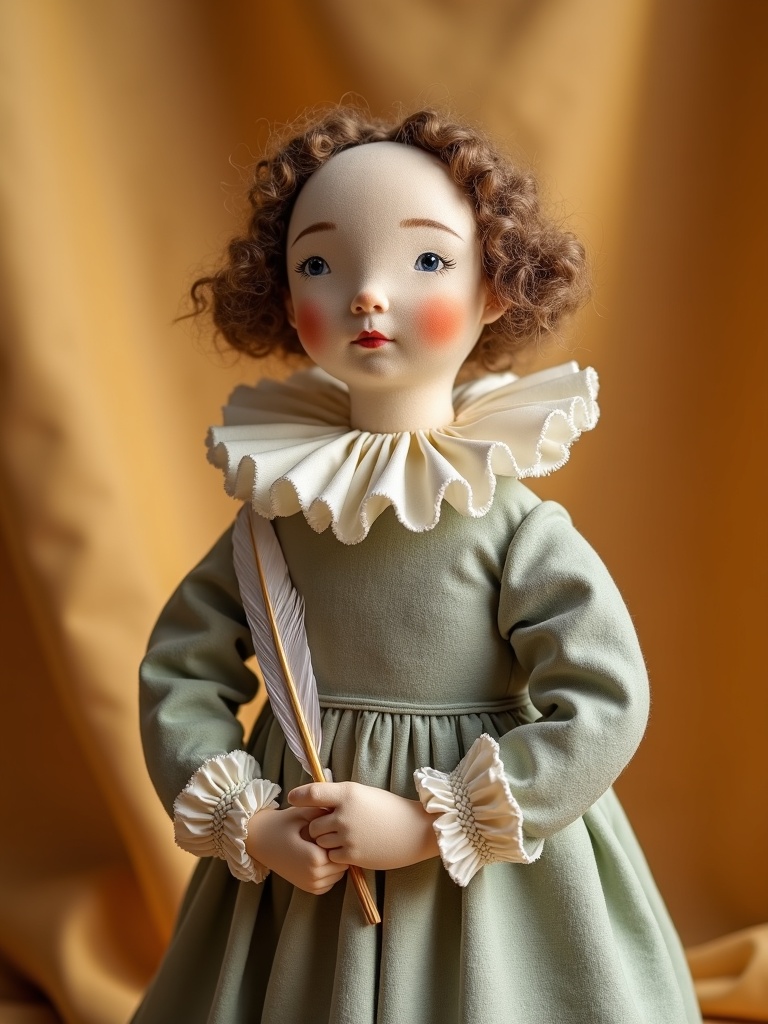
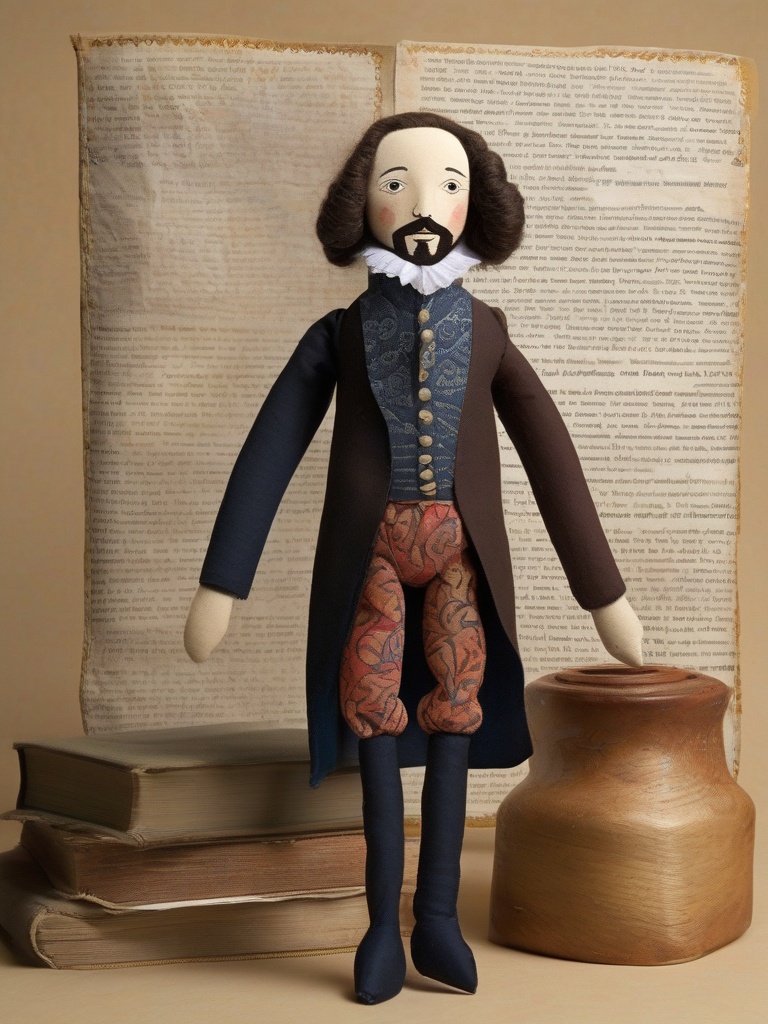
AI design preview — not a photo of the finished handmade doll
Theatre, Poetry & the Living Word
William Shakespeare
A glover's son from a small English market town who gave the world the most performed plays — and the English language hundreds of its everyday words.
- People
- English (Elizabethan & Jacobean)
- Country
- United Kingdom
- Region
- British Isles
- Era
- 1564–1616
- Theme
- Theatre, Poetry & the Living Word
Make your own
Design your William Shakespeare
Pick a garment, a hairstyle and a scene, enter the PIN and generate a fresh image of William Shakespeare with AI.
⚖ AI homage concept — not a likeness of the real person.
Each image is generated live with fal.ai.
Generated images
AI design preview — not a photo of the finished handmade doll
No images generated yet — be the first.
Tradition & Origin
A glover's son from a small English market town who gave the world the most performed plays — and the English language hundreds of its everyday words.
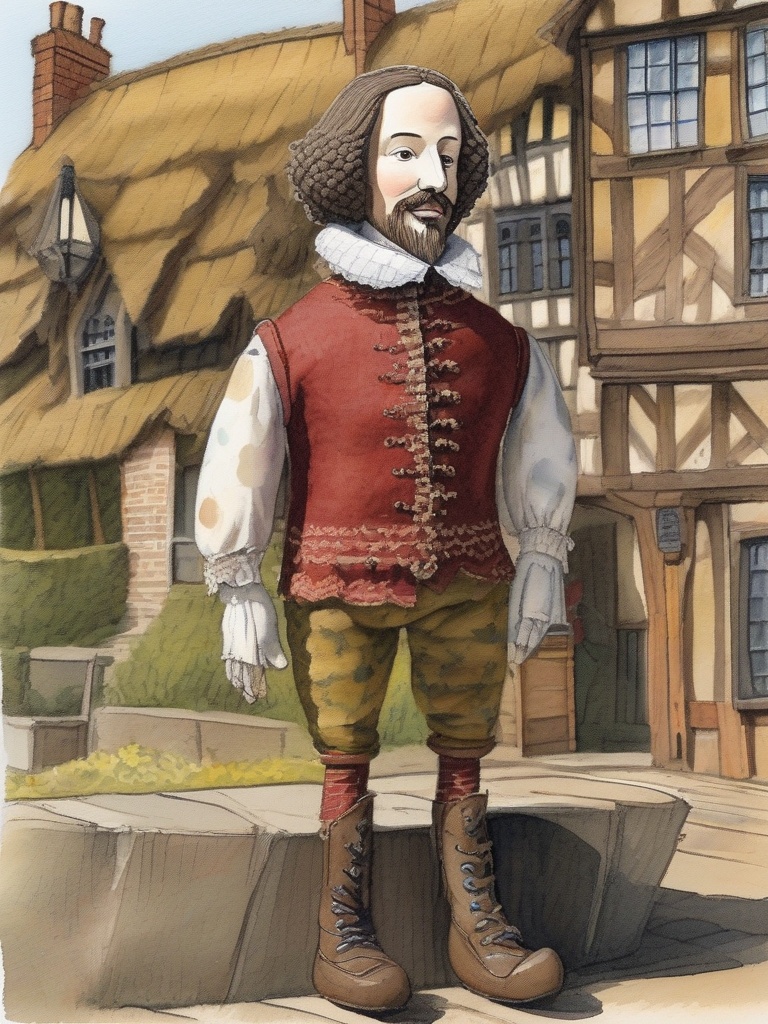
About 37–39 plays plus 154 sonnets and the narrative poems — the breadth of a single working life.
DetailsENShakespeare was born in Stratford-upon-Avon in 1564 and almost certainly attended the local grammar school, where he learned Latin and the art of rhetoric. He did not go to university, yet by his late twenties he was thriving in London as an actor and playwright among professional companies competing for crowds.
He became a sharer — a part-owner — in the Lord Chamberlain's Men, who in 1599 built the open-air Globe Theatre on the south bank of the Thames. After King James I became their patron in 1603 they were renamed the King's Men. Owning a stake in the company and its playhouse made Shakespeare, unusually for a writer, both an artist and a businessman.
In roughly two decades he wrote some 37 to 39 plays and 154 sonnets, working in iambic pentameter and inventing or first recording over 1,700 English words. When he died in 1616 many of these plays existed only as working scripts; two of his fellow actors, John Heminges and Henry Condell, gathered them into the First Folio of 1623 — the book that saved half of his dramatic work from being lost.
Timeline
- 1564born and baptised in Stratford-upon-Avon
- 1582marries Anne Hathaway
- 1599the Globe Theatre opens; he is a sharer in the company
- 1603the company becomes the King's Men under James I
- 1609his 154 Sonnets are published
- 1616 / 1623dies; fellow actors publish the First Folio of his plays
Did you know?
- The original Globe burned down in 1613 when a stage cannon set its thatched roof alight during a performance of Henry VIII; the company rebuilt it within a year with a tiled roof.DetailsEN
- Of perhaps 750 copies of the 1623 First Folio printed, about 235 are known to survive — the Folger Shakespeare Library alone holds 82 of them.DetailsEN
- Words such as 'eyeball', 'bedroom', 'lonely', 'fashionable' and 'critic' are among those first recorded in Shakespeare's work.DetailsEN
Whenever you say someone has a 'heart of gold' or feels 'lonely', you are speaking a little bit of Shakespeare.
Values & Capabilities
Capabilities
◆◆◆◆◆ shows how central a gift is — five diamonds mark a signature strength, fewer mark a supporting one.
Across roughly two decades he wrote some 37–39 plays and 154 sonnets — comedies, histories, tragedies and romances still performed in every corner of the world.
He used more than 20,000 different words and gave English over 1,700 of its first recorded uses — from 'eyeball' and 'bedroom' to 'lonely' and 'fashionable'.
Hamlet's doubt, Macbeth's ambition, Juliet's love, Lear's pride — he turned jealousy, grief and joy into characters we still recognise as ourselves.
He mastered iambic pentameter and the 14-line sonnet — three quatrains and a turning couplet — so that the rhythm of his lines still teaches poets how a heartbeat sounds in English.
Seven years after his death his fellow actors gathered his plays into the First Folio (1623); without it, eighteen plays — Macbeth and The Tempest among them — would have been lost forever.
Development
1 of 3 stages unlocked
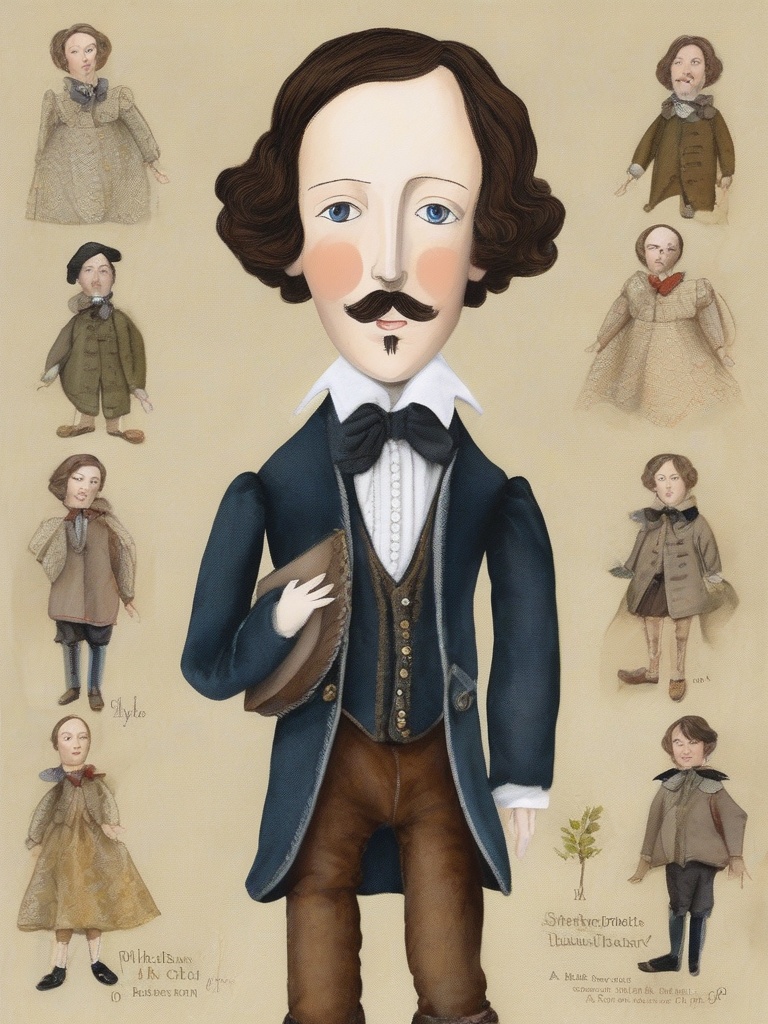
Young William at the grammar school in Stratford-upon-Avon, learning Latin, rhetoric and the old stories that would later fill his plays.
Answer all three to unlock this stage.
Unlock the previous stage first.
Crafting the doll
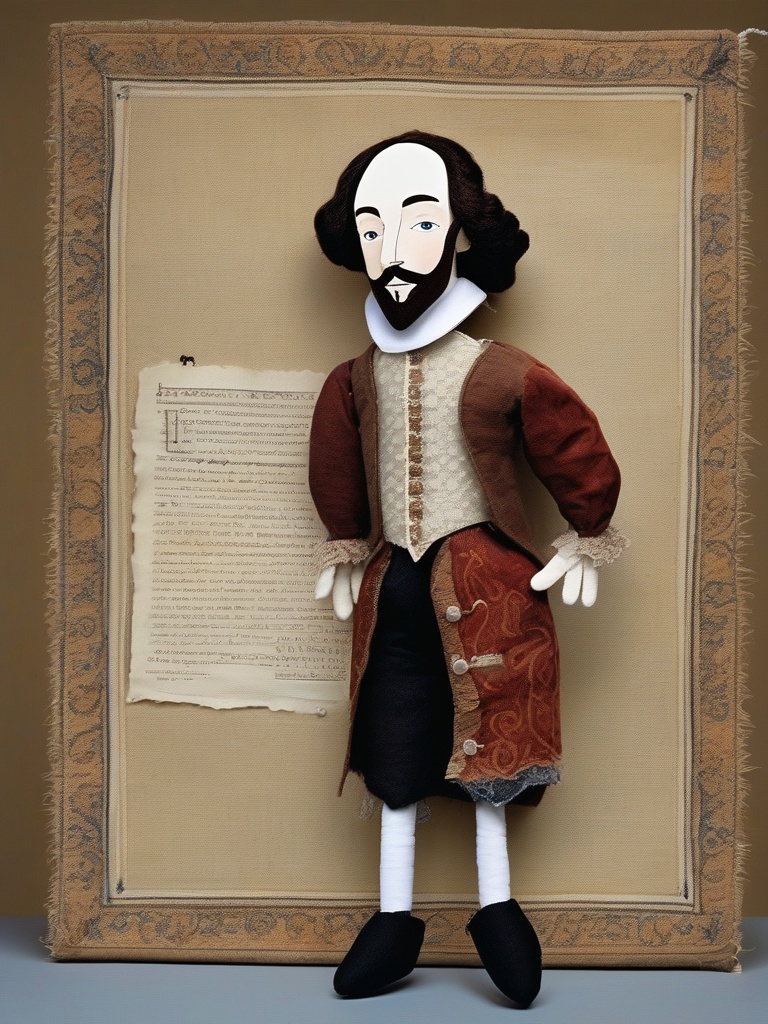
Garment: a black-and-russet Elizabethan doublet in fine cotton velveteen with slashed sleeves, a hand-pleated white linen ruff at the neck, a short felt cloak and a tiny gold earring. Signature attribute: a real grey feather quill, a horn-style inkwell and a miniature leather-bound 'First Folio' (felt and card). Education card: explains iambic pentameter and that over 1,700 of our everyday words first appear in his work. Sizes Classic 32 / Kidogo 18–20 / Shule 28. Part of proceeds → literacy and youth-theatre programmes / Shakespeare heritage conservation.
How this doll is made
Made authentically, this doll captures the Elizabethan theatre world in cloth — a ruff, a doublet, a quill and a tiny book.
- Garments 2
- Accessories 3
- Materials 1
- Techniques 2
Garments
- Elizabethan doubletSew a close-fitting black or russet doublet with a high collar and slashed (slit) sleeves, the fitted upper-body garment that defined a gentleman's silhouette in Shakespeare's day.DetailsEN
- Pleated linen ruffHand-pleat a stiff white linen or cotton strip into the cartwheel ruff worn at the neck — the most recognisable badge of the Elizabethan stage and street.DetailsEN
Accessories
- Goose-feather quill & inkwellAdd a grey goose-feather quill and a small horn-style inkwell — the writer's signature tools, with a folded sheet of handwritten verse.DetailsEN
- Miniature First FolioMake a tiny leather-bound book with gold-tooled spine to stand for the 1623 First Folio that preserved his plays.DetailsEN
- Theatre masks emblemA little pair of comedy-and-tragedy masks references his work across both genres; optional Yorick's skull as a Hamlet keepsake, kept gentle, not frightening.DetailsEN
Materials
- Wool, linen and velveteenUse natural period-appropriate fibres — wool felt for the cloak and cap, linen for the ruff and shirt, cotton velveteen for the doublet — in muted earth and plum tones.DetailsEN
Techniques
- The Globe backdropModel or print a backdrop of the round, thatched, open-air Globe Theatre with tiered galleries, the playhouse Shakespeare part-owned from 1599.DetailsEN
- Homage face, not portraitStitch a high domed forehead, neat moustache and soft beard as a respectful stylisation; no portrait painted from life is beyond dispute, so the face is homage, not an exact likeness.DetailsEN
Origin & Ethics
How we know this
On honesty: very well documented — baptism and burial records, his will, printed quartos and the 1623 First Folio survive. Homage, not likeness: no portrait was painted from life that is beyond dispute, so the doll's face is a respectful stylisation, not a photograph; the famous count of 'coined words' means first recorded use, and scholars note some were in spoken use before him.
Committee: the Shakespeare Birthplace Trust (Stratford-upon-Avon); Shakespeare's Globe (London); the Folger Shakespeare Library; the Royal Shakespeare Company; literature and theatre historians. 5-step protocol as standard; present costume and likeness as respectful homage, not portraiture.