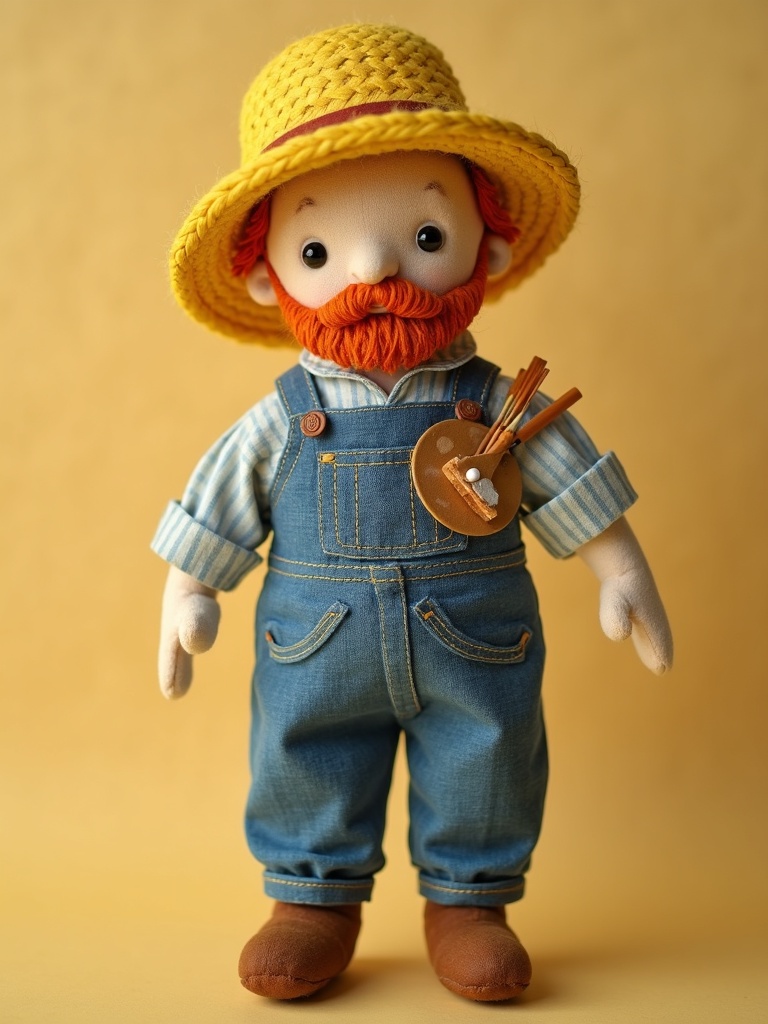
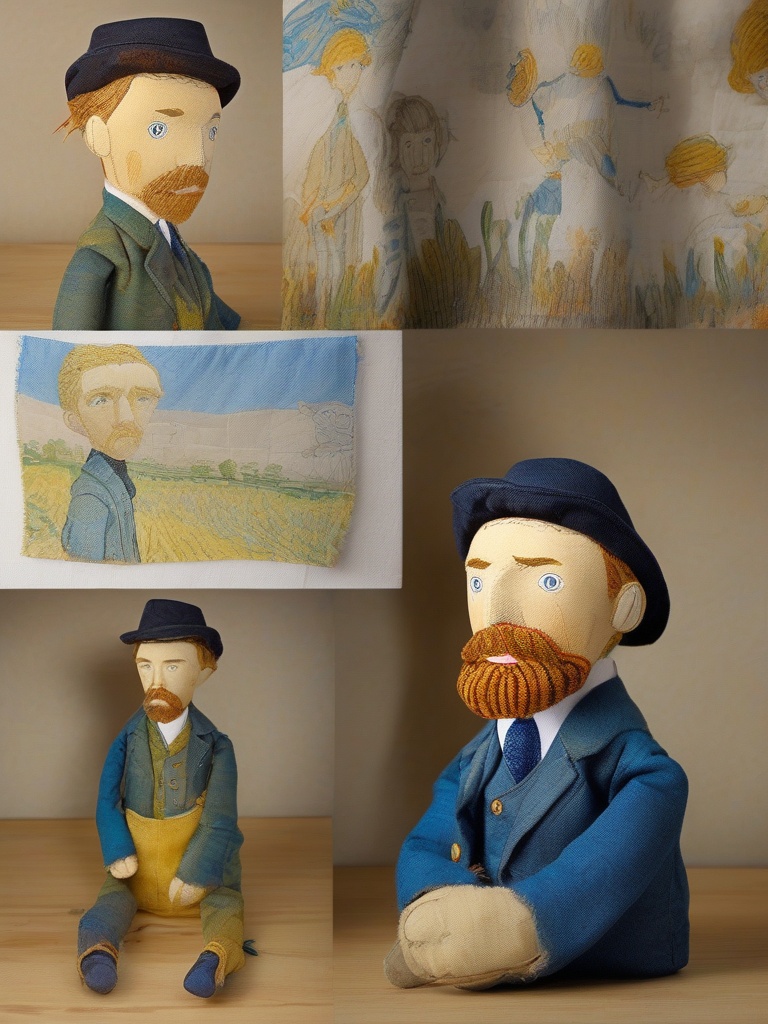
AI design preview — not a photo of the finished handmade doll
Vision & Perseverance
Vincent van Gogh
A poor, struggling painter who in ten years turned fields and night skies into colour — and was loved only after he was gone.
- People
- Dutch
- Country
- Netherlands
- Region
- Western Europe
- Era
- 1853–1890
- Theme
- Vision & Perseverance
Make your own
Design your Vincent van Gogh
Pick a garment, a hairstyle and a scene, enter the PIN and generate a fresh image of Vincent van Gogh with AI.
⚖ AI homage concept — not a likeness of the real person.
Each image is generated live with fal.ai.
Generated images
AI design preview — not a photo of the finished handmade doll
No images generated yet — be the first.
Tradition & Origin
A poor, struggling painter who in ten years turned fields and night skies into colour — and was loved only after he was gone.
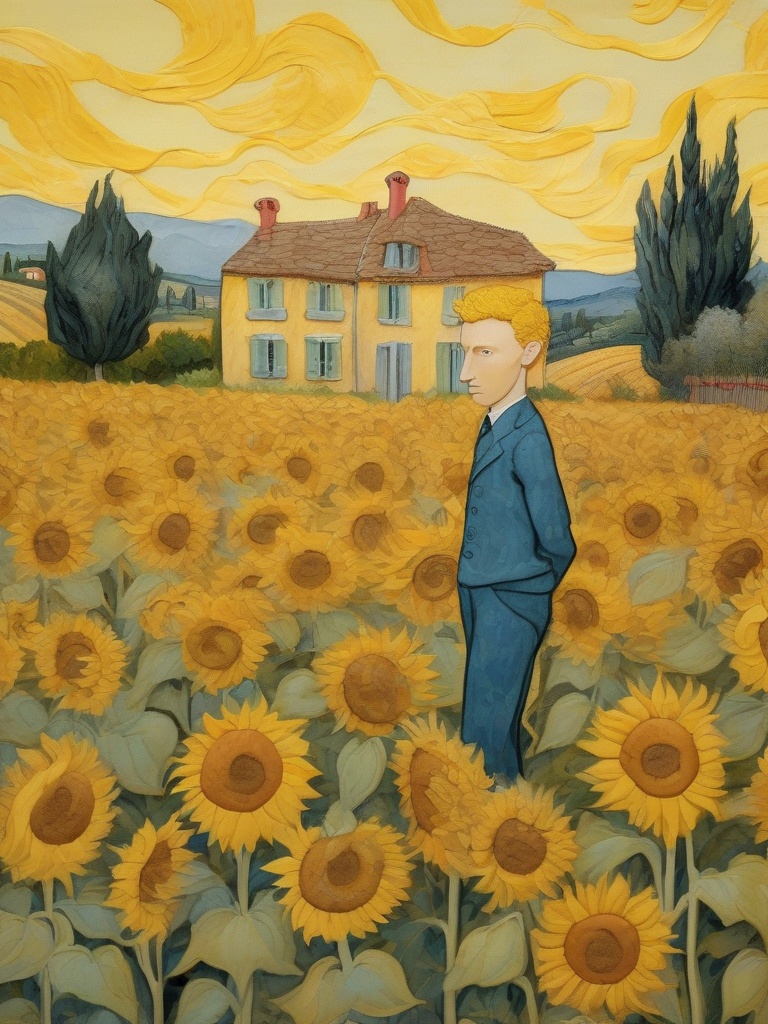
~2,100 artworks created in a decade versus a single documented sale in his lifetime — the gap fame would later close.
DetailsENVincent van Gogh came to painting late and worked at it furiously. Where Impressionists caught fleeting light, Vincent pushed further: thick ridges of paint and fearless colour that carried feeling. This Post-Impressionist boldness — sunflower-yellow, midnight-blue, swirling strokes — helped open the way to modern expressionist art.
The south of France set him free. In Arles in 1888 he rented the Yellow House and painted with new joy: the Sunflowers, the restful Bedroom in Arles. When mental illness overtook him he entered a hospital at Saint-Rémy — and from his window painted The Starry Night, now one of the most recognised pictures in the world.
Through every hard year his brother Theo sent money and belief, and the brothers exchanged hundreds of letters. Vincent sold almost nothing and lived near poverty; he died in 1890 at just 37. It was Theo's widow, Johanna van Gogh-Bonger, who exhibited his paintings and published his letters — and so gave the world the Van Gogh it loves today.
Timeline
- 1853born in Groot-Zundert, the Netherlands
- ≈1880decides to become an artist; Theo begins supporting him
- 1888moves to Arles; paints the Sunflowers and Bedroom in Arles at the Yellow House
- 1889in the asylum at Saint-Rémy he paints The Starry Night
- 1890The Red Vineyard sells in Brussels — his one well-documented sale in life; he dies in Auvers-sur-Oise
- 1905 / 1914Jo van Gogh-Bonger exhibits his work and publishes his letters — worldwide fame begins
Did you know?
- He painted The Starry Night in June 1889 from a window of the asylum at Saint-Rémy-de-Provence, just before sunrise.DetailsEN
- He wanted the Bedroom in Arles to make the eye 'rest', so he painted it in flat, plain colours 'like Japanese prints'.DetailsEN
- His sister-in-law Johanna van Gogh-Bonger published his letters and championed his paintings — without her, his fame might never have grown.DetailsEN
If your best ideas aren't noticed today, keep making them anyway — beauty can take time to be seen.
Values & Capabilities
Capabilities
◆◆◆◆◆ shows how central a gift is — five diamonds mark a signature strength, fewer mark a supporting one.
He turned ordinary fields, chairs and night skies into something glowing and alive — seeing colour and feeling where others saw only a view.
In barely a decade he made around 2,100 artworks, including about 860 oil paintings — most of them in his final two years.
Thick, swirling strokes and fearless colour — sunflowers, a yellow house, a blue night — helped open the door to modern expressionist art.
He lived with illness and hard times, yet kept painting — even from a hospital room he created some of his most beloved works.
He sold almost nothing while alive and lived near poverty; today his paintings are among the most loved and valuable in the world.
Development
1 of 3 stages unlocked
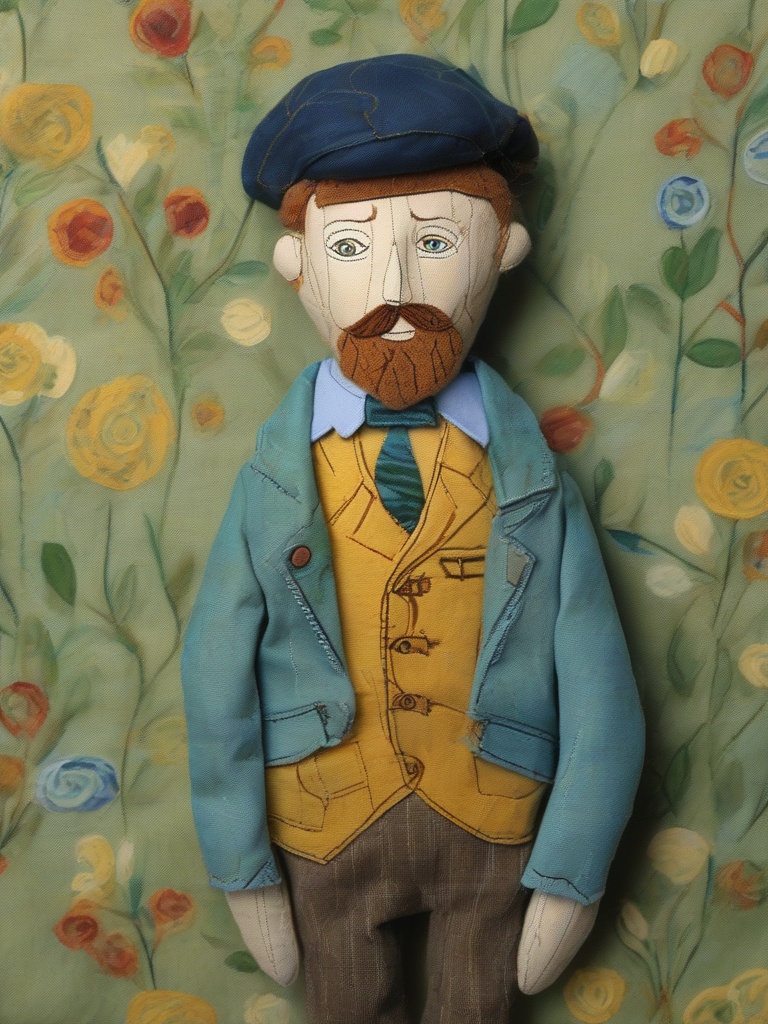
A restless young man in the Netherlands tries dealing art, teaching and preaching before, around age 27, he decides to become a painter.
Answer all three to unlock this stage.
Unlock the previous stage first.
Crafting the doll
Garment: a blue 1880s painter's smock in soft cotton over a plain shirt and trousers, a wide-brimmed yellow straw hat, a short reddish stitched beard. Signature attribute: a tiny wooden palette dotted with felt paint-blobs and a fan of brushes, plus a little vase of golden felt sunflowers. Education card: explains post-impressionism, that he made ~2,100 works yet sold almost none in life, and that his brother Theo and sister-in-law Jo carried his gift to the world. Sizes Classic 32 / Kidogo 18–20 / Shule 28. Part of proceeds → art education for children and youth mental-health charities.
How this doll is made
Make this doll as a tender 1880s field painter: blue smock, straw hat, palette in hand, and the glow of sunflowers and a starry sky around him.
- Garments 1
- Accessories 3
- Materials 2
- Techniques 2
Garments
- Blue painter's smockA loose, paint-flecked blue cotton smock over a plain shirt and trousers — the working dress of a 19th-century outdoor painter; dab tiny felt 'paint' marks for authenticity.DetailsEN
Accessories
- Wide straw sun-hatA wide-brimmed yellow straw hat as Van Gogh wore (and self-portrayed) while painting in the bright sun of Provence; weave from raffia or stiffened straw-coloured fabric.DetailsEN
- Palette & brushesA small wooden artist's palette dotted with bright felt 'paint' — yellow, cobalt blue, green — and a little fan of brushes; his colours were the bold ones of Post-Impressionism.DetailsEN
- Bundle of letters to TheoA small bundle of tiny handwritten letters tied with string — his ~903 letters, mostly to Theo, are how we know his story in his own words.DetailsEN
Materials
- Golden sunflowersStitch a tiny vase of felt sunflowers — his signature motif, painted to decorate the Yellow House in Arles; use layered yellows and a brown felt centre.DetailsEN
- Burlap / canvas textureHe sometimes painted on coarse burlap (as for The Red Vineyard); a textured natural-fibre cloth for any mini-canvas accessory nods to his real materials.DetailsEN
Techniques
- Swirling 'starry night' backdropFor the scene card, quilt or paint a deep cobalt sky with looping golden stars echoing The Starry Night (1889); short curved stitches mimic his swirling brushwork.DetailsEN
- Flat 'restful' colourFor a Bedroom-in-Arles look, use flat, plain blocks of colour — pale violet, red, yellow — as he did to make the eye 'rest', rather than blended shading.DetailsEN
Origin & Ethics
How we know this
On honesty: very well documented (his ~903 surviving letters, museum-held paintings, dated biography). Homage, not likeness — the doll stylises Vincent rather than copying his face. His illness and death are real but are presented gently and age-appropriately, with the focus on his creativity, his bond with Theo, and his hope; the popular claim that he sold 'only one painting' is the best-documented sale (The Red Vineyard), though a few minor works also changed hands.
Committee: Van Gogh Museum (Amsterdam) and art historians; mental-health advisors to ensure his illness and death are framed with dignity and age-appropriately; Dutch cultural-heritage scholars. 5-step protocol as standard.