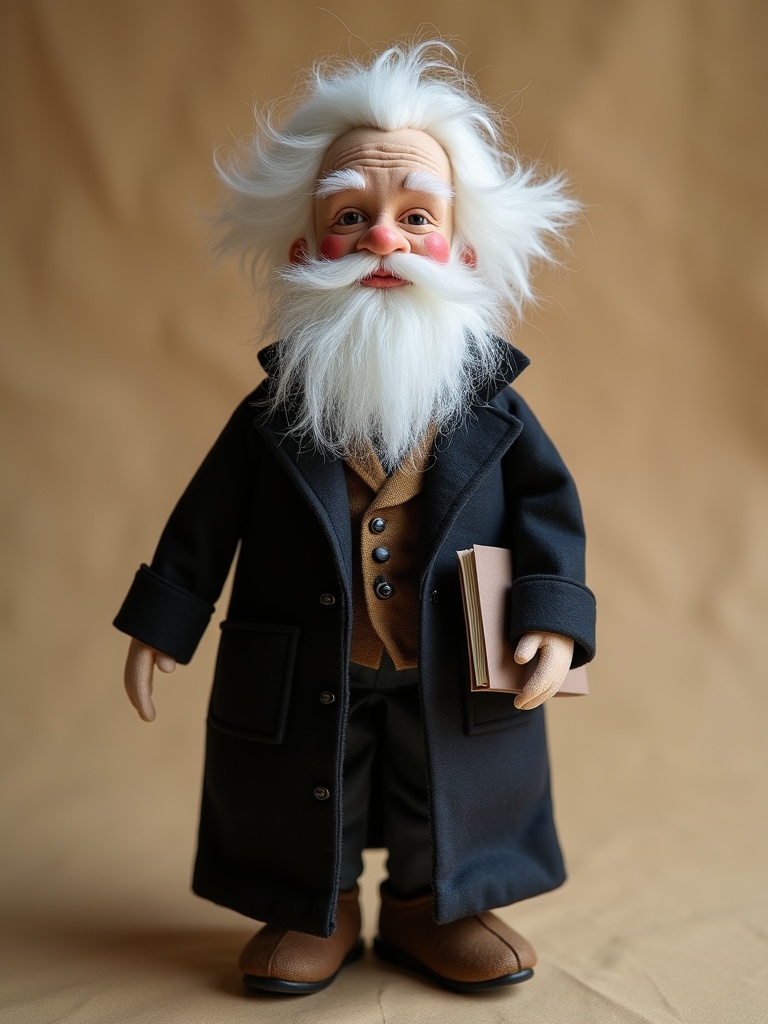
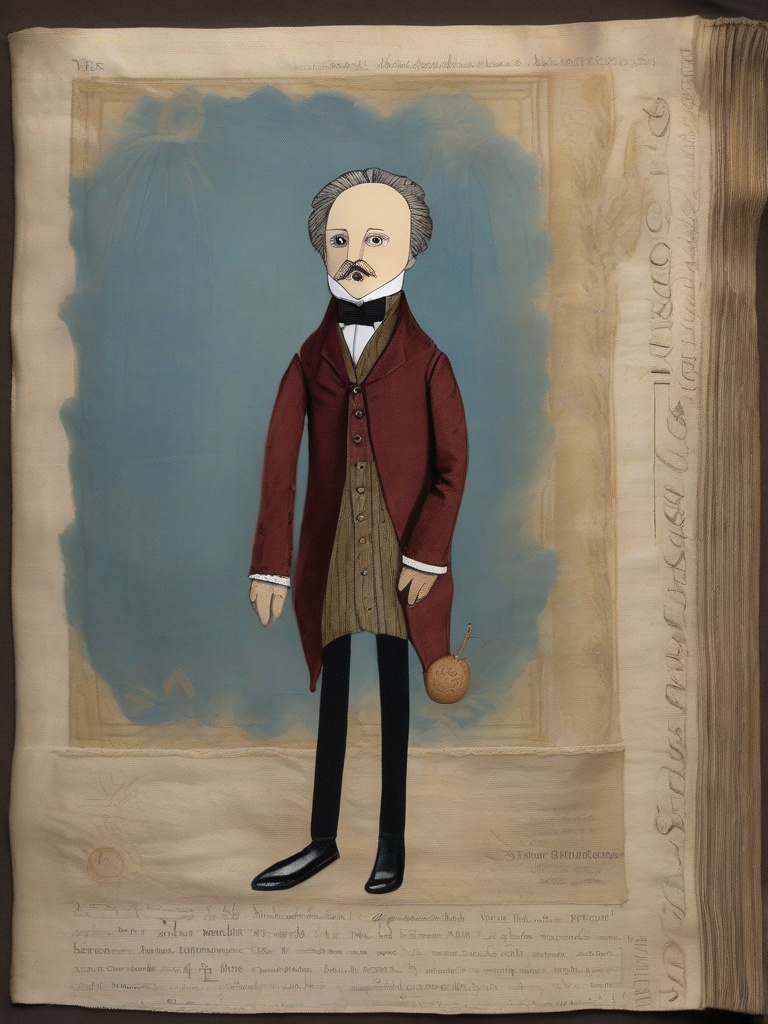
AI design preview — not a photo of the finished handmade doll
Justice & the Word
Victor Hugo
A poet who decided that the most powerful sentences in France belonged to the people who had no power at all.
- People
- French
- Country
- France
- Region
- Western Europe
- Era
- 1802–1885
- Theme
- Justice & the Word
Make your own
Design your Victor Hugo
Pick a garment, a hairstyle and a scene, enter the PIN and generate a fresh image of Victor Hugo with AI.
⚖ AI homage concept — not a likeness of the real person.
Each image is generated live with fal.ai.
Generated images
AI design preview — not a photo of the finished handmade doll
No images generated yet — be the first.
Tradition & Origin
A poet who decided that the most powerful sentences in France belonged to the people who had no power at all.
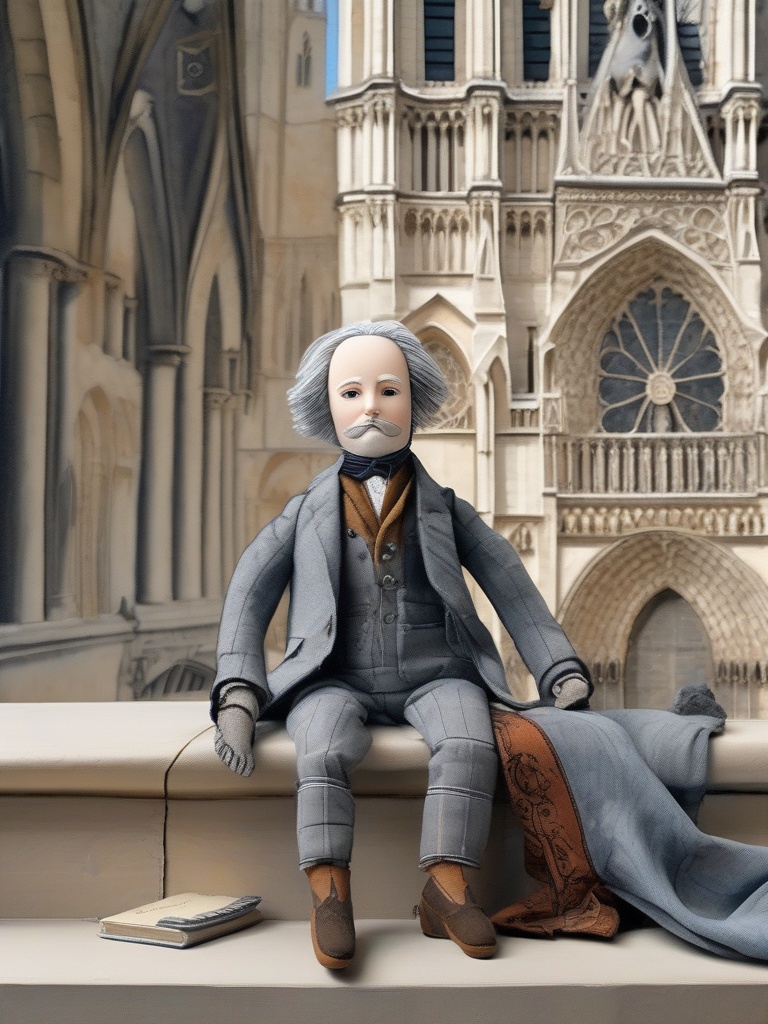
Four landmark moments across eight decades, from his first abolition novel to his burial among the nation's immortals.
DetailsENVictor Hugo became famous early and stayed famous for sixty years, but fame never settled him. He wrote Notre-Dame de Paris partly to shame Paris into saving its crumbling medieval cathedral — and it worked. He wrote The Last Day of a Condemned Man to make readers feel the terror of an execution from the inside, because he wanted the guillotine abolished. Again and again he aimed literature at injustice like a tool, not an ornament.
His greatest weapon was Les Misérables. In a single vast novel he gathered an ex-convict hunted for stealing bread, a mother forced to sell her hair and her teeth, and a child living in the streets of Paris, and asked France to look at what poverty actually does to people. The book was translated across Europe within months and has never gone out of print.
When Louis-Napoléon crushed the Republic in 1851, Hugo refused to bend. He named the new ruler a traitor and went into exile on the windswept Channel Islands, writing some of his finest work at Hauteville House on Guernsey. He returned only in 1870, an old man with a white beard, welcomed as the living conscience of the Republic. When he died in 1885, the nation buried a poet the way it buries kings.
Timeline
- 1802born 26 February in Besançon, France
- 1829The Last Day of a Condemned Man — his case against the death penalty
- 1831Notre-Dame de Paris (The Hunchback of Notre-Dame)
- 1841elected to the Académie française (fauteuil 14)
- 1851–1870exile under Napoleon III — Jersey then Hauteville House, Guernsey
- 1862Les Misérables published
- 1885dies 22 May; state funeral, two million mourners, buried in the Panthéon
Did you know?
- Hugo's novel about Quasimodo helped spark the campaign that saved Notre-Dame cathedral from being torn down.DetailsEN
- His Paris home at 6 Place des Vosges and Hauteville House on Guernsey are both museums today, holding tens of thousands of works.DetailsEN
- He was buried in the Panthéon in Paris, the resting place France reserves for its greatest citizens.DetailsEN
If you could write one sentence the whole world would read, who would you want it to help?
Values & Capabilities
Capabilities
◆◆◆◆◆ shows how central a gift is — five diamonds mark a signature strength, fewer mark a supporting one.
In Les Misérables he turned a convict, a starving mother and an abandoned child into a single great argument: that misery is made by society and can be undone by it.
At twenty-seven he wrote a whole novel inside the head of a man waiting to be guillotined, then campaigned for the rest of his life to abolish the death penalty.
When Louis-Napoléon seized power, Hugo called him a traitor and chose nineteen years of exile on the Channel Islands rather than silence.
Poet, novelist, playwright and tireless draughtsman, he reshaped French literature and left over four thousand drawings of his own.
Two million people followed his coffin from the Arc de Triomphe to the Panthéon; a poet was buried as a head of state.
Development
1 of 3 stages unlocked
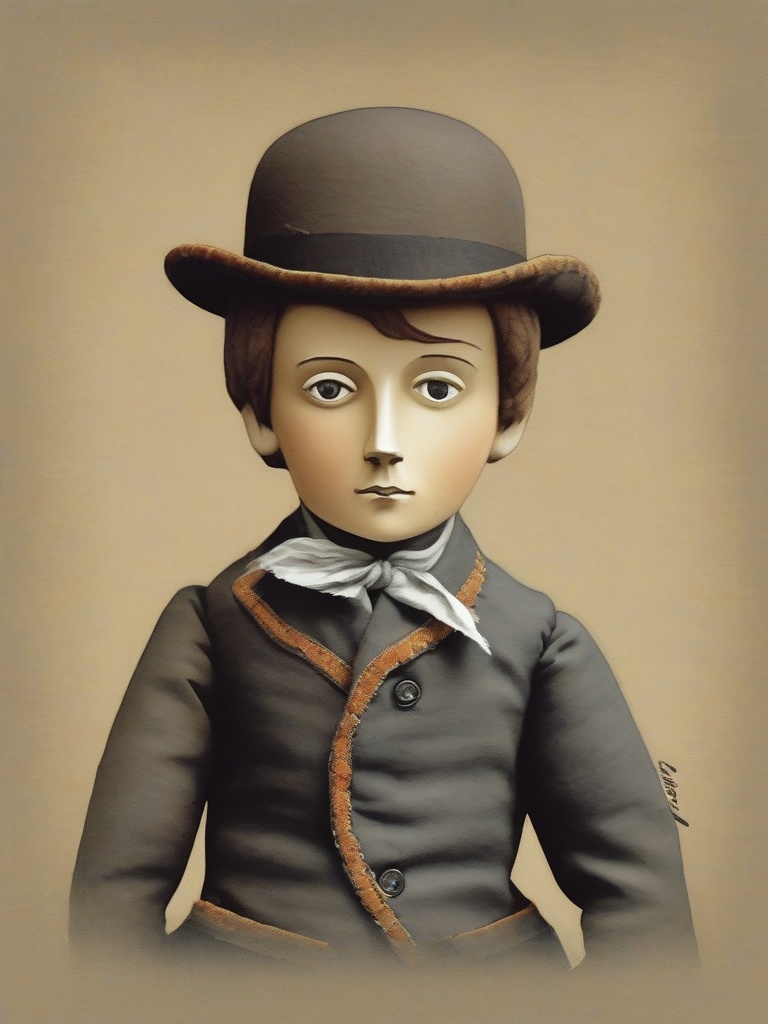
Born in 1802 in Besançon, a general's son carried across a Europe at war; he vows young to 'be Chateaubriand or nothing'.
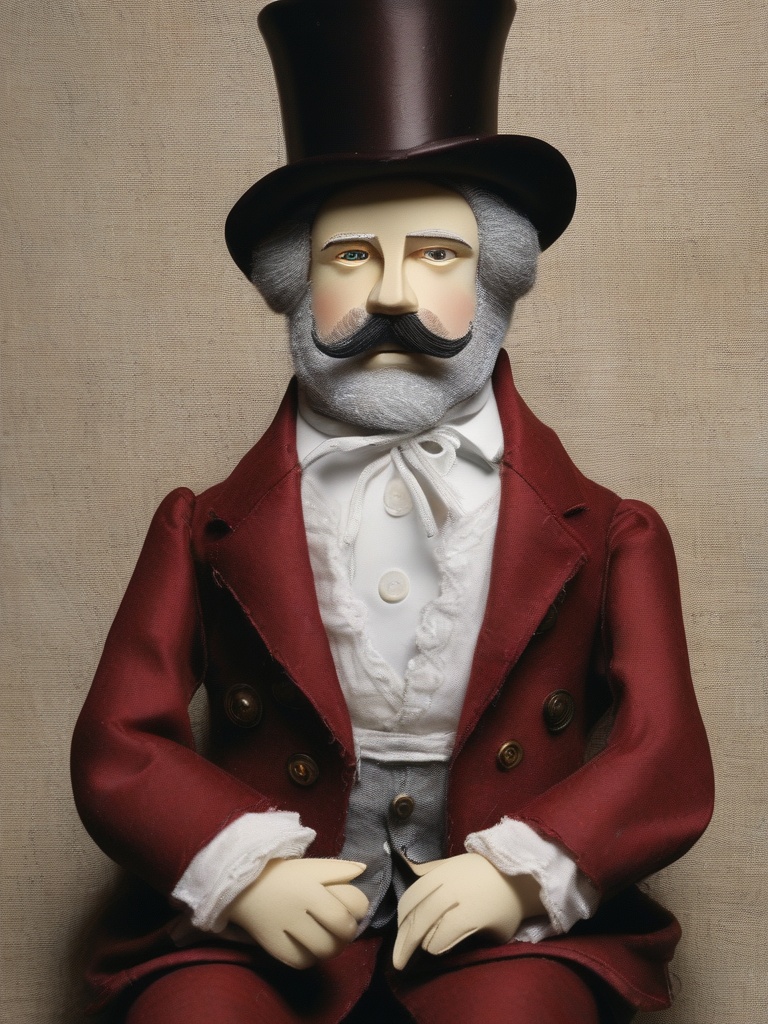
Answer all three to unlock this stage.
Unlock the previous stage first.
Crafting the doll
Garment: a dark wool/cotton frock coat with a high stand collar and a black silk cravat, a fine white-felt beard and hair hand-stitched on. Signature attribute: a tiny goose-feather quill and a thread-bound manuscript lettered 'Les Misérables'. Education card: explains how one novel argued for the poor and how Hugo fought to abolish the death penalty. Sizes Classic 32 / Kidogo 18–20 / Shule 28. Proceeds → literacy & children's-reading charities and the conservation of literary heritage houses.
How this doll is made
Made authentically, this doll is the white-bearded sage of the 1860s–80s, dressed in the sober dark tailoring of a 19th-century French man of letters with the quill and manuscript that defined him.
- Garments 3
- Accessories 3
- Materials 1
- Techniques 1
Garments
- Dark frock coat & high collarA knee-length dark wool frock coat over a waistcoat, with a stiff high collar — the standard formal dress of a 19th-century bourgeois Frenchman. Tailor in deep navy or black cotton/wool blend for the doll.DetailsEN
- Black silk cravatA dark silk neck-cloth knotted at the throat, the period equivalent of a tie; cut a small strip of black satin and tie it under the high collar.DetailsEN
- Académie habit vert (variant)For the formal look, the green palm-embroidered coat of an Académie française member; suggest it with green felt and gold-thread couching.DetailsFR
Accessories
- Full white beard & hairThe iconic late-life Hugo wore a broad white beard and swept-back white hair; hand-stitch from white wool roving or felt for the elder version, dark for the young Romantic.DetailsEN
- Goose-feather quillA single white feather trimmed to a nib, the writing tool of his era; glue a doll-scale feather to a tiny wooden shaft and dot the tip with 'ink'.DetailsEN
- Bound manuscriptA thread-bound bundle of handwritten pages lettered 'Les Misérables', recalling the novels and the BnF-held manuscripts; fold and stitch a tiny paper booklet.DetailsEN
Materials
- Sober wool & silk paletteKeep the cloth to dark navy, charcoal and black with cream linen at the collar — the restrained colours of a 19th-century writer; a single touch of Académie green or gold for ceremony.DetailsEN
Techniques
- Ink-wash drawing propHugo made about four thousand drawings, many in brown ink wash; add a tiny framed ink-and-wash sketch beside the doll to honour the artist as well as the author.DetailsEN
Origin & Ethics
How we know this
On honesty: very well documented (his manuscripts, drawings, two preserved houses, the BnF archive and his state funeral are all on the public record). Homage, not likeness; the doll stylises Hugo as a recognisable figure rather than copying any one portrait, and characters such as Jean Valjean and Cosette are his fiction, presented as the stories they are.
Committee: Maisons Victor Hugo (Paris & Guernsey, Paris Musées); Bibliothèque nationale de France (BnF) literary scholars; Académie française historians; specialists in 19th-century French literature. 5-step protocol; homage framing, no commercial likeness claim.