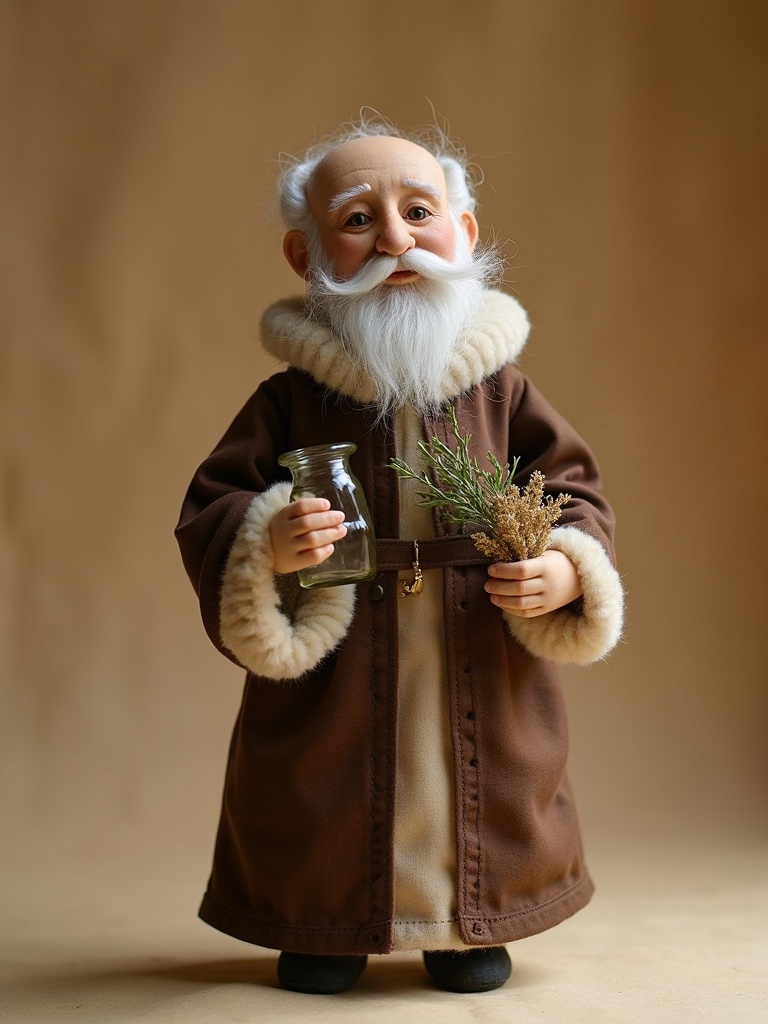
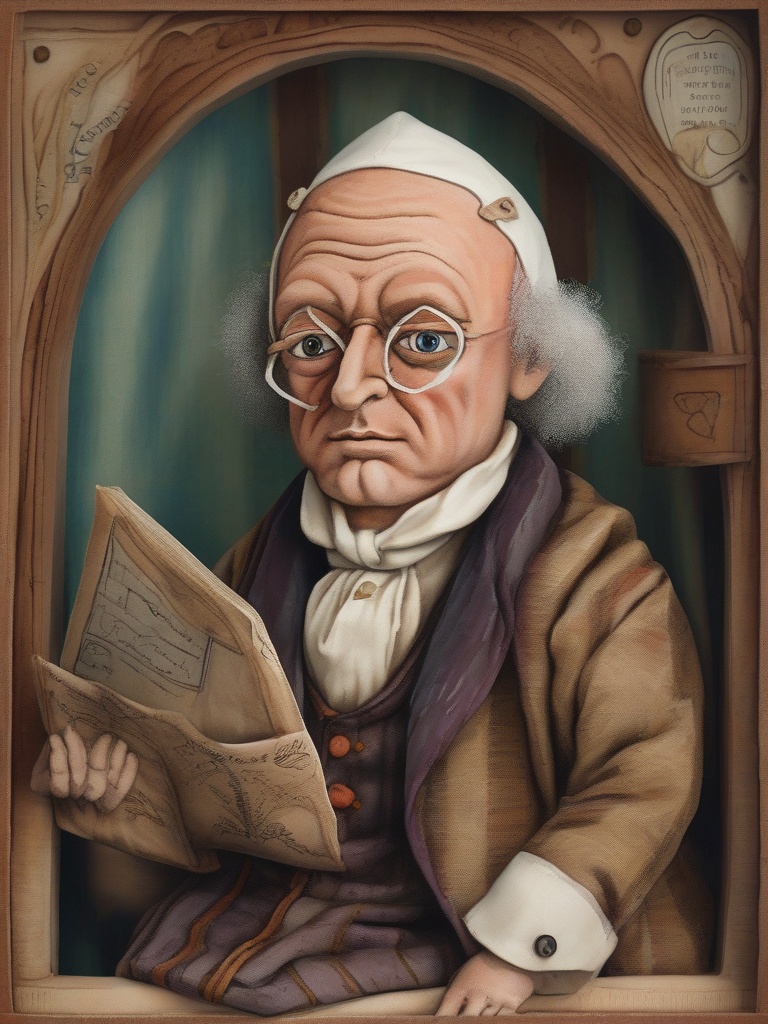
AI design preview — not a photo of the finished handmade doll
Medicine, Chemistry & the Dose
Paracelsus
A wandering Swiss healer who fused chemistry, herbs and one unforgettable rule — only the dose makes the poison — and so opened the door to modern medicine.
- People
- Swiss German (Confederation of Schwyz; Holy Roman Empire)
- Country
- Switzerland
- Region
- Central Europe
- Era
- 1493–1541
- Theme
- Medicine, Chemistry & the Dose
Make your own
Design your Paracelsus
Pick a garment, a hairstyle and a scene, enter the PIN and generate a fresh image of Paracelsus with AI.
⚖ AI homage concept — not a likeness of the real person.
Each image is generated live with fal.ai.
Generated images
AI design preview — not a photo of the finished handmade doll
No images generated yet — be the first.
Tradition & Origin
A wandering Swiss healer who fused chemistry, herbs and one unforgettable rule — only the dose makes the poison — and so opened the door to modern medicine.
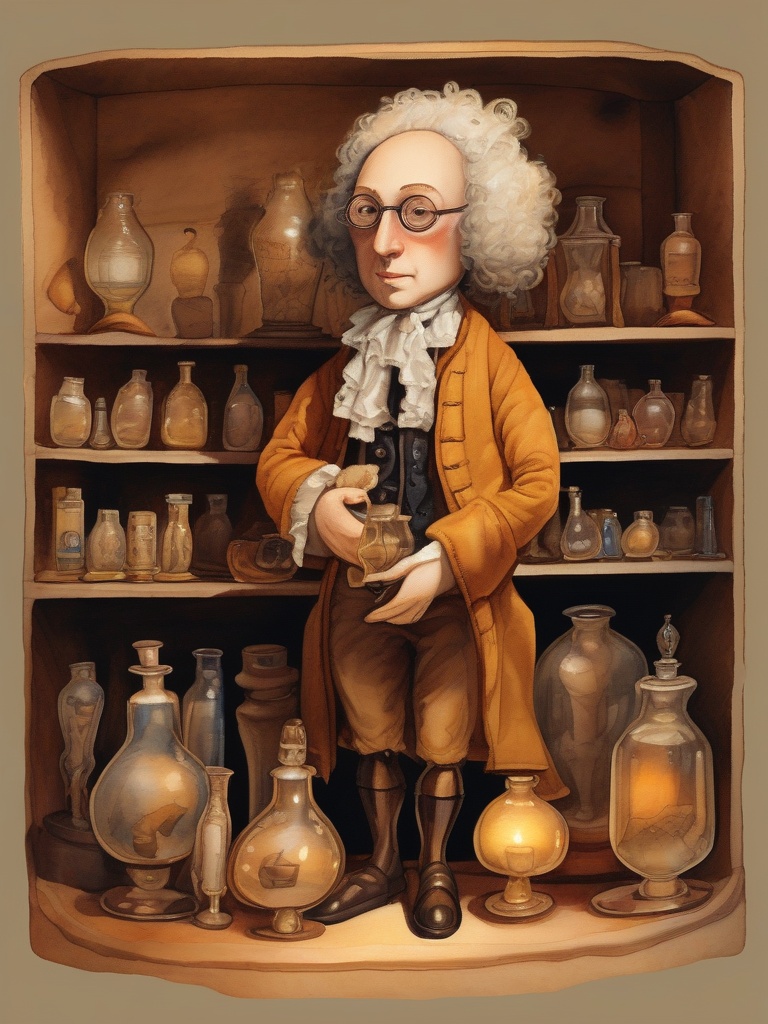
In a single year as town physician he taught in German, championed chemistry in medicine, and burned the ancient textbooks.
DetailsENTheophrastus von Hohenheim was born in the alpine town of Einsiedeln in 1493, the son of a physician. He grew up among herbs, minerals and the miners of Villach, and as a young man walked across Europe learning medicine wherever he could — from universities, but just as eagerly from surgeons, midwives and folk healers. He took the name Paracelsus, "beyond Celsus", and meant it: he wanted to go beyond the ancient authorities everyone else obeyed.
In 1527 the city of Basel made him town physician, with the right to lecture at its university. There he did three startling things: he taught in plain German instead of Latin so ordinary healers could follow, he insisted that doctors learn chemistry and read the "book of nature", and he publicly burned the revered medical books of Galen and Avicenna. It scandalised the establishment and he soon had to leave — but the idea spread.
His most lasting gift was a single principle. Watching how the same substance could heal in a small amount and kill in a large one, he declared that the dose itself decides whether something is a poison. That sentence is the foundation stone of toxicology. He also brought minerals and metals into the pharmacy (iatrochemistry) and was the first to write down the name of the metal zinc. He mixed this real science with the alchemy and astrology of his age — heritage to study, not modern medicine to follow.
Timeline
- 1493born in Einsiedeln, Switzerland, as Theophrastus von Hohenheim
- c.1502moves with his father to Villach; learns at the mining Bergschule
- 1510s–20swanders Europe as student and physician, gathering practical knowledge
- c.1526is the first to write down the name of the metal zinc (zincum)
- 1527town physician of Basel: lectures in German and burns Galen & Avicenna
- 1541dies in Salzburg, aged 47
Did you know?
- The name "Paracelsus" means "beyond Celsus" — a claim to surpass an admired ancient Roman medical writer.DetailsEN
- He helped found iatrochemistry, the idea that chemistry and minerals — not only herbs — belong in medicine; it is an ancestor of modern pharmacology.DetailsEN
- His dose principle now governs everything from drug labels to food safety: water, salt and even oxygen can harm at the wrong dose.DetailsEN
Next time you take a spoonful of medicine, remember: it is the amount, not just the thing, that helps or harms.
Values & Capabilities
Capabilities
◆◆◆◆◆ shows how central a gift is — five diamonds mark a signature strength, fewer mark a supporting one.
He taught that nothing is poison and everything is poison — only the dose decides. This one idea founded the science of toxicology.
He brought minerals and chemistry to the bedside (iatrochemistry), preparing remedies from metals and salts when others only mixed herbs.
He publicly burned the ancient textbooks of Galen and Avicenna at Basel and told doctors to study patients and nature, not only old books.
He is the first to write down the name of the metal zinc, calling it zincum after the German word Zinke — the jagged, tooth-like crystals it forms.
As Basel's town physician he lectured in plain German, not scholarly Latin, so healers and surgeons could understand him — and he treated the poor.
Development
1 of 3 stages unlocked
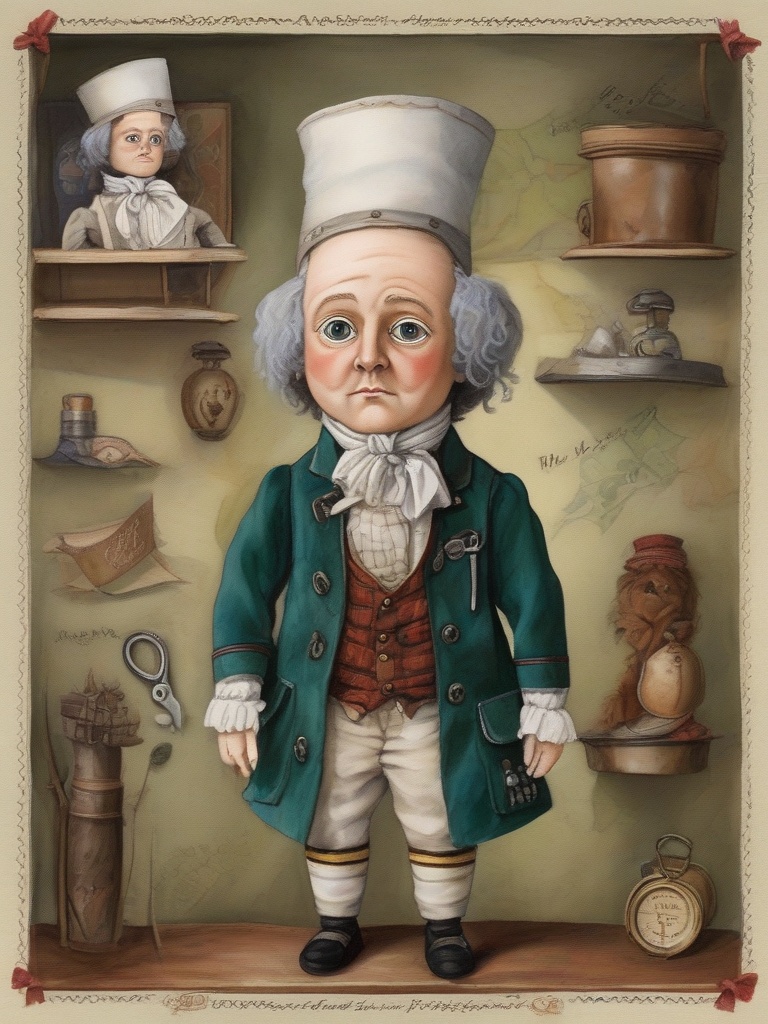
A boy in the Swiss Alps, son of a physician, learning herbs and minerals; later at the Bergschule near the mines of Villach.
Answer all three to unlock this stage.
Unlock the previous stage first.
Crafting the doll
Garment: a long dark scholar's gown in wool/cotton with a fur-look trimmed collar, a soft cap, a linen shirt and a leather-look belt with pouch; an alchemist apron variant. Signature attribute: a tiny glass-look alchemical flask plus a felt herb bundle and a small silvery zinc crystal. Education card: explains "the dose makes the poison" and that medicines and poisons are often the same thing in different amounts — and that he named the metal zinc. Sizes Classic 32 / Kidogo 18–20 / Shule 28. Part of proceeds → science education and history-of-medicine collections in Switzerland.
How this doll is made
Make this doll as a serious, plainly-dressed Renaissance physician-alchemist — wool and linen, glass and herbs, nothing flashy.
- Garments 3
- Accessories 3
- Materials 1
- Techniques 1
Garments
- Scholar's gown (Schaube)A long dark wool over-gown with a wide fur-trimmed collar, the standard dress of a learned 16th-century physician; sew from heavy dark cotton/wool with a faux-fur collar strip.DetailsEN
- Linen shirt & soft capUnder the gown, a plain off-white linen shirt with a small collar; top with a soft dark scholar's cap. Keep tones muted and serious.DetailsEN
- Alchemist's leather apronAn alternate look: a worn leather-look apron over rolled sleeves for the laboratory, lightly distressed to suggest furnace soot.DetailsEN
Accessories
- Glass alchemical flaskA tiny round-bottomed clear-resin or glass flask with a little amber 'tincture' inside — his signature symbol of chemistry brought to the bedside.DetailsEN
- Herb bundle & mortarA small tied bundle of dried medicinal herbs and a miniature mortar and pestle, honouring the herbal craft he learned from folk healers.DetailsEN
- Open book & quillA tiny hand-lettered book with a quill, plus a single leaf and mineral on the page — his motto to read the 'book of nature', not only old texts.DetailsEN
Materials
- Zinc crystalA small jagged silvery 'metal' crystal in painted resin or beadwork — the metal he was the first to name, after the German word Zinke (tooth-like, pointed).DetailsEN
Techniques
- Muted Renaissance paletteDye fabrics in deep blue, ochre and olive with undyed linen — the sober, earthy colours of a 1520s German-speaking scholar rather than bright costume.DetailsEN
Origin & Ethics
How we know this
On honesty: very well documented (his own printed works, Basel records, his tomb in Salzburg). Homage, not likeness — no reliable portrait survives, so the doll stylises a Renaissance physician rather than copying a face. Honest caveat: Paracelsus mixed lasting science (dose–response, chemistry in medicine, naming zinc) with the alchemy, astrology and magical cosmology of his time — we present those as historical heritage, not as modern medicine.
Committee: Swiss cultural and history-of-medicine bodies (e.g. Einsiedeln / Salzburg heritage, university history-of-pharmacy collections); historians of medicine and chemistry; toxicology educators. 5-step protocol as standard; honour the line between his real science and his era-bound alchemy.