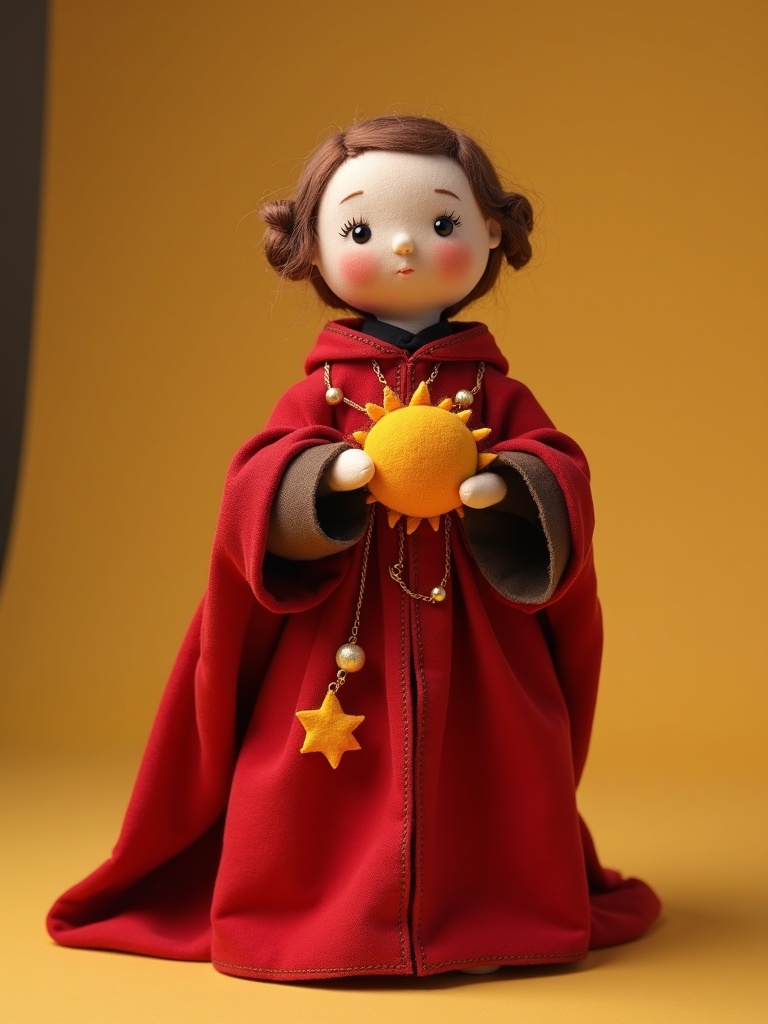
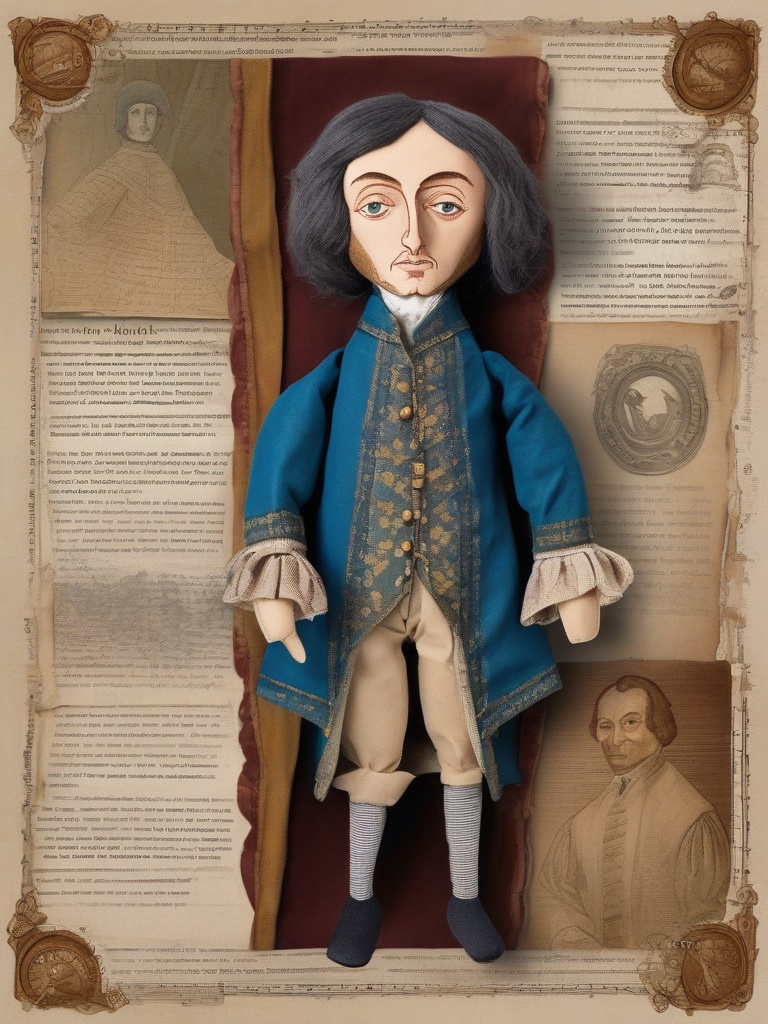
AI design preview — not a photo of the finished handmade doll
Heliocentrism & Quiet Courage
Nicolaus Copernicus
An astronomer in a quiet Baltic tower dared to stop the Sun and set the Earth in motion — and modern science began.
- People
- Royal Prussian Pole (Warmia)
- Country
- Poland
- Region
- Central Europe
- Era
- 1473–1543
- Theme
- Heliocentrism & Quiet Courage
Make your own
Design your Nicolaus Copernicus
Pick a garment, a hairstyle and a scene, enter the PIN and generate a fresh image of Nicolaus Copernicus with AI.
⚖ AI homage concept — not a likeness of the real person.
Each image is generated live with fal.ai.
Generated images
AI design preview — not a photo of the finished handmade doll
No images generated yet — be the first.
Tradition & Origin
An astronomer in a quiet Baltic tower dared to stop the Sun and set the Earth in motion — and modern science began.
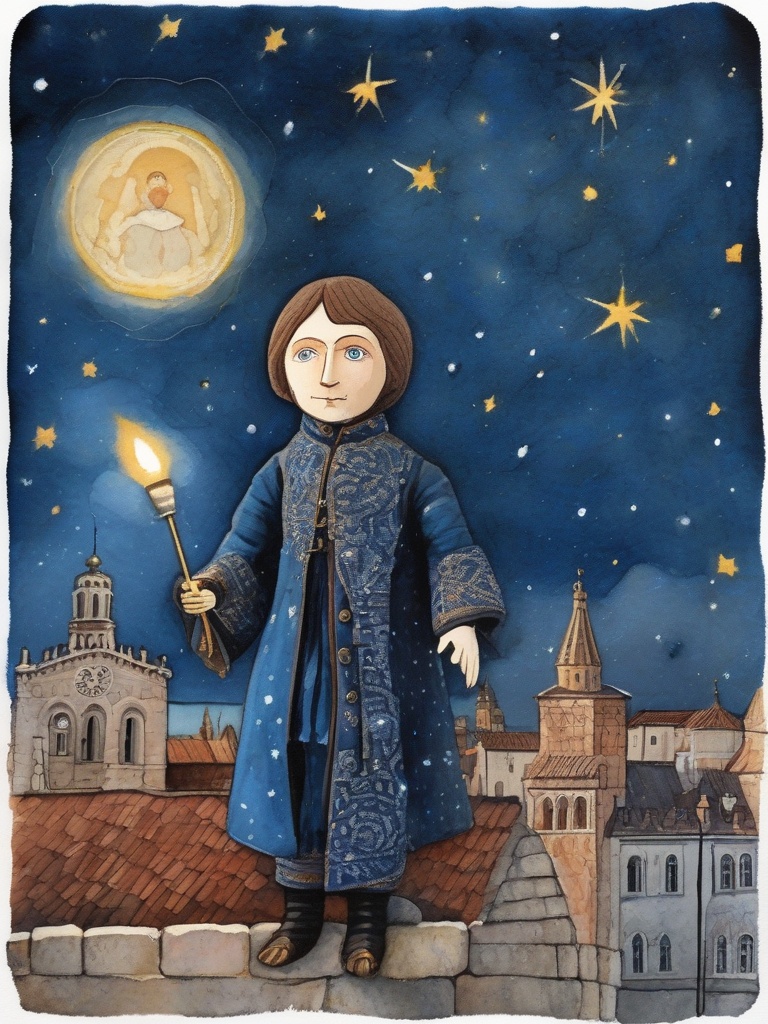
Copernicus published in 1543 with no telescope; Galileo first turned one to the sky around 1609, confirming the heliocentric picture.
DetailsENFor nearly 1,400 years European thinkers had followed Ptolemy: the Earth lay motionless at the centre of the universe while the Sun, Moon, planets and stars wheeled around it. The picture was complicated — full of circles riding on circles — but it matched the everyday feeling that the ground beneath us does not move.
Copernicus, working from observations he made beside Frombork Cathedral, proposed something simpler and stranger. Place the Sun at the centre, let the Earth turn once a day and circle the Sun once a year, and the awkward backward loops of the planets fall into place almost on their own. He had even read of the ancient Greek Aristarchus, who long before had guessed at a Sun-centred world.
He held the idea back for decades — partly caution, partly a perfectionist's care. Only at the end of his life did he allow 'De revolutionibus orbium coelestium' to be printed in Nuremberg, in 1543. He could not prove it with instruments he did not have; the telescope was still 65 years away. But the book set Kepler, Galileo and Newton on their road, and the Copernican Revolution is often called the true start of modern science.
Timeline
- 1473born 19 February in Toruń, Royal Prussia
- 1491begins studies at the University of Kraków
- 1497made a canon of the Warmia cathedral chapter
- c.1510scirculates the 'Commentariolus', a first sketch of his Sun-centred idea
- 1526writes 'Monetae cudendae ratio' on coinage and the value of money
- 1543'De revolutionibus' is printed; he dies 24 May at Frombork
Did you know?
- He never saw a planet through a telescope — Galileo's first sky-telescope came about 65 years after Copernicus died. He reasoned his Sun-centred model out from naked-eye observation and geometry.DetailsEN
- By centring the Sun, Copernicus could throw away Ptolemy's awkward 'equant' and explain the planets' backward loops without piling on extra circles — a simpler, more elegant cosmos.DetailsEN
- NASA still calls Copernicus the founder of modern astronomy: from his observations he concluded that every planet, including the Earth, revolves around the Sun.DetailsEN
Sometimes the bravest thing is to look at what everyone 'knows' is true — and gently, carefully, ask whether it really is.
Values & Capabilities
Capabilities
◆◆◆◆◆ shows how central a gift is — five diamonds mark a signature strength, fewer mark a supporting one.
Copernicus dared to put the Sun, not the Earth, at the centre of the heavens — overturning a picture of the cosmos that had stood for 1,400 years.
His six-book masterwork 'De revolutionibus orbium coelestium' (1543) launched the Copernican Revolution and, with it, modern science.
For decades he served as a cathedral canon at Frombork, doing astronomy in stolen hours from a tower — patient, unhurried, unafraid to be slow.
A trained doctor of medicine, he tended the sick of Warmia; a doctor of canon law, he advised his chapter and even helped defend it in time of war.
In a 1526 treatise on coinage he stated an early quantity theory of money and the rule — later called Gresham's law — that bad money drives out good.
Development
1 of 3 stages unlocked
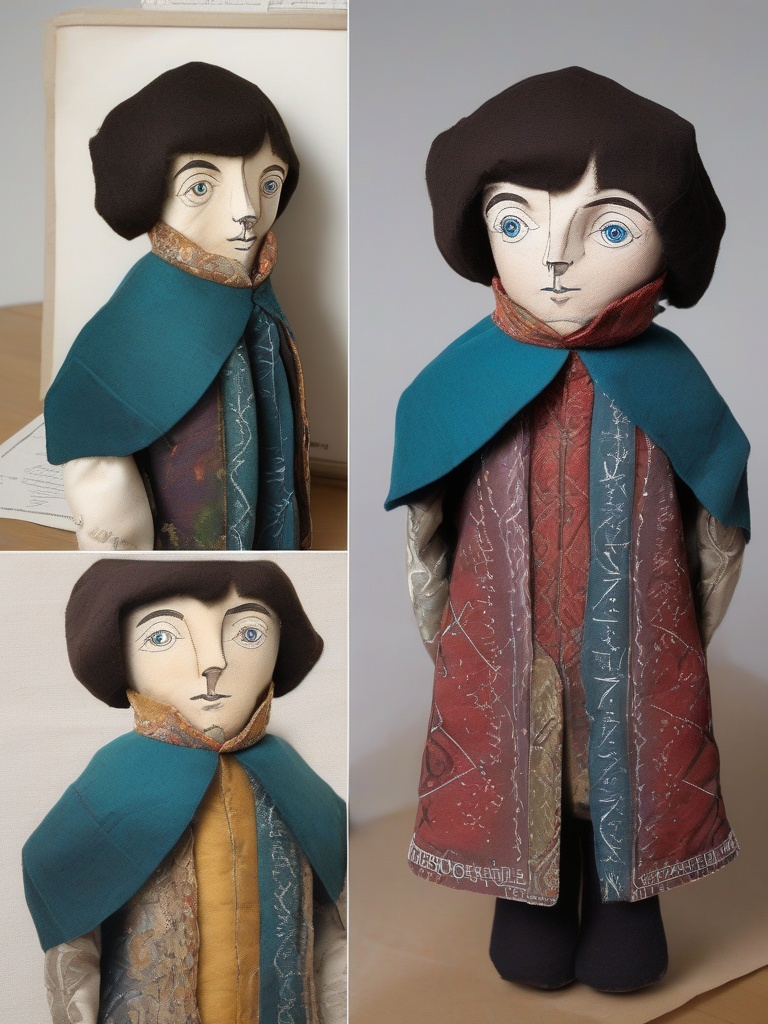
Young Copernicus studies at the University of Kraków, then astronomy, medicine and law in Bologna and Padua, gathering the whole learning of the Renaissance.
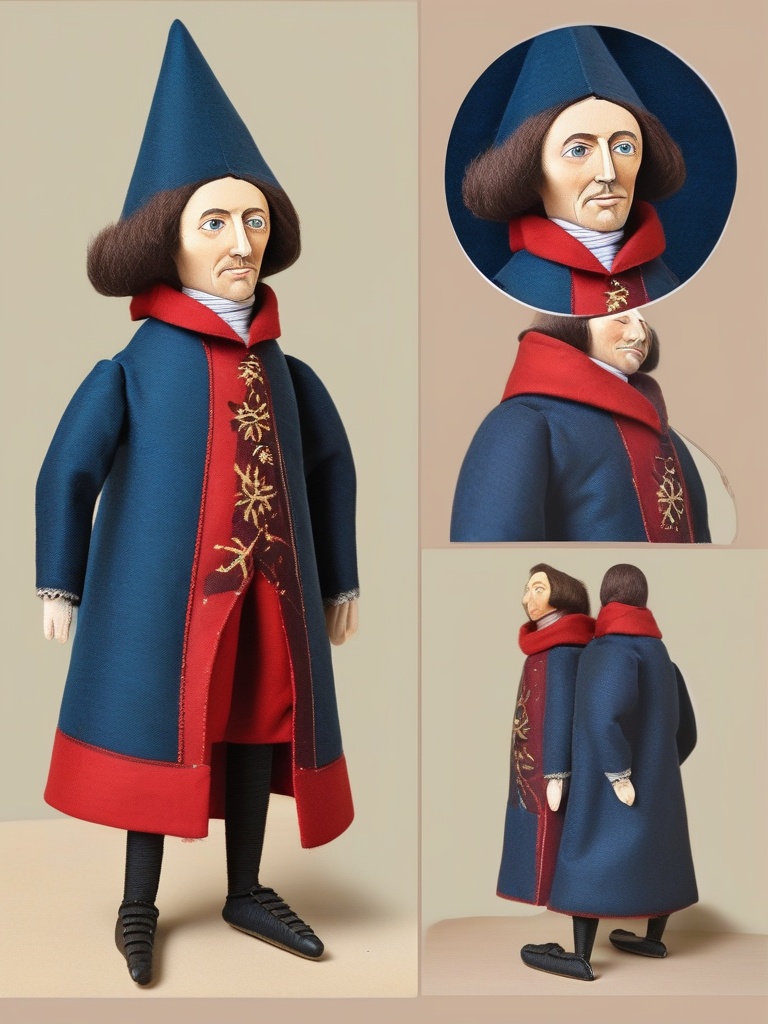
Answer all three to unlock this stage.
Unlock the previous stage first.
Crafting the doll
Garment: a deep crimson canon's robe in cotton or wool felt with a dark fur-look trimmed collar, a soft black scholar's cap, white linen at the throat. Signature attribute: a tiny brass armillary sphere with a golden Sun at its centre (felt and wire), plus a quill and a folded manuscript page of star diagrams. Education card: explains that Copernicus put the Sun, not the Earth, at the centre, and that 'De revolutionibus' (1543) began modern science. Sizes Classic 32 / Kidogo 18–20 / Shule 28. Part of proceeds → astronomy education & the Frombork / Toruń heritage and Copernicus museums.
How this doll is made
Make this doll as a calm Renaissance scholar in canon's red, with a tiny gleaming model of the heavens in his hands.
- Garments 2
- Accessories 3
- Materials 2
- Techniques 1
Garments
- Canon's crimson robeSew a long deep-crimson robe of cotton or wool felt with a dark fur-look trimmed collar — the dress of a 16th-century cathedral canon, the office Copernicus held at Frombork for over forty years.DetailsEN
- Scholar's cap & linenAdd a soft black scholar's cap and a strip of white linen at the throat, the everyday look of a learned Renaissance churchman at his desk.DetailsEN
Accessories
- Brass armillary sphereBend fine brass or gold wire into nested rings — an armillary sphere — with a small golden bead Sun at its centre, the emblem of his Sun-centred cosmos.DetailsEN
- Quill & manuscript pageStitch a tiny feather quill and a folded paper 'manuscript' printed with star diagrams and Latin lines, echoing the six books of 'De revolutionibus'.DetailsEN
- Wooden quadrantA small wooden astronomical quadrant for measuring star heights recalls the simple naked-eye instruments he used from his Frombork tower, decades before the telescope.DetailsEN
Materials
- Deep-blue starfield baseSet the doll on a midnight-blue felt base flecked with gold stars and a single bright Sun, the night sky he watched from the cathedral rampart on the Baltic.DetailsEN
- Gold-and-crimson paletteKeep to deep crimson, midnight blue, scholar's grey and warm gold — the colours of a canon's robe against a starlit sky.DetailsEN
Techniques
- Calm, thoughtful faceEmbroider a quiet, patient expression rather than a heroic one — a homage to a man who worked slowly and humbly, no exact likeness, since no verified life portrait survives.DetailsEN
Origin & Ethics
How we know this
On honesty: very well documented (his own published book 'De revolutionibus', chapter records, his medical and economic writings). Homage, not likeness — no verified life portrait survives, so the doll stylises a thoughtful Renaissance scholar rather than copying any single painting. The deathbed-copy story is a long-standing tradition, shown as such.
Committee: Polish cultural heritage bodies (Frombork Cathedral / Mikołaj Kopernik museums in Toruń & Frombork); university astronomy & history-of-science scholars; respect for his role as both a churchman and a scientist.