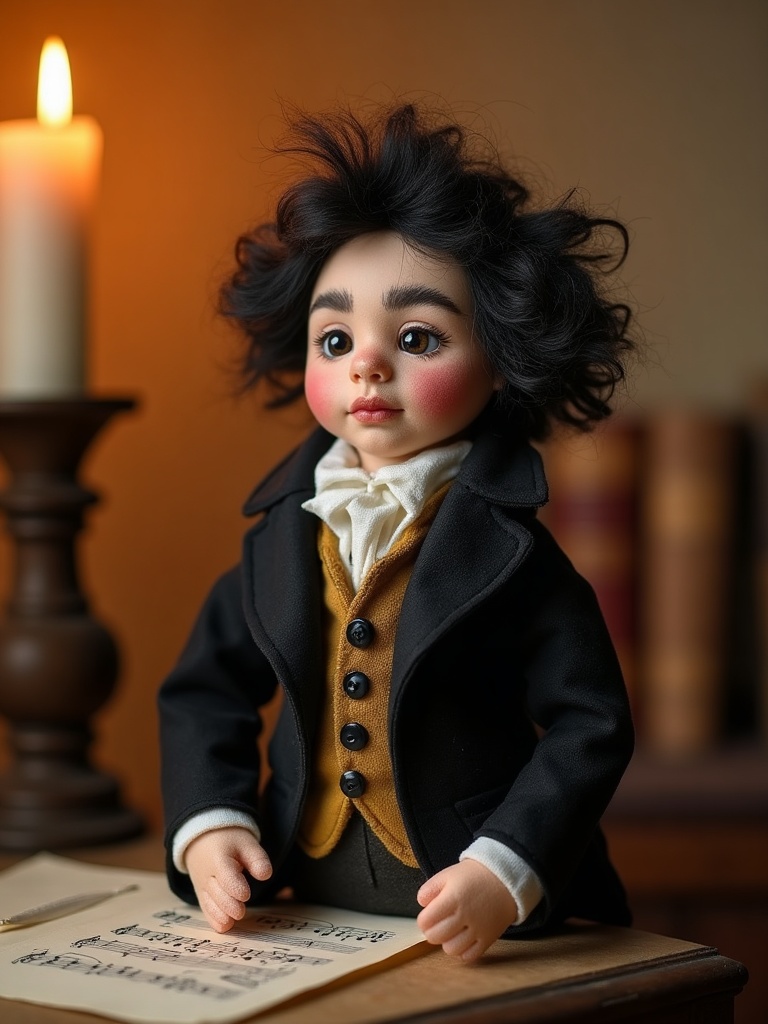
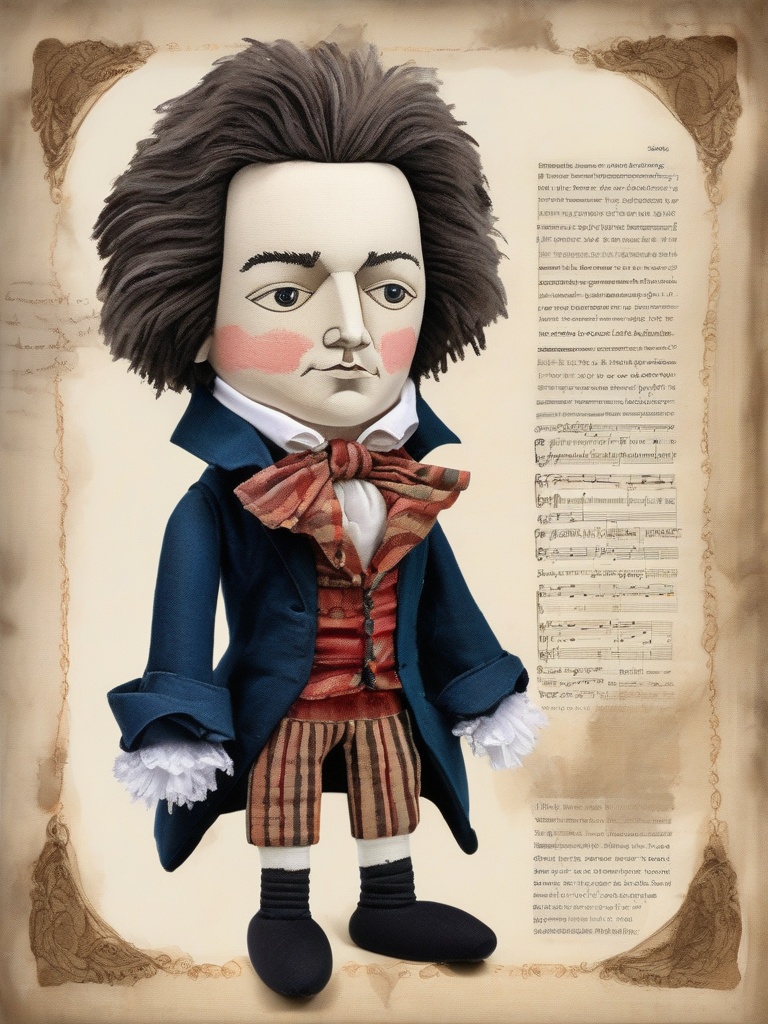
AI design preview — not a photo of the finished handmade doll
Music & Resilience
Ludwig van Beethoven
A boy from Bonn who lost the one sense a musician seems to need most — and wrote some of humanity's greatest music anyway.
- People
- German
- Country
- Germany
- Region
- Central Europe
- Era
- 1770–1827
- Theme
- Music & Resilience
Make your own
Design your Ludwig van Beethoven
Pick a garment, a hairstyle and a scene, enter the PIN and generate a fresh image of Ludwig van Beethoven with AI.
⚖ AI homage concept — not a likeness of the real person.
Each image is generated live with fal.ai.
Generated images
AI design preview — not a photo of the finished handmade doll
No images generated yet — be the first.
Tradition & Origin
A boy from Bonn who lost the one sense a musician seems to need most — and wrote some of humanity's greatest music anyway.
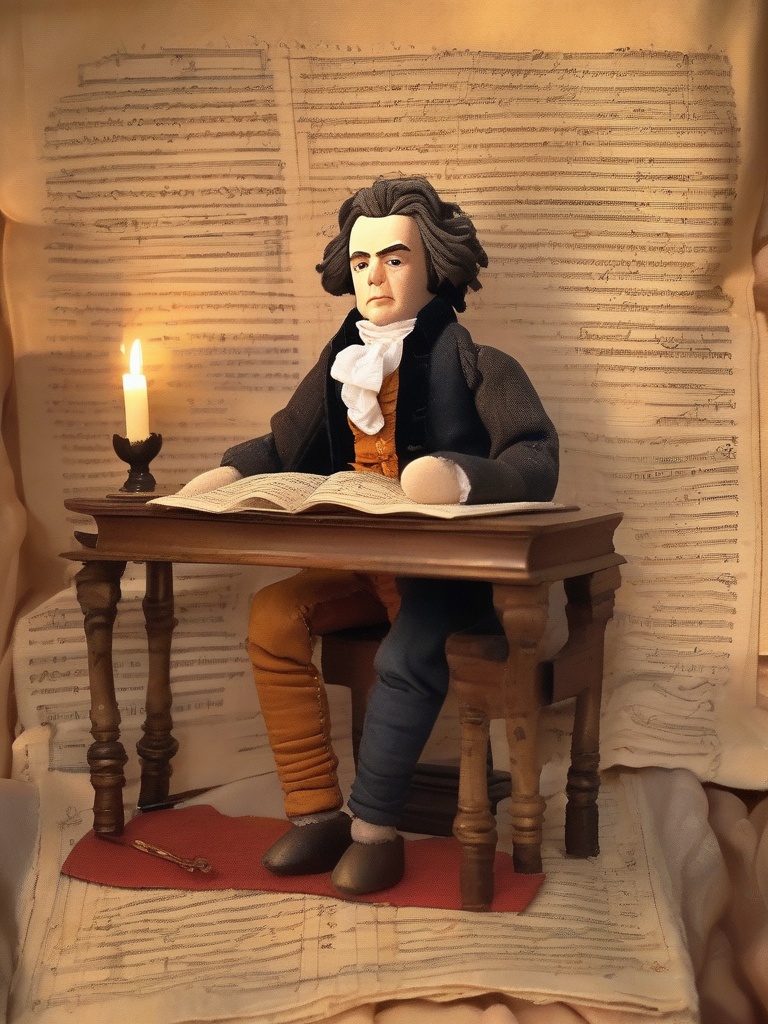
Beethoven completed nine symphonies — the last, the choral Ninth, gave Europe its anthem.
DetailsENBeethoven was baptised in Bonn in December 1770 and grew up in a family of court musicians. In 1792 he moved to Vienna, the music capital of Europe, where he first made his name as a brilliant young pianist before becoming its most daring composer. He worked in three great creative periods, and across them he carried European music from the balanced clarity of the Classical age into the passion and freedom of the Romantic one — a single artist standing on the bridge between two epochs.
From around 1798 he began to go deaf. For a composer it was a catastrophe, and in 1802, at the village of Heiligenstadt outside Vienna, his despair overflowed into a letter to his brothers — the Heiligenstadt Testament — in which he admitted he had thought of ending his life. Instead he chose his art. Over the next 25 years, hearing less and less, he composed much of his greatest work, 'reading' music through the vibrations and the ear inside his mind.
His nine symphonies crowned that work. The Ninth, premiered in Vienna in 1824 when he was almost completely deaf, ended with a chorus on Schiller's 'Ode to Joy' — the hope that all people might become brothers. That melody was later adopted as the anthem of Europe, and small pieces like Für Elise and the Moonlight Sonata made him beloved in living rooms as much as in concert halls.
Timeline
- 1770baptised 17 December in Bonn
- 1792moves to Vienna; studies with Haydn
- ≈1798his hearing begins to fail
- 1802writes the Heiligenstadt Testament — and chooses to live on
- 1824Ninth Symphony premieres in Vienna; he is almost wholly deaf
- 1827dies 26 March in Vienna, aged 56
Did you know?
- At the 1824 premiere of the Ninth Symphony, Beethoven could not hear the applause — a singer had to turn him round so he could see the audience cheering.DetailsEN
- 'Für Elise' was never published in his lifetime; it was only discovered in 1867, forty years after his death.DetailsEN
- The 'Moonlight' nickname was not Beethoven's — the critic Ludwig Rellstab coined it in 1832, after the composer had died.DetailsEN
If he could write a song of joy while he could no longer hear, what might you make even when something feels impossible?
Values & Capabilities
Capabilities
◆◆◆◆◆ shows how central a gift is — five diamonds mark a signature strength, fewer mark a supporting one.
He took the polished forms of Haydn and Mozart and broke them open, carrying music from the orderly Classical age into the storm and feeling of Romanticism.
As his hearing failed he kept writing — composing some of his greatest works, including the Ninth Symphony, when he could barely hear a note.
His Ninth Symphony set Schiller's hymn that 'all people become brothers' — music so universal that Europe adopted it as its anthem.
In 1802, despairing of his deafness, he wrote a farewell letter to his brothers — then chose his art over despair and lived to compose for another 25 years.
Für Elise, the Moonlight Sonata, the Fifth's four hammering notes — tunes that children, beginners and concert halls still play two centuries on.
Development
1 of 3 stages unlocked
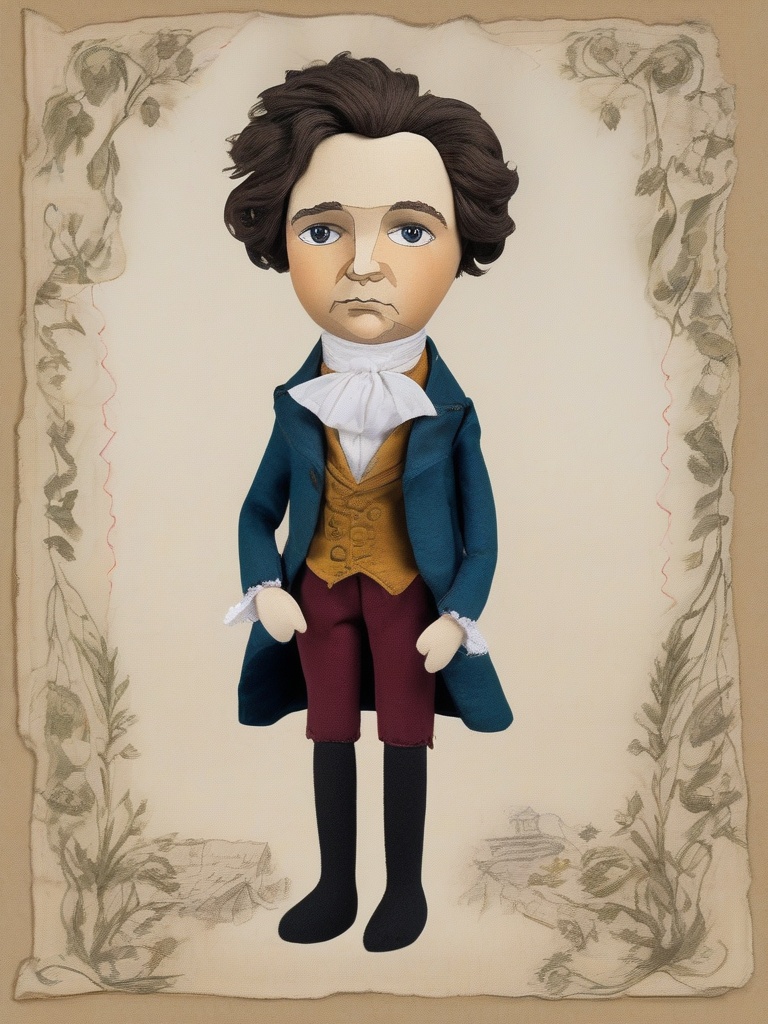
Young Ludwig at the keyboard in Bonn, the gifted son of a court-musician family, drilled hard at the fortepiano.
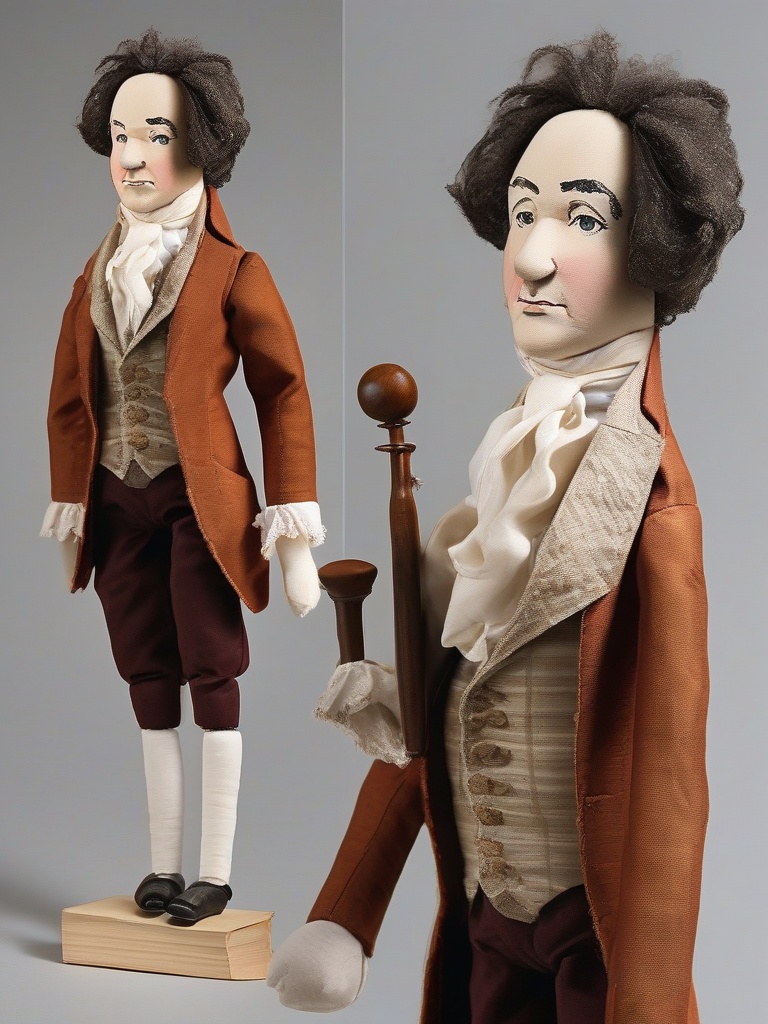
Answer all three to unlock this stage.
Unlock the previous stage first.
Crafting the doll
Garment: a dark wool/cotton early-1800s frock coat with a high stand collar, a white cotton cravat, and a buttoned waistcoat; the wild dark hair in soft yarn. Signature attribute: a tiny handwritten felt 'score' and a goose-quill pen, plus an optional little brass ear-trumpet. Education card: explains that Beethoven went deaf yet kept composing, and that his 'Ode to Joy' is the anthem of Europe. Sizes Classic 32 / Kidogo 18–20 / Shule 28. Part of proceeds → music education and access-to-music programmes for children.
How this doll is made
Sew this doll as an early-1800s Viennese composer — formal frock coat, wild hair, and a tiny score in hand — a homage, not an exact likeness.
- Garments 2
- Accessories 4
- Materials 1
- Techniques 1
Garments
- Early-1800s frock coatA dark, knee-length frock coat with a high stand collar and a fitted waist, the formal men's coat of Beethoven's Vienna; stitch it in dark wool-look cotton.DetailsEN
- White cravat & waistcoatA white cotton cravat wound and tied at the throat over a buttoned waistcoat — the layered neckwear of the period seen in his portraits.DetailsEN
Accessories
- Handwritten scoreA miniature sheet of felt or stiffened cloth ruled with five-line staves and inked notes — a nod to the autograph manuscripts in the Beethoven-Haus archive.DetailsEN
- Goose-quill penA small white feather quill with a darkened nib, the writing tool he scored his music with; pair it with a tiny ink bottle.DetailsEN
- Brass ear-trumpetA small conical brass ear-trumpet — the hearing aid of his deaf years — sewn or moulded as an optional dignified attribute, never as a joke.DetailsEN
- Conversation bookA tiny bound notebook and pencil recall the 'conversation books' visitors wrote in to talk with the deaf composer — a gentle teaching attribute.DetailsEN
Materials
- Period colour paletteKeep to deep browns, charcoal and warm gold — the muted, candle-lit tones of the painted portraits — with a single white accent at the cravat.DetailsEN
Techniques
- The wild tousled hairBeethoven's untamed, swept-up hair is his most recognisable feature; build it from loosely sewn dark-grey and brown yarn left deliberately unkempt.DetailsEN
Origin & Ethics
How we know this
On honesty: very well documented (autograph scores, the Heiligenstadt Testament in his own hand, conversation books, the Beethoven-Haus collection). Homage, not likeness; no contemporary photograph exists — his face is known only from painted portraits and a life mask, so the doll stylises rather than copies it, and the famous 'wild hair' follows those portraits.
Committee: Beethoven-Haus Bonn (museum & archive); music historians and musicologists; German cultural-heritage scholars. 5-step protocol as standard; depict the deafness and ear-trumpet with dignity, never as comic.