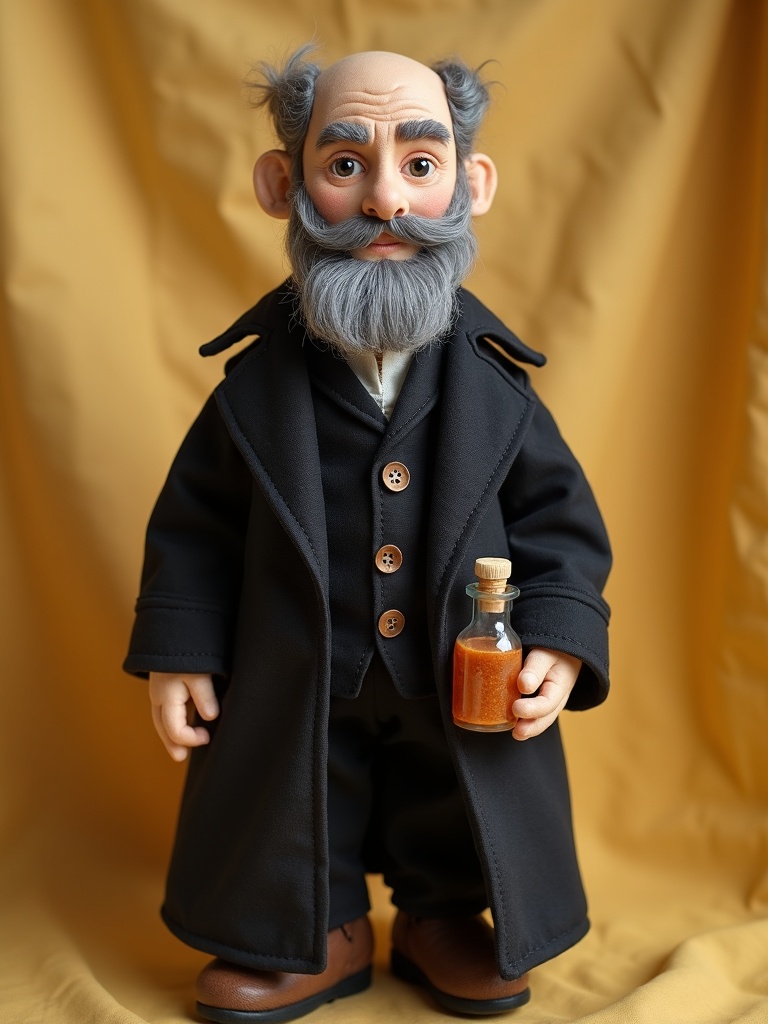
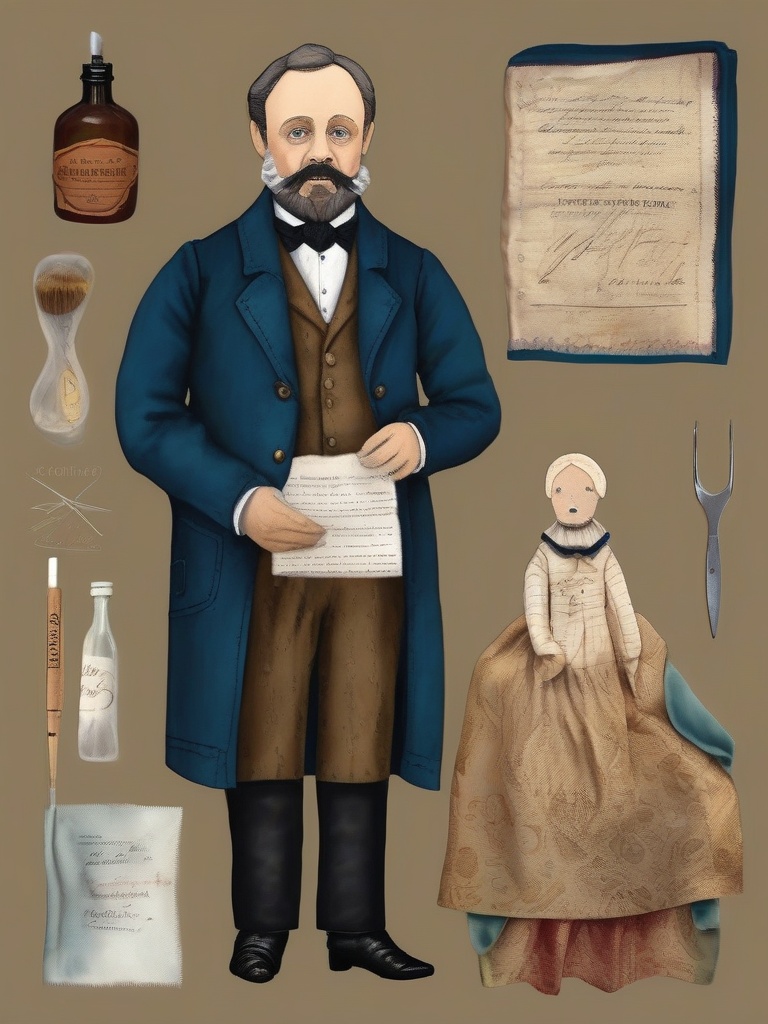
AI design preview — not a photo of the finished handmade doll
Germ Theory & Vaccines
Louis Pasteur
A tanner's son who could barely see what he was studying changed medicine forever by proving the world is full of invisible life.
- People
- French
- Country
- France
- Region
- Western Europe
- Era
- 1822–1895
- Theme
- Germ Theory & Vaccines
Make your own
Design your Louis Pasteur
Pick a garment, a hairstyle and a scene, enter the PIN and generate a fresh image of Louis Pasteur with AI.
⚖ AI homage concept — not a likeness of the real person.
Each image is generated live with fal.ai.
Generated images
AI design preview — not a photo of the finished handmade doll
No images generated yet — be the first.
Tradition & Origin
A tanner's son who could barely see what he was studying changed medicine forever by proving the world is full of invisible life.
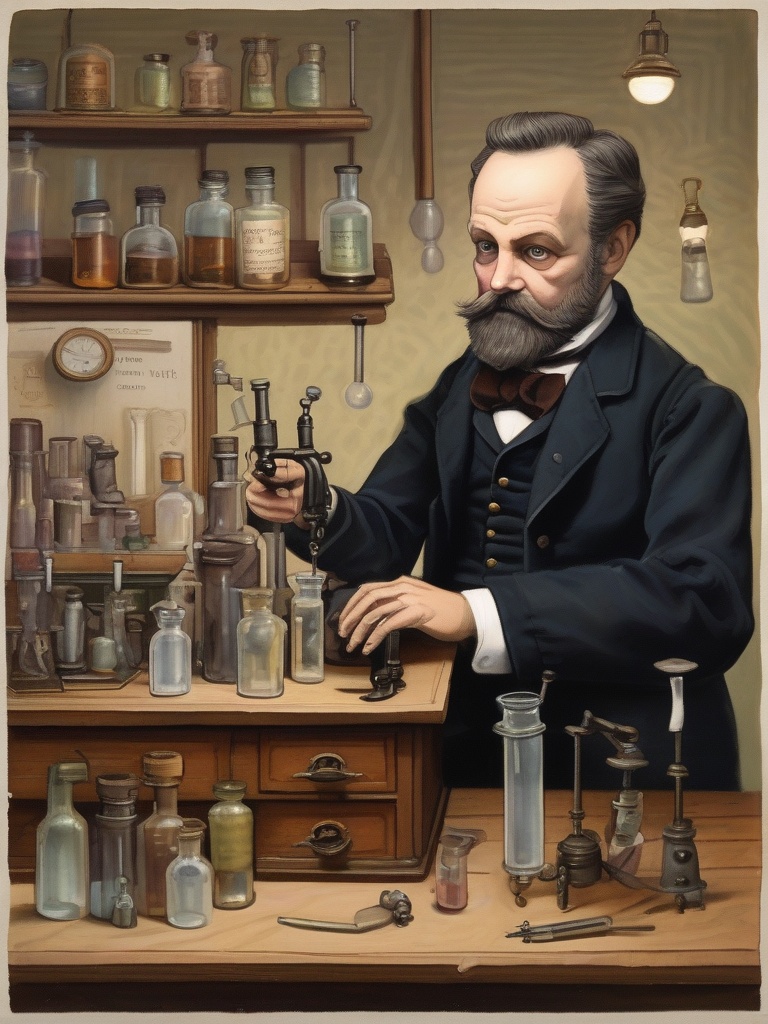
Four decades of discovery, each idea building on the last — chirality, germ theory, pasteurisation, vaccines, the rabies cure.
DetailsENLouis Pasteur was not a doctor — he was a chemist. Yet by following his curiosity from the shape of crystals to the souring of wine, he arrived at one of the most important ideas in all of science: that living microbes, too small to see, cause fermentation, spoilage and disease. This 'germ theory' overturned the old belief in bad air and spontaneous generation.
His genius was the clean experiment. The swan-neck flask let air in but trapped dust, so the broth inside stayed lifeless until microbes were admitted — a single elegant test that settled a centuries-old debate. The same understanding gave the world pasteurisation, still used on milk today, and a new way to make vaccines by deliberately weakening a germ until it could train the body without harming it.
When his rabies treatment saved nine-year-old Joseph Meister in 1885, patients poured in from across Europe and beyond. Public donations built the Institut Pasteur, inaugurated in Paris in 1888, which Pasteur led until his death in 1895 and which still works against infectious disease around the world.
Timeline
- 1822born 27 December in Dole, Jura, France
- 1848discovers molecular chirality in tartaric-acid crystals
- 1862swan-neck flask work wins the Alhumbert Prize; spontaneous generation disproved
- 1881pasteurisation in use; public anthrax-vaccine trial at Pouilly-le-Fort (5 May)
- 1885rabies vaccine saves Joseph Meister (6 July)
- 1888Institut Pasteur inaugurated in Paris; dies 1895
Did you know?
- Pasteur's first discovery had nothing to do with germs — at 25 he solved why some crystals bend light, founding the science of molecular chirality.DetailsEN
- At the open-air anthrax trial at Pouilly-le-Fort in 1881, every vaccinated sheep survived and every unvaccinated one died, proving the vaccine before a crowd.DetailsEN
- The word 'pasteurise' on your milk carton is his surname turned into a verb in dozens of languages.DetailsEN
What invisible things might you discover, if you only look closely enough?
Values & Capabilities
Capabilities
◆◆◆◆◆ shows how central a gift is — five diamonds mark a signature strength, fewer mark a supporting one.
From crooked crystals to invisible microbes, Pasteur turned careful observation into the germ theory of disease — that tiny living organisms cause fermentation, spoilage and illness.
With a flask bent like a swan's neck he showed that life does not appear from nothing: broth stayed clear until dust — carrying microbes — was let in.
Gently heating wine, beer and later milk to kill spoilage microbes — a simple idea that still keeps the world's food safe.
He learned to weaken germs on purpose, building vaccines for fowl cholera and then anthrax — proven in the open field at Pouilly-le-Fort in 1881.
On 6 July 1885 he treated nine-year-old Joseph Meister, bitten by a rabid dog — and the boy lived. The world came to his door, and the Pasteur Institute was born.
Development
1 of 3 stages unlocked
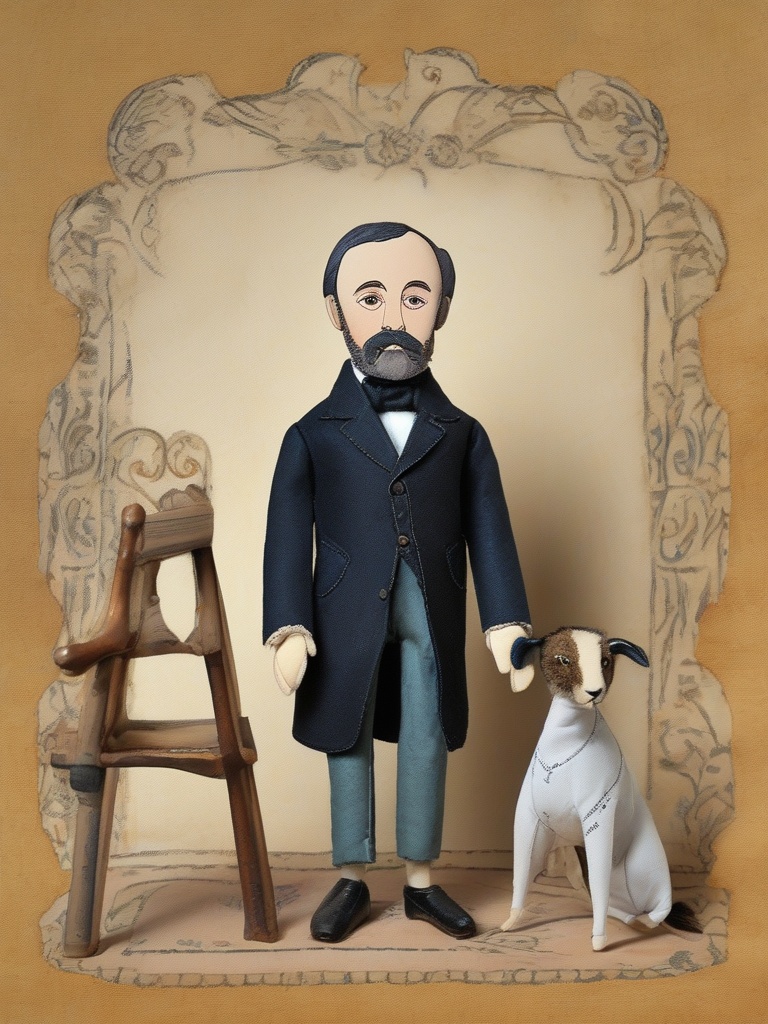
Young Louis in Dole and Arbois, more gifted at drawing than at lessons, learning to look closely at the world.
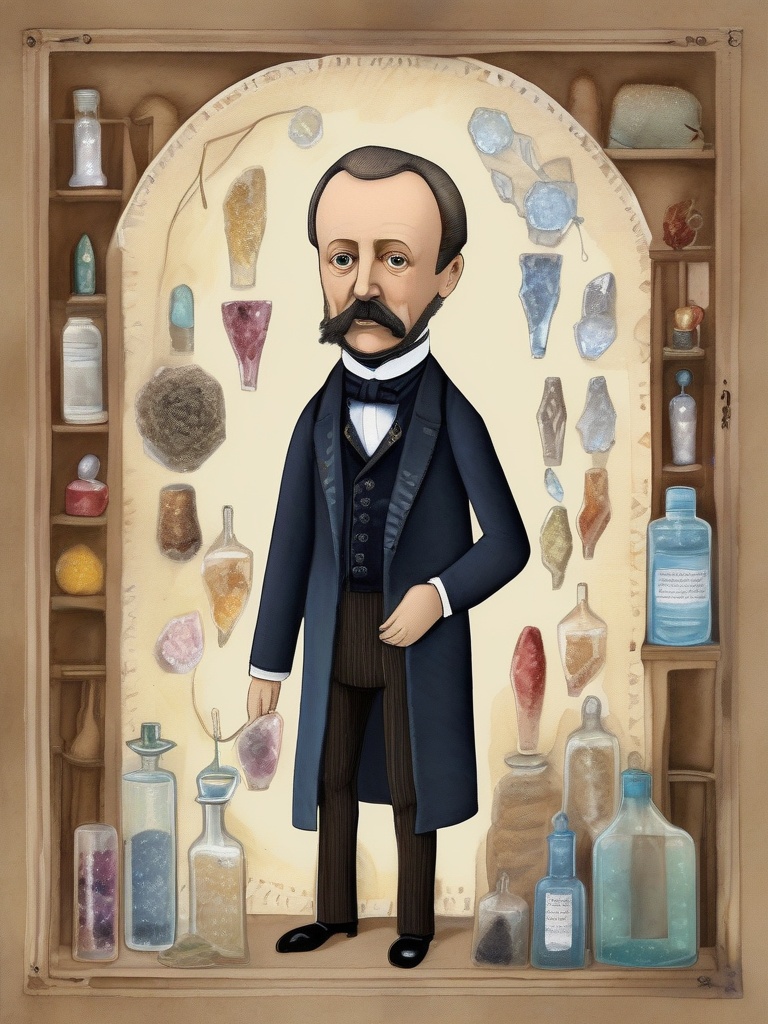
Answer all three to unlock this stage.
Unlock the previous stage first.
Crafting the doll
Garment: a dark wool-look frock coat and waistcoat, a crisp white cotton shirt with a knotted cravat, a tiny red felt rosette for the Légion d'honneur. Signature attribute: a small clear-glass swan-neck flask and a brass-look microscope (felt and bead). Education card: explains germ theory, pasteurisation and how vaccines weaken a germ to teach the body — and why we wash our hands. Sizes Classic 32 / Kidogo 18–20 / Shule 28. Part of proceeds → infectious-disease research / global vaccination access.
How this doll is made
Make this doll as a dignified 19th-century French scientist — sober tailoring, with the glass flask and microscope that tell his whole story.
- Garments 2
- Accessories 3
- Materials 1
- Techniques 2
Garments
- Frock coat & waistcoatA dark, knee-length wool-look frock coat over a matching waistcoat — the everyday formal dress of a mid-1800s European gentleman. Keep colours muted: charcoal, navy or black.DetailsEN
- White shirt & cravatA high-collared white cotton shirt finished with a soft knotted silk cravat at the throat, as worn in his studio portraits.DetailsEN
Accessories
- Légion d'honneur rosetteA tiny red rosette at the left lapel — Pasteur was made a Grand Cross of the Légion d'honneur. Use a small felt or thread knot in deep red.DetailsEN
- Swan-neck flaskHis signature object: a clear glass flask whose neck is drawn out long and bent like an S. Mould from clear resin or shape from bead-and-wire so the curve reads clearly.DetailsEN
- Brass microscopeA small antique-style brass compound microscope on a wooden foot, the tool of the microbe hunter. Paint a wooden or card form in warm brass tones.DetailsEN
Materials
- Wool & cottonPeriod dress was wool for the suiting and crisp cotton or linen for the shirt — natural fibres, matte finish, no synthetic sheen.DetailsEN
Techniques
Origin & Ethics
How we know this
On honesty: very well documented (laboratory notebooks, the surviving swan-neck flasks, the Institut Pasteur archives). Homage, not likeness; the doll stylises a real historical person and simplifies his science for children — Pasteur worked with colleagues such as Émile Roux and his wife Marie, and the famous line about chance favouring the prepared mind comes from his 1854 inaugural lecture at Lille.
Committee: Institut Pasteur (Paris) and its heritage department; the Maison de Louis Pasteur / Musée Pasteur (Dole & Arbois); historians of science and medicine. 5-step protocol as standard; homage, not likeness.