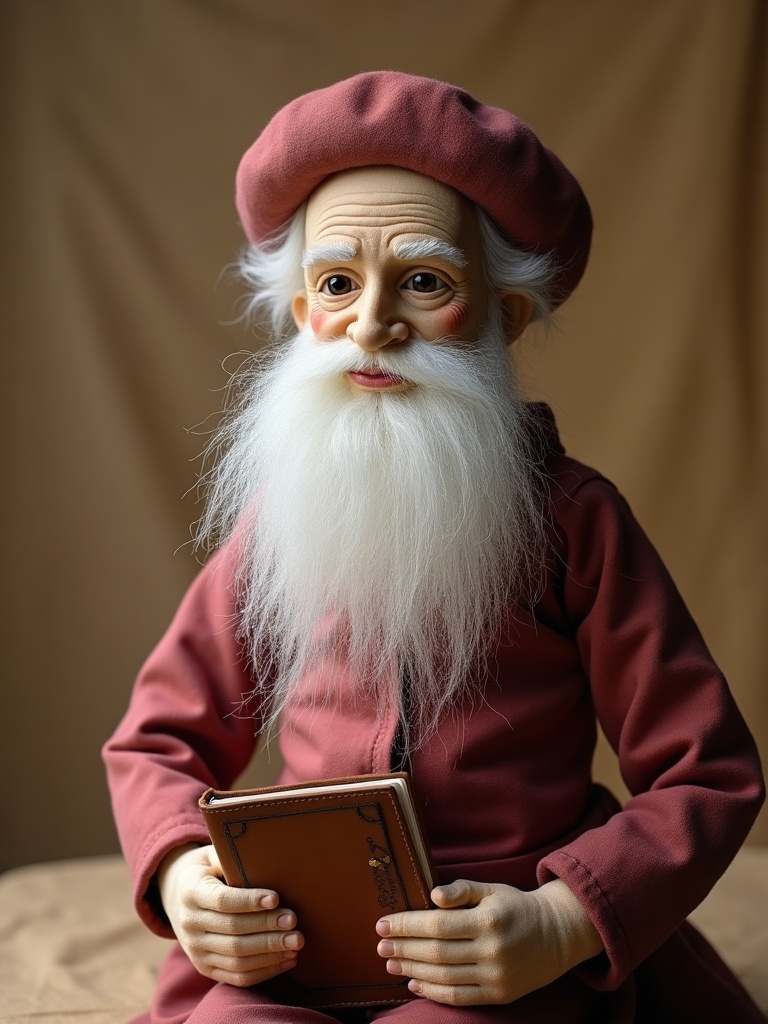
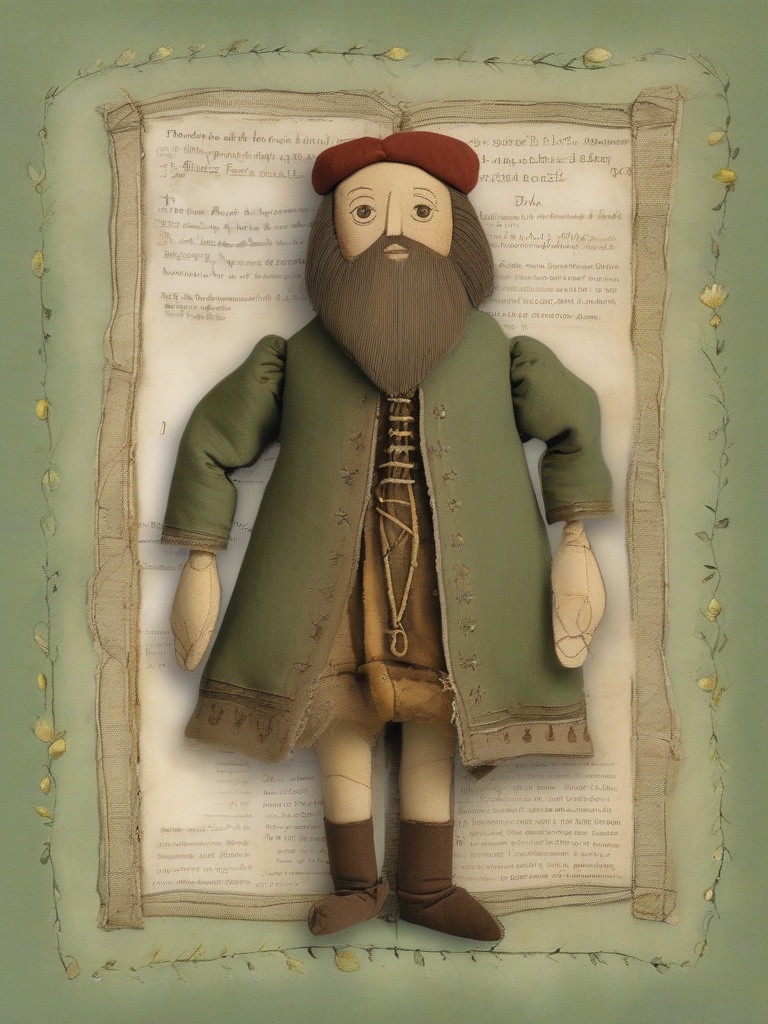
AI design preview — not a photo of the finished handmade doll
Art & Engineering (Polymath)
Leonardo da Vinci
One man looked at a smile, a river and a bird's wing with the very same hungry attention — and never stopped writing it all down.
- People
- Italian (Florence)
- Country
- Italy
- Region
- Southern Europe
- Era
- 1452–1519
- Theme
- Art & Engineering (Polymath)
Make your own
Design your Leonardo da Vinci
Pick a garment, a hairstyle and a scene, enter the PIN and generate a fresh image of Leonardo da Vinci with AI.
⚖ AI homage concept — not a likeness of the real person.
Each image is generated live with fal.ai.
Generated images
AI design preview — not a photo of the finished handmade doll
No images generated yet — be the first.
Tradition & Origin
One man looked at a smile, a river and a bird's wing with the very same hungry attention — and never stopped writing it all down.
Of roughly 13,000 pages Leonardo wrote, about 7,000 survive — each square here stands for about 1,000 pages.
DetailsENLeonardo was born in 1452 to unmarried parents in Vinci, a Tuscan hill town, and had little formal schooling — which may be why he trusted his own eyes above old books, calling himself a 'disciple of experience'. Apprenticed to Verrocchio in Florence, he learned painting, sculpture and engineering at once, and never afterwards saw a reason to keep them apart.
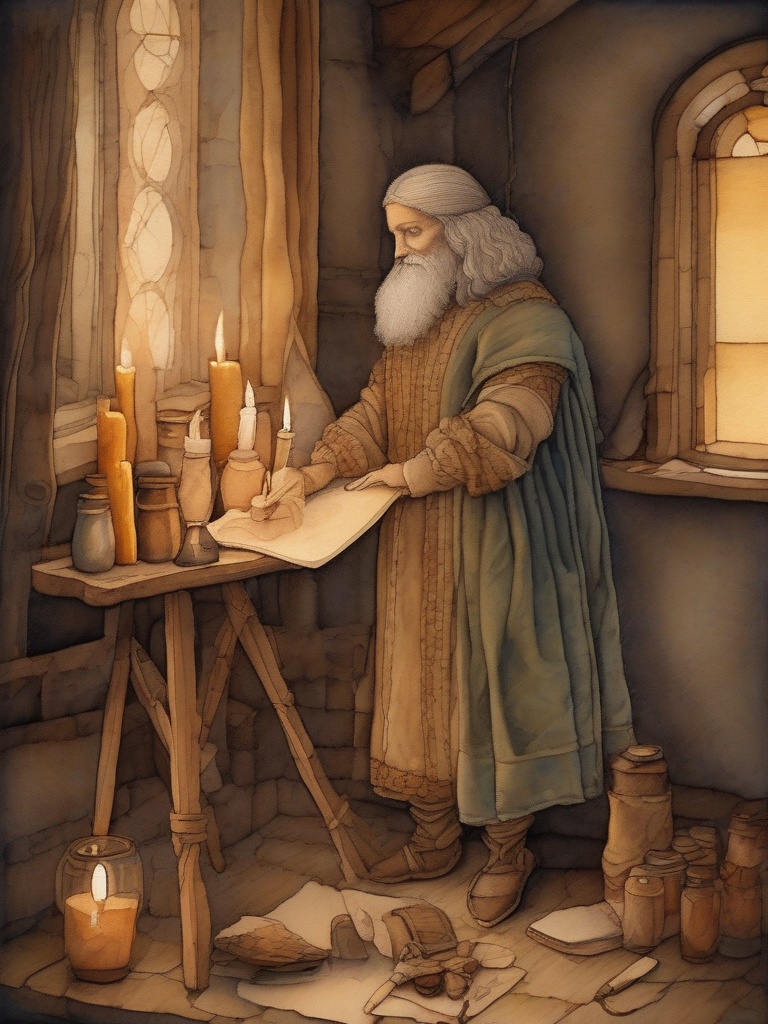
For nearly twenty years he served Ludovico Sforza, Duke of Milan, as painter, festival-designer and military engineer. There he painted The Last Supper and filled notebook after notebook with machines, anatomy and the swirl of moving water. He wrote most of it backwards, in mirror script that reads only in a looking-glass — possibly to write fluently left-handed, possibly to keep his thoughts his own.
He carried the unfinished Mona Lisa with him for the rest of his life, refining its smoke-soft sfumato year after year. In his final years King François I of France gave him the manor of Clos Lucé at Amboise and treated the ageing master as a treasure. He died there in 1519, leaving thousands of pages that the world is still reading today.
Timeline
- 1452born 15 April in Vinci, near Florence
- ≈1482enters the service of Ludovico Sforza in Milan
- 1495–98paints The Last Supper at Santa Maria delle Grazie
- ≈1490draws the Vitruvian Man; sketches flying machines
- ≈1503–19paints the Mona Lisa, working on it for years
- 1516–19guest of King François I at Clos Lucé; dies 2 May 1519
Did you know?
- He wrote in mirror script — text running right to left, readable only in a mirror.DetailsEN
- His spiral 'aerial screw' of c.1487–90 anticipated the helicopter; in 2022 engineers flew a drone based on it.DetailsEN
- The Mona Lisa is oil on a single poplar panel and Leonardo kept reworking it for over a decade.DetailsEN
What would you fill a notebook with, if you let yourself wonder about everything?
Values & Capabilities
Capabilities
◆◆◆◆◆ shows how central a gift is — five diamonds mark a signature strength, fewer mark a supporting one.
Painter, anatomist, engineer, botanist, geologist — Leonardo treated art and science as one single way of seeing the world.
With his sfumato — smoke-soft shading with no hard lines — he gave the Mona Lisa a living, unreadable smile.
He filled thousands of pages with sketches and mirror-written notes, asking 'why?' about water, flight, light and the human body.
Four centuries before the aeroplane he designed a flapping ornithopter and a spiral 'aerial screw' — a helicopter on paper.
By dissecting some thirty bodies he drew the heart, the skull and a baby curled in the womb with stunning accuracy.
Development
1 of 3 stages unlocked
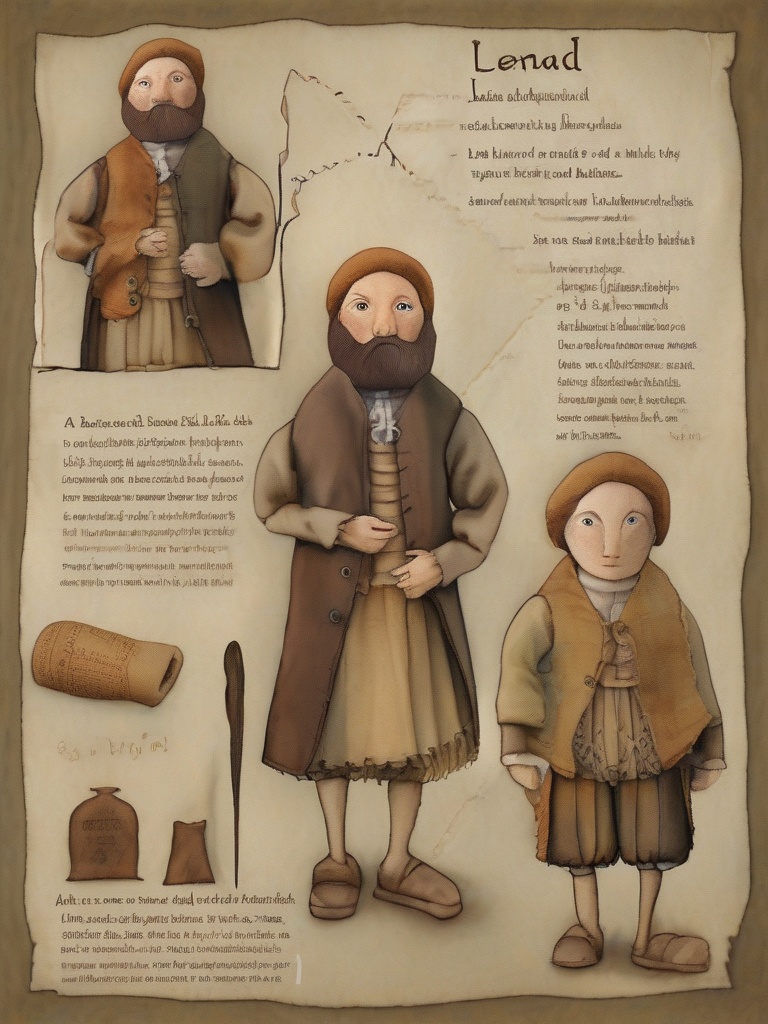
Young Leonardo in Verrocchio's Florence workshop, learning to mix pigment, cast bronze and look very, very closely at the world.
Answer all three to unlock this stage.
Unlock the previous stage first.
Crafting the doll
Garment: a rose-pink lucco robe in cotton/wool felt over a wine-red tunic, a soft round cap; soft white wool-fibre beard. Signature attribute: a tiny stitched leather notebook with mirror-written sketches and a little wood-and-linen aerial-screw model. Education card: explains the 'Renaissance man' idea, sfumato, mirror writing, and that he left masterpieces unfinished because curiosity always pulled him onward. Sizes Classic 32 / Kidogo 18–20 / Shule 28. Proceeds → arts-and-science education and Renaissance heritage conservation.
How this doll is made
Make Leonardo as an elderly Florentine sage in soft earth tones, with a notebook and tiny machine as his unmistakable signature objects.
- Garments 2
- Accessories 4
- Materials 1
- Techniques 1
Garments
- The rose lucco robeRenaissance Florentine men wore the lucco, a long loose gown; Leonardo is traditionally pictured in a rose-pink robe over a darker tunic. Use cotton or wool felt in dusty rose and wine-red.DetailsEN
- Leather tool-pouch & apronFor the engineer or apprentice looks, add a leather belt-pouch and a workshop apron — the maker's gear of Verrocchio's bottega and the Sforza court.DetailsEN
Accessories
- The long white beardHis best-known image is the flowing-bearded elder of the famous red-chalk drawing. Stitch a soft white wool-fibre beard and shoulder-length hair, with a round cloth cap.DetailsEN
- The mirror-writing notebookHis signature object: a small leather-bound notebook. Print or embroider tiny backwards 'mirror script' and sketches of gears, water swirls and birds on the open page.DetailsEN
- Model aerial screwBuild a miniature of his spiral 'aerial screw' from a thin wooden mast and a starched-linen helix — a helicopter four centuries early.DetailsEN
- Vitruvian Man parchmentA tiny rolled parchment of the Vitruvian Man — a nude figure spread inside a circle and a square — references his fusion of art and geometry (Gallerie dell'Accademia, Venice).DetailsEN
Materials
- Brush, dividers & pigment jarsAdd a fine sable brush, a pair of brass dividers (his measuring compass) and tiny clay pigment jars to show painter, engineer and scientist in one figure.DetailsEN
Techniques
- Sfumato earth paletteEcho his sfumato — soft, edgeless shading in muted browns, ochres and blue-greys. Choose fabrics with no harsh colour borders so the doll itself looks 'smoke-soft'.DetailsEN
Origin & Ethics
How we know this
On honesty: very well documented (surviving paintings, ~7,000 notebook pages, hundreds of drawings in major collections, contemporary records). Homage, not likeness — no authenticated portrait of Leonardo survives, so his face is a respectful stylisation, not a photograph; several inventions stayed designs on paper and were never built in his lifetime.
Committee: Italian cultural-heritage bodies (Ministero della Cultura), the Louvre and Gallerie dell'Accademia (Venice), the Royal Collection Trust (Windsor) and Renaissance art historians. Homage figure of a long-dead public figure; sacred subjects (The Last Supper) treated with respect.