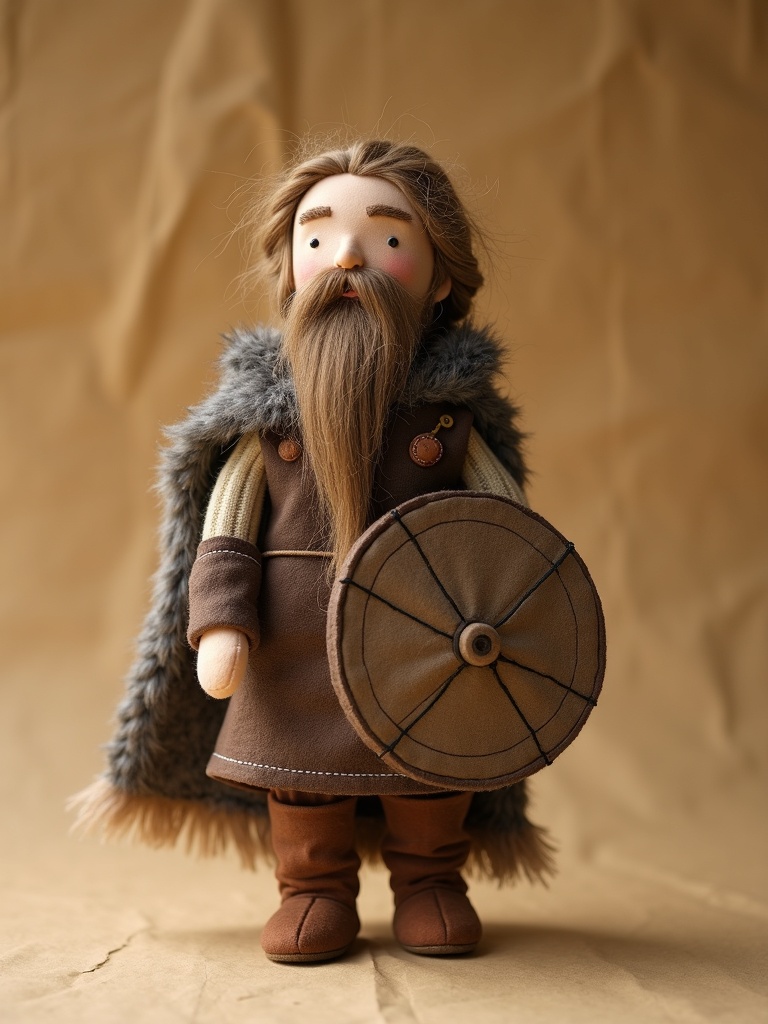
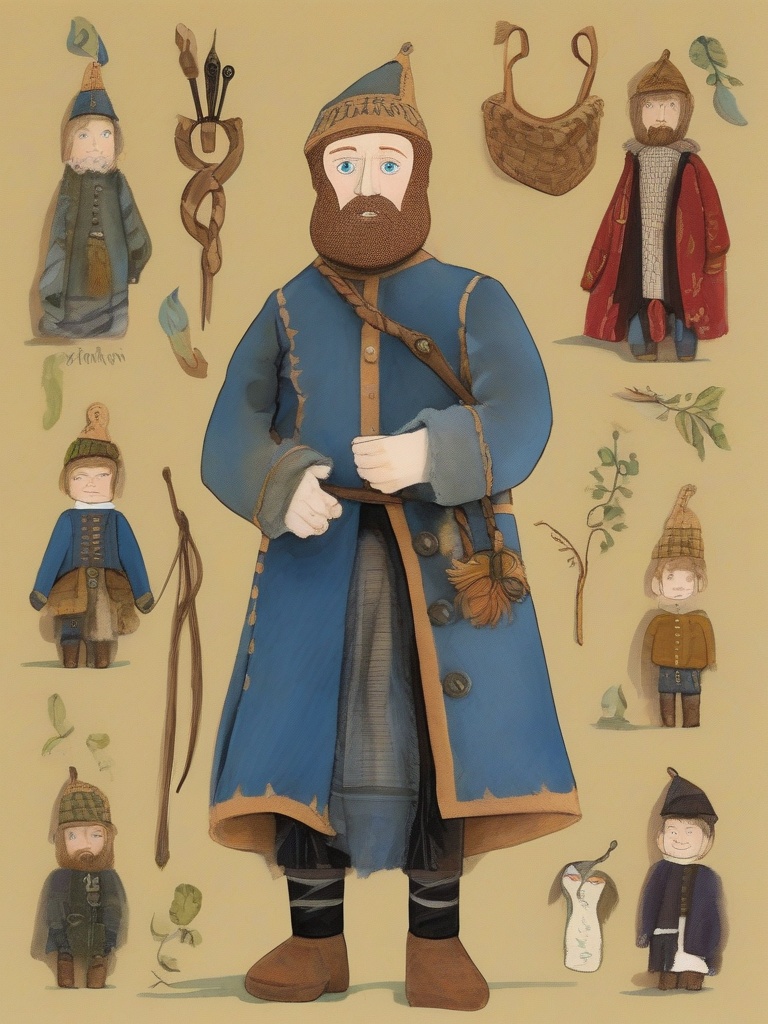
AI design preview — not a photo of the finished handmade doll
Exploration & Vision
Leif Erikson
A man from the edge of the known world sailed off its western rim around the year 1000 and found a green coast no European had named.
- People
- Norse (Icelandic-Greenlandic)
- Country
- Iceland
- Region
- Northern Europe
- Era
- c.970–c.1020
- Theme
- Exploration & Vision
Make your own
Design your Leif Erikson
Pick a garment, a hairstyle and a scene, enter the PIN and generate a fresh image of Leif Erikson with AI.
⚖ AI homage concept — not a likeness of the real person.
Each image is generated live with fal.ai.
Generated images
AI design preview — not a photo of the finished handmade doll
No images generated yet — be the first.
Tradition & Origin
A man from the edge of the known world sailed off its western rim around the year 1000 and found a green coast no European had named.
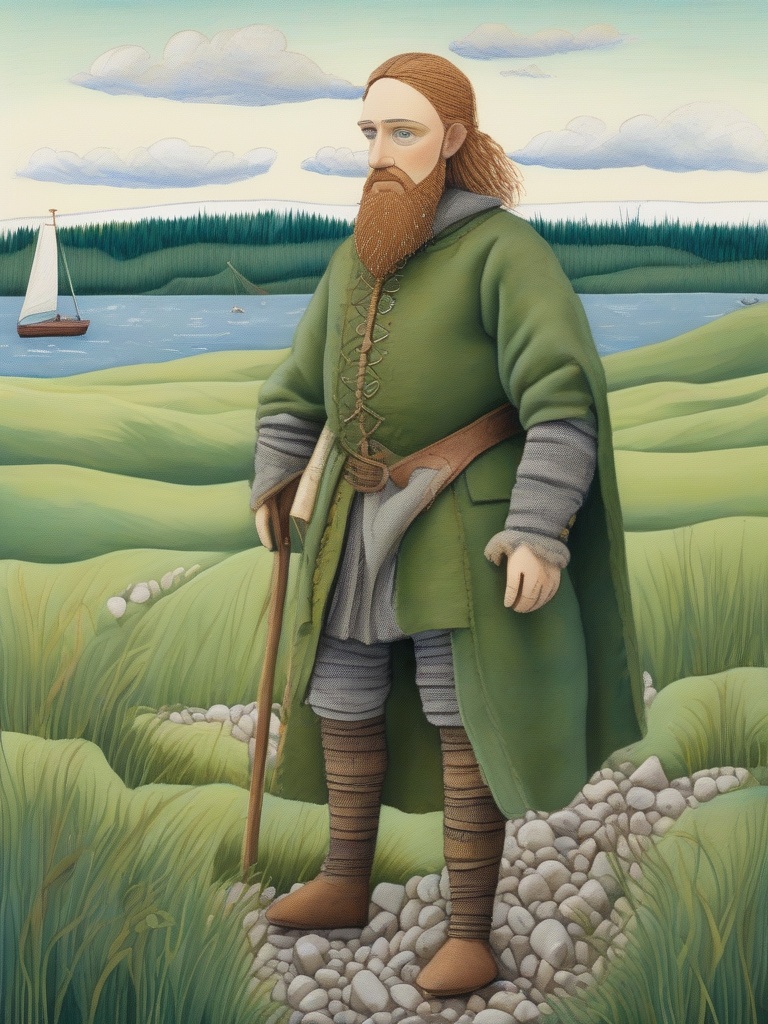
A worldwide carbon spike from a 993 cosmic-ray event sits 28 growth rings before the bark — fixing the felling year at 1021.
DetailsENLeif Erikson was born to a frontier people. His father, Erik the Red, had been exiled from Iceland for killing and had pushed on to settle Greenland — an icy land at the very limit of Norse reach. Leif grew up there at Brattahlíð, where survival meant knowing wool, oar, weather and the open ocean.
When Bjarni Herjólfsson reported a strange wooded coast far to the west, Leif bought his ship and went to see for himself. Around the year 1000 his knarr — a broad, single-sailed Norse cargo ship — made landfall in a land he called Vinland, the Wineland, for the wild grapes his crew gathered. He wintered in turf houses and sailed home, earning the name 'the Lucky' for rescuing a shipwrecked crew on the way.
For nearly a thousand years this lived only in the Vinland Sagas, written down around 1200 — gripping, contradictory, half legend. Then in 1960 Helge and Anne Stine Ingstad uncovered Norse buildings, an iron smithy, nails and a spindle-whorl at L'Anse aux Meadows in Newfoundland. UNESCO listed it in 1978, and in 2021 scientists used a worldwide 993 solar-storm spike in tree rings to date the felled timber to exactly 1021. The saga turned out to be built on a true keel.
Timeline
- c.970born, an Icelandic family; son of Erik the Red
- c.986raised at Brattahlíð as Erik the Red founds Norse Greenland
- c.999at the court of King Olaf Tryggvason in Norway; converts to Christianity
- c.1000sails west and lands in Vinland (North America)
- 1960 / 1978Norse site found at L'Anse aux Meadows; UNESCO World Heritage
- 2021tree-ring solar-storm method dates the wood to exactly 1021
Did you know?
- Real Viking helmets had no horns — the horned-helmet image is a 19th-century invention, not Norse history.DetailsEN
- A spindle-whorl and a bone needle found at the site suggest women, not only men, lived in the Vinland camp.DetailsEN
- In the U.S., October 9 is Leif Erikson Day — chosen because the first organised Norwegian emigrant ship reached New York on that date in 1825.DetailsEN
Leif had no map at all — just the courage to keep sailing toward a coast nobody he knew had ever seen.
Values & Capabilities
Capabilities
◆◆◆◆◆ shows how central a gift is — five diamonds mark a signature strength, fewer mark a supporting one.
Around the year 1000 he sailed west past the edge of the known map and set foot in North America — roughly five centuries before Columbus.
Norse sailors crossed open ocean in open boats, navigating by sun, swell, stars and seabird without a compass.
Nicknamed 'Leif the Lucky' after he rescued a shipwrecked crew on the cold return voyage — luck that was really steadiness.
Born of an Icelandic family and raised at Brattahlíð in Greenland, he carried a frontier people's identity onto an unknown coast.
For centuries his voyage lived only in sagas — half record, half legend — until spades at L'Anse aux Meadows proved the heart of it true.
Development
1 of 3 stages unlocked
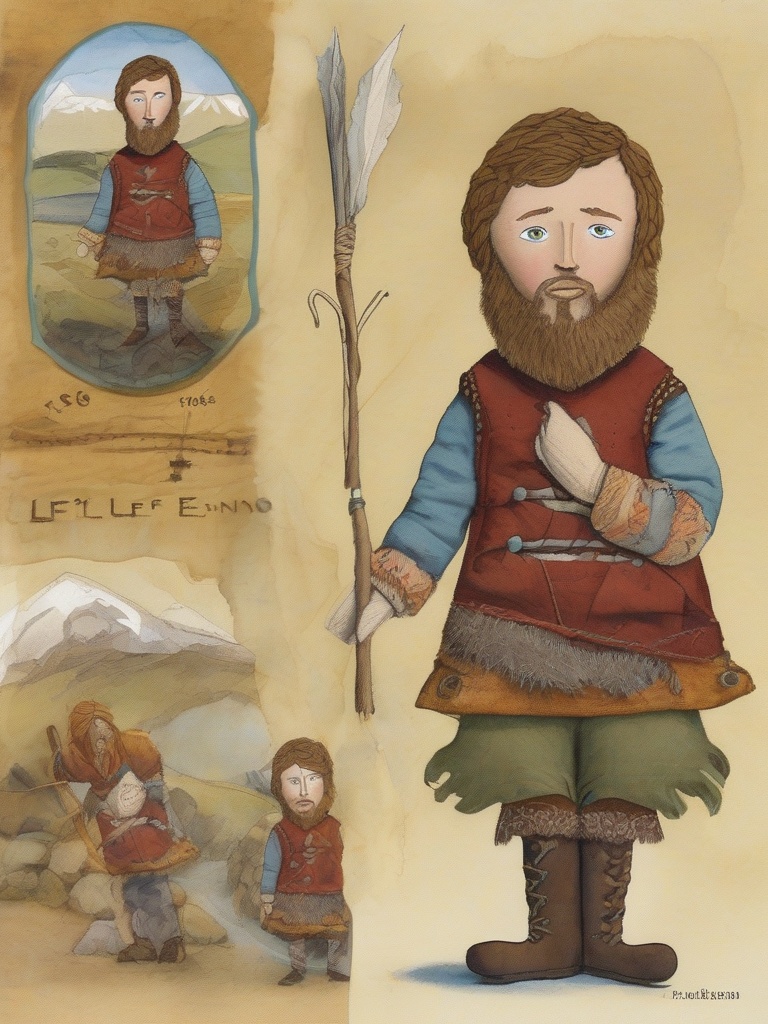
Young Leif at Brattahlíð in Greenland, learning rope, oar and the reading of the sea from his father Erik the Red's settlers.
Answer all three to unlock this stage.
Unlock the previous stage first.
Crafting the doll
Garment: undyed and grey 100% wool/felt tunic, trousers and a hooded fur-trimmed cloak, leg-wraps, a tablet-woven belt and brown leather shoes; a round bronze penannular brooch at the shoulder. Signature attribute: a wooden round shield with an iron boss and a small carved knarr ship (felt sail). Education card: explains that the Norse reached North America around 1000 — about 500 years before Columbus — and that we know it because a saga was later proven by archaeology at L'Anse aux Meadows. Sizes Classic 32 / Kidogo 18–20 / Shule 28. Part of proceeds → North Atlantic / Norse heritage conservation (L'Anse aux Meadows).
How this doll is made
Make the doll the way a Norse traveller really dressed and sailed — wool, leather, bronze and wood, weathered by salt and cold.
- Garments 2
- Accessories 4
- Materials 1
- Techniques 1
Garments
- Undyed wool tunic & trousersA knee-length wool tunic over woollen trousers in natural cream and grey — the everyday Norse seafarer's dress, sturdy against North Atlantic weather.DetailsEN
- Fur-trimmed wool cloakA heavy hooded cloak of felted wool, the edge trimmed with grey fur, fastened at the shoulder for warmth on deck.DetailsEN
Accessories
- Penannular bronze broochA round (penannular) bronze cloak-pin at the shoulder — the typical Norse fastener; sculpt or cast a small ring-and-pin in bronze-tone metal or stiff felt.DetailsEN
- Round wooden shieldA plank shield with a central iron boss, painted in plain bands; build a disc of light wood or stiff card, no drawn weapon shown.DetailsEN
- Carved knarr (cargo ship)A small model of a knarr — the broad, single-square-sail Norse ocean ship Leif used — carved in wood with a wool sail, tucked under the arm.DetailsEN
- Leg-wraps & leather shoesWind woollen leg-wraps (winingas) up each shin and finish with simple turn-shoe leather footwear, both standard Norse travelling dress.DetailsEN
Materials
- Tablet-woven wool beltA narrow patterned belt made by Norse tablet-weaving; reproduce with a thin woven or braided wool band in earth tones.DetailsEN
Techniques
- Nålebinding & spinning detailsHint at Norse textile craft — a nålebinding (single-needle looped) cap or mitt, echoing the bone needle and spindle-whorl found at the site.DetailsEN
Origin & Ethics
How we know this
On honesty: very well documented where it counts — the Vinland Sagas plus the excavated, UNESCO-listed and tree-ring-dated (1021) Norse site at L'Anse aux Meadows. Homage, not likeness; the sagas blend record and legend, so saga details (and the famous 'no-horned-helmet' is the real history — horned Viking helmets are a 19th-century myth) are presented as story where they are story.
Committee: Parks Canada (L'Anse aux Meadows National Historic Site); UNESCO World Heritage guidance; Norse/Viking-Age historians and Icelandic-saga scholars; Newfoundland heritage bodies. 5-step protocol as standard; helmet shown without horns (historically accurate), no glorified violence.