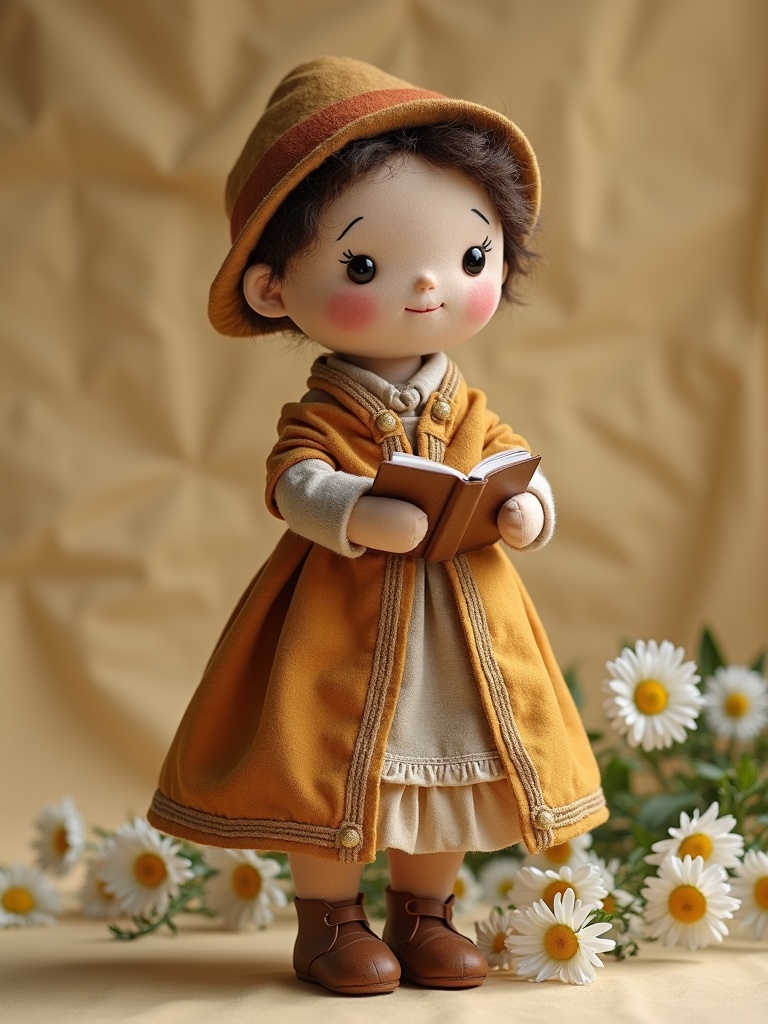
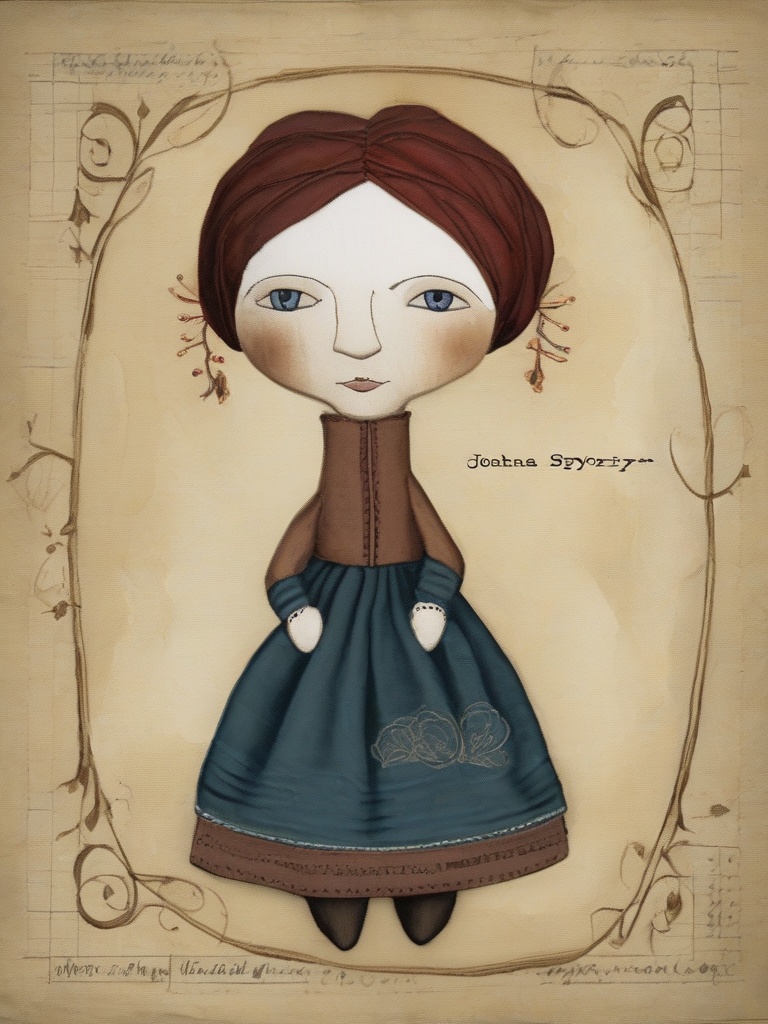
AI design preview — not a photo of the finished handmade doll
Nature, Home & Healing
Johanna Spyri
A quiet Zürich widow imagined an orphan girl on an Alpine pasture, and the world has never let her go.
- People
- Swiss (German-speaking, Canton of Zürich)
- Country
- Switzerland
- Region
- Central Europe
- Era
- 1827–1901
- Theme
- Nature, Home & Healing
Make your own
Design your Johanna Spyri
Pick a garment, a hairstyle and a scene, enter the PIN and generate a fresh image of Johanna Spyri with AI.
⚖ AI homage concept — not a likeness of the real person.
Each image is generated live with fal.ai.
Generated images
AI design preview — not a photo of the finished handmade doll
No images generated yet — be the first.
Tradition & Origin
A quiet Zürich widow imagined an orphan girl on an Alpine pasture, and the world has never let her go.
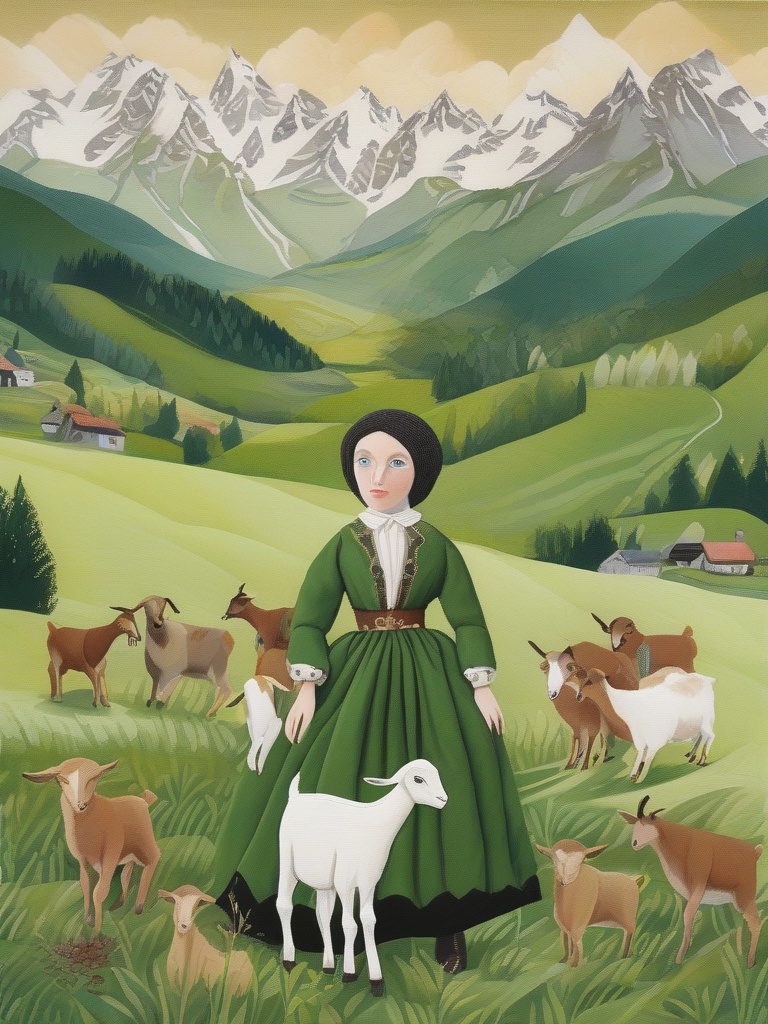
She began writing past forty, then wrote Heidi in roughly four weeks and over fifty works in all.
DetailsENJohanna Spyri grew up at Hirzel above Lake Zürich, the daughter of a country doctor and a published poet. Her childhood summers in the Graubünden mountains, near Maienfeld, gave her the clear air, goat-bells and herb-scented pastures she would later pour into her books.
She came to writing late — past forty — and partly for others, raising money for orphans of the Franco-Prussian War and publishing at first without her name. In about four weeks in 1880–81 she wrote Heidi, the story of a small orphan who only thrives in the mountains and who heals the people around her.
Heidi became one of the best-selling books in history: translated into roughly seventy languages, tens of millions of copies, a Swiss myth carried as far as Japan. Yet its author chose the opposite of fame — charitable, private, she destroyed her own papers. In 2023 UNESCO added the Zürich Heidi and Spyri archives to its Memory of the World.
Timeline
- 1827born 12 June in Hirzel, Canton of Zürich, a doctor's daughter
- 1852marries lawyer Bernhard Spyri; moves to the city of Zürich
- 1871begins to write, partly to help Franco-Prussian War orphans
- 1880–81writes and publishes Heidi, reportedly in about four weeks
- 1884her husband and only son both die; she turns to charity and writing
- 1901dies 7 July in Zürich, author of over fifty works
Did you know?
- Did you know? Spyri started writing at over forty, partly to raise money for children orphaned by the Franco-Prussian War.DetailsEN
- Did you know? In the novel, a doctor 'prescribes' that homesick Heidi simply go home to the mountains — and frail Clara later learns to walk in the Alpine air.DetailsEN
- Did you know? A famously private woman, Spyri avoided fame and even destroyed her own personal papers.DetailsEN
Sometimes the gentlest story — one girl, one mountain — travels the furthest of all.
Values & Capabilities
Capabilities
◆◆◆◆◆ shows how central a gift is — five diamonds mark a signature strength, fewer mark a supporting one.
From a quiet flat in Zürich she imagined an orphan girl on an Alpine pasture — and wrote Heidi in about four weeks.
Her vivid Alpine landscape — Maienfeld, goat-bells, herbs and clear air — became one of the most beloved settings in all of literature.
Heidi sickens with homesickness in the city and is healed only by returning to the mountain — and frail Clara learns to walk in the fresh Alpine air.
She began writing at over forty to help war orphans, gave to charity, shunned fame and even destroyed her private papers.
Translated into some 70 languages and tens of millions of copies, Heidi became a symbol of Switzerland itself — and entered UNESCO's Memory of the World.
Development
1 of 3 stages unlocked
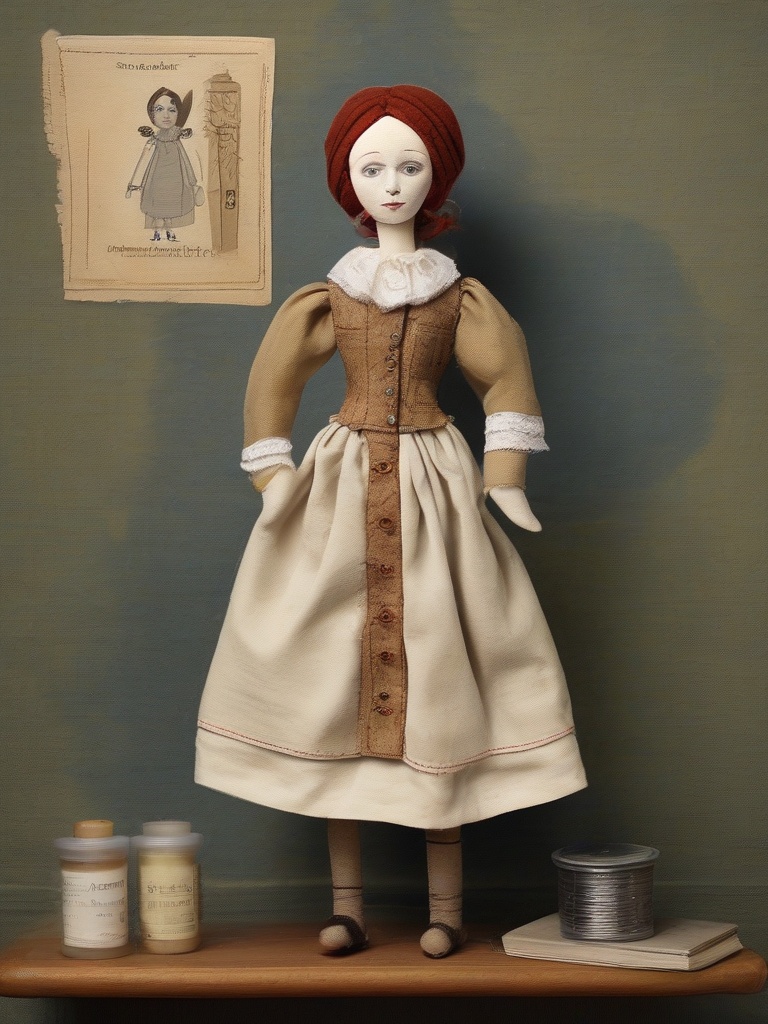
Young Johanna among books and poems above Lake Zürich, spending summers in the Graubünden mountains that she never forgot.
Answer all three to unlock this stage.
Unlock the previous stage first.
Crafting the doll
Garment: a high-necked 19th-century day dress in deep green or grey wool/cotton, a fine white lace collar, a small enamel brooch; hair in a neat bun. Signature attribute: a tiny cloth-bound book lettered 'Heidi', a felt quill pen, and a posy of white edelweiss and blue gentian. Education card: explains that Heidi was written in about four weeks, translated into some 70 languages, and that its author chose charity and privacy over fame. Sizes Classic 32 / Kidogo 18–20 / Shule 28. Part of proceeds → Swiss children's-literacy and Alpine-heritage causes (Heidi/Spyri archives, Zürich).
How this doll is made
Made authentically: a dignified mid-Victorian Swiss lady, with the small props of a writer and the flowers of the Alps.
- Garments 1
- Accessories 4
- Materials 1
- Techniques 2
Garments
- High-necked day dressA long-sleeved 1860s–80s day dress in dark green, grey or black wool/cotton, with a fitted bodice and full skirt — the modest dress of a respectable Zürich lady of her time.DetailsEN
Accessories
- Lace collar & broochA fine white lace or crochet collar buttoned high at the throat, fastened with a small enamel or jet brooch — typical of the period and seen in her portraits.DetailsEN
- A little 'Heidi' bookA miniature cloth-bound book lettered 'Heidi' on the cover — her four-week masterpiece and the source of her fame.DetailsEN
- Quill pen & inkwellA felt or wire quill pen and a tiny glass inkwell, the tools of a prolific author and letter-writer who produced over fifty works.DetailsEN
- Edelweiss & gentian posyA small posy of white felt edelweiss and blue gentian — the Alpine flowers that stand for the Graubünden mountain world of her stories.DetailsEN
Materials
- Hair in a neat parted bunHair stitched in dark brown wool or embroidery floss, smoothly centre-parted and gathered into a low bun, matching the restrained Victorian style of her portraits.DetailsEN
Techniques
- Alpine scene baseAn optional felt-and-wool base of a green mountain pasture with tiny goats and a brass bell, recalling the Maienfeld setting where Heidi finds her health.DetailsEN
- Restrained, dignified paletteKeep colours sober — forest green, slate grey, black, cream lace — with a single warm accent (a red shawl or flower), honouring a private woman who shunned display.DetailsEN
Origin & Ethics
How we know this
On honesty: very well documented (her books, letters, civic records, museums and the UNESCO-listed Zürich archives). Homage, not likeness — the doll stylises a private 19th-century woman who deliberately destroyed her personal papers and avoided portraits, so we honour her work and values rather than claim an exact face; Heidi is fiction, and we present its healing-by-nature theme as a story, not a medical claim.
Committee: Swiss National Library / Schweizerisches Literaturarchiv; the Johanna Spyri Foundation and Zürich Heidi-Spyri archives (UNESCO Memory of the World); Heididorf/Heidi heritage museums (Maienfeld); literary historians. 5-step protocol as standard; portray a real private person with dignity.