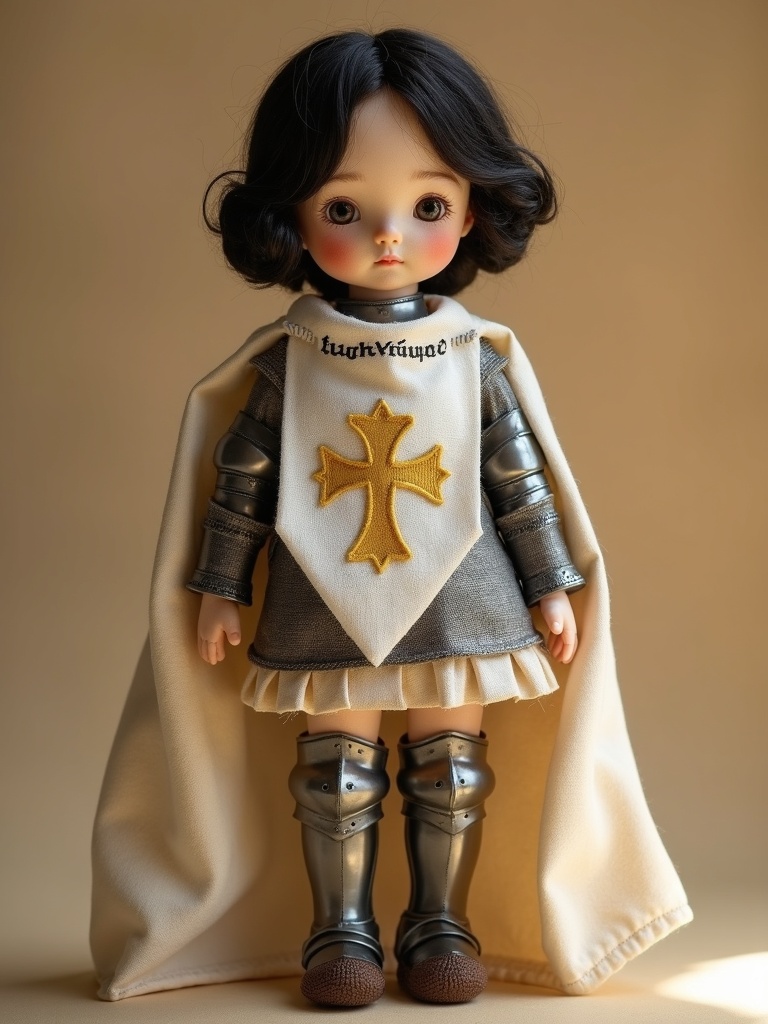
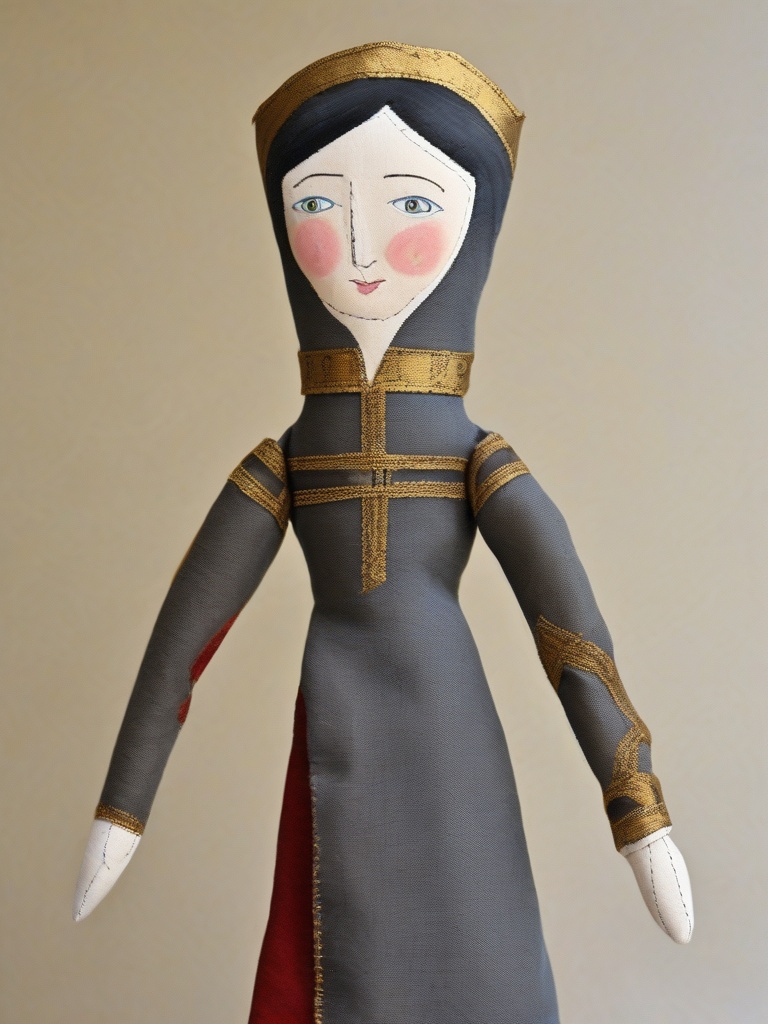
AI design preview — not a photo of the finished handmade doll
Courage & Conscience
Jeanne d'Arc
A girl who could not read, who carried a banner instead of leading the slaughter, broke a siege that had crushed France's hopes — and was burned for it at nineteen.
- People
- French
- Country
- France
- Region
- Western Europe
- Era
- c.1412–1431
- Theme
- Courage & Conscience
Make your own
Design your Jeanne d'Arc
Pick a garment, a hairstyle and a scene, enter the PIN and generate a fresh image of Jeanne d'Arc with AI.
⚖ AI homage concept — not a likeness of the real person.
Each image is generated live with fal.ai.
Generated images
AI design preview — not a photo of the finished handmade doll
No images generated yet — be the first.
Tradition & Origin
A girl who could not read, who carried a banner instead of leading the slaughter, broke a siege that had crushed France's hopes — and was burned for it at nineteen.
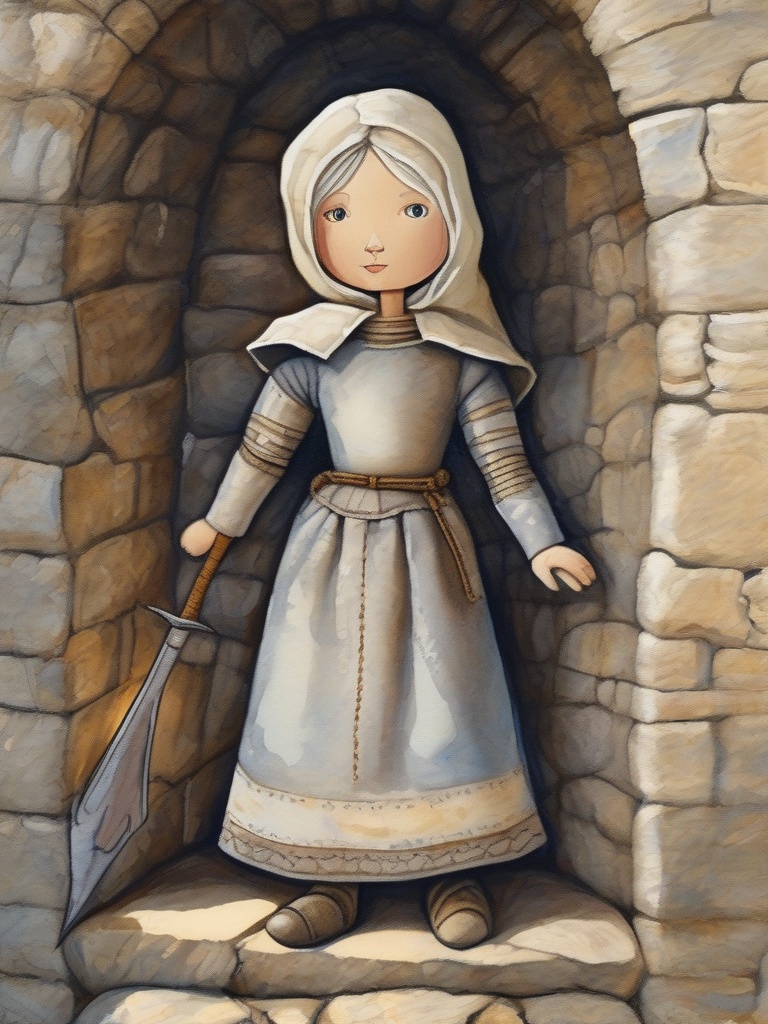
Birth (c.1412) → the siege lifted (1429) → coronation (1429) → death at Rouen (1431) → cleared, then canonised (1456 / 1920). A steep rise, an unjust fall, and a long restoration.
DetailsENJeanne d'Arc was born about 1412 in Domrémy, a small village on the frontier of a France that was losing the Hundred Years' War. The English and their Burgundian allies held much of the north, and the French heir, Charles, had not even been crowned. Into this Jeanne stepped, an illiterate teenager who said the saints themselves had told her to save the kingdom.
What she actually achieved is documented and astonishing. She convinced a desperate court to let her ride to Orléans, and within nine days, on 8 May 1429, the long English siege collapsed — the moment historians mark as the turning point of the whole war. She then led the army to Reims so that Charles could be crowned king in the cathedral where French kings had always been anointed.
Her end was as unjust as her rise was sudden. Captured in 1430 and tried by a court loyal to the English, she was condemned and executed at Rouen in 1431. But the story did not end there: a 1456 retrial overturned the verdict as unsound, and in 1920 she was declared a saint. France keeps her as a national symbol — proof that a single act of conscience can be remembered long after the armies are forgotten.
Much of what we know comes from her own mouth. The trial scribes wrote down her sharp, plain answers, and the 1456 inquiry gathered witnesses who had known her. Around that record, five centuries of legend have grown — so we tell you which parts are documented and which are story.
Timeline
- c.1412born at Domrémy, north-east France, during the Hundred Years' War
- c.1425from about age 13 reports the voices of Saints Michael, Catherine and Margaret
- 8 May 1429the English siege of Orléans is lifted — the war's turning point
- 17 July 1429Charles VII crowned king at Reims, with Joan at his side
- 23 May 1430captured at Compiègne; later handed to an English-allied court
- 30 May 1431condemned and dies at the stake at Rouen, aged about nineteen
- 1456 / 1920retrial clears her name; canonised a saint by Pope Benedict XV
Did you know?
- Joan said she loved her white banner with its fleur-de-lis far more than her sword — she carried it to inspire her soldiers, not to kill.DetailsEN
- She could not read or write, yet two of the most detailed legal records of the entire Middle Ages exist because of her — her 1431 trial and the 1456 inquiry that cleared her.DetailsEN
- Twenty-five years after she was burned as a heretic, the very same Church held a new trial and declared the first verdict unjust.DetailsEN
If a village girl who could not read could find the courage to do what she believed was right, what brave, kind thing could you do today?
Values & Capabilities
Capabilities
◆◆◆◆◆ shows how central a gift is — five diamonds mark a signature strength, fewer mark a supporting one.
A teenage farm girl rode into besieged Orléans and, within nine days, the English siege was broken — the turning point of the Hundred Years' War.
From about thirteen she said she heard the voices of Saint Michael, Saint Catherine and Saint Margaret, and she trusted that inner call completely.
She led the army to Reims so that Charles VII could be crowned in the cathedral of the French kings — turning a disputed claimant into the anointed king.
Captured, tried and condemned by an English-allied court, she met an unjust death with dignity, calling on the name of Jesus to the end.
In 1456 a retrial overturned her conviction as unjust; centuries later the Church declared her a saint, and France made her a national symbol.
Development
1 of 3 stages unlocked
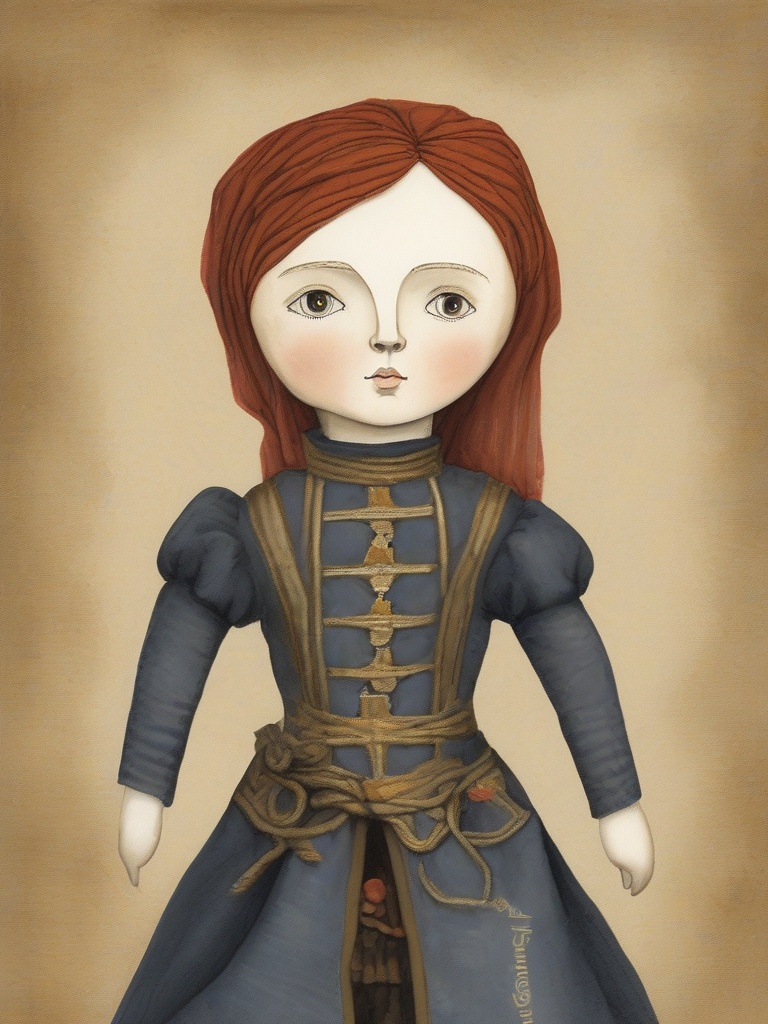
Young Jeanne tending sheep and spinning wool in her village, hearing — by her own account — voices calling her to a task too large for a child.
Answer all three to unlock this stage.
Unlock the previous stage first.
Crafting the doll
Garment: a quilted arming tunic of natural linen under hand-shaped 'plate' armour in silver-grey felt and metallic fabric; for the Domrémy look, undyed rough wool in grey and russet with a linen coif. Signature attribute: a small white banner of cotton/linen painted with golden fleur-de-lis and the names of Jesus and Mary, on a slim wooden pole. Education card: explains the Hundred Years' War, why a girl wore a soldier's clothing (a charge later used against her), and how the 1456 retrial cleared her name. Sizes Classic 32 / Kidogo 18–20 / Shule 28. Proceeds → heritage conservation of Domrémy, Orléans and Reims cathedral (UNESCO World Heritage).
How this doll is made
Made authentically as a young 15th-century French girl in armour over homespun cloth, her white fleur-de-lis banner her true signature — a protector, not a fighter.
- Garments 3
- Accessories 3
- Materials 1
- Techniques 1
Garments
- Plate armour over an arming tunicShape lightweight 'plate' from silver-grey felt and metallic fabric worn over a quilted linen arming tunic — Joan campaigned in full plate armour, dignified and not graphic.DetailsEN
- Male soldier's doublet and hoseAn alternate look: a fitted doublet with hose laced to it by leather points, as men's campaign dress of the 1420s — the male clothing that was later used as a charge against her.DetailsEN
- Domrémy homespun dressFor the village look, undyed rough wool in grey and russet with a simple linen coif, reflecting her peasant childhood in Domrémy.DetailsEN
Accessories
- The white fleur-de-lis bannerHer signature attribute: a small white banner painted with golden fleur-de-lis and the names of Jesus and Mary, on a slim wooden pole — the emblem she said she loved more than her sword.DetailsEN
- Azure fleur-de-lis shieldA small blue shield strewn with golden fleur-de-lis, the royal arms of France she fought to restore at Reims.DetailsEN
- Wooden cross & rosaryA plain wooden cross and rosary beads convey her sincere devotion without depicting violence.DetailsEN
Materials
- Linen, wool and metallic feltPeriod-true fibres: natural linen for the arming tunic and banner, undyed wool for the village dress, and metallic-grey felt standing in for steel plate.DetailsEN
Techniques
- Cropped 'page' haircutHand-stitch short, cropped dark hair in the soldier's 'page' style she adopted on campaign, framing a calm, resolute young face.DetailsEN
Origin & Ethics
How we know this
On honesty: very well documented — her own words survive in the 1431 trial-of-condemnation records and the 1456 nullification testimony, two of the richest medieval sources about any individual. Homage, not likeness: no portrait was made from life, so the doll's face is invented. We tell her story honestly as a blend of record and legend — the dated events (Orléans, Reims, Rouen, the 1456 retrial, 1920 canonisation) are documented; the content of her 'voices' is presented as her own sincere testimony, not as proven fact.
Committee: French national heritage bodies (Centre des monuments nationaux; Reims / Orléans heritage); medieval historians of the Hundred Years' War; a church-history adviser regarding her sainthood. 5-step protocol as standard; handle the trial and execution with dignity and without gore, suitable for children.