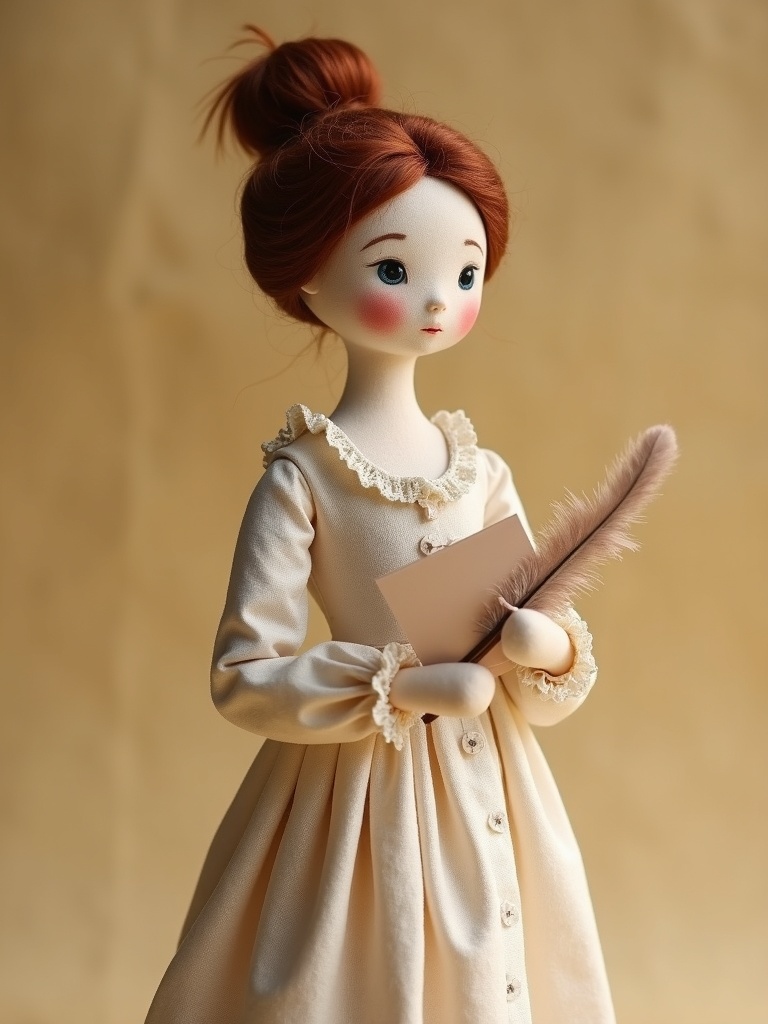
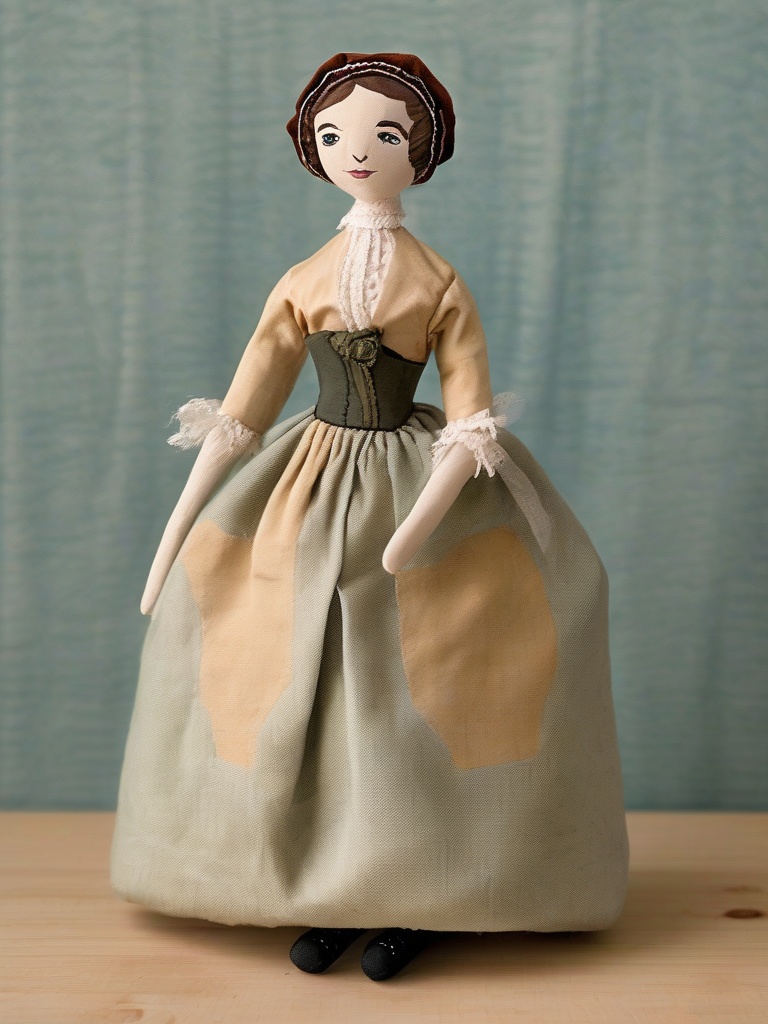
AI design preview — not a photo of the finished handmade doll
Irony & Social Observation
Jane Austen
A clergyman's daughter who never published under her own name became, with irony and a perfect ear, one of the greatest novelists in the English language.
- People
- English (Georgian / Regency)
- Country
- United Kingdom
- Region
- British Isles
- Era
- 1775–1817
- Theme
- Irony & Social Observation
Make your own
Design your Jane Austen
Pick a garment, a hairstyle and a scene, enter the PIN and generate a fresh image of Jane Austen with AI.
⚖ AI homage concept — not a likeness of the real person.
Each image is generated live with fal.ai.
Generated images
AI design preview — not a photo of the finished handmade doll
No images generated yet — be the first.
Tradition & Origin
A clergyman's daughter who never published under her own name became, with irony and a perfect ear, one of the greatest novelists in the English language.
Four novels reached print in the six years before her death, then two more posthumously — a quiet, steady output.
DetailsENJane Austen wrote about the world she knew exactly: the drawing rooms, walks and dinner tables of the English country gentry, where a woman's future turned on whom she married and how much money was in it. Where other novelists reached for castles and villains, she found her drama in overheard conversation and a misjudged first impression — and made it last.
Her great technical gift was free indirect discourse, a way of letting the narrator and a character think at the same time, so readers are pulled inside a heroine's mind even as the story gently shows where that mind goes wrong. Combined with her famous irony, it gave the English novel a new kind of intimacy and wit.
She published all of it anonymously — "By a Lady" — and earned little fame while she lived. Two hundred years on her six novels have never been out of print, are filmed and re-read across the world, and in 2017 her portrait was chosen for the Bank of England's £10 note.
Timeline
- 1775born 16 December at Steventon, Hampshire
- 1809moves to Chawton cottage and returns to writing
- 1811Sense and Sensibility published anonymously, "By a Lady"
- 1813Pride and Prejudice published; copyright sold for £110
- 1815Emma published (Mansfield Park had appeared in 1814)
- 1817dies 18 July at Winchester, aged 41; Northanger Abbey & Persuasion published posthumously
Did you know?
- She first drafted Pride and Prejudice in the 1790s under the title 'First Impressions' before reshaping it years later.DetailsEN
- Almost no portrait of her survives — only a small sketch by her sister Cassandra, which every later image is based on.DetailsEN
- The £10 note quotes Miss Bingley from Pride and Prejudice: 'I declare after all there is no enjoyment like reading!'DetailsEN
She didn't need her name on the cover for her words to be remembered — what do you make that speaks for itself?
Values & Capabilities
Capabilities
◆◆◆◆◆ shows how central a gift is — five diamonds mark a signature strength, fewer mark a supporting one.
She published her novels anonymously — the title pages said only "By a Lady" or "By the Author of Sense and Sensibility" — yet wrote some of the most-read books in English.
She perfected free indirect discourse — slipping inside a character's thoughts while the narrator keeps speaking — so the reader feels what Elizabeth Bennet feels and judges what she misjudges.
With irony as fine as a needle she dissected the manners, money and marriages of the English landed gentry — comedy that is also social analysis.
She showed plainly that for a woman of her time marriage was the main route to money and security — and let her heroines insist on respect, not just a match.
Little noticed in her lifetime, her six novels never went out of print and put her on the British £10 note two centuries later.
Development
1 of 3 stages unlocked
A clergyman's daughter in a house full of books and brothers, scribbling witty "juvenilia" to make the family laugh.
Answer all three to unlock this stage.
Unlock the previous stage first.
Crafting the doll
Garment: high-waisted empire-line gown in fine cotton muslin (sage green or sprigged cream), a fitted spencer or wool pelisse, a white fichu and a small lace cap; soft Regency colours. Signature attribute: a miniature slanted wooden writing slope with a felt goose-quill and tiny ink pot, plus a little stack of six bound books. Education card: explains anonymous authorship ("By a Lady"), free indirect discourse, and why marriage meant money for women of her time. Sizes Classic 32 / Kidogo 18–20 / Shule 28. Part of proceeds → literacy and girls' reading programmes / literary-heritage conservation.
How this doll is made
Make her as a quiet Regency writer: empire-waist muslin, a small lace cap, and a miniature writing slope with a real little quill.
- Garments 2
- Accessories 4
- Materials 1
- Techniques 1
Garments
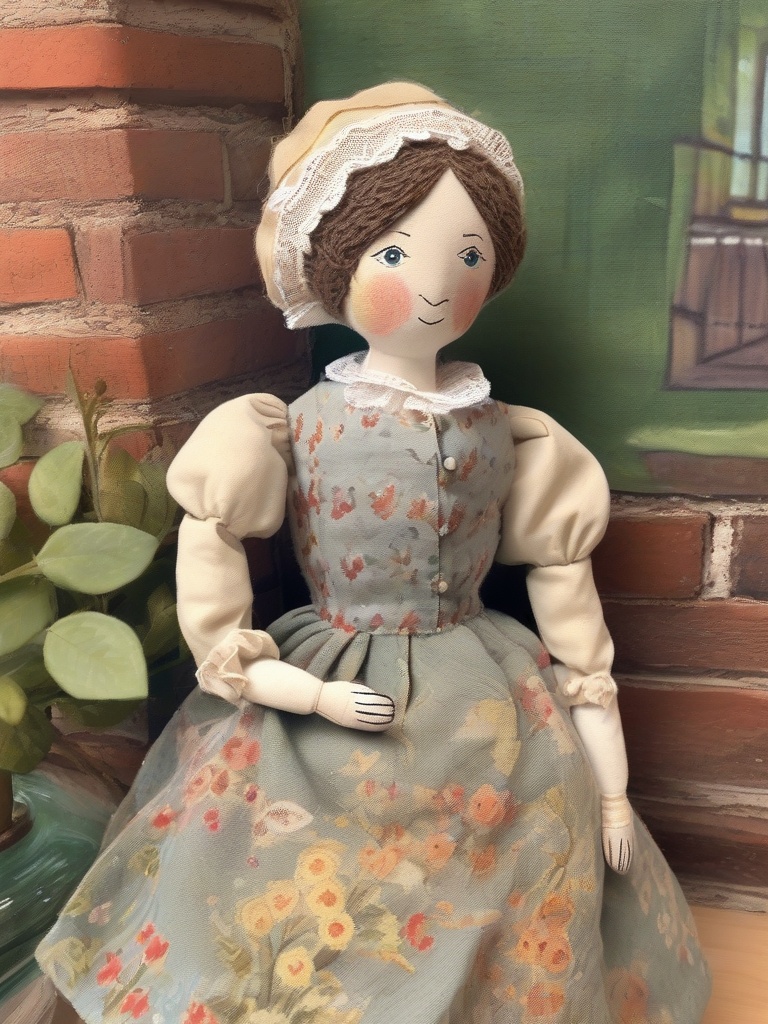
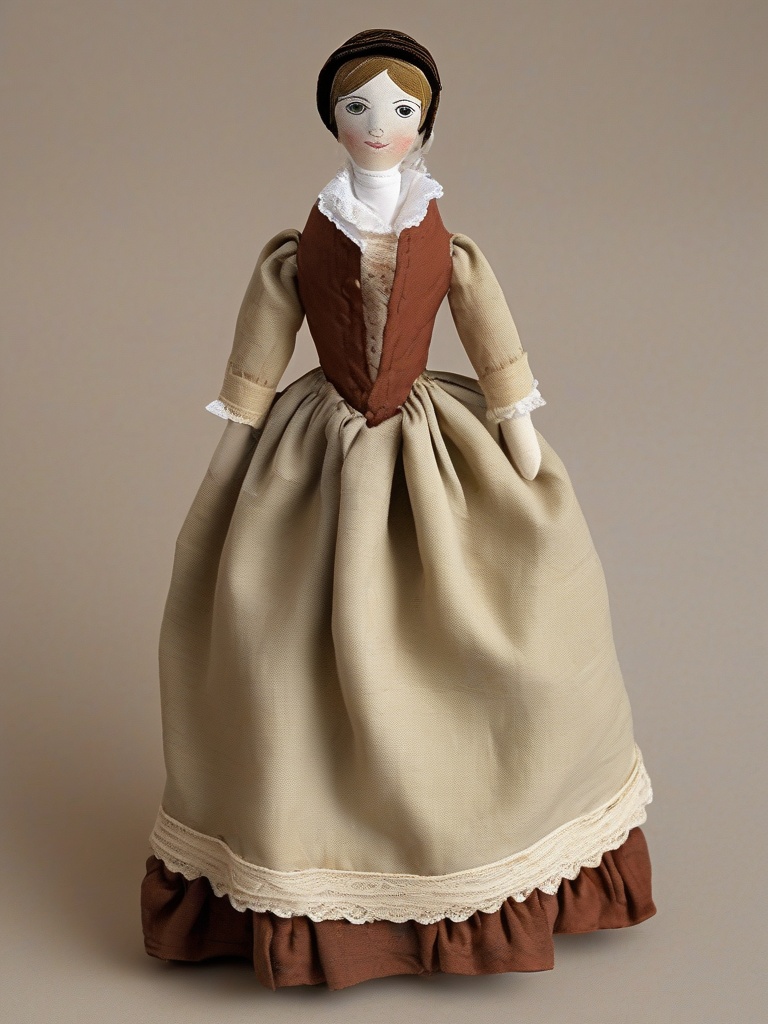
- Empire-line muslin gownCut a high-waisted Regency dress with the seam just under the bust and a long, narrow skirt to the ankle; fine cotton muslin in sage green or a sprigged print suits a country gentlewoman.DetailsEN
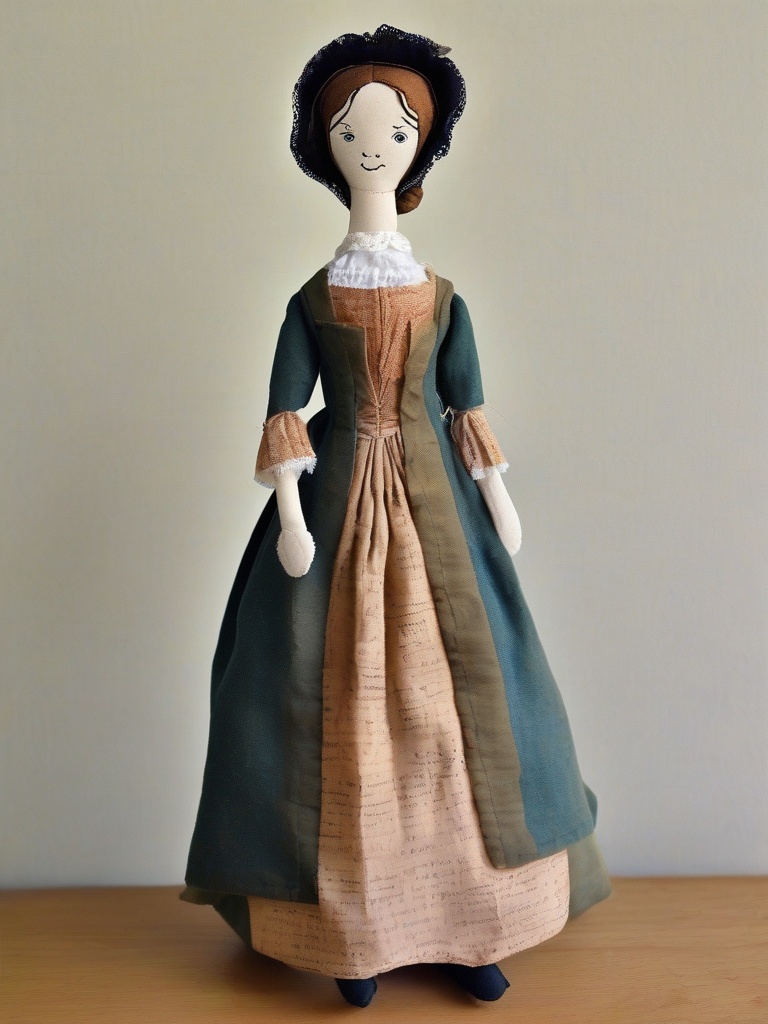
- Spencer jacket or pelisseAdd a short fitted spencer jacket or a longer wool pelisse coat over the gown for an outdoor look — Regency women layered these for walking and church.DetailsEN
Accessories
- Lace cap & fichuPin a small white lace cap over the doll's hair and fold a fine white fichu (a triangular muslin neckerchief) into the neckline — modest, everyday Georgian dress.DetailsEN
- Straw poke bonnetFor the outdoor look, shape a small straw bonnet with a forward brim tied under the chin with ribbon, typical of the 1800s–1810s.DetailsEN
- Miniature writing slopeBuild a tiny slanted wooden lap desk — a flat box with a sloped, hinged writing surface — the kind of portable desk Austen wrote on; her own mahogany writing slope survives in a museum collection.DetailsEN
- Quill, ink pot & letterAdd a felt or feather goose-quill, a thimble-sized ink pot, and a folded paper 'letter' sealed with a dot of red wax — the tools of a writer who also kept up a famous correspondence.DetailsEN
Materials
- Cotton muslin & light woolUse soft cotton muslin for gowns and a light wool for the pelisse; keep the palette to muted Regency tones — sage, cream, dove grey, pale gold — rather than bright modern colours.DetailsEN
Techniques
- Six little bound booksMake a stack of six miniature leather-look books for her six novels; emboss tiny gold spines and you can letter them Sense & Sensibility, Pride & Prejudice, Mansfield Park, Emma, Northanger Abbey, Persuasion.DetailsEN
Origin & Ethics
How we know this
On honesty: very well documented (her surviving letters, manuscripts, publication records and contemporary editions). Homage, not likeness — no authenticated portrait of Austen survives except a small sketch by her sister Cassandra, so the doll's face is a respectful interpretation, not a true portrait.
Committee: Jane Austen's House (Chawton) and Austen scholars; the Jane Austen Society; British Library literary curators; the Bank of England (for any depiction tied to the £10 note imagery). Homage to a public literary figure, presented with period accuracy and dignity.