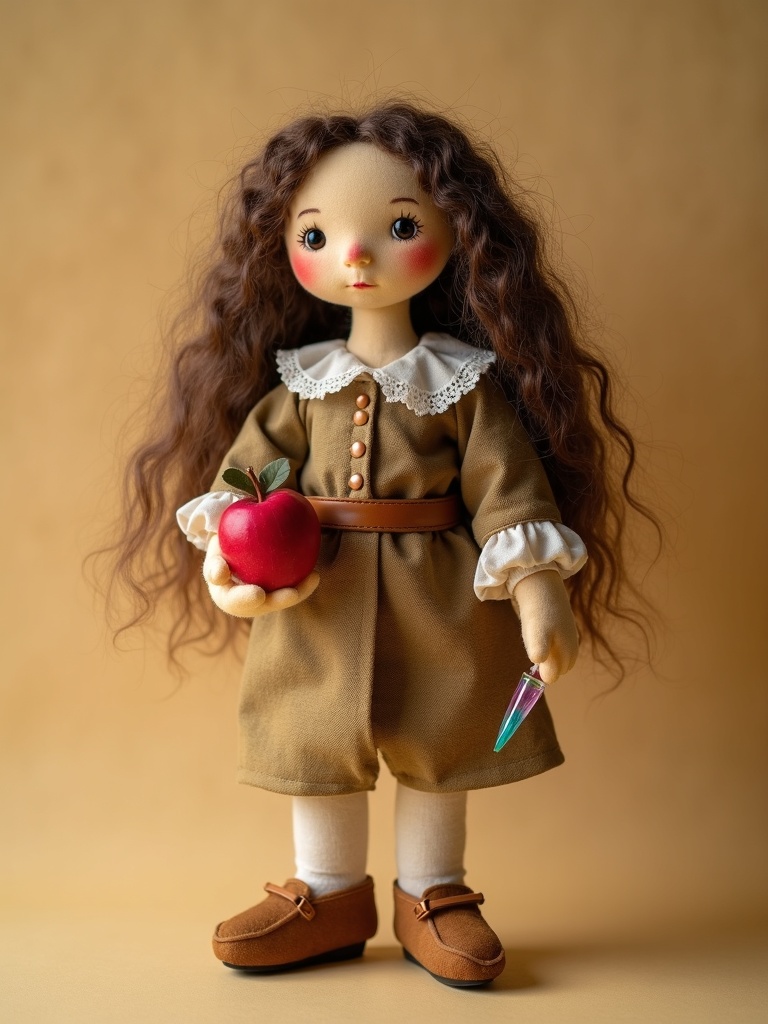
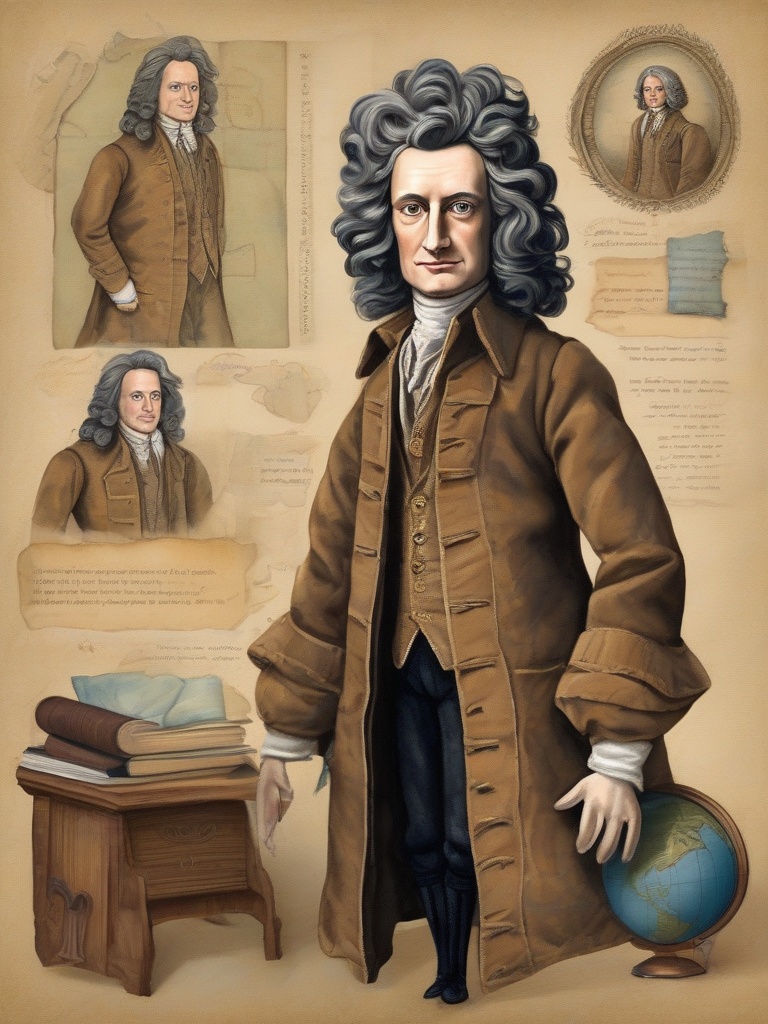
AI design preview — not a photo of the finished handmade doll
Gravity & the Laws of Nature
Isaac Newton
A fatherless farm boy from a Lincolnshire orchard who found one law strong enough to explain both a falling apple and the orbit of the Moon.
- People
- English
- Country
- United Kingdom
- Region
- British Isles
- Era
- 1643–1727
- Theme
- Gravity & the Laws of Nature
Make your own
Design your Isaac Newton
Pick a garment, a hairstyle and a scene, enter the PIN and generate a fresh image of Isaac Newton with AI.
⚖ AI homage concept — not a likeness of the real person.
Each image is generated live with fal.ai.
Generated images
AI design preview — not a photo of the finished handmade doll
No images generated yet — be the first.
Tradition & Origin
A fatherless farm boy from a Lincolnshire orchard who found one law strong enough to explain both a falling apple and the orbit of the Moon.
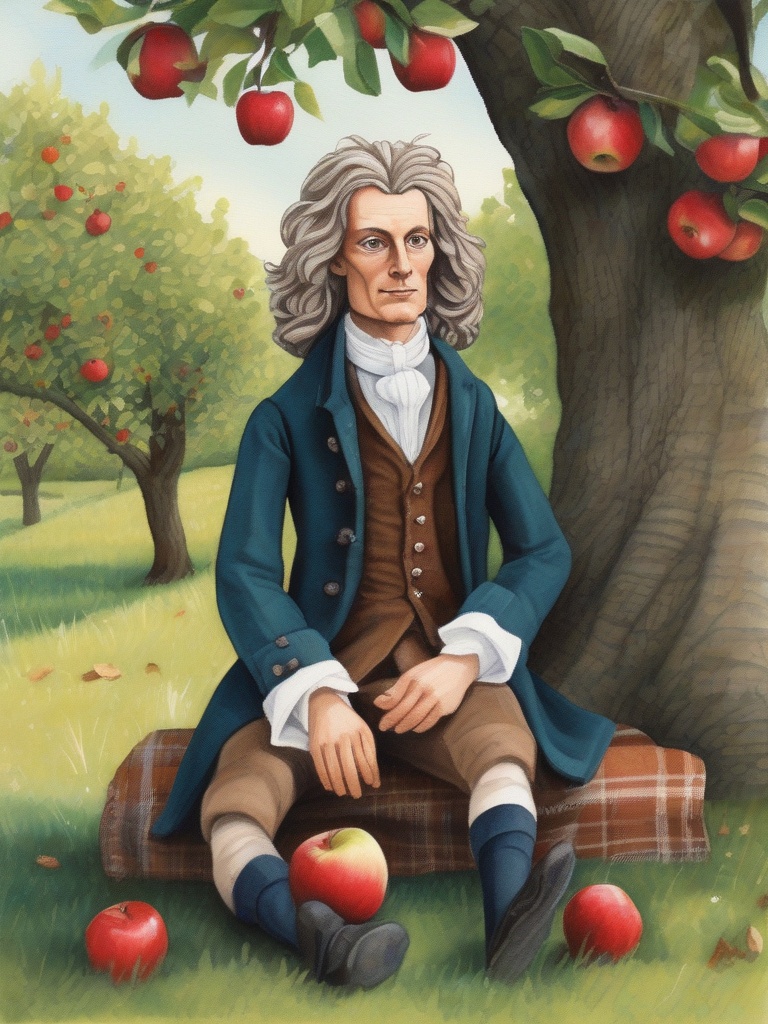
The same gravity reaches across vastly different distances — from a falling apple to the orbiting Moon — weakening with the square of the distance.
DetailsENIsaac Newton was born prematurely in 1643 at Woolsthorpe Manor, so small, his mother said, that he could have fitted into a quart pot. His father had already died. Sent away to be raised by his grandmother, he grew into a solitary, intensely curious boy who built clocks, sundials and tiny windmills instead of farming.
At Cambridge the plague struck, and in 1665–66 the university closed. Newton returned to the same orchard he was born in, and there, almost alone, he laid the foundations of gravity, the laws of motion, calculus and the science of colour — what he later called his most inventive years. It was here that the story of the falling apple belongs.
Two decades later, prodded and funded by his friend the astronomer Edmond Halley, Newton finally gathered this work into the Principia (1687). In one book he united the heavens and the Earth under a single mathematics. He ended his life honoured beyond any scientist before him — knighted, Master of the Mint, and President of the Royal Society.
Timeline
- 1643born at Woolsthorpe Manor, Lincolnshire (25 Dec 1642 old style)
- 1665–66plague years at home; begins gravity, calculus and optics
- 1668/1671builds the first reflecting telescope; shown to the Royal Society
- 1687publishes the Principia — laws of motion and universal gravitation
- 1699becomes Master of the Royal Mint
- 1703 / 1705elected President of the Royal Society; knighted Sir Isaac
Did you know?
- Newton built the first reflecting telescope, using a curved mirror instead of lenses; the design behind most great telescopes today still bears his name.DetailsEN
- To solve his physics, Newton invented a whole new branch of mathematics — calculus, the maths of change — independently of Gottfried Leibniz.DetailsEN
- His famous line 'standing on the shoulders of Giants' comes from a real 1675 letter to his rival Robert Hooke.DetailsEN
If a quiet, fatherless boy in an orchard could read the rules of the whole sky, what might your own curiosity discover?
Values & Capabilities
Capabilities
◆◆◆◆◆ shows how central a gift is — five diamonds mark a signature strength, fewer mark a supporting one.
He showed that the same force which pulls a falling apple to the ground also holds the Moon in its orbit and steers the planets around the Sun — one law for the whole universe.
Inertia, force and reaction — three rules that describe how every object on Earth and in the sky moves. They are still the first physics every engineer learns.
To do his physics he needed a new mathematics, so he invented one — the calculus of change and motion (independently of Leibniz, who published first).
With a glass prism he split a beam of white sunlight into a rainbow and proved the colours were already inside the light — then built the first reflecting telescope.
He knew he had built on Kepler, Galileo and Copernicus before him, and his work in turn became the foundation others would stand upon — including, later, Einstein.
Development
1 of 3 stages unlocked
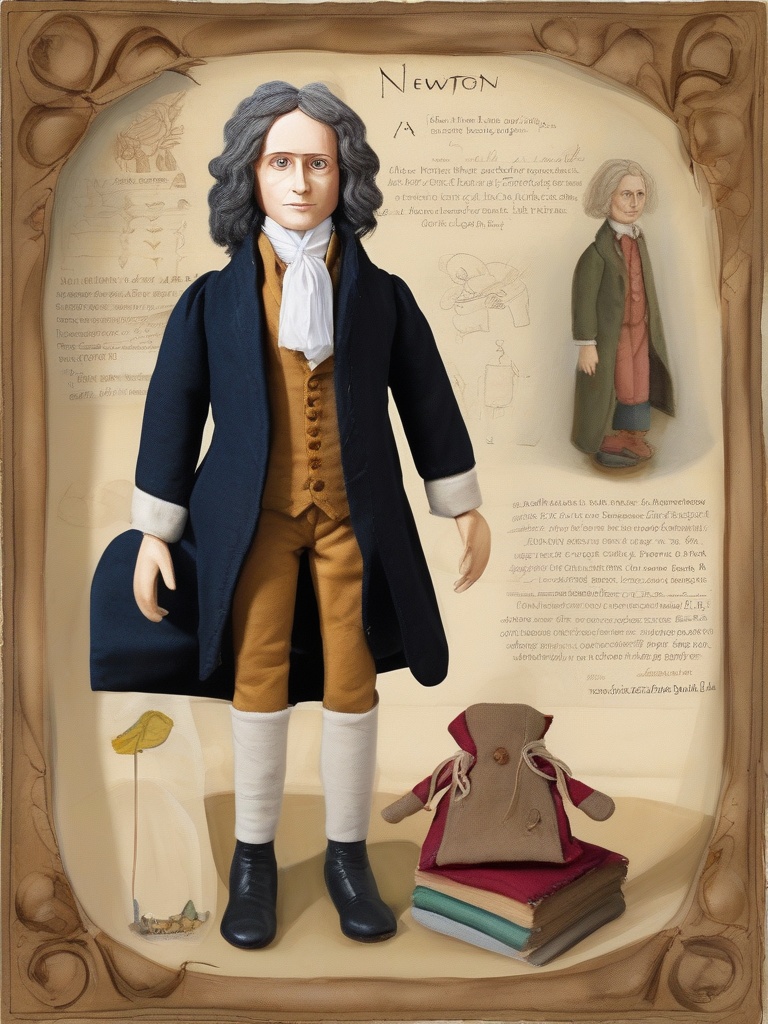
A fatherless farm boy at Woolsthorpe Manor who would rather build sundials and tiny machines than mind the sheep.
Answer all three to unlock this stage.
Unlock the previous stage first.
Crafting the doll
Garment: a long dark scholar's coat in heavy cotton/wool felt with deep cuffs, a white linen cravat and waistcoat, and long grey-white curls in soft yarn. Signature attribute: a tiny faceted glass prism that catches the light, plus a small felt apple and a stitched 'Principia' book. Education card: explains gravity, the three laws of motion, and how Newton built on the giants before him. Sizes Classic 32 / Kidogo 18–20 / Shule 28. Part of proceeds → science education and STEM outreach for children.
How this doll is made
Dress this doll as a 17th-century English gentleman-scholar, and give it the two objects everyone remembers — the prism and the apple.
- Garments 2
- Accessories 5
- Materials 1
Garments
- Long scholar's coatA late-17th-century gentleman's long dark coat with deep turned-back cuffs, worn over a waistcoat — the everyday dress of a Cambridge don of Newton's time.DetailsEN
- White linen cravatA plain white neck-cloth (cravat) and falling collar bands, the dignified scholar's neckwear of the Restoration era; stitch from soft cotton lawn.DetailsEN
Accessories
- Long grey curlsNewton is shown with long flowing grey-white curls to the shoulders; model these in soft yarn rather than a stiff formal wig for a gentler, child-friendly look.DetailsEN
- The glass prismA tiny triangular glass prism is Newton's signature object — it splits white light into the spectrum in his Opticks experiments. A small clear acrylic prism catches real light.DetailsEN
- The appleA single small felt apple recalls the falling-apple story Newton told of his Woolsthorpe years — the gentle symbol of gravity.DetailsEN
- The 'Principia' bookA miniature leather-bound book lettered 'Principia' stands for his 1687 masterwork on motion and gravitation; make it from card and thin leather scrap.DetailsEN
- Reflecting telescopeAn optional tiny brass tube models the reflecting telescope Newton invented and presented to the Royal Society around 1671 — a curved mirror, not lenses.DetailsEN
Materials
- Era-true colours & clothUse deep navy, brown and crimson wool-look felt with brass-look buttons and white linen, the sober rich palette of a Restoration scholar and Royal Society fellow.DetailsEN
Origin & Ethics
How we know this
On honesty: extremely well documented (the Principia and Opticks survive, his letters and papers are archived at Cambridge and Oxford, his role at the Royal Society is recorded). Homage, not likeness — the doll stylises Newton and does not copy any one historical portrait. The 'falling apple' is a real story Newton told friends late in life, but the tidy 'apple hit his head' version is a later legend, shown here as the gentle symbol it became.
Committee: the Royal Society and the Whipple / History of Science scholars; Trinity College, Cambridge and the University of Cambridge; the National Trust at Woolsthorpe Manor; historians of science. 5-step protocol as standard; the doll is a respectful homage, not a portrait likeness.