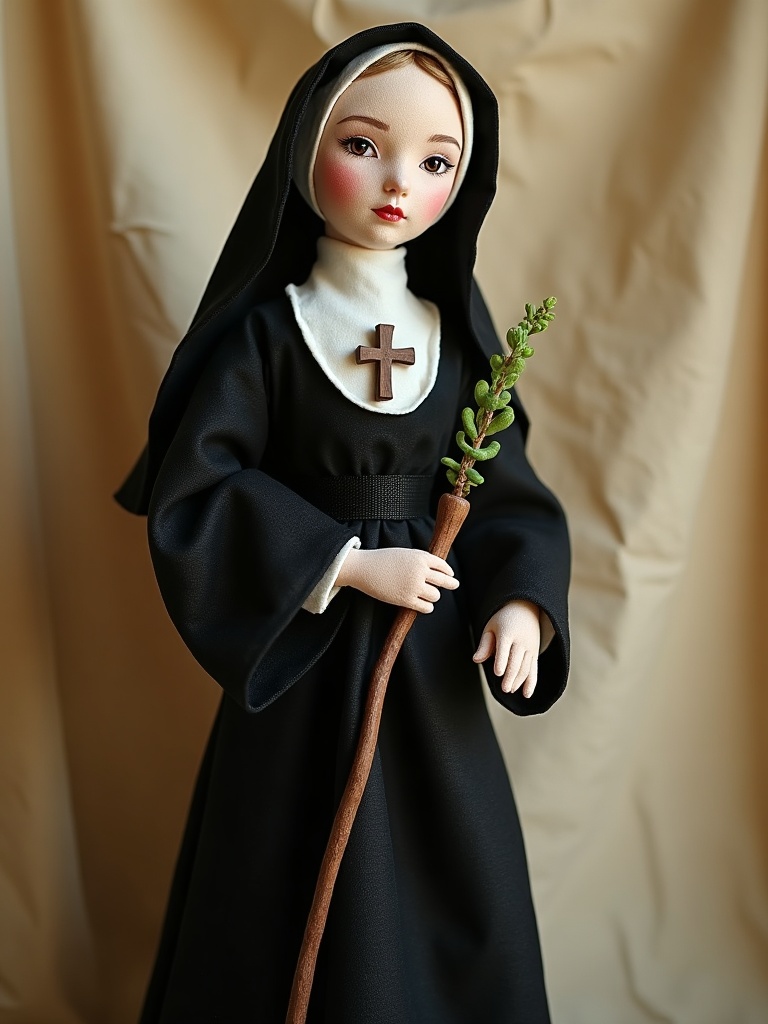
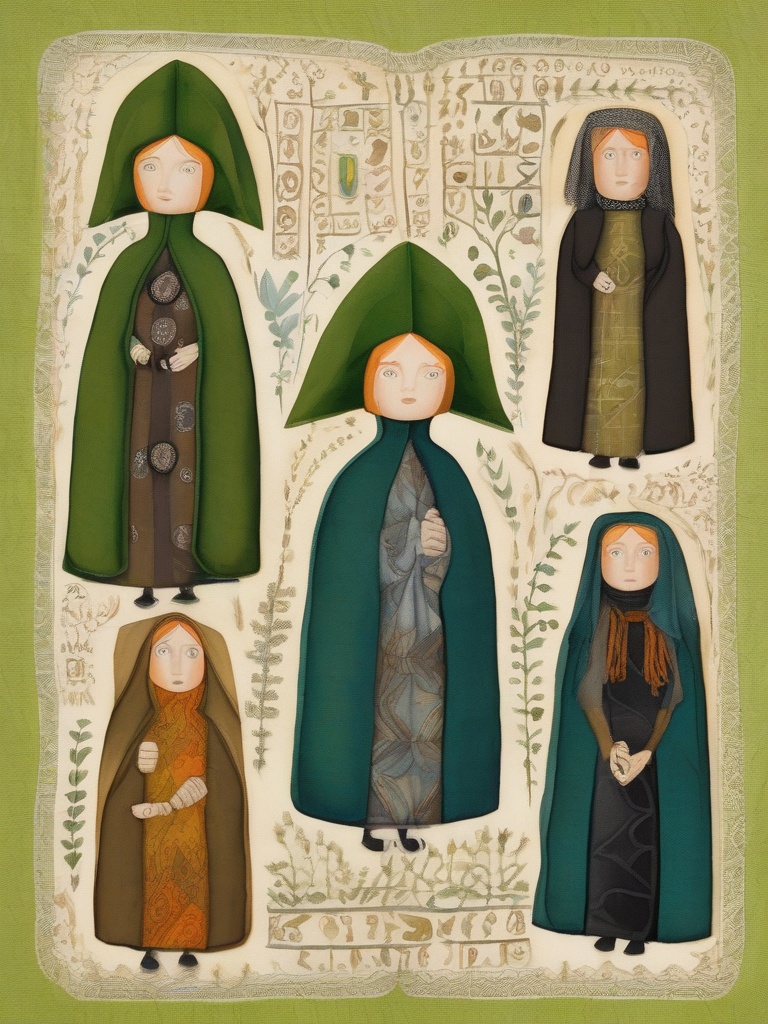
AI design preview — not a photo of the finished handmade doll
Visions, Music & Green Life-Force
Hildegard von Bingen
A girl who saw a 'living light', who waited forty years to speak — then sang, healed and wrote until popes and an emperor listened.
- People
- German (Rhineland)
- Country
- Germany
- Region
- Central Europe
- Era
- c.1098–1179
- Theme
- Visions, Music & Green Life-Force
Make your own
Design your Hildegard von Bingen
Pick a garment, a hairstyle and a scene, enter the PIN and generate a fresh image of Hildegard von Bingen with AI.
⚖ AI homage concept — not a likeness of the real person.
Each image is generated live with fal.ai.
Generated images
AI design preview — not a photo of the finished handmade doll
No images generated yet — be the first.
Tradition & Origin
A girl who saw a 'living light', who waited forty years to speak — then sang, healed and wrote until popes and an emperor listened.
Roughly how her surviving output divides — an unusually broad polymath even for a great abbess.
DetailsENHildegard was born around 1098 in the Rhineland, a tenth child given to the Church and raised by the anchoress Jutta. From childhood she experienced what she described not as dreams or trances but as a waking 'living light'. For most of her life she told almost no one; only around age 42, she wrote, did a command compel her to set the visions down. Over nearly a decade she produced Scivias, twenty-six visions on God, humanity and creation, and — crucially for a woman of her age — won the public approval of Pope Eugenius III, who is said to have read it aloud at the Synod of Trier.
That approval freed her. She left the men's monastery at Disibodenberg and founded her own community at Rupertsberg above the Rhine, later a daughter house at Eibingen. There she did the work that still astonishes: over seventy chants of soaring melodic range gathered as her Symphonia, and the Ordo Virtutum, an entire sung morality play; two natural-medicine books, Physica and Causae et Curae, cataloguing the healing uses of plants, animals and minerals; and a constructed language, the Lingua ignota. Through it all ran her central idea, viriditas — the 'greening' divine life-force.
She did not stay behind the convent wall. Hildegard preached publicly on tours along the Rhine and into Germany, an almost unheard-of thing for a woman, and corresponded with the powerful — Bernard of Clairvaux, several popes, and Emperor Frederick Barbarossa — often rebuking them plainly. She died in 1179. More than eight centuries later, in 2012, Pope Benedict XVI named her a Doctor of the Church, only the fourth woman ever given that title.
Timeline
- c.1098born at Bermersheim in the Rhineland, a tenth child
- 1112enters religious life under the anchoress Jutta at Disibodenberg
- 1142–1151writes Scivias; Pope Eugenius III approves it
- c.1150founds her own convent at Rupertsberg near Bingen
- 1151–c.1158composes the Symphonia chants and Ordo Virtutum; writes Physica & Causae et Curae
- 17 Sept 1179dies at Rupertsberg
- 7 Oct 2012named a Doctor of the Church by Pope Benedict XVI
Did you know?
- Hildegard invented her own language, the Lingua ignota ('unknown language'), with about a thousand made-up words — possibly the earliest known constructed language.DetailsEN
- Her Ordo Virtutum ('Play of the Virtues') is one of the earliest surviving morality plays and is set entirely to music.DetailsEN
- For Hildegard, viriditas — 'greenness' — was a divine life-force animating all of creation; sickness was its drying-up, and healing its return.DetailsEN
If you have an idea no one else can see, can you do the patient work — for years — to help the world finally see it too?
Values & Capabilities
Capabilities
◆◆◆◆◆ shows how central a gift is — five diamonds mark a signature strength, fewer mark a supporting one.
From age three she saw a 'living light'; at 42, told to write, she set down 26 visions as the book Scivias — and Pope Eugenius III himself approved it.
She wrote over 70 luminous chants and the Ordo Virtutum, an early sung morality play — among the largest bodies of music by any medieval composer, and by name.
In Physica and Causae et Curae she catalogued hundreds of plants, animals and minerals and their uses — early European natural-medicine writing in a woman's hand.
Her great idea was viriditas — the 'greening', a divine life-force she saw flowing through plants, people and the whole of creation; illness was its drying-up, health its return.
She founded her own convent at Rupertsberg, went on preaching tours, and wrote frankly to popes, Bernard of Clairvaux and Emperor Frederick Barbarossa — named a Doctor of the Church in 2012.
Development
1 of 3 stages unlocked
Young Hildegard, given to the Church and taught by the anchoress Jutta, already seeing a 'living light' she dares tell almost no one.
Answer all three to unlock this stage.
Unlock the previous stage first.
Crafting the doll
Garment: a black Benedictine habit in cotton/wool felt with a white linen wimple and veil; an alternate festive look in flowing white with a small golden circlet. Signature attribute: a fresh green felt branch (viriditas), a tiny vellum music scroll and a little bundle of herbs (fennel, sage, spelt). Education card: explains who an abbess was, what 'viriditas' means, and that her medieval remedies are heritage — not modern medical advice. Sizes Classic 32 / Kidogo 18–20 / Shule 28. Proceeds → heritage conservation of the Hildegard sites at Rüdesheim/Eibingen and music-education programmes.
How this doll is made
Make her as a 12th-century Rhineland abbess: a Benedictine habit, the tools of a healer-composer, and the green branch of viriditas — dignified, not theatrical.
- Garments 2
- Accessories 3
- Materials 2
- Techniques 1
Garments
- Black Benedictine habitA long black tunic with a white wimple and veil, as worn by nuns of the Order of Saint Benedict; add a simple wooden cross. Keep lines plain and modest.DetailsEN
- Festive white veil with circletAn alternate look in flowing white with a small golden circlet over the veil — Hildegard had her nuns wear white and circlets on feast days, a choice that drew comment in her time.DetailsEN
Accessories
- Abbess's staff & wooden crossA slim crozier-style staff marks her as the head of her own convent at Rupertsberg; a small carved cross at the breast keeps the religious frame.DetailsEN
- Vellum music scrollA tiny unrolled scroll printed with medieval neumes (square chant notation) evokes her Symphonia chants and the Ordo Virtutum — sew or glue it to one hand.DetailsEN
- Bundle of healing herbsA small tied bundle of fennel, sage and a few spelt grains with a clay mortar nods to Physica and Causae et Curae — shown as heritage craft, not as medicine.DetailsEN
Materials
- Green branch (viriditas)A fresh-green felt or silk leafy branch is her signature symbol of the 'greening' life-force; choose a vivid spring green so it reads instantly.DetailsEN
- Natural undyed linen & wool feltUse undyed linen for the wimple and wool felt for the habit — period-faithful fibres that hold a clean drape and a matte, monastic finish.DetailsEN
Techniques
- Hand-stitched, no exact likenessSew the face with simple embroidered features: no medieval portrait of Hildegard survives, so stylise a calm, wise expression rather than attempting a true likeness.DetailsEN
Origin & Ethics
How we know this
On honesty: very well documented (her own surviving works Scivias, Physica, Causae et Curae, ~70 chants and Ordo Virtutum, a large letter corpus, and the 2012 Vatican apostolic letter). Homage, not likeness — no contemporary portrait of her face survives, so the doll stylises rather than depicts her. Her medieval cures and 'viriditas' are presented as heritage and spirituality, not as medical advice.
Committee: Abtei St. Hildegard (Eibingen) and the Diocese of Limburg/Mainz; medievalists and musicologists; herbal-heritage historians. Sacred and liturgical iconography to be treated with respect; remedies framed strictly as historical heritage.