
AI design preview — not a photo of the finished handmade doll
Folk Life & the Written Homeland
Heinrich Hansjakob
A village priest who turned the everyday lives of Black Forest farmers into books a million people read.
- People
- Badener (Black Forest German, Alemannic)
- Country
- Germany
- Region
- Central Europe
- Era
- 1837–1916
- Theme
- Folk Life & the Written Homeland
Make your own
Design your Heinrich Hansjakob
Pick a garment, a hairstyle and a scene, enter the PIN and generate a fresh image of Heinrich Hansjakob with AI.
⚖ AI homage concept — not a likeness of the real person.
Each image is generated live with fal.ai.
Generated images
AI design preview — not a photo of the finished handmade doll
No images generated yet — be the first.
Tradition & Origin
A village priest who turned the everyday lives of Black Forest farmers into books a million people read.
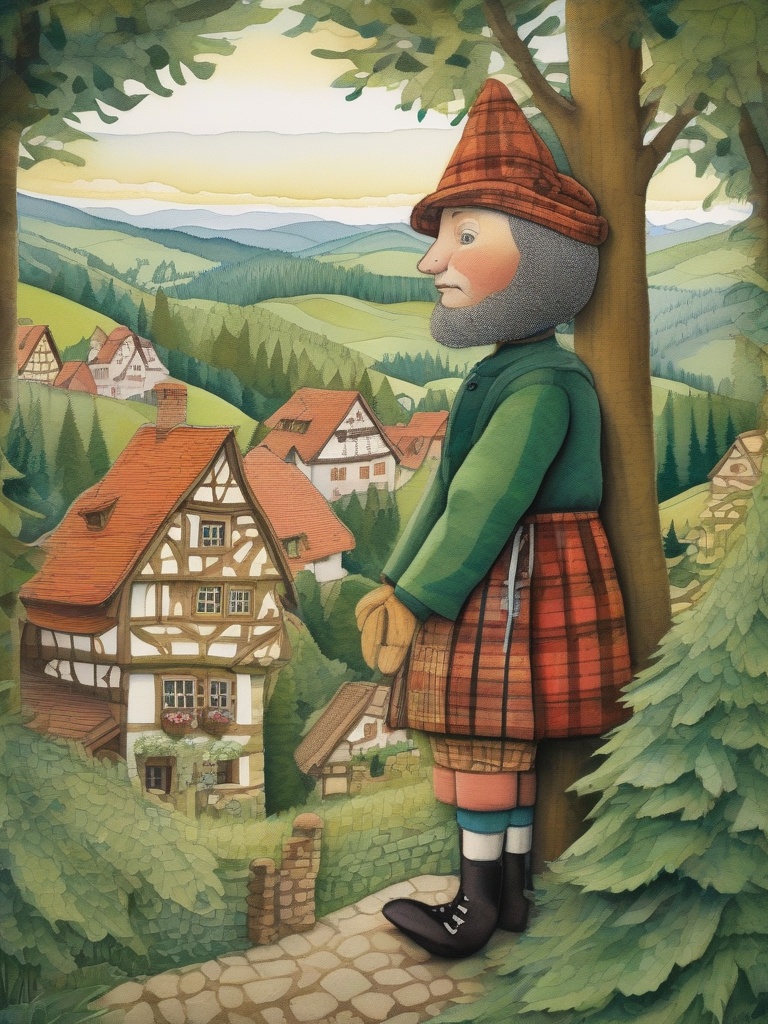
Priest, parliamentarian and prolific author — roughly how his life's energy divided.
DetailsENHeinrich Hansjakob was born in 1837 over a bakery in Haslach im Kinzigtal, deep in the Black Forest. He became a Catholic priest, but he never left that world behind: in more than seventy books he wrote down the customs, speech, faith and hard work of the farmers, craftspeople and innkeepers around him, in luxury editions illustrated by the painters of the region.
He was a practical man as well as a writer. As pastor in Hagnau on Lake Constance he watched wine merchants squeeze his poor growers, and in 1881 he founded the first wine cooperative in Baden so they could sell together — a model that later spread across Germany. He also served a decade in the Baden parliament and was briefly imprisoned for his convictions during the Kulturkampf.
Today the Freihof in Haslach — the house he designed for his old age — is a museum, the only museum in the Kinzig valley devoted to a writer. Historians and folklorists still read him as a precious record of a Black Forest way of life that the railways and factories were already washing away.
Timeline
- 1837born 19 August in Haslach im Kinzigtal, a baker's son
- 1863ordained a Catholic priest after studies in Freiburg and Tübingen
- 1871–1881deputy in the Baden state parliament
- 1881founds the Hagnauer Winzerverein, Baden's first wine cooperative (20 Oct)
- 1888 / 1899publishes "Wilde Kirschen" and "Erzbauern", at the height of his fame
- 1916dies 23 June in his Freihof in Haslach
Did you know?
- He was the most widely read author in southern Germany of his day, yet he wrote almost entirely about the people in his own corner of the Black Forest.DetailsDE
- His books were illustrated by Black Forest painters like Wilhelm Hasemann and Curt Liebich, turning regional life into beautiful deluxe editions.DetailsDE
- He built the Freihof in Haslach as his retirement home; it is now the only museum in the Kinzig valley dedicated to a writer.DetailsDE
What would happen if you wrote down the everyday stories of your own street, before they are forgotten?
Values & Capabilities
Capabilities
◆◆◆◆◆ shows how central a gift is — five diamonds mark a signature strength, fewer mark a supporting one.
He wrote down the ordinary lives of farmers, craftspeople and villagers of the Baden Black Forest — so a whole world would not be forgotten.
His tales like "Wilde Kirschen" (1888) and "Erzbauern" (1899) made him the most widely read author in southern Germany of his day.
As pastor in Hagnau he saw merchants offer his winegrowers "a scandalous price" — so on 20 October 1881 he founded Baden's first wine cooperative.
He sat in the Baden state parliament for a decade (1871–1881) and spoke for rural Catholics — once jailed during the Kulturkampf for his convictions.
He championed the Alemannic dialect and the old Black Forest folk costume, recording customs, legends and dress that the railway age was sweeping away.
Development
1 of 3 stages unlocked
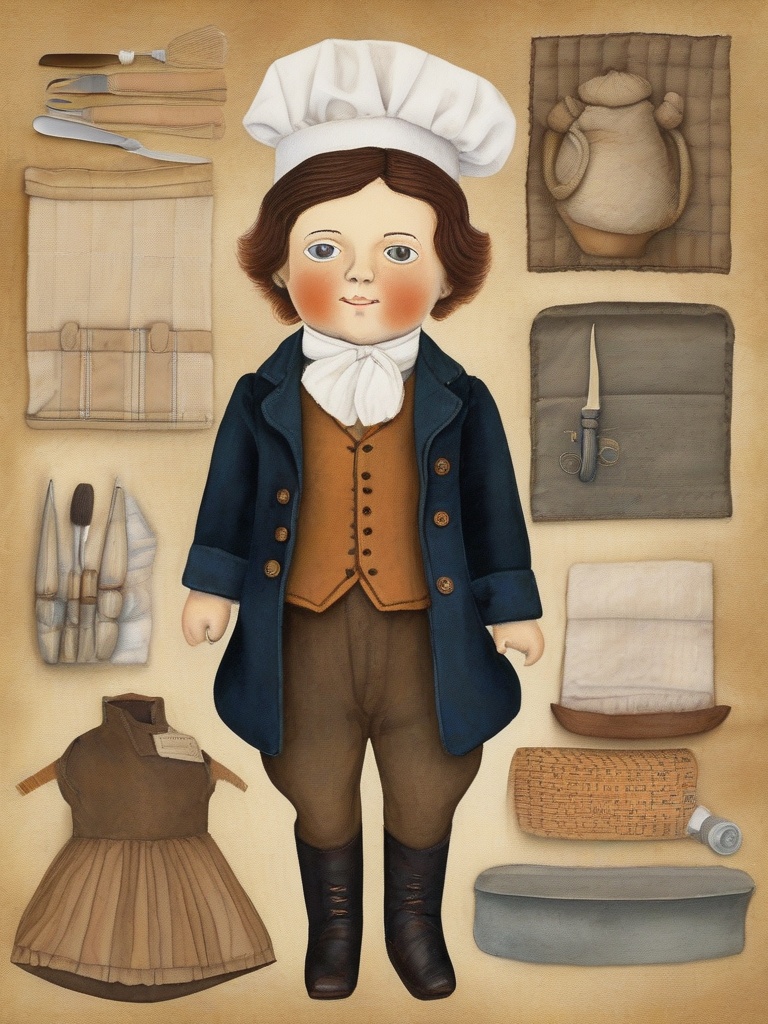
Young Heinrich grows up over his father's bakery and inn in Haslach, soaking in the talk, customs and dialect of the Kinzig valley.
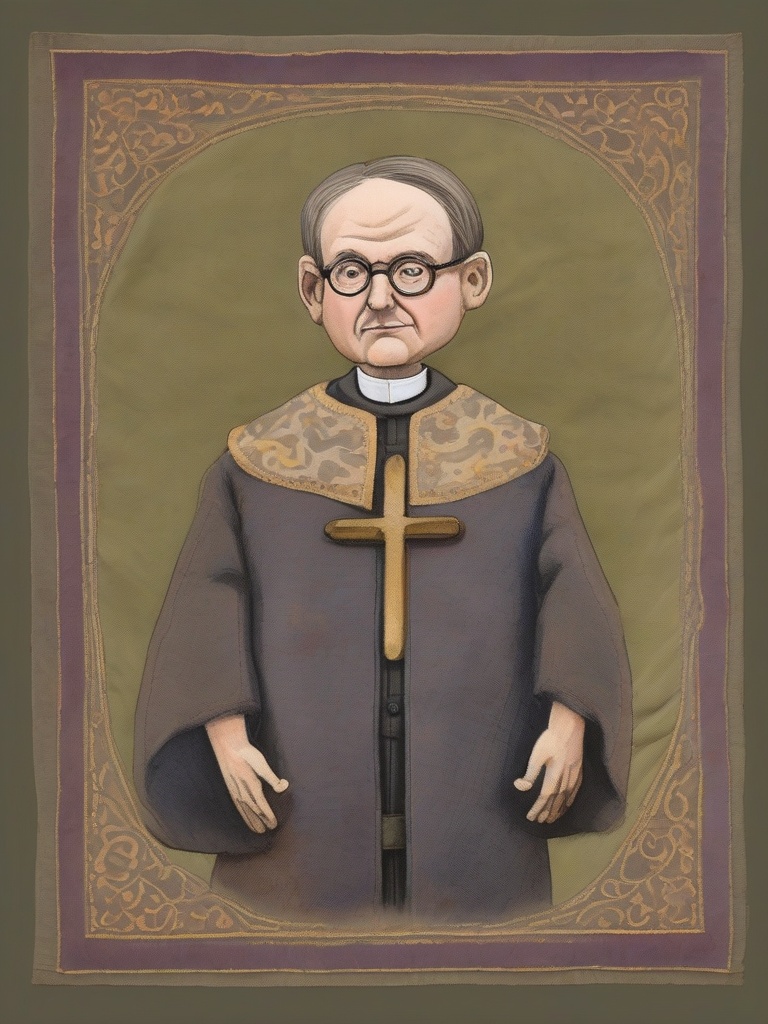
Answer all three to unlock this stage.
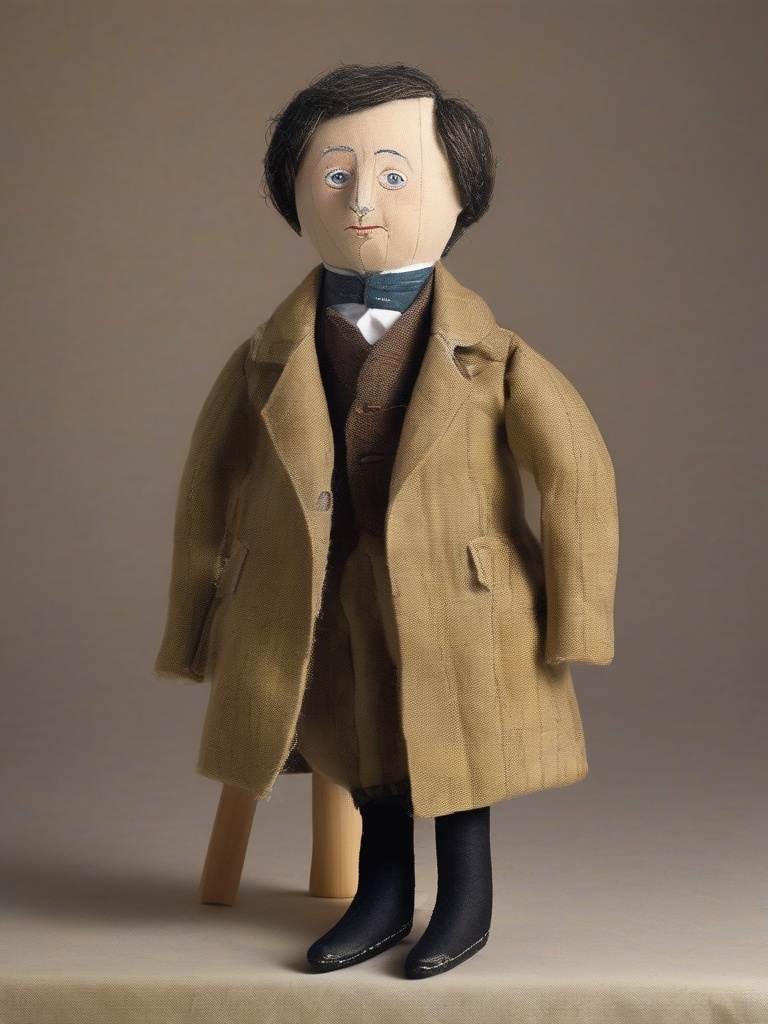
Unlock the previous stage first.
Crafting the doll
Garment: long black cassock or wool frock coat in 100% cotton/wool, small black buttons, white shirt collar, a black biretta or felt hat; full beard in soft fibre. Signature attribute: a tiny leather notebook and quill, a little stack of cloth-bound books, plus a small Black Forest Bollenhut on a stand. Education card: explains that Hansjakob wrote down the everyday lives, dialect and folk costume of ordinary Black Forest people so they would not be forgotten. Sizes Classic 32 / Kidogo 18–20 / Shule 28. Part of proceeds → Hansjakob-Museum Freihof / Black Forest heritage and dialect preservation.
How this doll is made
Make this doll as a dignified 19th-century Black Forest country priest and author, his clothing plain and dark, his attributes the pen and the book.
- Garments 2
- Accessories 4
- Materials 1
- Techniques 1
Garments
- Black cassock (Soutane)A long fitted black robe buttoned from collar to hem, the everyday dress of a 19th-century Catholic priest; sew it from matte black cotton or wool with a row of small covered buttons.DetailsDE
- Frock coat & waistcoatFor his 'writer at his desk' look, a dark wool frock coat over a waistcoat and white shirt — the bourgeois dress of a Baden gentleman-author of the late 1800s.DetailsDE
Accessories
- Biretta or wide-brimmed hatTop him with a black clerical biretta or a broad black felt hat; finish the face with a full beard in soft grey-brown fibre.DetailsDE
- Notebook & quillHis signature tools: a small leather notebook and a quill or steel pen, the instruments with which he recorded Black Forest life and dialect.DetailsDE
- Cloth-bound booksA miniature stack of his works — 'Wilde Kirschen', 'Erzbauern' — stitched as tiny cloth-bound volumes with painted gilt titles.DetailsDE
- Bollenhut & grapesOptional folk attributes: a tiny red-pom-pom Bollenhut on a stand for the Tracht he documented, and a small bunch of grapes for the Hagnau wine cooperative he founded.DetailsDE
Materials
- Wool, linen and leatherUse natural period materials — black wool for the cassock, white linen for the collar, fine leather for the little notebook and shoes — matching the modest, earthy Black Forest palette.DetailsEN
Techniques
- Illustrated-edition stylingEcho the look of his famous deluxe editions: present the doll with a forest-green and ochre card and fir-branch motifs, the way painters Hasemann and Liebich framed his books.DetailsDE
Origin & Ethics
How we know this
On honesty: very well documented (over 70 published books, a dedicated museum, the Baden state biography and the Archdiocese archive). Homage, not likeness; the doll stylises a real, long-dead public figure and gently honours his beloved Black Forest folk culture without claiming his exact face. His was a man of his time, admired but also a figure of contradictions — we present the chronicler and cooperative-founder, not a saint.
Committee: Hansjakob-Museum im Freihof (Haslach im Kinzigtal); Heinrich-Hansjakob-Gesellschaft e.V. (Freiburg); Archdiocese of Freiburg archive; LEO-BW / Baden-Württemberg state biography and regional folklorists.