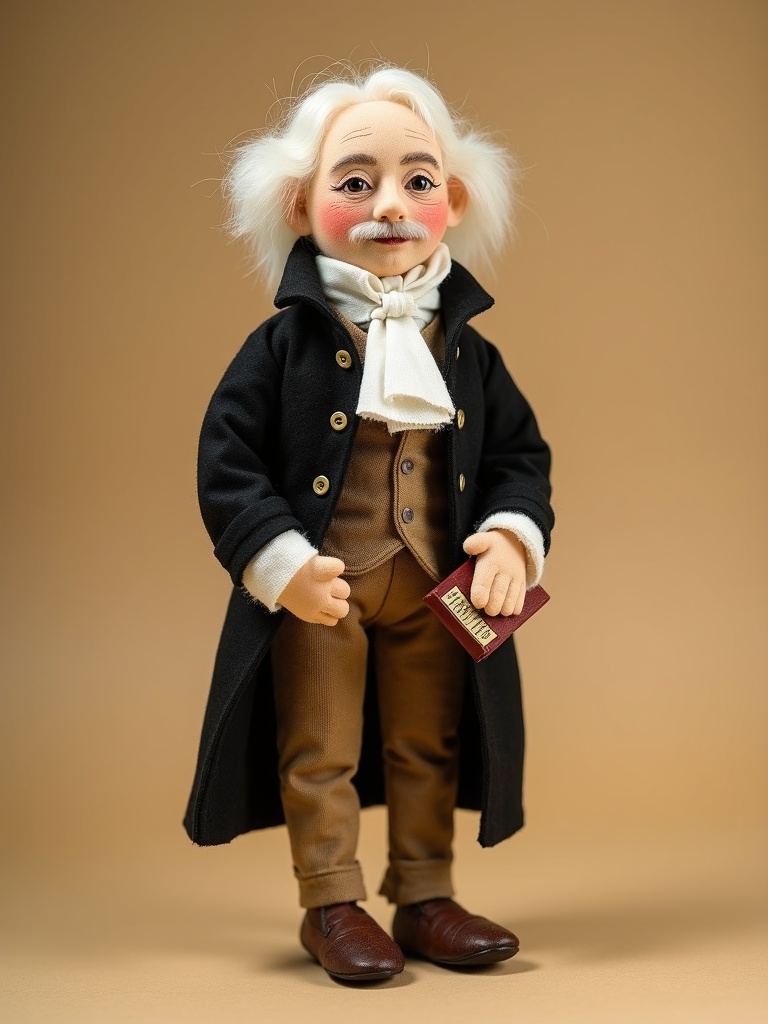
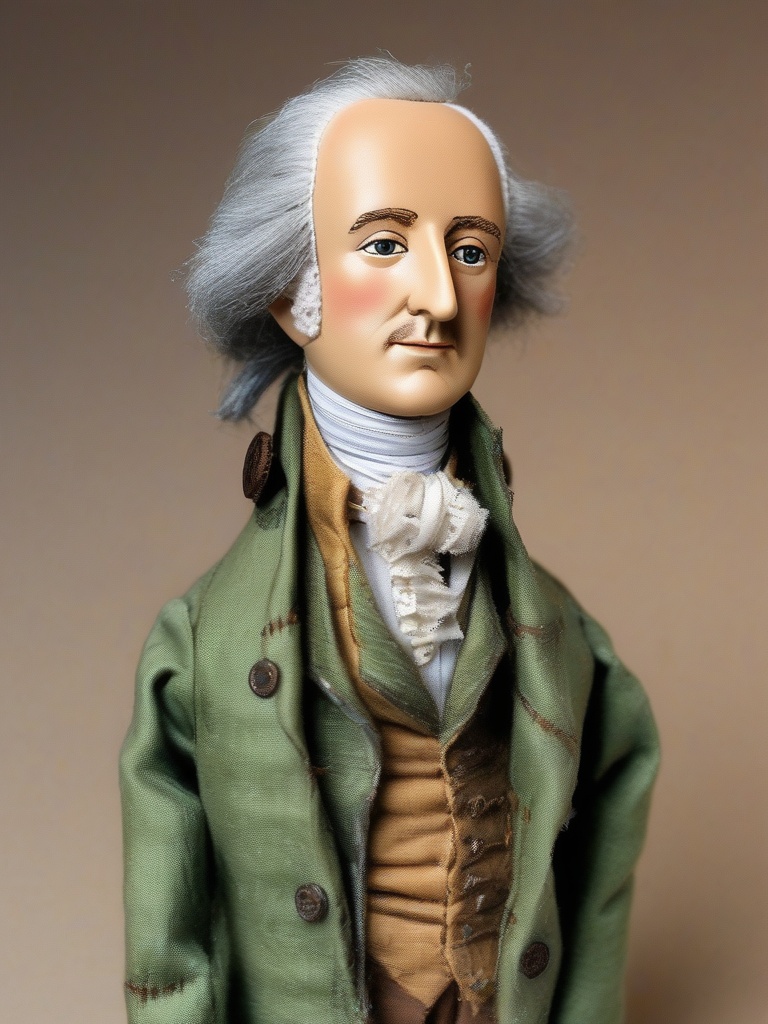
AI design preview — not a photo of the finished handmade doll
Creativity & the Whole Human
Johann Wolfgang von Goethe
He refused to be only a poet — Goethe was a writer, a minister, a botanist and a colour-theorist all at once, and gave the word 'genius' the meaning of a whole human being.
- People
- German (Frankfurt-born, of Weimar)
- Country
- Germany
- Region
- Central Europe
- Era
- 1749–1832
- Theme
- Creativity & the Whole Human
Make your own
Design your Johann Wolfgang von Goethe
Pick a garment, a hairstyle and a scene, enter the PIN and generate a fresh image of Johann Wolfgang von Goethe with AI.
⚖ AI homage concept — not a likeness of the real person.
Each image is generated live with fal.ai.
Generated images
AI design preview — not a photo of the finished handmade doll
No images generated yet — be the first.
Tradition & Origin
He refused to be only a poet — Goethe was a writer, a minister, a botanist and a colour-theorist all at once, and gave the word 'genius' the meaning of a whole human being.
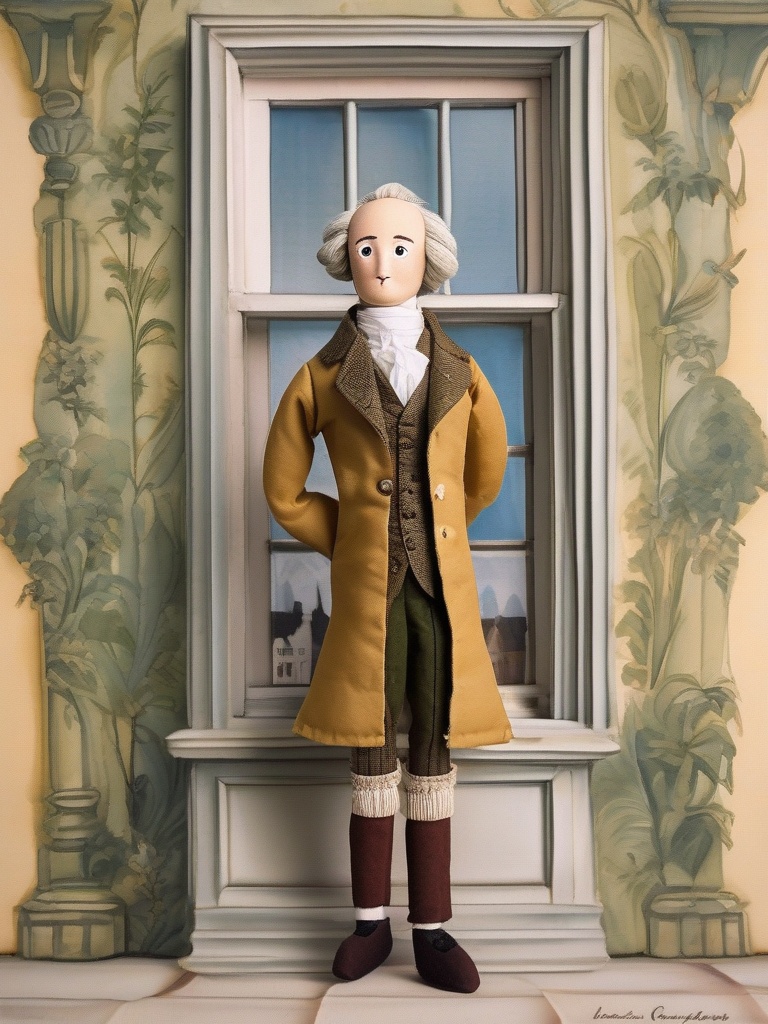
From the first Urfaust drafts to the completion of Part Two — Goethe's lifelong work, finished the year he died.
DetailsENGoethe was born in Frankfurt in 1749 into a comfortable family that gave him languages, drawing and a head full of books. At twenty-four he wrote The Sorrows of Young Werther in about five and a half weeks, and it made him one of the first true literary celebrities of Europe — young men dressed like his hero, manufacturers sold Werther merchandise, and some cities banned the book out of fear of its power.
In 1775 the young Duke of Saxe-Weimar-Eisenach, Karl August, invited him to Weimar. There Goethe lived almost fifty years in his house on the Frauenplan and did far more than write: he sat on the privy council, ran the treasury and the mines, and was ennobled in 1782. With his friend Friedrich Schiller (their friendship began in 1794) he made the small town a capital of European thought — the movement we now call Weimar Classicism.
He was just as serious about nature. From his observations he proposed the Urpflanze — the idea that leaf, petal and seed-leaf are all transformations of one basic organ — decades before science had the word 'homology'. He spent years on his Theory of Colours, prouder of it than of any verse. And across nearly sixty years he carried Faust, beginning it in his twenties and finishing it the year he died, at eighty-two.
Timeline
- 1749born 28 August in Frankfurt am Main
- 1774publishes The Sorrows of Young Werther; instant European fame
- 1775moves to Weimar at Duke Karl August's invitation
- 1786–1788the Italian Journey, renewing his art and science
- 1808 / 1832Faust Part One published; Part Two finished 1831, published after his death
- 1832dies 22 March in Weimar
Did you know?
- Werther fever swept Europe: young men copied his hero's blue coat and yellow waistcoat, and the craze was so strong that several cities banned the book.DetailsEN
- Goethe reached a 'homology' view of plant organs — that all are modified leaves — more than fifty years before the term homology was coined in 1843.DetailsEN
- He valued his Theory of Colours above his poetry, boasting he was 'the only person who knows the truth in the difficult science of colours' — though physics still follows Newton on light.DetailsEN
What if you didn't have to pick just one thing to be? Goethe was a poet and a scientist and a leader — and that was his real masterpiece.
Values & Capabilities
Capabilities
◆◆◆◆◆ shows how central a gift is — five diamonds mark a signature strength, fewer mark a supporting one.
He carried one work, Faust, across roughly sixty years — beginning in his twenties and finishing it months before he died at eighty-two.
At twenty-four he wrote The Sorrows of Young Werther in about five and a half weeks — and became one of Europe's first literary celebrities, sparking a fashion and a fever.
In Weimar he was not only a writer but a statesman — privy councillor to Duke Karl August, running mines, roads and the treasury for years.
He studied nature as seriously as poetry, sensing that every part of a plant — petal, seed-leaf, leaf — is a transformation of one shape: the Urpflanze.
In his Theory of Colours he asked not what light is made of, like Newton, but how human eyes actually feel colour — a six-hue wheel he prized above his poems.
Development
1 of 3 stages unlocked
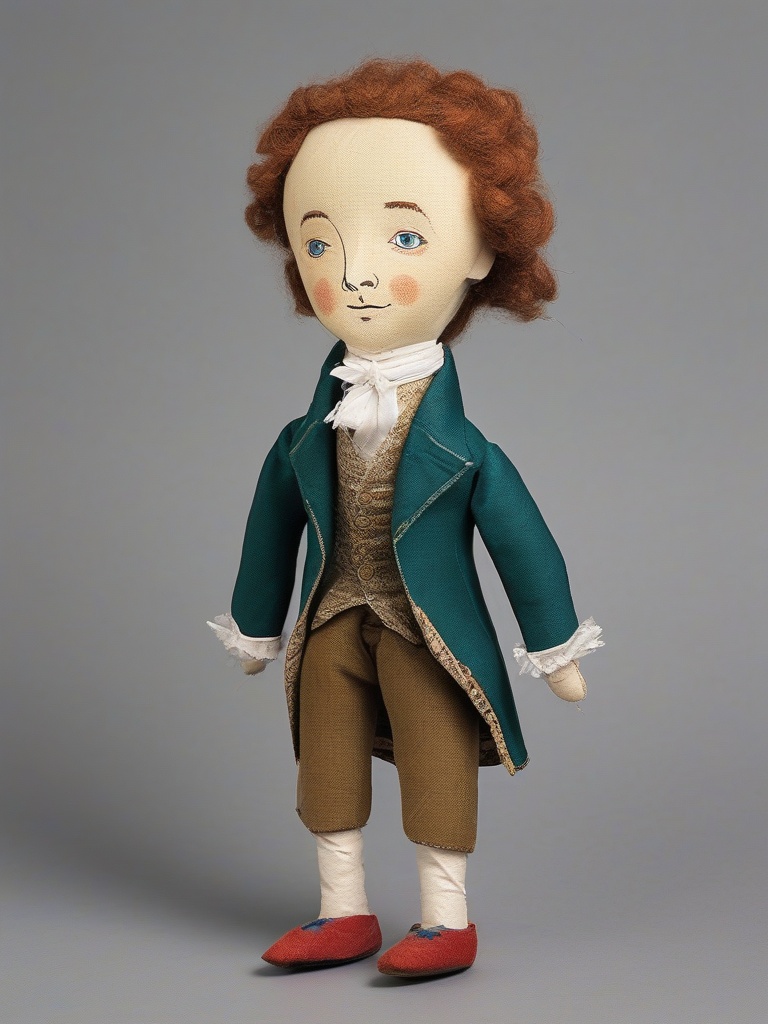
Young Wolfgang in the tall house in Frankfurt, taught languages and drawing, devouring books and puppet-plays of the Faust legend.
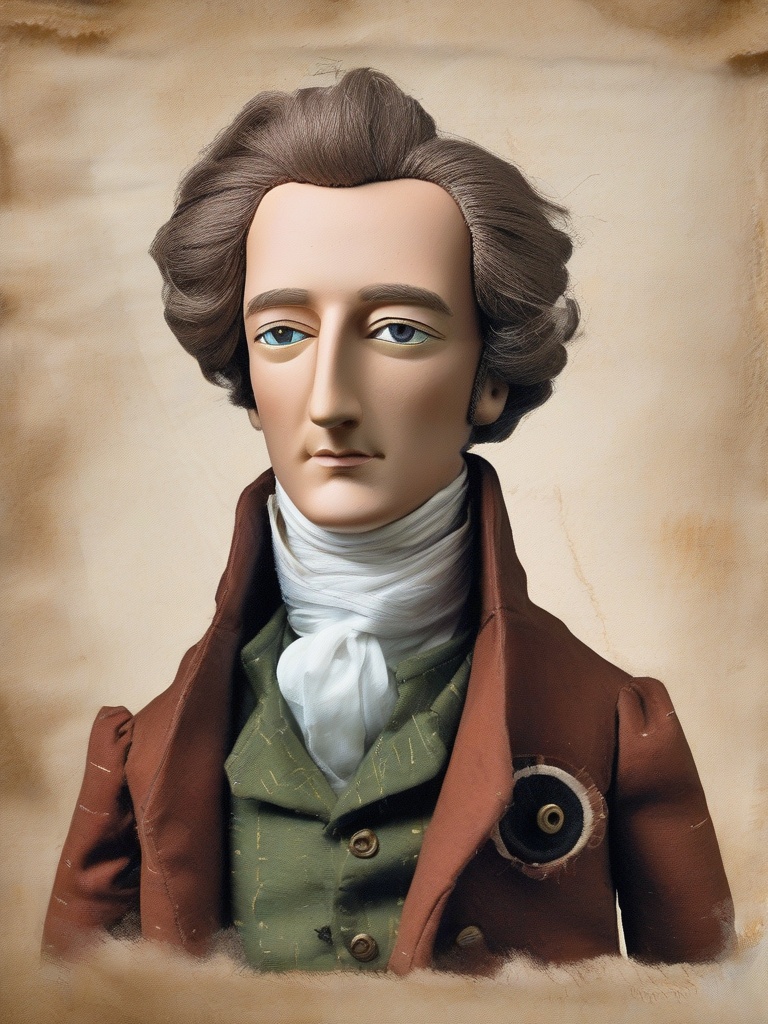
Answer all three to unlock this stage.
Unlock the previous stage first.
Crafting the doll
Garment: dark-green wool tailcoat with brass buttons, an embroidered cream waistcoat, white lace cravat, knee breeches; powdered tied-back hair in wool or thread. Signature attribute: a tiny quill, a bundle of paper 'manuscript', and a hand-painted six-colour wheel (felt and card). Education card: explains that Goethe was poet AND minister AND scientist — a whole person who refused one single label. Sizes Classic 32 / Kidogo 18–20 / Shule 28. Part of proceeds → German-language literacy and youth-writing programmes.
How this doll is made
Make this doll as a late-18th-century German gentleman of letters: sober tailoring, fine cloth, and small props that show he was poet, scientist and minister at once.
- Garments 2
- Accessories 4
- Materials 1
- Techniques 1
Garments
- Dark-green wool tailcoatCut a fitted late-1700s tailcoat with a stand collar, cutaway front and brass buttons, in deep bottle-green felted wool — the dignified colour of a Weimar privy councillor.DetailsEN
- Werther blue-and-yellowFor the young-poet variant, pair a blue coat over a bright yellow waistcoat — the exact outfit his readers copied during 'Werther fever'.DetailsEN
Accessories
- Lace cravat & embroidered waistcoatAdd a white lace cravat at the throat and a cream waistcoat with fine embroidery; period gentlemen layered shirt, waistcoat and coat.DetailsEN
- Quill and manuscript bundleHand-roll a small bundle of cream paper tied with thread and a tiny feather quill — the drafts of Faust, which he wrote and rewrote for decades.DetailsEN
- Six-colour wheelPaint a small disc divided into red, orange, yellow, green, blue and violet — Goethe's colour wheel from his Theory of Colours, his proudest work.DetailsEN
- Pressed leaf & seedlingTuck in a single pressed leaf and a tiny potted seedling to stand for the Urpflanze — his idea that every plant part is a transformed leaf.DetailsEN
Materials
- Powdered hair, tied backUse pale grey or off-white wool/thread for hair gathered and tied at the nape in the powdered style of the late 1700s.DetailsEN
Techniques
- The Frauenplan settingStage the doll before a warm classical façade with tall windows — his Weimar residence of nearly fifty years, now the Goethe National Museum.DetailsEN
Origin & Ethics
How we know this
On honesty: very well documented (his own letters and diaries, the preserved Weimar residence and collections, vast scholarship). Homage, not likeness; the doll stylises a real man — his 'Werther blue-and-yellow' look is the literary fashion he inspired, and his Theory of Colours is presented as a way of seeing, not as correct physics (modern science follows Newton on light).
Committee: Klassik Stiftung Weimar (Goethe-Nationalmuseum); Freies Deutsches Hochstift / Frankfurter Goethe-Haus; Germanists and literature scholars. 5-step protocol as standard; period costume verified against portraits, homage not exact likeness.