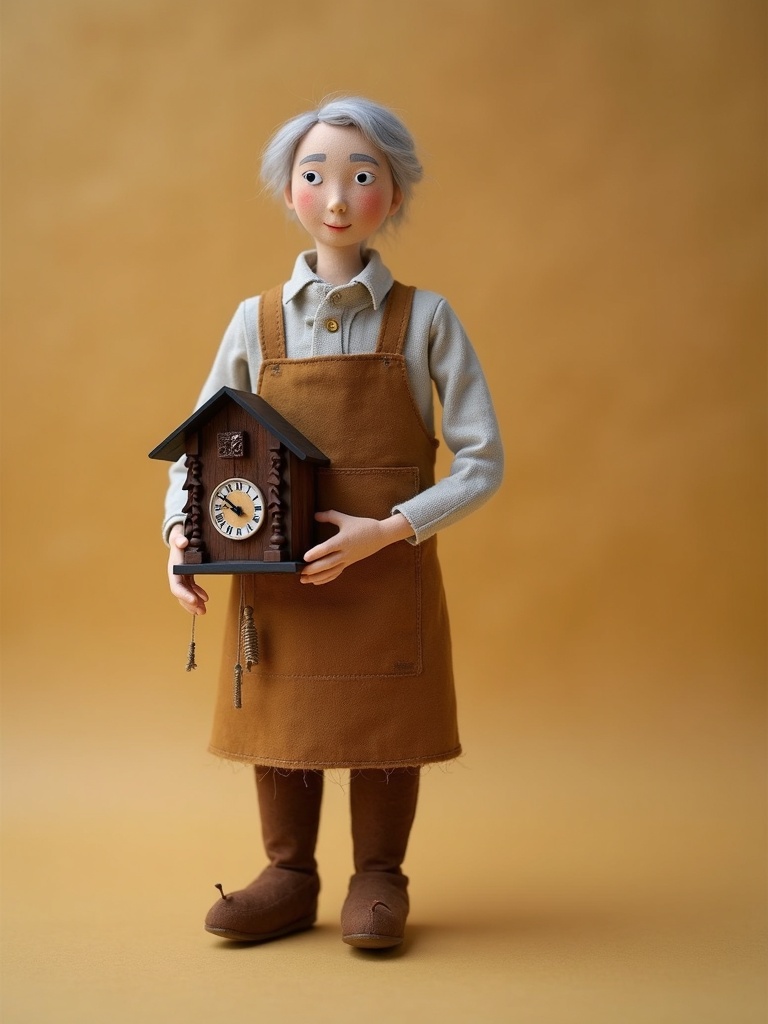
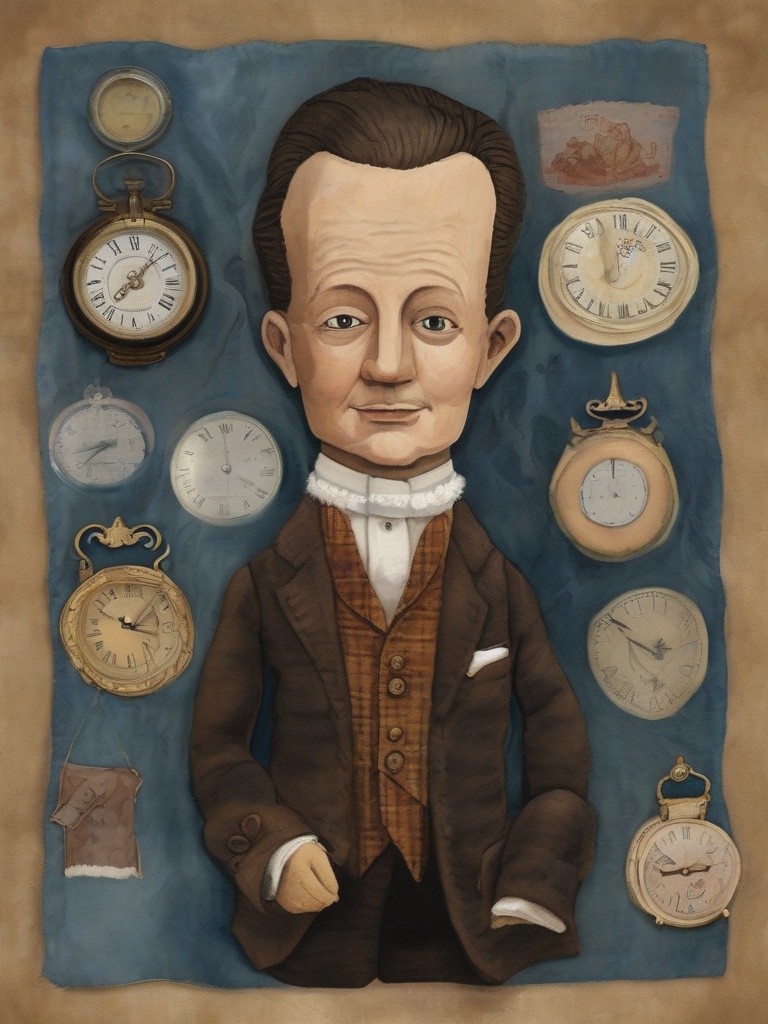
AI design preview — not a photo of the finished handmade doll
Clockmaking & Craft
Franz Anton Ketterer
In snowbound Black Forest farmhouses, ordinary people carved a clock that could sing like a bird — and then argued for two centuries about who did it first.
- People
- Black Forest German (Schönwald, Baden)
- Country
- Germany
- Region
- Central Europe
- Era
- early 18th century (Schönwald, Black Forest)
- Theme
- Clockmaking & Craft
Make your own
Design your Franz Anton Ketterer
Pick a garment, a hairstyle and a scene, enter the PIN and generate a fresh image of Franz Anton Ketterer with AI.
⚖ AI homage concept — not a likeness of the real person.
Each image is generated live with fal.ai.
Generated images
AI design preview — not a photo of the finished handmade doll
No images generated yet — be the first.
Tradition & Origin
In snowbound Black Forest farmhouses, ordinary people carved a clock that could sing like a bird — and then argued for two centuries about who did it first.
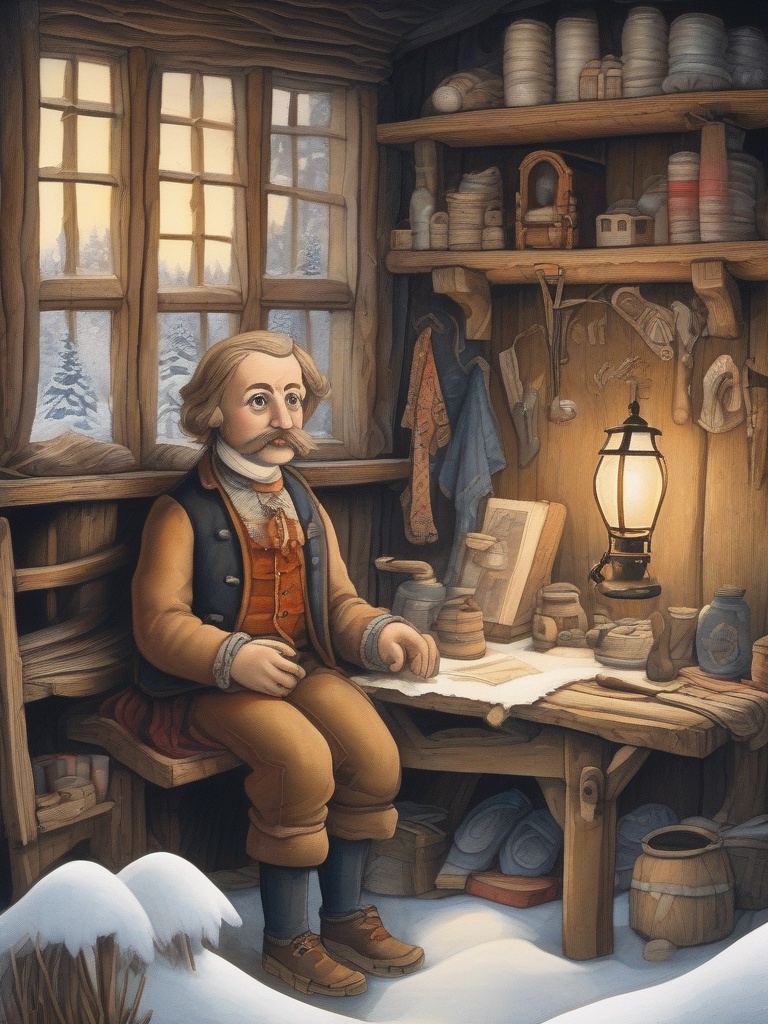
At its 19th-century peak the Black Forest's cottage workshops dwarfed ordinary local crafts in output — clocks by the hundreds of thousands each year.
DetailsENThe Black Forest is a region of dark fir valleys in south-west Germany. From the middle of the 17th century its farmers, idle through deep winters, began carving clock movements out of cheap local wood. Wood was the clever choice: it cost little and it let them work around the metalworkers' guilds. Whole families specialised — one carved gears, one painted faces, one made cases — an early cottage 'assembly line' long before factories.
Out of this craft came the most famous Black Forest invention: the cuckoo clock, in which a falling two-note 'cu-ckoo' is breathed by two small bellows pushing air through two differently-tuned wooden whistles. Tradition links the idea to a clockmaker named Ketterer in the village of Schönwald around the 1730s, said to be inspired by the bellows of a church organ.
But the story is contested. A 1796 account credits a Bohemian merchant and local makers like Dilger and Hummel; a 1810 account names Franz Ketterer of Schönwald; and in some versions the Ketterer who is named would still have been a small child. The German Clock Museum in Furtwangen, after generations of research, simply says no proof survives for any single inventor — which makes this doll as much a lesson in how heritage is made as in how clocks are.
What is beyond dispute is the scale of the craft. By 1840 roughly a thousand workshops dotted the valleys, producing on the order of 600,000 wooden clocks a year, carried across Europe on the backs of peddlers (Uhrenträger). For a time, one in three clocks in the world came from this one small region.
Timeline
- mid-1600sBlack Forest farmhouses begin making wooden clocks in winter
- ≈1730stradition: a Schönwald clockmaker (Ketterer) adds bellows-and-whistle 'cuckoo'
- 1796Franz Steyrer's account credits a Bohemian merchant & other makers instead
- 1810Markus Fidelis Jäck names Franz Ketterer of Schönwald as inventor
- ≈1850sEisenlohr's carved 'railway-house' (Bahnhäusle) design becomes the icon
- 1852/1992Furtwangen collection begun; today's German Clock Museum building opens
Did you know?
- Black Forest clockmakers used wood instead of metal partly to avoid the metalworkers' guild rules — a constraint that became an industry.DetailsEN
- The familiar carved 'railway-house' shape of the cuckoo clock came from a mid-19th-century design by architect Friedrich Eisenlohr — not from the 18th century at all.DetailsEN
- Schönwald still calls itself the 'birthplace of the cuckoo clock' and keeps a small monument to Franz Ketterer in the upper village.DetailsEN
When the little bird calls, remember: somebody once imagined air could sing — and that even a famous story is worth gently asking 'is it really true?'
Values & Capabilities
Capabilities
◆◆◆◆◆ shows how central a gift is — five diamonds mark a signature strength, fewer mark a supporting one.
Tradition credits a Schönwald clockmaker named Ketterer with the idea of two small bellows-driven whistles that breathe a falling 'cu-ckoo' out of a wooden clock — turning a machine into a creature that sings.
Black Forest clocks were carved from cheap local wood, sidestepping the metalworkers' guilds — a whole industry grew from farmers whittling gears through long snowbound winters.
At its peak the Black Forest sent roughly 600,000 wooden clocks abroad each year — for a time, one in three clocks on earth came from these valleys.
Was Ketterer truly the inventor? The clock museum says no one can prove it — the story now 'belongs to Black Forest folklore', like cherry cake. A perfect lesson in checking what we're told.
From the 1850s the carved 'railway-house' (Bahnhäusle) cuckoo clock became the icon of the region — proof that a humble craft can become a people's living heritage.
Development
1 of 3 stages unlocked
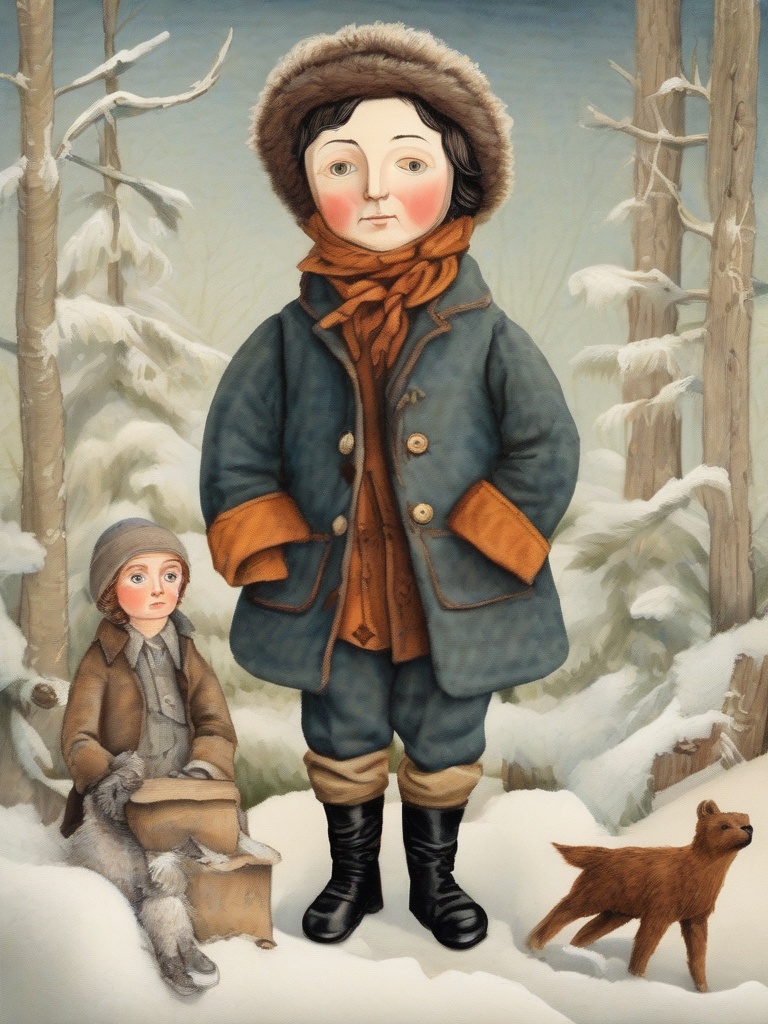
A Black Forest farm child learns to carve wooden gears by lamplight while snow buries the valley — the apprenticeship of a whole region.
Answer all three to unlock this stage.
Unlock the previous stage first.
Crafting the doll
Garment: a natural-linen shirt, a brown wool waistcoat with brass buttons, a long tan leather work-apron, woollen breeches and knitted stockings, buckled felt shoes. Signature attribute: a tiny hand-carved wooden cuckoo clock (felt-and-wood) plus a little set of carving tools and paired bellows. Education card: explains the Black Forest cottage clock trade — and that the 'inventor' story is honoured folklore, not settled fact. Sizes Classic 32 / Kidogo 18–20 / Shule 28. Part of proceeds → Black Forest clockmaking heritage / Deutsches Uhrenmuseum, Furtwangen.
How this doll is made
To make this doll authentically, dress an 18th-century Black Forest clockmaker and give him the tools and the singing wooden clock of his valley.
- Garments 3
- Accessories 3
- Materials 1
- Techniques 1
Garments
- Linen shirt & wool waistcoatA plain natural-linen shirt under a brown wool waistcoat with simple brass buttons — the everyday dress of a Black Forest farm-artisan, far from city finery.DetailsEN
- Leather work-apronA long tan leather apron over woollen breeches and knitted stockings, the practical gear of a craftsman whittling gears and cases all winter.DetailsEN
- Black Forest Tracht (festival)For the 'Sunday best' look, the folk Tracht — black felt hat, red waistcoat, white shirt, dark breeches — the festival costume the museum likens the cuckoo legend to.DetailsDE
Accessories
- Carved wooden cuckoo clockThe signature object: a small carved cuckoo clock with a bird at an open door, pendulum and pinecone-shaped weights — render it in the carved 'railway-house' style that became the icon.DetailsEN
- Bellows & two whistlesTwo tiny paired bellows and two differently-tuned wooden whistles — the mechanism that breathes the falling 'cu-ckoo' and the heart of the legend.DetailsDE
- Peddler's carrying-frameAn optional tall wooden back-frame stacked with finished clocks — the Uhrenträger gear that carried Black Forest clocks across Europe.DetailsEN
Materials
- Local fir / linden woodBlack Forest movements and cases were carved from cheap local wood (fir, linden) — wood, not metal, was the whole economic trick; echo it with warm wood-grain felt and tiny carved props.DetailsEN
Techniques
- Carving tools & a wooden gearwheelAdd a little kit of chisels, gouge, hand-drill and knife with wood shavings, plus one hand-carved wooden gearwheel — the division-of-labour cottage craft that built the trade.DetailsEN
Origin & Ethics
How we know this
On honesty: the Black Forest clockmaking craft is very well documented (the German Clock Museum in Furtwangen, c.8,000 objects, holds the record). Homage, not likeness — this doll stylises an 18th-century Black Forest clockmaker rather than a verified portrait. Honest caveat: the attribution of the cuckoo clock to 'Franz Anton Ketterer of Schönwald (≈1730s)' is a beloved tradition, NOT a settled fact — rival accounts exist, the dates are contested, and the museum itself says no clear proof was ever found and the tale 'belongs to Black Forest folklore'.
Committee: Deutsches Uhrenmuseum (German Clock Museum), Furtwangen; the Verein die Schwarzwalduhr (Black Forest Clock Association); Schönwald local heritage; horology and folk-craft historians. 5-step protocol as standard; honour the craft and present the inventor story as documented folklore.