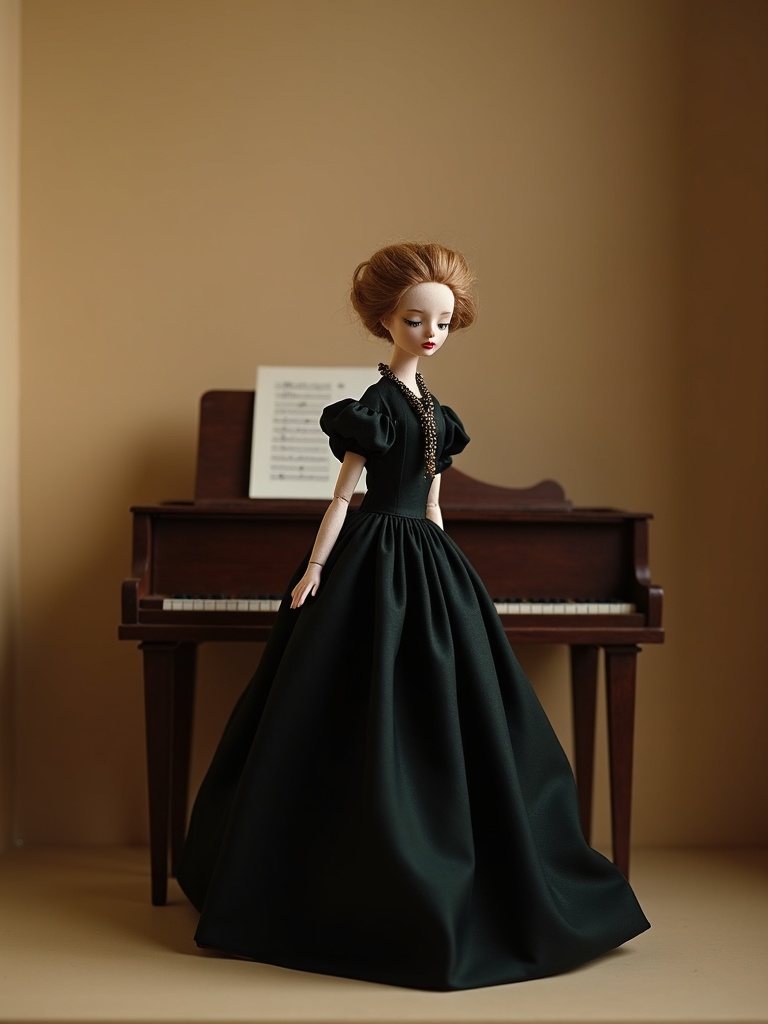
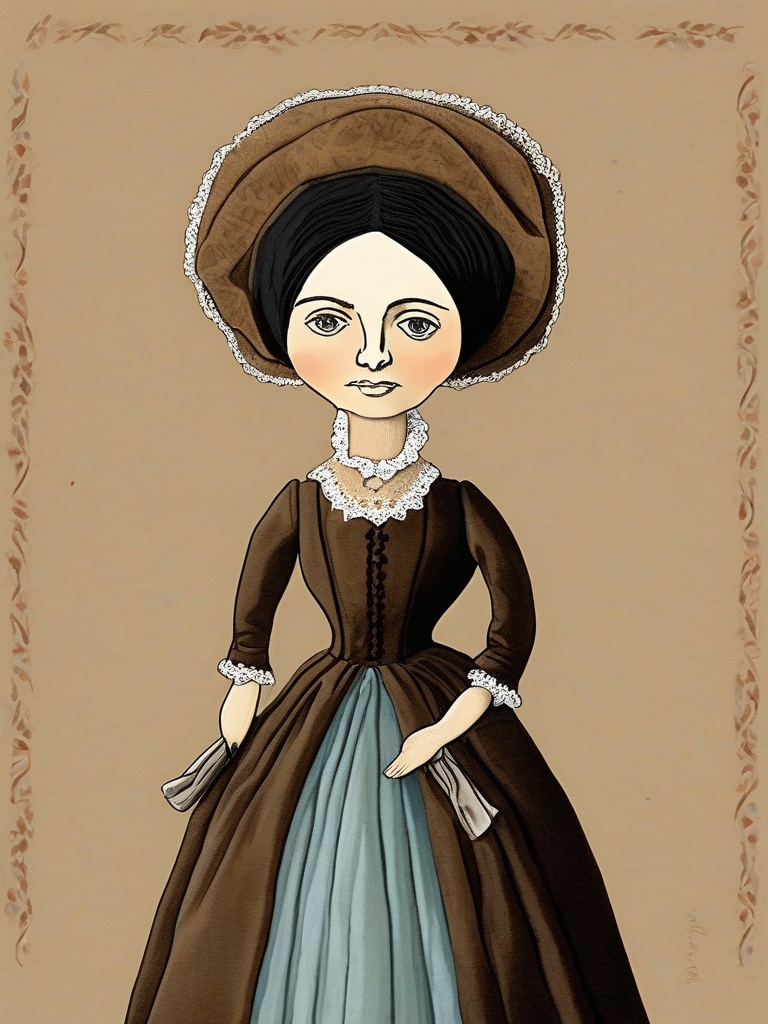
AI design preview — not a photo of the finished handmade doll
Artistry & Perseverance
Clara Schumann
A Leipzig girl trained to the keyboard at five who became the defining concert pianist of the Romantic age and held the stage for over sixty years.
- People
- Saxon German (Leipzig)
- Country
- Germany
- Region
- Central Europe
- Era
- 1819–1896
- Theme
- Artistry & Perseverance
Make your own
Design your Clara Schumann
Pick a garment, a hairstyle and a scene, enter the PIN and generate a fresh image of Clara Schumann with AI.
⚖ AI homage concept — not a likeness of the real person.
Each image is generated live with fal.ai.
Generated images
AI design preview — not a photo of the finished handmade doll
No images generated yet — be the first.
Tradition & Origin
A Leipzig girl trained to the keyboard at five who became the defining concert pianist of the Romantic age and held the stage for over sixty years.
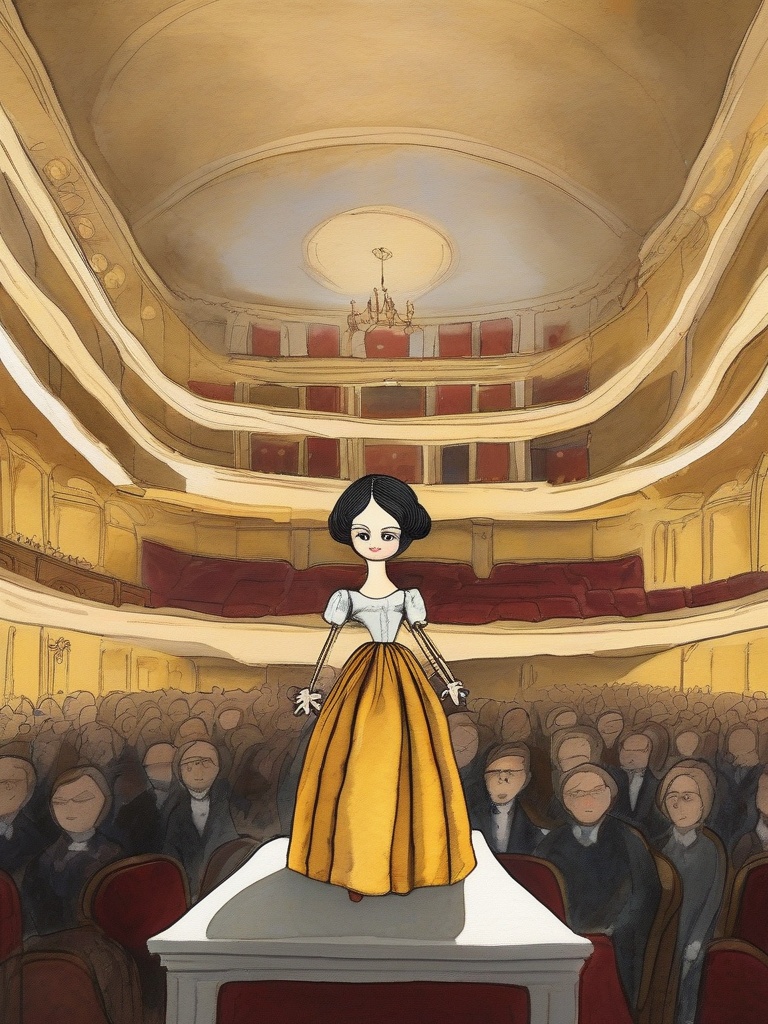
Her performing life stretched from a child prodigy in the early 1830s to her final concert in 1891 — a single unbroken arc of artistry.
DetailsENClara Wieck was a child prodigy made and managed by her father, the piano teacher Friedrich Wieck. By 1835 — barely sixteen — she had a reputation across Europe, and in 1838 the Austrian court honoured her and Vienna's Society of the Friends of Music elected her. She married Robert Schumann in 1840 after a bitter legal fight with her father, and for the next fourteen years lived between the cradle and the concert hall, bearing eight children while still touring.
Her influence ran deeper than her fame. She was among the first pianists to play whole programmes from memory, helping to invent the modern recital — serious, by heart, built around the composer rather than the showman. She premiered Robert's works, edited his complete edition, and gave early performances of Brahms, whom she befriended in 1853 and supported for the rest of her life. After Robert's illness and death in 1856, her playing fed the family.
She also composed — a piano concerto written in her teens, a piano trio, songs, character pieces — yet absorbed her century's verdict that a woman should not. For decades her own music was nearly forgotten while her name lived on as a performer. Today, with her works played again and her face once carried on the 100 Deutsche Mark note, both Claras are remembered: the artist and the composer.
Timeline
- 1819born Clara Wieck in Leipzig, Saxony
- 1838honoured by the Austrian court; elected to Vienna's Society of the Friends of Music
- 1840marries Robert Schumann despite her father's objection
- 1853the Schumanns befriend the young Johannes Brahms
- 1856Robert dies; Clara becomes the family's breadwinner on tour
- 1878–92teaches piano at Dr. Hoch's Conservatory, Frankfurt; dies 1896
Did you know?
- She helped make playing from memory the norm — by her early teens she already performed whole programmes without the score.DetailsEN
- After Robert Schumann's death in 1856, Clara — not Robert's estate — supported their large family through her concert earnings.DetailsEN
- She edited the complete published edition of Robert Schumann's works between 1881 and 1893, securing his place in the canon.DetailsEN
If she could practise for sixty years and still call it joy, what is the one thing you would love enough to keep doing your whole life?
Values & Capabilities
Capabilities
◆◆◆◆◆ shows how central a gift is — five diamonds mark a signature strength, fewer mark a supporting one.
Across a 61-year concert career she changed the format and repertoire of the piano recital and the taste of the whole listening public.
One of the first pianists to perform whole programmes by heart — making the music, not the sheet, the centre of the recital. By her teens it was already her signature.
She premiered and kept alive the works of her husband Robert Schumann and of her friend Johannes Brahms, and edited Robert's complete works (1881–93).
She raised eight children and, after Robert's illness and death, supported the family through her concert earnings while still touring Europe and Britain.
She wrote a piano concerto, a piano trio, songs and many character pieces — yet, in her time, told herself "a woman must not desire to compose." Today her music is heard again.
Development
1 of 3 stages unlocked
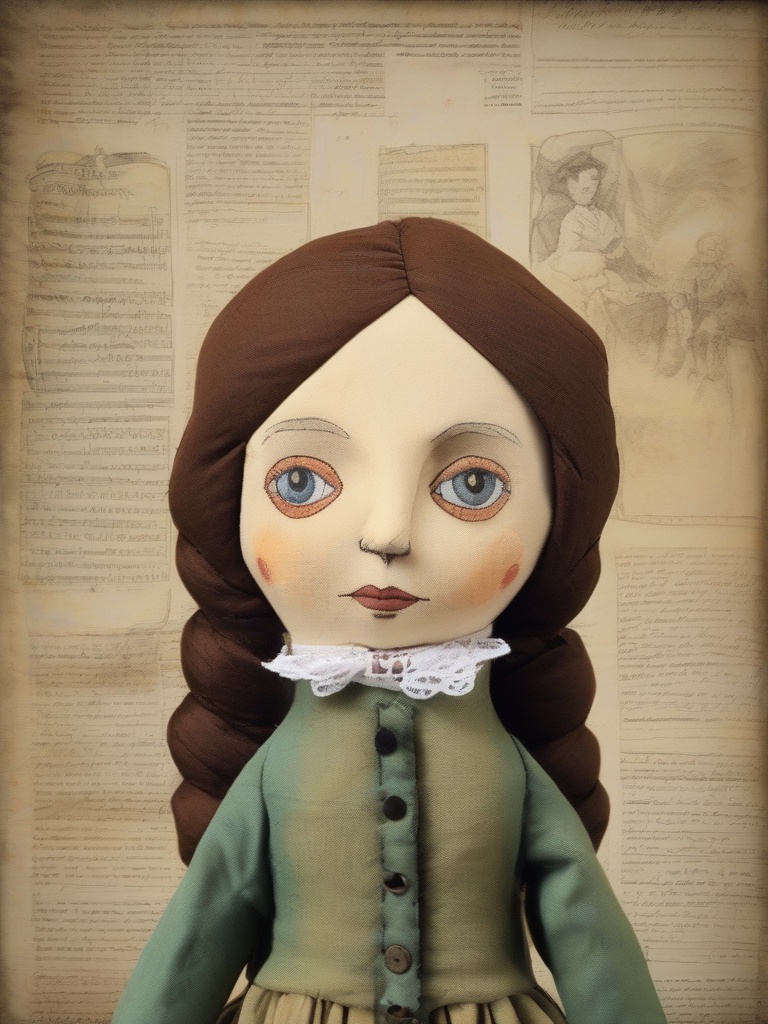
Young Clara Wieck at the keyboard under her father's strict teaching, already touring Europe and famous before she was grown.
Answer all three to unlock this stage.
Unlock the previous stage first.
Crafting the doll
Garment: a deep-violet Romantic concert gown in silk/cotton with a fitted bodice, lace collar and long bell sleeves; hair parted and drawn back. Signature attribute: a small dark wooden grand piano with a closed score, plus a rolled manuscript tied in a violet ribbon (felt). Education card: explains that she shaped the modern recital, played from memory, championed Robert Schumann and Brahms, and once appeared on the 100 Deutsche Mark note. Sizes Classic 32 / Kidogo 18–20 / Shule 28. Part of proceeds → music education for children / Schumann-Haus Leipzig heritage.
How this doll is made
Make this doll as a poised 19th-century concert pianist — Romantic gown, drawn-back hair, and a small grand piano at her hands.
- Garments 2
- Accessories 3
- Materials 1
- Techniques 2
Garments
- Romantic concert gownA full mid-19th-century evening gown in deep-violet silk or cotton sateen: fitted boned bodice, narrow waist, wide bell-shaped skirt over a stiffened underskirt, and long bell sleeves typical of the 1840s–50s.DetailsEN
- Lace collar & cuffsA small white lace or crocheted collar at the high neckline with matching cuffs — the modest, dignified finish of a Romantic-era lady's dress.DetailsEN
Accessories
- Centre-parted hairHair in dark felt or yarn, parted in the centre and drawn smoothly back over the ears into a low bun — her well-known, sober hairstyle.DetailsEN
- Miniature grand pianoA small dark-wood grand piano prop with a painted keyboard strip and a lifting lid; her signature attribute, echoing the instrument on the 100 DM note.DetailsEN
- Rolled manuscriptA tiny rolled sheet-music manuscript tied with a violet ribbon, marking that she composed as well as performed — her own concerto, trio and songs.DetailsEN
Materials
- Silk & jet beadsUse silk or silk-look fabric for the gown and small black jet-style beads for a brooch and trim — the materials of Romantic evening and mourning dress.DetailsEN
Techniques
- Boned bodice shapingShape the fitted bodice with light internal boning or stiff interfacing so the silhouette holds the period's narrow waist and smooth front.DetailsEN
- Painted keyboardPaint or print a fine black-and-white keyboard strip onto the piano prop and pose her hands resting on it — the empty music stand a nod to playing from memory.DetailsEN
Origin & Ethics
How we know this
On honesty: very well documented (over 1,300 surviving concert programmes, her own diaries and letters, Robert's papers, her edition of his works). Homage, not likeness; the doll stylises a real historical artist — period gown, hairstyle and grand piano are representative of her era, not a portrait copy, and her own quoted self-doubt about composing is shown as a sign of her time, not a verdict on her gift.
Committee: Schumann-Haus Leipzig and the Robert-Schumann-Haus Zwickau; music historians and Romantic-era specialists; Dr. Hoch's Conservatory Frankfurt; German cultural heritage bodies. 5-step protocol as standard; depict period dress and instruments faithfully.