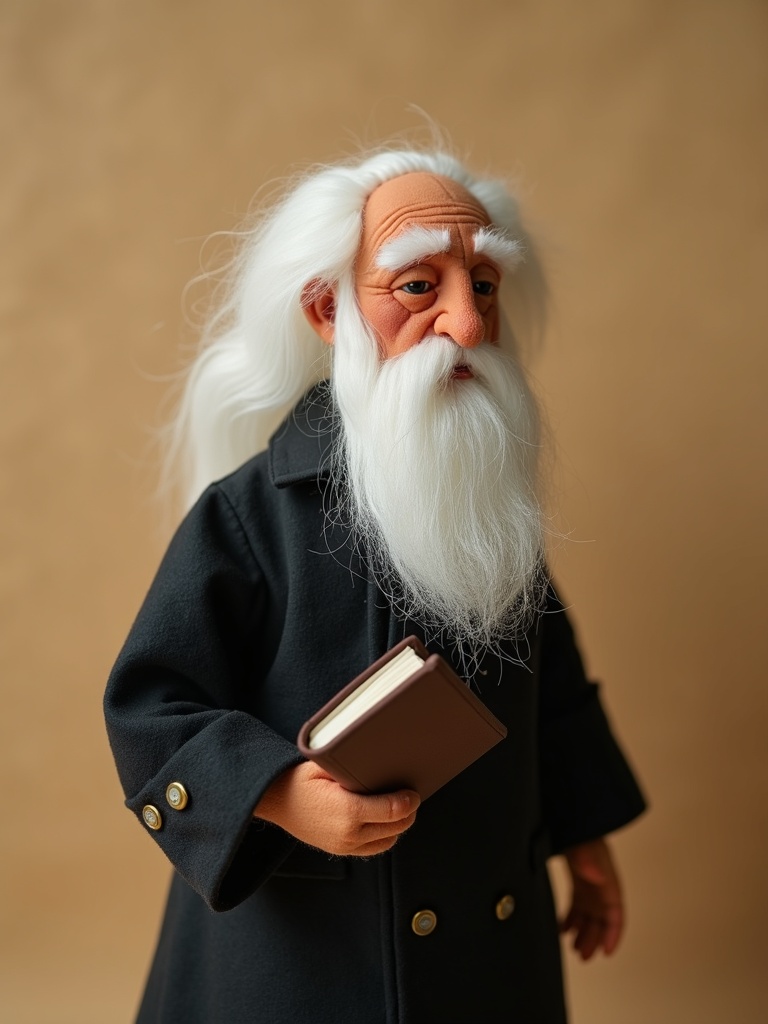
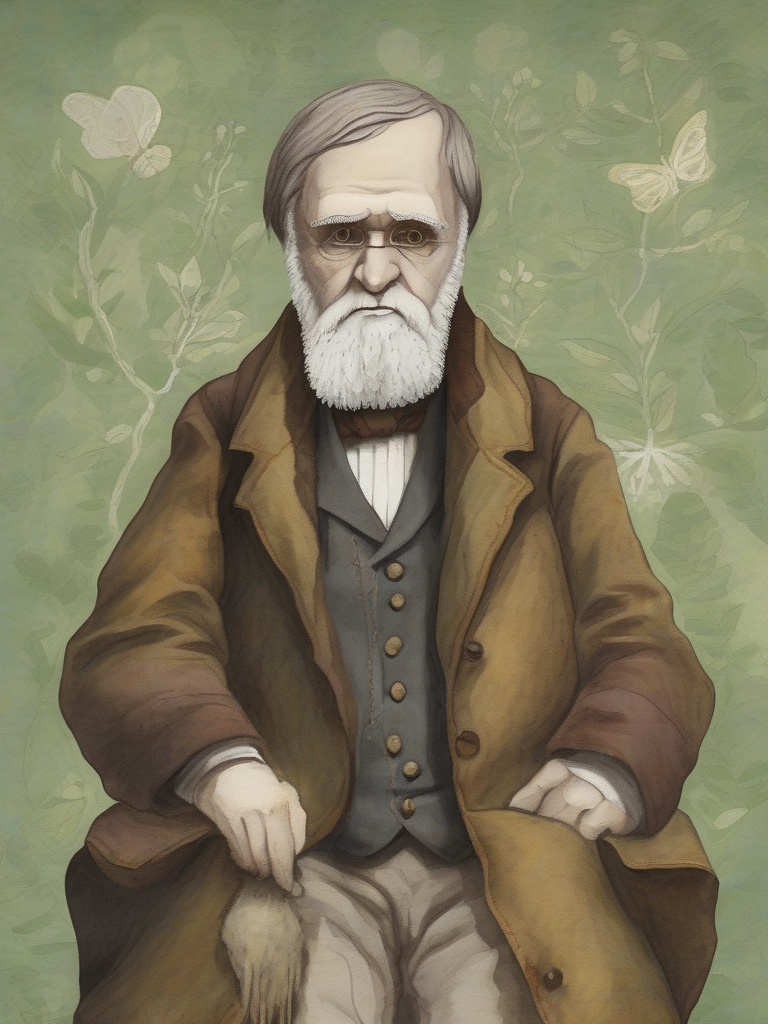
AI design preview — not a photo of the finished handmade doll
Patient Observation & Evolution
Charles Darwin
A gentle, patient Englishman who sailed round the world, watched nature very closely, and found the single idea that connects every living thing.
- People
- English
- Country
- United Kingdom
- Region
- British Isles
- Era
- 1809–1882
- Theme
- Patient Observation & Evolution
Make your own
Design your Charles Darwin
Pick a garment, a hairstyle and a scene, enter the PIN and generate a fresh image of Charles Darwin with AI.
⚖ AI homage concept — not a likeness of the real person.
Each image is generated live with fal.ai.
Generated images
AI design preview — not a photo of the finished handmade doll
No images generated yet — be the first.
Tradition & Origin
A gentle, patient Englishman who sailed round the world, watched nature very closely, and found the single idea that connects every living thing.
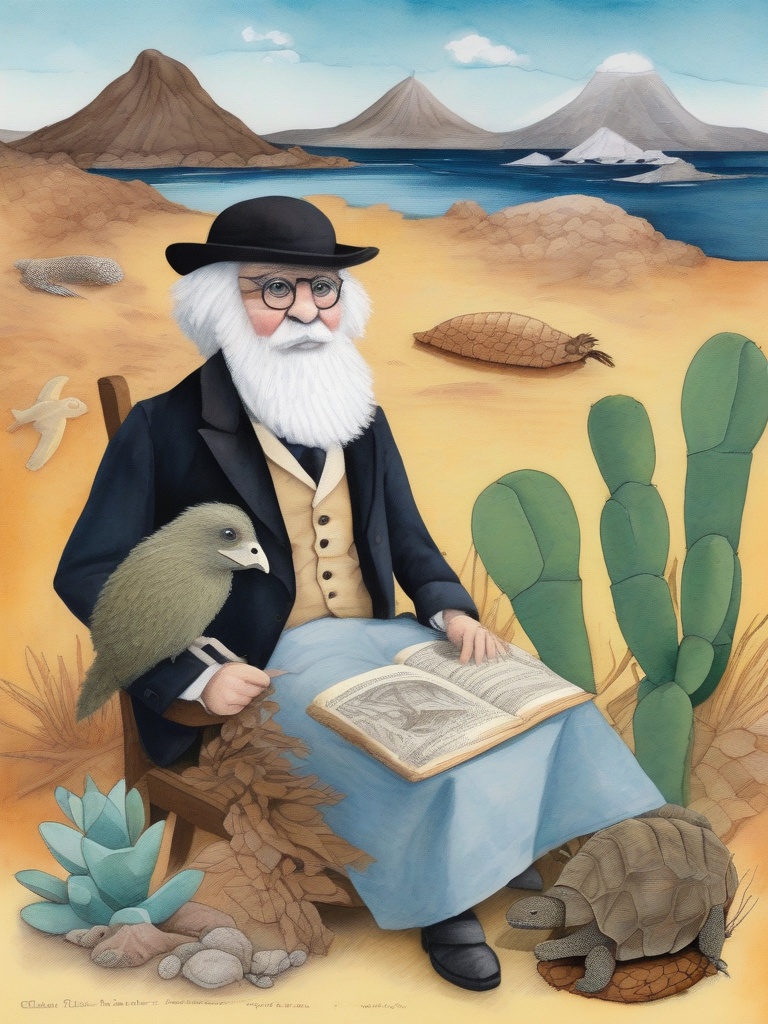
From a single finch that reached the Galápagos, evolution shaped a whole family of species — each beak matched to its food.
DetailsENCharles Darwin was born in 1809 and might have become a country doctor or a clergyman. Instead, at twenty-two, he joined HMS Beagle as its naturalist for a voyage that lasted almost five years. Everywhere the ship stopped he collected, dug, measured and wrote — fossils in South America, corals in the Pacific, and birds and giant tortoises on the Galápagos Islands in 1835.
Back in England he noticed something puzzling about the Galápagos finches: closely related birds, but each kind with a different beak suited to different food. Slowly an explanation took shape. Living things vary; the variations that help survival are passed to the young; over enormous stretches of time, this 'natural selection' reshapes species and grows new ones. By 1838 he had the idea — but he kept it to himself and tested it for over twenty years.
He published On the Origin of Species in 1859 only after Alfred Russel Wallace independently arrived at the same idea. It is one of the most important books ever written, yet Darwin spent his later years quietly at home, studying orchids, climbing plants and earthworms — proof, to the very end, that patient observation was his real superpower.
Timeline
- 1809born 12 February in Shrewsbury, England
- 1831–1836sails round the world on HMS Beagle
- 1835the Galápagos Islands — finches and tortoises
- 1838first sketches the idea of natural selection
- 1859publishes On the Origin of Species (24 Nov)
- 1882dies 19 April at Down House, Kent
Did you know?
- Did you know? Darwin spent eight years (1846–1854) just describing barnacles — small sea creatures — before he felt ready to write about evolution.DetailsEN
- Did you know? Over 15,000 of Darwin's letters survive and have been collected by the Darwin Correspondence Project in Cambridge — we can almost read his mind at work.DetailsEN
- Did you know? The different Galápagos finches have differently shaped beaks for different foods — seeds, insects, cactus flowers, even (for one species) blood.DetailsEN
If a quiet man with a notebook can change how the whole world sees life — what might you discover if you just keep looking?
Values & Capabilities
Capabilities
◆◆◆◆◆ shows how central a gift is — five diamonds mark a signature strength, fewer mark a supporting one.
He looked closer and longer than anyone — beaks, barnacles, earthworms, orchids — and let nature, not opinion, tell him the answer.
A five-year voyage round the world (1831–1836) opened his eyes; on the Galápagos in 1835 he gathered the finches that would change biology.
Natural selection: small useful differences are passed on, so over deep time living things change and new species form.
He had the idea by 1838 but kept testing it for over twenty years, gathering proof before he dared to publish.
He showed that all living things — finch and whale and fern and child — share common ancestors, branches of one family tree.
Development
1 of 3 stages unlocked
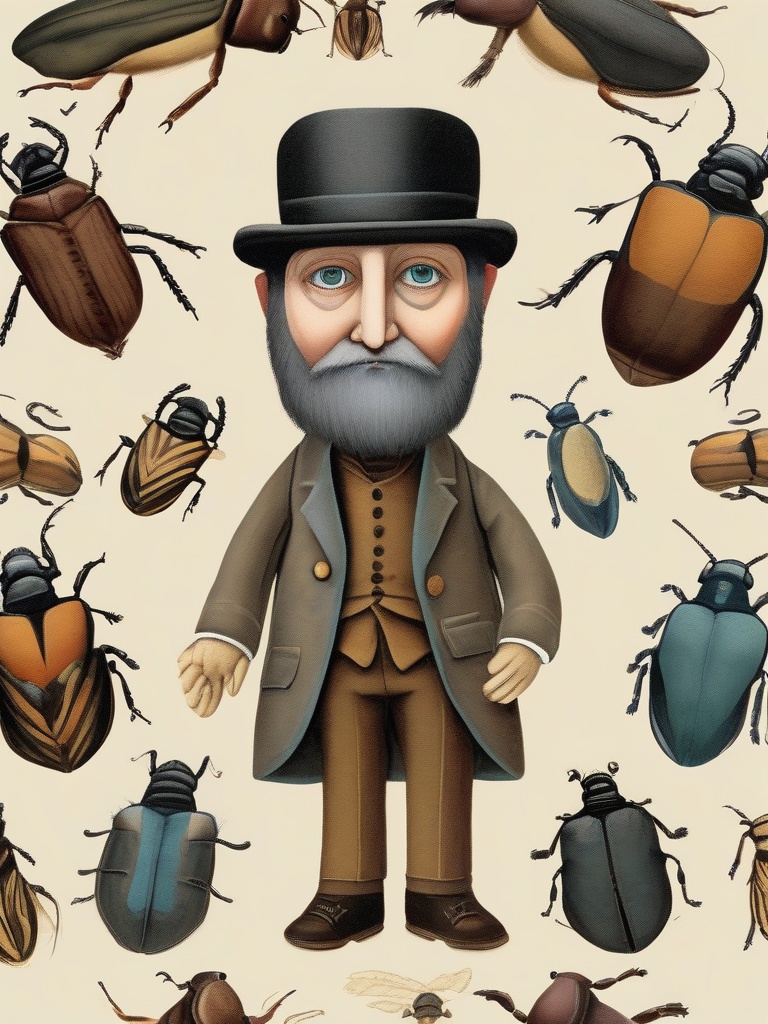
A restless student who loved collecting beetles, then a young man stepping aboard HMS Beagle in 1831 for a voyage round the world.
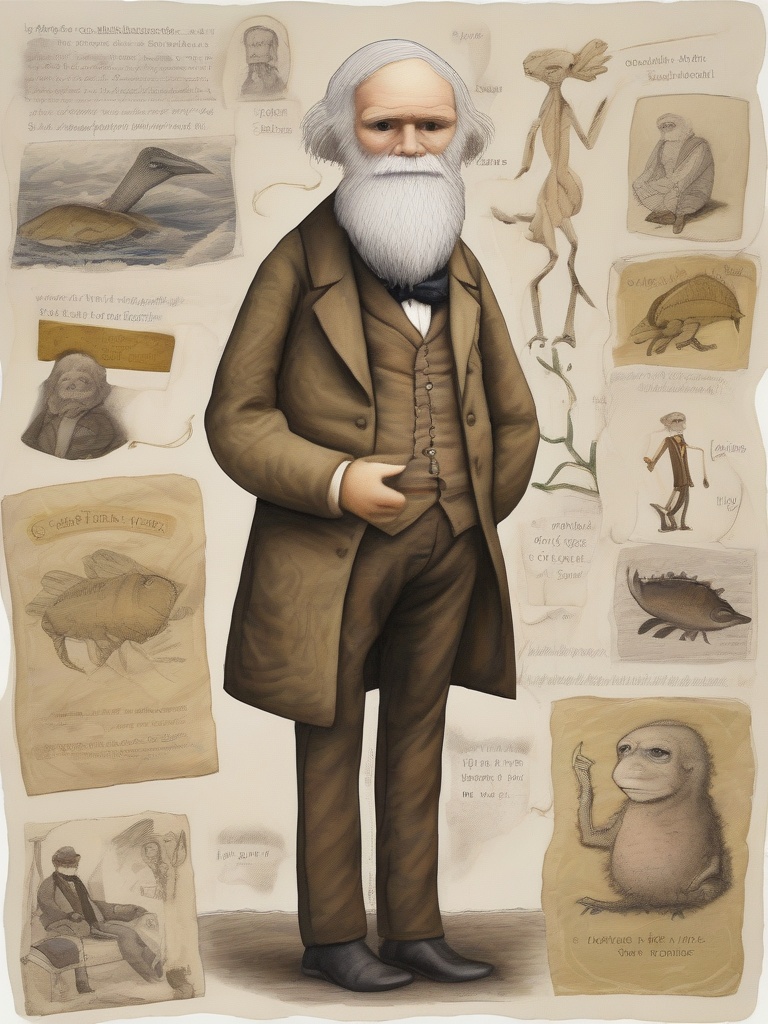
Answer all three to unlock this stage.
Unlock the previous stage first.
Crafting the doll
Garment: a heavy brown wool field coat with many pockets, sturdy boots, a wide-brimmed felt hat, and a hand-stitched long grey-white beard. Signature attribute: a tiny felt Galápagos finch with a thick beak and a little leather field notebook. Education card: explains natural selection in one child-friendly sentence and why Darwin waited twenty careful years before publishing. Sizes Classic 32 / Kidogo 18–20 / Shule 28. Part of proceeds → biodiversity & nature education / Galápagos conservation.
How this doll is made
Make this doll as a gentle Victorian field naturalist — practical, weathered, and curious, with the bird that made him famous.
- Garments 1
- Accessories 5
- Materials 1
- Techniques 1
Garments
- Brown wool field coatA heavy, many-pocketed naturalist's coat in earthy brown wool or felt — practical clothes for collecting outdoors, not a fancy gentleman's suit.DetailsEN
Accessories
- Long grey-white beardStitch a flowing beard from soft grey-white yarn or wool roving — the defining feature of the elder Darwin in his most famous portraits.DetailsEN
- Galápagos finchA tiny stitched finch with a noticeably thick, deep beak — his most famous specimen and a teaching tool for adaptation.DetailsEN
- Leather field notebookA miniature brown leather notebook with a pencil — Darwin filled dozens of notebooks; this is where the theory first appeared as a sketch.DetailsEN
- Giant tortoise companionA small felt Galápagos giant tortoise with a domed shell — an icon of the islands and of Darwin's island observations.DetailsEN
- Brass hand-lensA tiny brass magnifying lens on a cord and a small specimen jar — props for the patient observer of barnacles, beetles and orchids.DetailsEN
Materials
- Earth-tone paletteForest green, warm wood-brown, soft gold and parchment — colours of fieldcraft, study and old books, not bright costume colours.DetailsEN
Techniques
- Tree-of-life embroideryOn the Studio Card backdrop, embroider a simple branching 'tree of life' and a row of differently shaped finch beaks — Darwin's own visual idea.DetailsEN
Origin & Ethics
How we know this
On honesty: very well documented (his published books, his notebooks and over 15,000 surviving letters at the Darwin Correspondence Project). Homage, not likeness — the doll stylises Darwin and does not claim to be his exact face. We are careful to credit Alfred Russel Wallace, who reached the same idea independently and shared the 1858 announcement.
Committee: the Natural History Museum (London) and the Darwin Correspondence Project / Cambridge University Library; evolutionary biologists and historians of science; English Heritage (custodians of Down House). Homage, not likeness; keep the science accurate and child-appropriate.