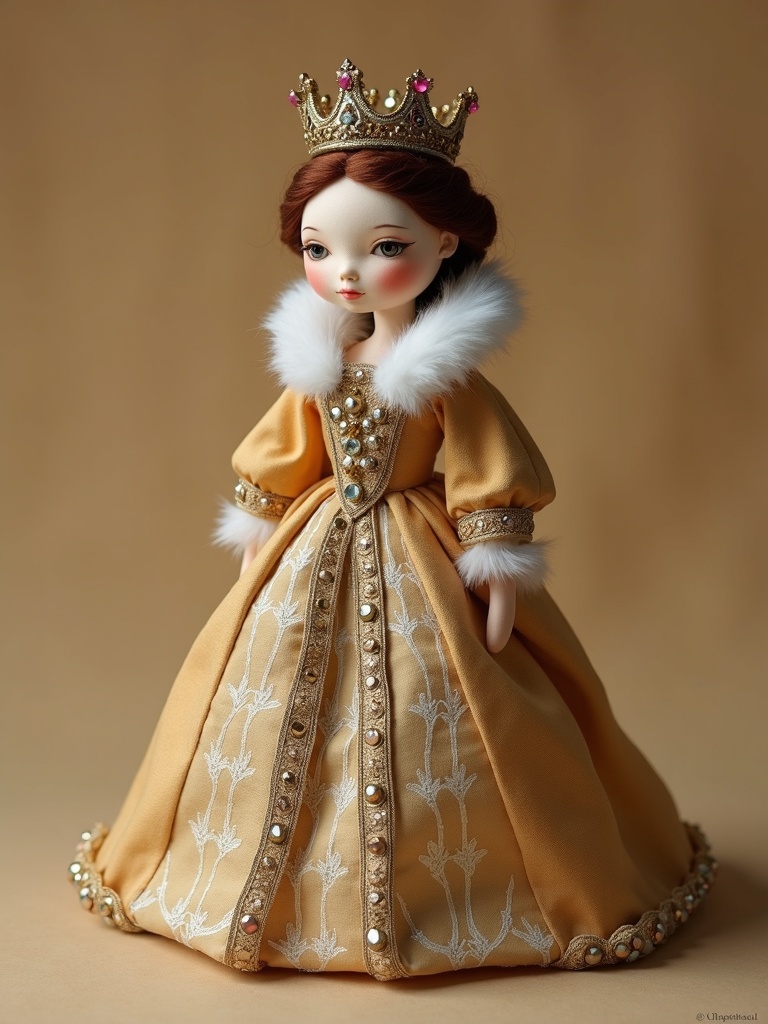
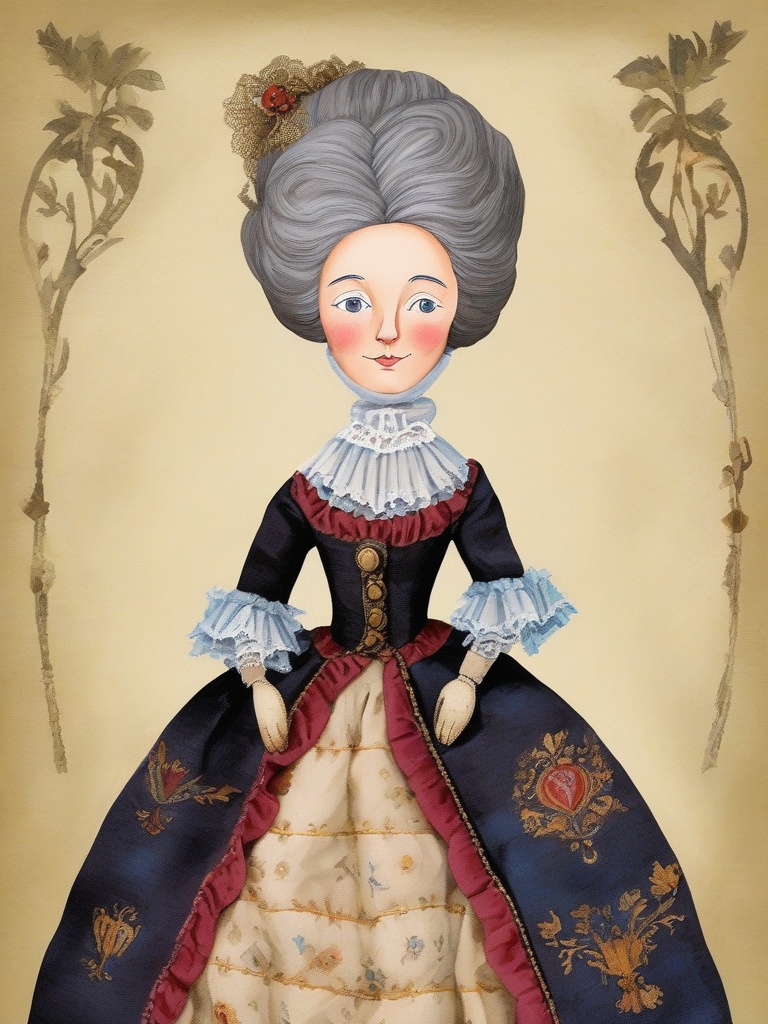
AI design preview — not a photo of the finished handmade doll
Enlightenment & Imperial Power
Catherine the Great
A German princess became Russia's most famous empress — a reader of philosophers who built museums and schools, and an autocrat under whom serfdom grew harsher.
- People
- Russian (born Prussian German, in Stettin)
- Country
- Russia
- Region
- Eastern Europe
- Era
- 1729–1796 (reigned 1762–1796)
- Theme
- Enlightenment & Imperial Power
Make your own
Design your Catherine the Great
Pick a garment, a hairstyle and a scene, enter the PIN and generate a fresh image of Catherine the Great with AI.
⚖ AI homage concept — not a likeness of the real person.
Each image is generated live with fal.ai.
Generated images
AI design preview — not a photo of the finished handmade doll
No images generated yet — be the first.
Tradition & Origin
A German princess became Russia's most famous empress — a reader of philosophers who built museums and schools, and an autocrat under whom serfdom grew harsher.
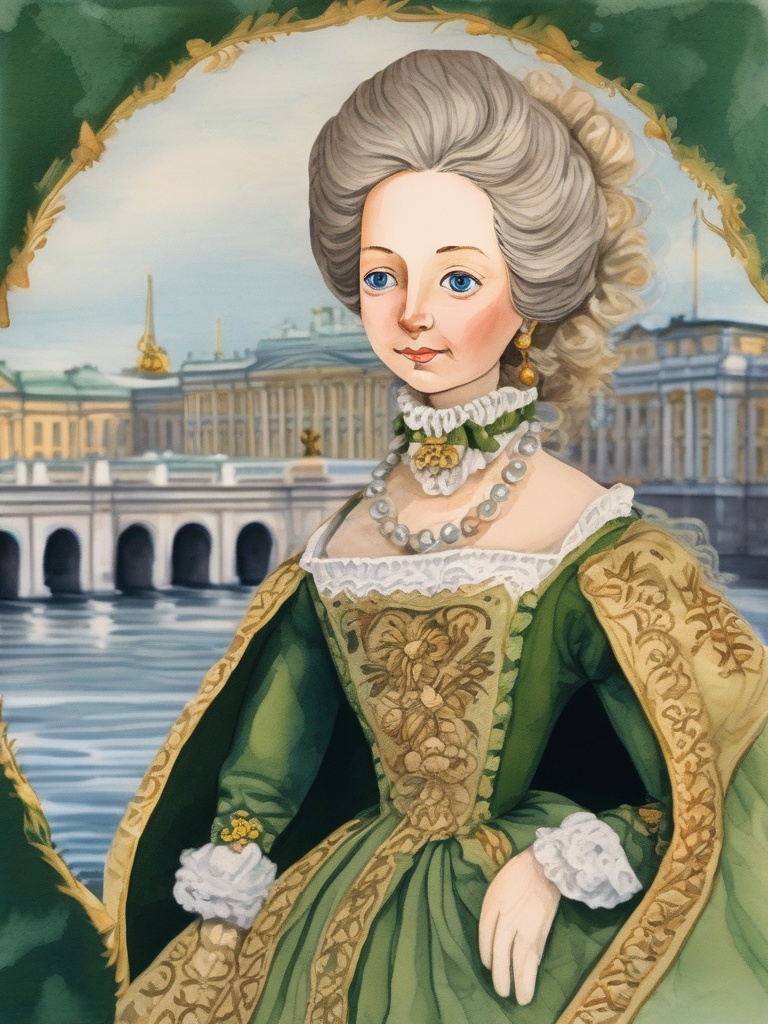
A reign measured in institutions: a museum, a girls' school, and a 526-article code of law.
DetailsENBorn Sophie of Anhalt-Zerbst in 1729 in Stettin, she came to Russia as a teenage bride, learned Russian, joined the Orthodox Church, and took the name Catherine. In 1762 she overthrew her husband Peter III in a palace coup and ruled for thirty-four years, long enough that history calls her 'the Great'.
She loved the European Enlightenment. She wrote to Voltaire for decades, paid Diderot's debts and welcomed him to St Petersburg, and spent two years drafting the Nakaz — a 526-article 'Instruction' calling for equality before the law and against torture. She founded the Hermitage in 1764 with 225 purchased paintings, opened the Smolny Institute to educate girls, and championed smallpox inoculation.
But the brilliance had a hard edge. The Legislative Commission she summoned produced no new code; when nobles defended serfdom, she backed down. Serfdom spread and hardened during her reign, the Pugachev revolt was put down with force, and her power stayed absolute. The 'enlightened monarch' was real — and so was the empire of the unfree she governed.
Studying Catherine teaches a vital lesson: that fine words and real freedom are not the same thing, and that a ruler can be both a genuine reformer and a defender of injustice at once.
Timeline
- 1729born Sophie of Anhalt-Zerbst in Stettin, Prussia
- 1762coup against Peter III; crowned Empress Catherine II
- 1764founds the Hermitage and the Smolny Institute for girls
- 1767writes the Nakaz and convenes the Legislative Commission
- 1773–75Pugachev's peasant revolt is crushed
- 1783 / 1796annexes Crimea; dies at the Winter Palace, St Petersburg
Did you know?
- Did you know? The Nakaz argued against torture and the death penalty years before the U.S. Constitution and the Polish Constitution of 1791.DetailsEN
- Did you know? Catherine founded the Hermitage in 1764 by buying 225 paintings that had been collected for a Prussian king who never paid for them.DetailsEN
- Did you know? When Diderot urged sweeping reforms, Catherine replied that his ideas worked fine on paper but she had to govern the real 'human skin' of Russia.DetailsEN
Can someone write beautiful laws and still leave many people unfree? What would you have asked her to do?
Values & Capabilities
Capabilities
◆◆◆◆◆ shows how central a gift is — five diamonds mark a signature strength, fewer mark a supporting one.
She spent two years writing the Nakaz, a 526-article 'Instruction' that called for equality before the law and argued against torture and the death penalty — drawing openly on Montesquieu and Beccaria.
In 1764 she bought 225 paintings meant for a Prussian king and founded what became the Hermitage — by her death it held some 4,000 old-master paintings, 38,000 books and 10,000 carved gems.
For decades she exchanged letters with Voltaire and hosted Diderot in St Petersburg, styling herself an 'enlightened' monarch — yet she told Diderot that his ideas worked on paper, not on the 'human skin' of Russia.
She founded the Smolny Institute in 1764 — one of the first state schools in Europe set up to educate girls — and later opened free primary and secondary schools to children of all classes (though not to serfs).
She seized power in a 1762 coup, annexed Crimea in 1783, took vast lands in the partitions of Poland, and survived Pugachev's huge peasant revolt — all while serfdom grew harsher under her rule.
Development
1 of 3 stages unlocked
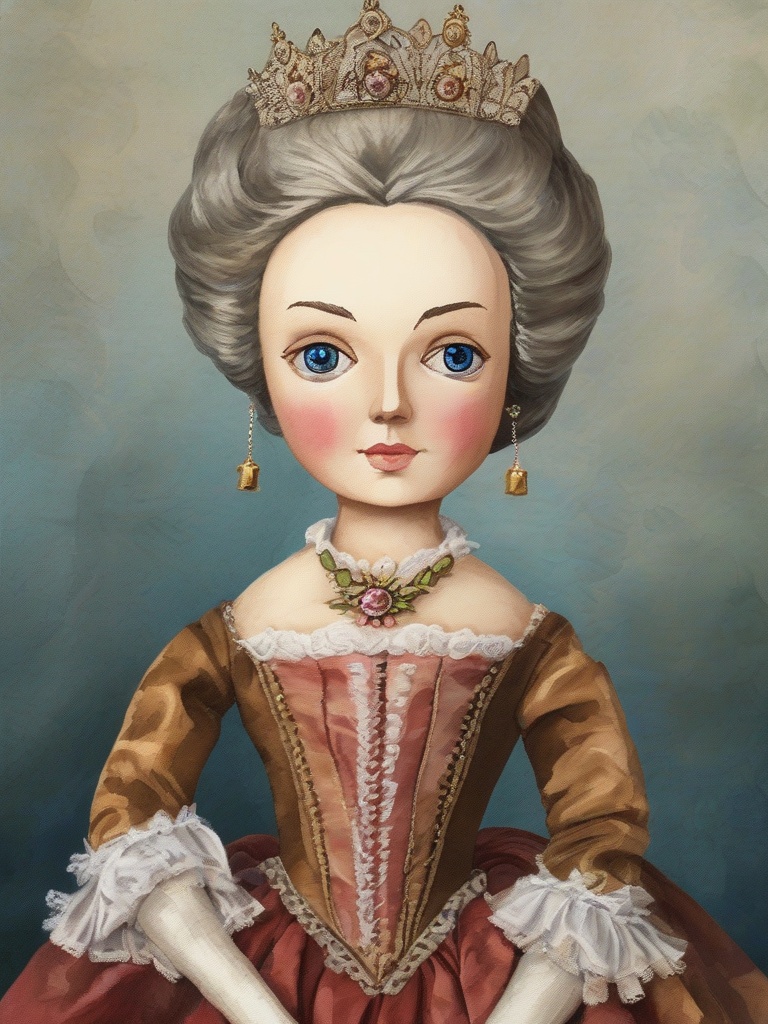
A clever, bookish German princess arrives in Russia, learns the language and faith, and takes the name Catherine.
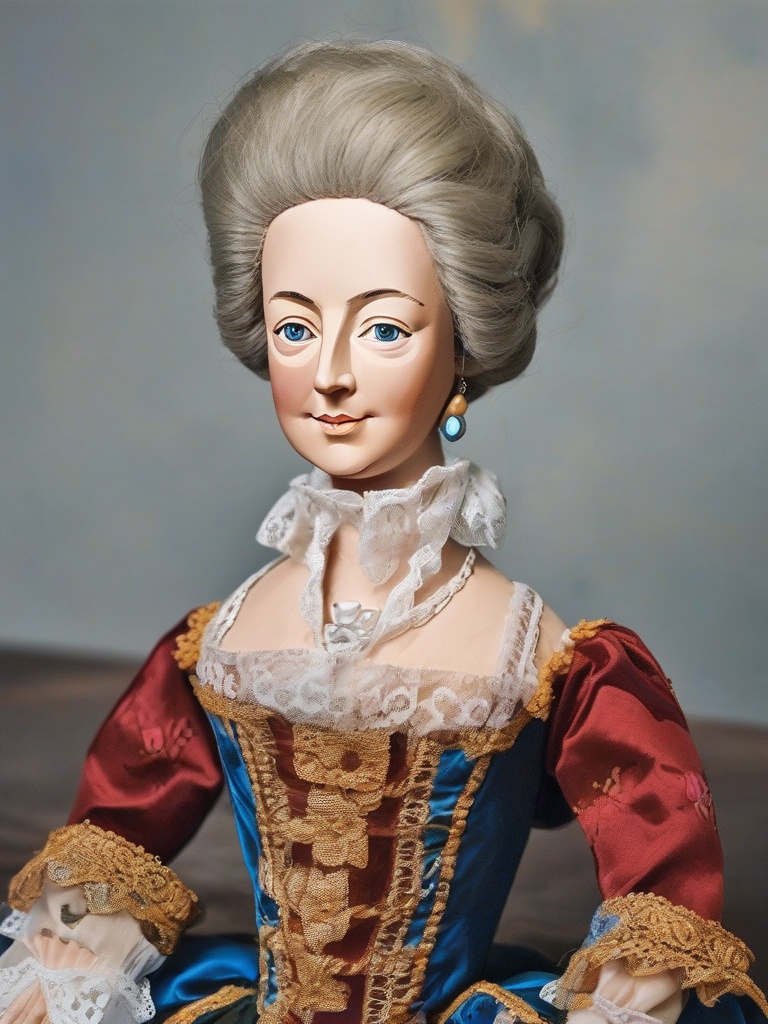
Answer all three to unlock this stage.
Unlock the previous stage first.
Crafting the doll
Garment: crimson-and-gold brocade court gown with an ermine-look trimmed mantle (faux fur), a jewelled stomacher in glass beads and pearls, a small imperial crown in gilt felt. Signature attribute: a tiny bound book (the Nakaz) with a felt quill, and a miniature gilt-framed painting for the Hermitage. Education card: explains that 'enlightened' rulers could write fine laws while keeping millions in serfdom — reform and unfreedom side by side. Sizes Classic 32 / Kidogo 18–20 / Shule 28. Part of proceeds → European museum-education and arts-literacy programmes for schoolchildren.
How this doll is made
Make this doll as a stately 18th-century Russian court figure — opulent brocade and ermine for the empress, a tiny book and crown for the reformer and ruler.
- Garments 2
- Accessories 3
- Materials 1
- Techniques 2
Garments
- Imperial court gownA wide-skirted 18th-century court gown in crimson-and-gold brocade with a fitted, boned bodice and pannier-style hips; this mirrors the lavish court dress of Catherine's era.DetailsEN
- Ermine-trimmed mantleA coronation-style mantle edged in faux ermine (white with black flecks), the classic emblem of imperial Russian sovereignty.DetailsEN
Accessories
- Small imperial crownA gilt felt crown studded with glass 'gems' and a small cross, recalling the Russian imperial regalia worn at her 1762 coronation.DetailsEN
- The Nakaz (book) and quillA miniature bound book lettered 'Nakaz' with a tiny felt quill — her 1767 'Instruction', the object that made her an Enlightenment lawgiver.DetailsEN
- Framed Hermitage paintingA doll-scale gilt-framed 'old master' to carry — a nod to the 225 paintings of 1764 that grew into the Hermitage's ≈4,000.DetailsEN
Materials
- Brocade, silk and pearlsUse rich brocade and silk for the gown, with glass pearls and beads for the stomacher and jewellery, matching the opulent fabrics of the St Petersburg court.DetailsEN
Techniques
- Powdered coiffure & kokoshnik optionSew either a powdered 18th-century coiffure or a stylised pearl-trimmed kokoshnik-style headdress for the Russian court-dress look.DetailsEN
- Sash and order ribbonAdd a moiré sash across the bodice in the style of an imperial order (e.g. St Andrew's blue), a detail seen in her state portraits.DetailsEN
Origin & Ethics
How we know this
On honesty: very well documented (her own writings and letters, the Nakaz, state archives, the Hermitage's records). Homage, not likeness; the doll stylises an 18th-century court figure. We are honest that she was an enlightened reformer AND an autocrat under whom serfdom grew harsher — the 'enlightened monarch' image was partly her own careful self-presentation.
Committee: Russian and European Enlightenment historians; art-museum curators (Hermitage/State collections context); educators in civics and media literacy. 5-step protocol as standard; present empire and serfdom honestly, never as glamour.