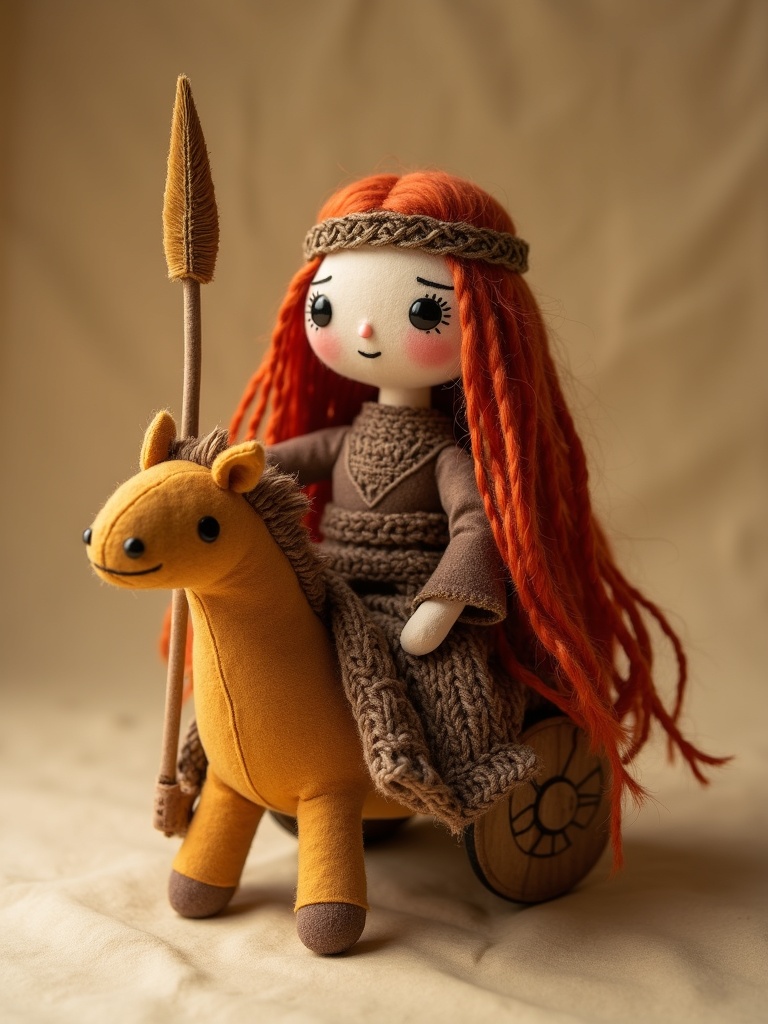
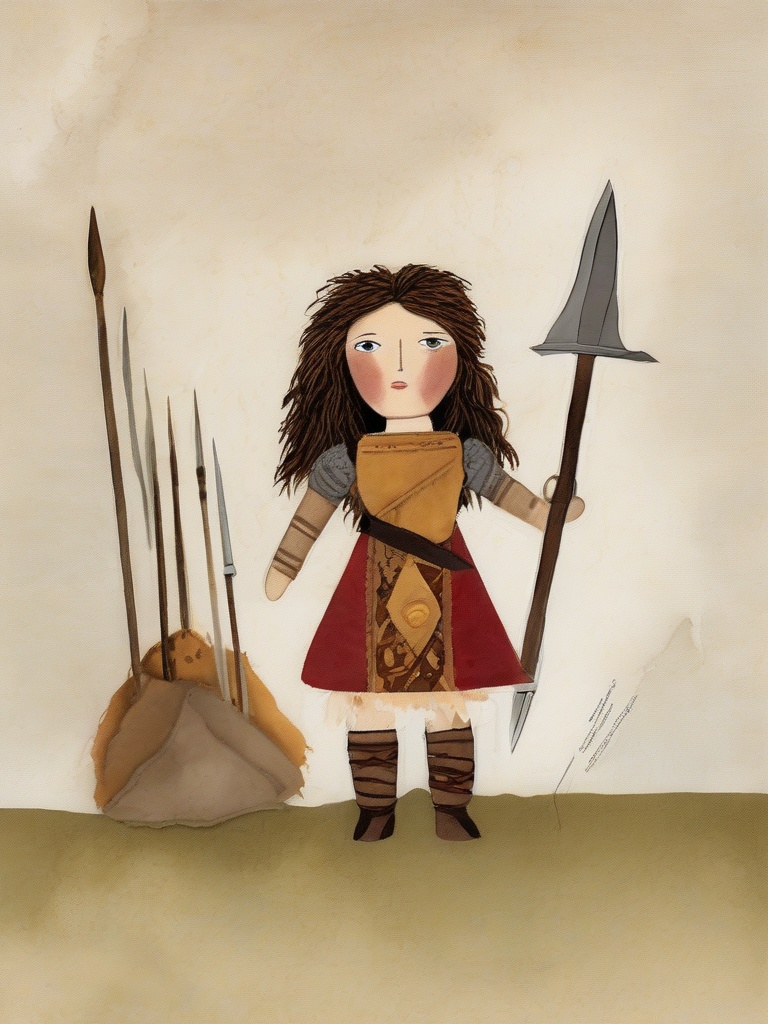
AI design preview — not a photo of the finished handmade doll
Courage & Resistance
Boudica
When Rome broke its word to her dead husband and laid hands on her daughters, a queen of the Iceni turned her grief into the largest revolt Roman Britain ever saw.
- People
- Britons (Iceni), Celtic eastern Britain
- Country
- United Kingdom
- Region
- British Isles
- Era
- c.30–61 CE
- Theme
- Courage & Resistance
Make your own
Design your Boudica
Pick a garment, a hairstyle and a scene, enter the PIN and generate a fresh image of Boudica with AI.
⚖ AI homage concept — not a likeness of the real person.
Each image is generated live with fal.ai.
Generated images
AI design preview — not a photo of the finished handmade doll
No images generated yet — be the first.
Tradition & Origin
When Rome broke its word to her dead husband and laid hands on her daughters, a queen of the Iceni turned her grief into the largest revolt Roman Britain ever saw.
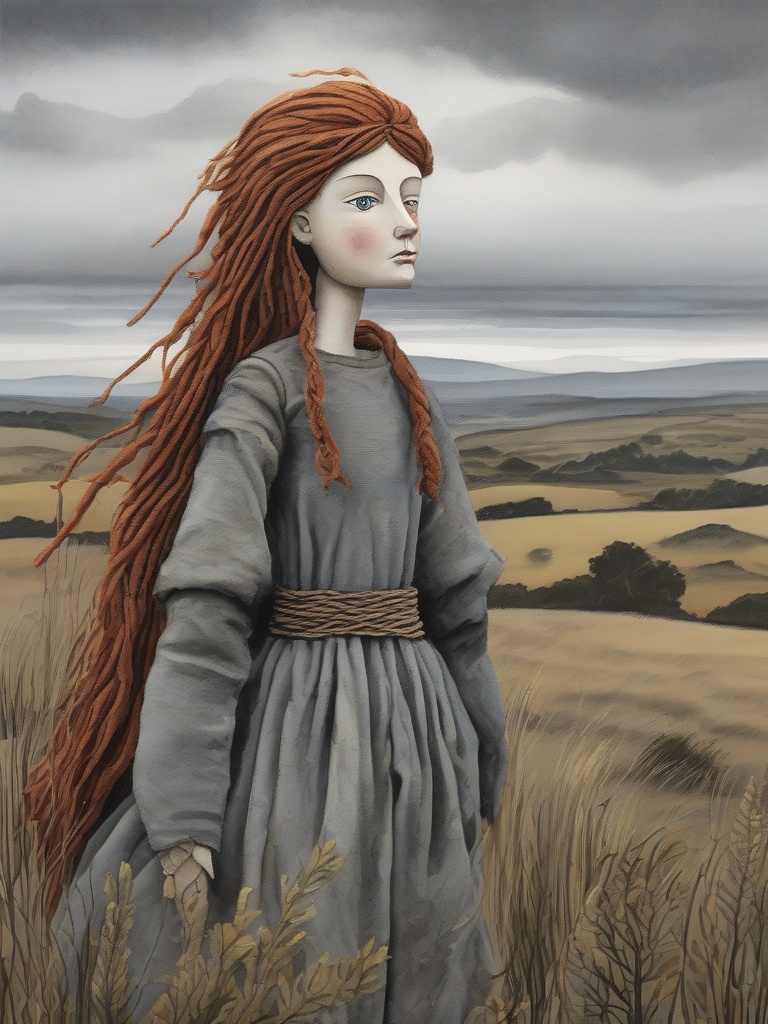
Boudica's army destroyed the three most important Roman towns in Britain: Colchester, London and St Albans.
DetailsENBoudica was queen of the Iceni, a Celtic tribe of eastern Britain around modern Norfolk. Her husband Prasutagus had ruled as a client king — left on his throne so long as he kept faith with Rome. He tried to protect his family by naming both his daughters and the emperor as his heirs. When he died in about AD 60, Rome ignored the will entirely: officials annexed the kingdom, plundered noble houses, and, Tacitus writes, had Boudica flogged and her daughters raped.
She answered by uniting the Iceni with the neighbouring Trinovantes and rising against the empire. Her forces destroyed the three most important Roman towns in Britain — Camulodunum (Colchester), Londinium (London) and Verulamium (St Albans). In London, archaeologists still find a thick red layer of burnt earth from that destruction. Roman writers claim around 80,000 people were killed before the rebellion was crushed.
The governor Suetonius Paulinus, heavily outnumbered, finally defeated her at the Battle of Watling Street by fighting in a narrow place where her vast army could not deploy. Boudica died soon after — by poison or by illness. Almost everything we know comes from two Romans, Tacitus and Cassius Dio, writing long after her death; centuries later, Victorian and modern Britain remade her as a national heroine and suffragette symbol — a reminder that who writes the record decides who becomes the hero.
Timeline
- c.30 CEborn into the Iceni, a Celtic people of eastern Britain
- c.48–60queen alongside Prasutagus, client king of Rome
- c.60Prasutagus dies; Rome ignores his will and seizes Iceni land
- AD 60/61the revolt: Camulodunum, Londinium and Verulamium burned
- AD 60/61defeated at the Battle of Watling Street by Suetonius Paulinus
- 1902Thornycroft's bronze 'Boadicea and Her Daughters' raised by Westminster Bridge
Did you know?
- Her name 'Boudica' comes from a Celtic word for 'victory' — it literally means something like 'Victoria'.DetailsEN
- Tacitus says the Britons made no distinction of sex in their leaders — they were used to following women into war.DetailsEN
- In central London, archaeologists still dig up a thick scorched layer of earth left by the burning of Londinium during her revolt.DetailsEN
If only your enemies ever wrote down your story, would they call you a hero — or a rebel? Boudica is both, and learning to read both is its own kind of courage.
Values & Capabilities
Capabilities
◆◆◆◆◆ shows how central a gift is — five diamonds mark a signature strength, fewer mark a supporting one.
When Rome broke her late husband's treaty and stripped her people of their land, she stood up and led the largest British uprising against the empire.
Her army of the Iceni and Trinovantes burned the three biggest Roman towns in Britain and very nearly drove Rome out altogether.
Tacitus says she was flogged and her daughters violated; rather than break, she turned a private wound into a people's cause.
Tacitus notes the Britons made no distinction of sex in their leaders — they were used to following women into war.
Almost everything we know comes from two Romans — her enemies — writing decades later; Britain later remade her as a national heroine.
Development
1 of 3 stages unlocked
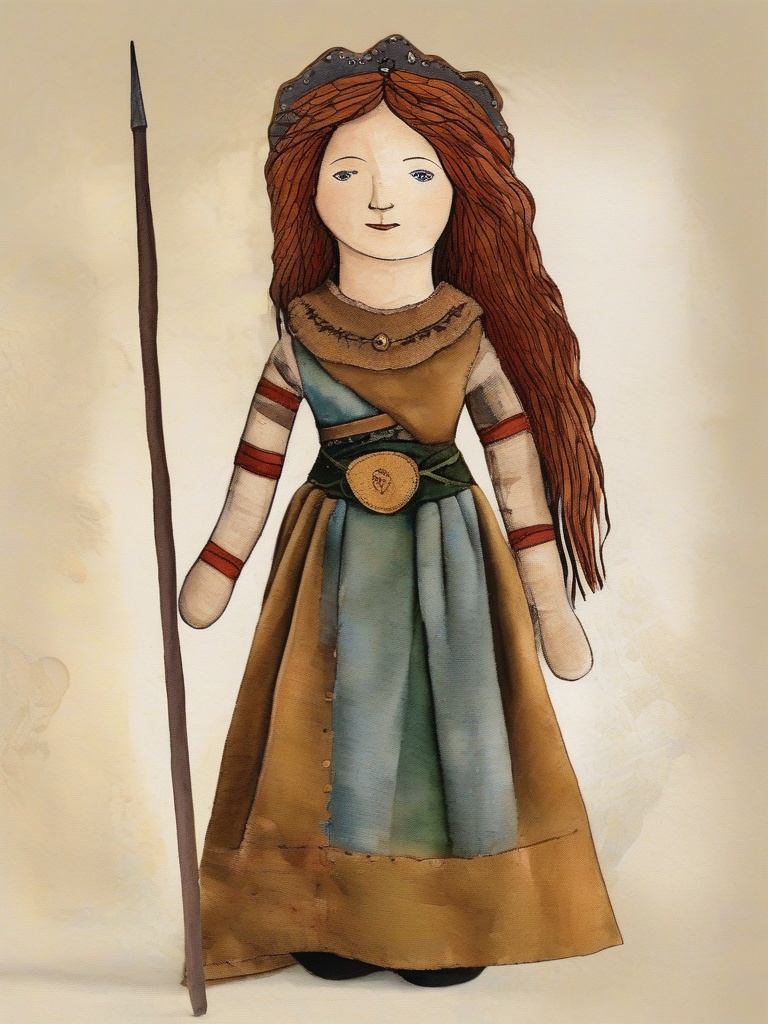
A young noblewoman of the Iceni in eastern Britain, in a land that already let women lead.
Answer all three to unlock this stage.
Unlock the previous stage first.
Crafting the doll
Garment: hand-woven wool in a plaid 'tartan'-style check of madder-red, woad-blue, green and ochre over an undyed linen tunic, pinned with a cast bronze brooch. Signature attribute: a twisted golden torc (gilded cord/felt) and a small spoked war-chariot. Education card: explains client kingdoms, that the Celtic Britons followed women leaders, and that her whole story survives only through Roman writers — record vs. legend. Sizes Classic 32 / Kidogo 18–20 / Shule 28. Part of proceeds → UK heritage education and Roman-Britain conservation (e.g. Colchester / Iceni sites).
How this doll is made
Made authentically, this doll is built from the real materials of Iron Age Britain: hand-woven checked wool, undyed linen and cast bronze, crowned by a golden torc.
- Garments 2
- Accessories 3
- Materials 1
- Techniques 2
Garments
- Checked woollen cloak ('Celtic tartan')A heavy plaid-checked mantle of madder-red, woad-blue, green and ochre wool — the Iron Age Britons wove bright checked and striped cloth, the ancestor of later tartan. Pin it at the shoulder.DetailsEN
- Long undyed linen-and-wool tunicBeneath the cloak, a simple ankle-length tunic of natural linen and wool, belted at the waist — the everyday dress of a Celtic noblewoman.DetailsEN
Accessories
- Twisted golden torcA heavy twisted neck-ring of gold was the badge of a Celtic noble and chief; Boudica is traditionally shown wearing one. Make it from gilded cord or twisted felt.DetailsEN
- Bronze brooch and arm-ringsCast-bronze penannular brooches fastened the cloak; arm-rings and pins completed a noblewoman's dress. Use bronze-toned metal or beads.DetailsEN
- Small war-chariotTacitus and Dio describe the queen driving a chariot before her tribes. A miniature spoked two-pony chariot is her signature scene-prop — no weapons needed.DetailsEN
Materials
- Madder and woad dyesIron Age Britons coloured wool with plant dyes — madder root for red, woad leaves for blue, weld for yellow. Use these palette colours to keep the checks historically honest.DetailsEN
Techniques
- Warp-weighted check weavingCeltic cloth was woven on upright warp-weighted looms, producing the checked and striped patterns Roman writers noticed. Mimic the look with a small even check, not a modern print.DetailsEN
- Long plaited reddish hairCassius Dio describes Boudica with a great mass of tawny hair falling to her hips; stitch long reddish hair in loose plaits as her most recognisable feature (homage, not a real portrait — none survives).DetailsEN
Origin & Ethics
How we know this
On honesty: very well documented for the ancient world, but only through two Roman authors — Tacitus and Cassius Dio — both her enemies, writing decades later; the speeches put in her mouth were never recorded in life. Homage, not likeness; we show no portrait survives, present the war with dignity and without gore, and flag where 'record' ends and national legend (the Victorian heroine) begins.
Committee: UK museums (London Museum, British Museum Roman Britain dept.); English Heritage; Celtic and Roman-Britain historians; classicists who study Tacitus and Cassius Dio. 5-step protocol; frame the war with dignity and no gore; mark Roman-sourced detail as such.