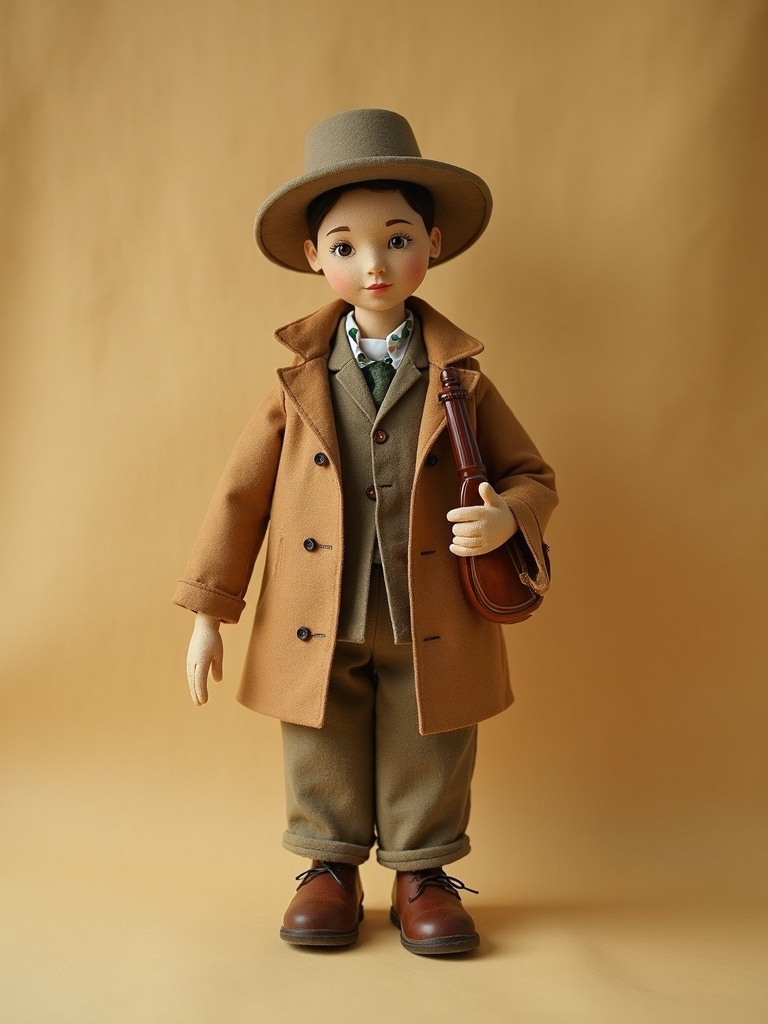
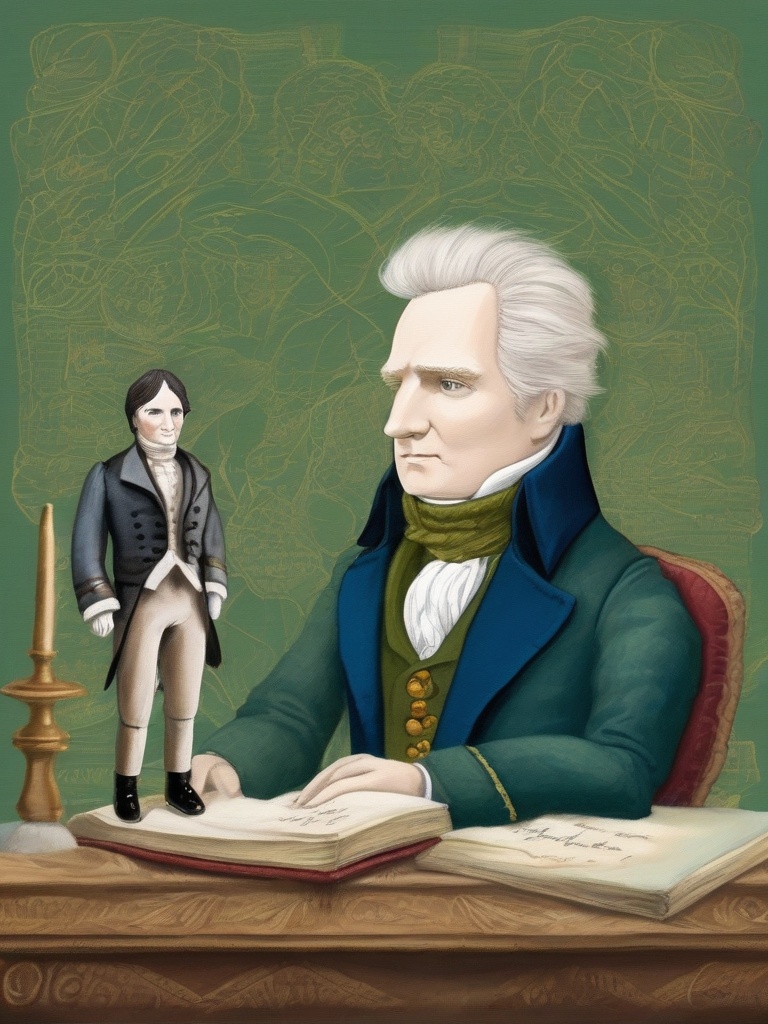
AI design preview — not a photo of the finished handmade doll
Nature as One Web
Alexander von Humboldt
A Prussian who spent his fortune to climb a volcano, measure the sky, and discover that everything in nature is connected.
- People
- Prussian German
- Country
- Germany
- Region
- Central Europe
- Era
- 1769–1859
- Theme
- Nature as One Web
Make your own
Design your Alexander von Humboldt
Pick a garment, a hairstyle and a scene, enter the PIN and generate a fresh image of Alexander von Humboldt with AI.
⚖ AI homage concept — not a likeness of the real person.
Each image is generated live with fal.ai.
Generated images
AI design preview — not a photo of the finished handmade doll
No images generated yet — be the first.
Tradition & Origin
A Prussian who spent his fortune to climb a volcano, measure the sky, and discover that everything in nature is connected.
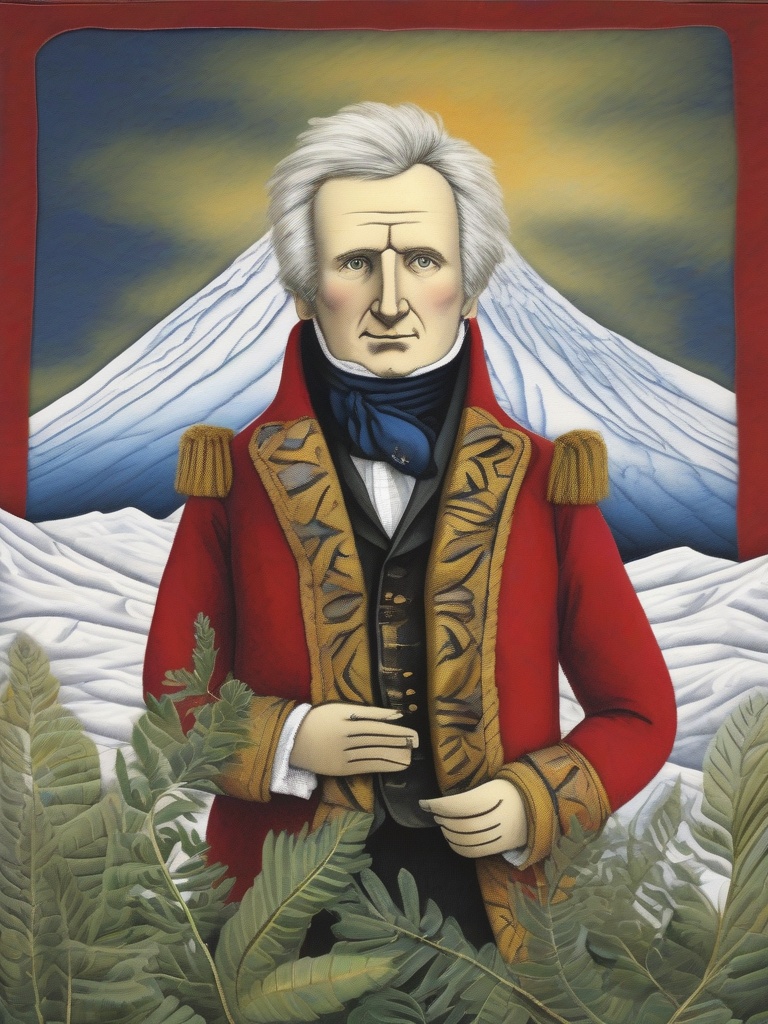
About 300 plants carry Humboldt's name — and that is before counting the animals, mountains, the ocean current and a sea on the Moon.
DetailsENAlexander von Humboldt was born into wealth in Berlin in 1769 and could have lived an easy life. Instead he poured his inheritance into a five-year scientific journey across the Americas (1799–1804), where he and the botanist Aimé Bonpland travelled some 6,000 miles, gathering about 60,000 plant specimens — roughly 3,000 of them new to European science.
His genius was not just collecting but connecting. Climbing the Andean volcano Chimborazo in June 1802, he noticed that plants changed in bands as the air cooled with height. He drew this as a mountain cross-section, the Naturgemälde, which founded the science of biogeography and gave us the idea of vegetation belts.
From that one mountain grew a world-view: that climate, plants, animals, rocks and human beings form a single connected web. He invented isotherms to compare climates across the globe, warned — perhaps first of any scientist — that cutting forests could change the climate, and spent his old age writing 'Kosmos', a book that tried to hold the whole of nature in one vision.
By the time he died in 1859 he was, by some counts, the most famous scientist in the world, and today more things on Earth are named after him than after almost anyone else — penguins, squid, an ocean current, mountains, rivers, even a sea on the Moon.
Timeline
- 1769born 14 September in Berlin, Prussia
- 1799–1804the great American expedition with Aimé Bonpland (~6,000 miles)
- 1802climbs Chimborazo (~5,878 m), a Western altitude record
- 1807publishes the Naturgemälde / Tableau Physique — founding biogeography
- 1817introduces isotherms to map climate worldwide
- 1845–1862publishes 'Kosmos'; dies in Berlin in 1859
Did you know?
- He carried delicate barometers and thermometers up an icy volcano, measuring temperature, air pressure and even the blueness of the sky at every height.DetailsEN
- After seeing forests felled around Lake Valencia, he may have been the first scientist to warn that humans could change the climate.DetailsEN
- His 1807 Chimborazo diagram (the Tableau Physique) founded biogeography and the idea of vegetation belts — still used today to track climate change.DetailsEN
Look very closely at just one mountain — and you might start to understand the whole world.
Values & Capabilities
Capabilities
◆◆◆◆◆ shows how central a gift is — five diamonds mark a signature strength, fewer mark a supporting one.
He was among the first to see the living world as a single connected whole — that climate, plants, animals, rocks and people all hang together. "In this great chain of causes and effects, no single fact can be considered in isolation."
On the volcano Chimborazo he saw plant zones change with height, and drew them as a cross-section — founding biogeography and the idea of vegetation belts.
In June 1802 he climbed Chimborazo to about 5,878 m — a Western altitude record that stood for roughly 30 years — measuring temperature, pressure and the blue of the sky all the way up.
Seeing forests felled around Lake Valencia, he warned that cutting trees changes the climate — perhaps the first scientist to caution about human-caused climate harm.
He drew isotherms — lines joining places of equal temperature — inventing a way to compare climates across the whole globe, and wrote it all into his great work "Kosmos".
Development
1 of 3 stages unlocked
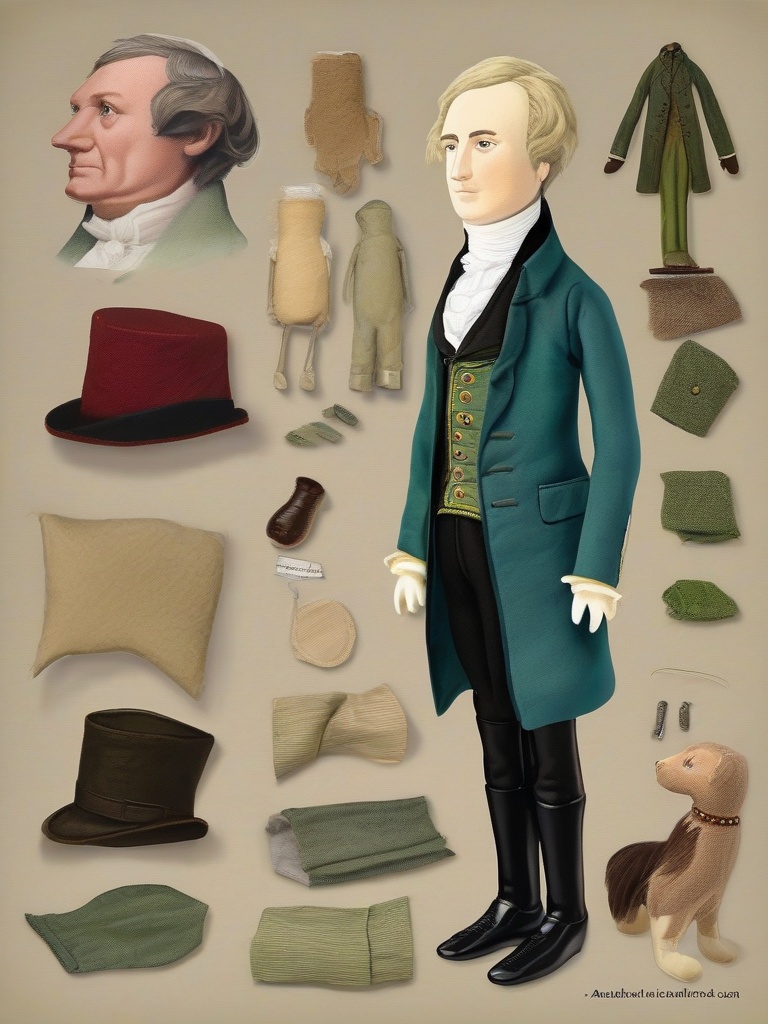
Young Alexander in Berlin and at the family estate of Tegel, filling boxes with plants, shells and stones — nicknamed 'the little apothecary'.
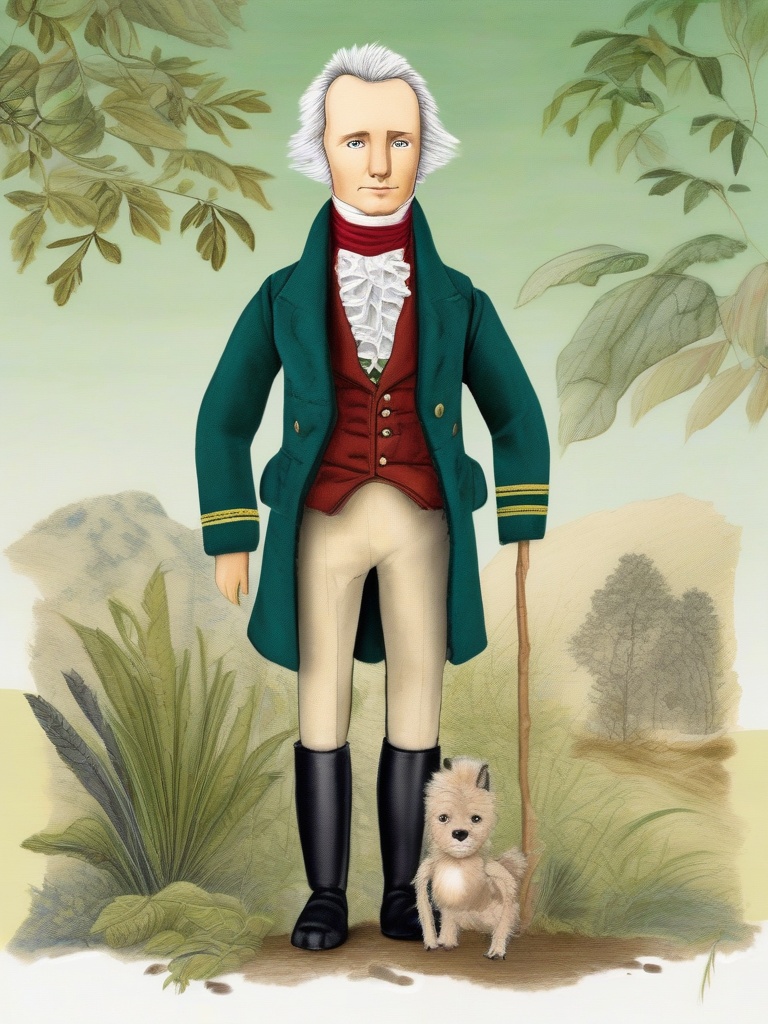
Answer all three to unlock this stage.
Unlock the previous stage first.
Crafting the doll
Garment: a forest-green wool/cotton tailcoat with a white cotton cravat and high collar, buff travel breeches and felt-leather boots, a small stitched leather field-bag. Signature attribute: a tiny brass-and-glass barometer and a wooden plant press with a pressed fern (child-safe, firmly sewn). Education card: explains that Humboldt saw nature as one connected web and warned early about human-caused climate change. Sizes Classic 32 / Kidogo 18–20 / Shule 28. Proceeds → reforestation & climate-education projects.
How this doll is made
Make this doll as an early-1800s field scientist: a green tailcoat, real little instruments, and the plant press of a man who measured the whole world.
- Garments 2
- Accessories 4
- Materials 1
- Techniques 1
Garments
- Forest-green tailcoatAn early-19th-century gentleman's tailcoat with a high collar and tails, in deep forest green to echo the naturalist's love of plants; pair with a white cravat at the throat.DetailsEN
- Travel breeches & bootsBuff knee-breeches and sturdy leather boots suited to river crossings and mountain trails — the working dress of an explorer, not a courtier.DetailsEN
Accessories
- BarometerStitch a tiny brass-and-glass barometer; Humboldt carried such instruments up Chimborazo to measure air pressure at altitude.DetailsEN
- Plant pressA small wooden plant press with a pressed fern between paper — the tool behind his 60,000 specimens.DetailsEN
- Naturgemälde chartA miniature rolled chart of a mountain cross-section with stacked plant zones — a nod to his 1807 Tableau Physique that founded biogeography.DetailsEN
- Field notebook & quillAn open leather notebook with tiny sketches and numbers, and a quill — he wrote and drew constantly in the field.DetailsEN
Materials
- Wool, cotton & leatherPeriod-correct natural fibres — wool for the coat, cotton for the cravat and shirt, leather for boots and the field-bag — all child-safe and firmly sewn.DetailsEN
Techniques
- Layering for the high AndesOffer a removable wool cloak, scarf and felt hat so the doll can be dressed for Chimborazo's thin, cold air — telling the story of the record-setting climb.DetailsEN
Origin & Ethics
How we know this
On honesty: very well documented (his own published journals, instruments, the Naturgemälde and Kosmos, and modern scholarship). Homage, not likeness; we stylise the man as a cloth doll. One honest caveat: his celebrated Chimborazo plant-zone diagram (1807) was partly schematic — some alpine plant data actually came from nearby Mt. Antisana — so it is foundational in idea but not exact in every elevation.
Committee: the Alexander von Humboldt Foundation; historians of science and museums (Humboldt-Universität / Berlin natural-history collections); biogeographers and climate educators. Present the science accurately, including the honest caveat that his famous Chimborazo diagram mixed in data from neighbouring peaks.