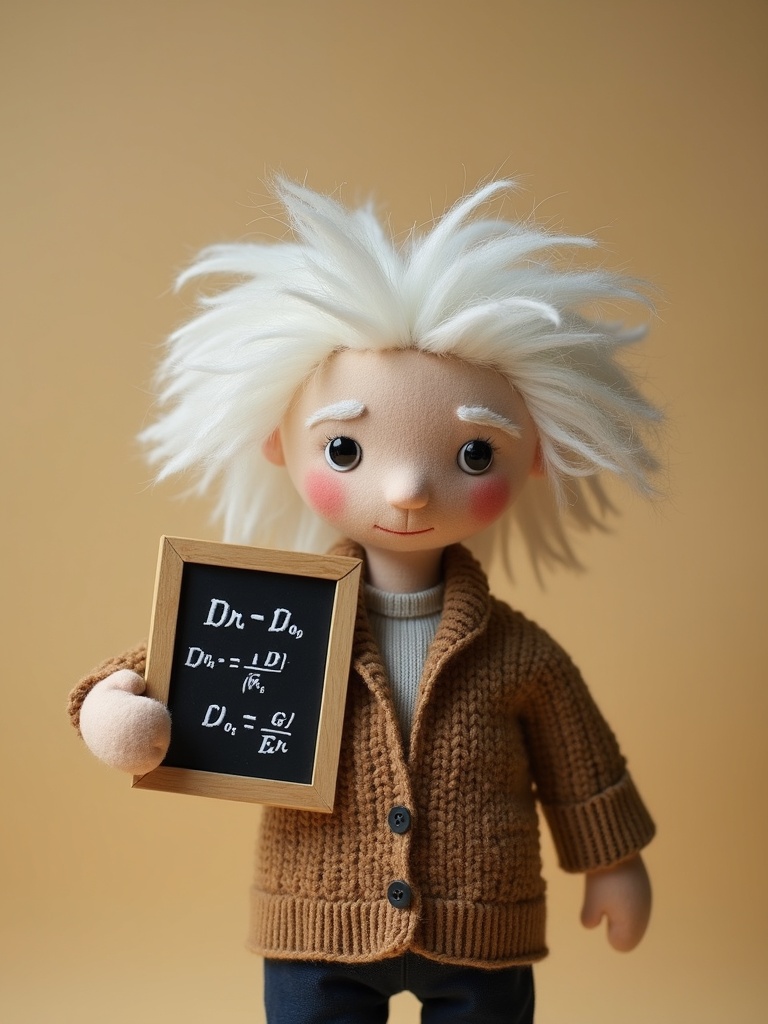
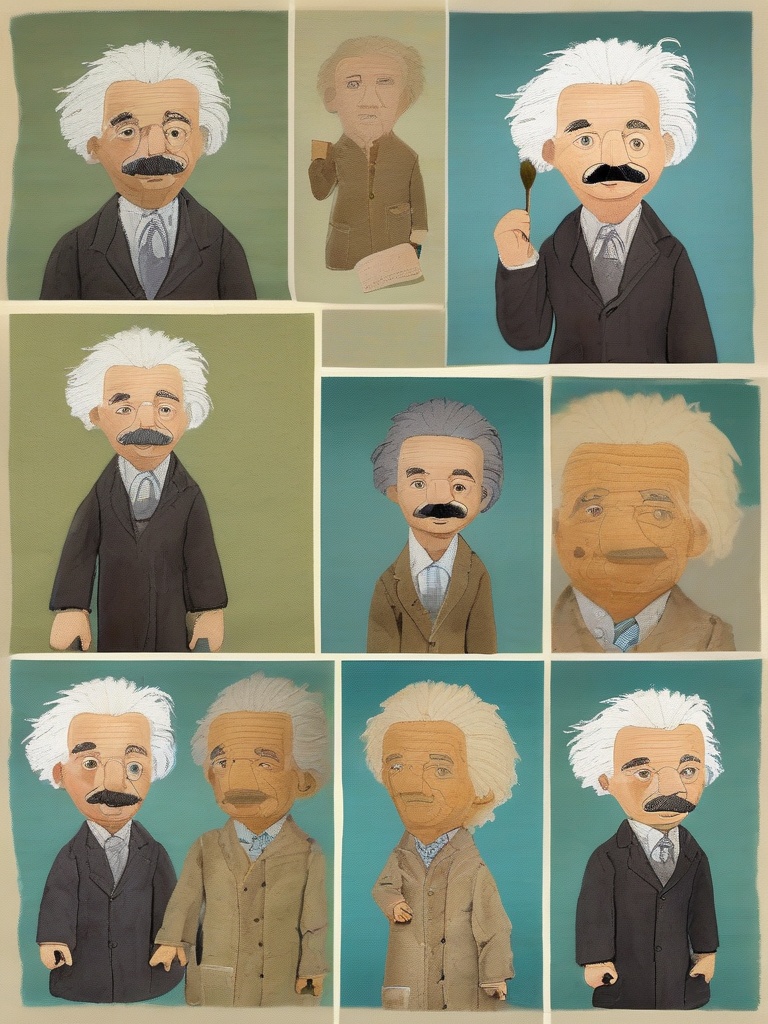
AI design preview — not a photo of the finished handmade doll
Relativity & Conscience
Albert Einstein
A boy who failed at obedience and a clerk who failed to find a professorship rebuilt our picture of space, time and matter — in his spare hours.
- People
- German (Swabian Jewish), later Swiss & American
- Country
- Germany
- Region
- Central Europe
- Era
- 1879–1955
- Theme
- Relativity & Conscience
Make your own
Design your Albert Einstein
Pick a garment, a hairstyle and a scene, enter the PIN and generate a fresh image of Albert Einstein with AI.
⚖ AI homage concept — not a likeness of the real person.
Each image is generated live with fal.ai.
Generated images
AI design preview — not a photo of the finished handmade doll
No images generated yet — be the first.
Tradition & Origin
A boy who failed at obedience and a clerk who failed to find a professorship rebuilt our picture of space, time and matter — in his spare hours.
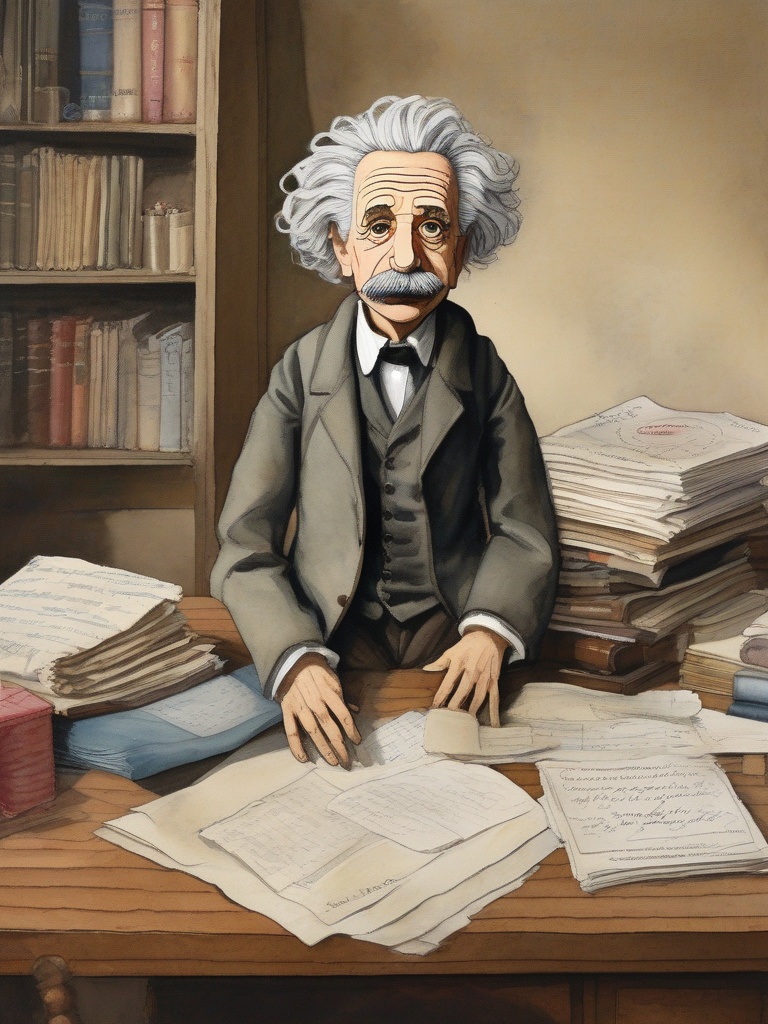
In 1905 alone Einstein published four papers that each reshaped physics — the photoelectric effect, Brownian motion, special relativity and E=mc².
DetailsENAlbert Einstein was born in Ulm in 1879 and grew up in Munich in a Swabian Jewish family of small electrical-engineering entrepreneurs. He chafed against rote schooling, taught himself geometry, played the violin all his life, and renounced his German citizenship as a teenager. After studying in Zurich he could not land an academic post and took a modest job examining patent applications in Bern.
From that quiet desk came the annus mirabilis of 1905. In four papers he argued that light arrives in discrete packets (explaining the photoelectric effect), that the random dance of tiny particles proves atoms are real (Brownian motion), that measurements of space and time depend on motion (special relativity), and that mass and energy are interchangeable — E = mc². Each paper alone would have made a career; together they began a new physics.
In 1915 he completed the general theory of relativity, recasting gravity as the curvature of space-time. When observations of a 1919 solar eclipse confirmed that starlight bends near the Sun by just the amount he had predicted, Einstein became a global celebrity, and in 1921 he received the Nobel Prize in Physics, citing the photoelectric effect rather than the still-controversial relativity.
A committed pacifist, he fled Nazi Germany in 1933 and joined the new Institute for Advanced Study in Princeton, where he spent the rest of his life. In 1939 he signed a letter, drafted with Leo Szilárd, warning President Roosevelt that Germany might build an atomic bomb — a step he later called the one great mistake of his life. After the war he campaigned for nuclear disarmament, civil rights and world cooperation until his death in 1955.
Timeline
- 1879born in Ulm, German Empire, to a Swabian Jewish family
- 1905the 'miracle year': four papers, special relativity and E=mc²
- 1915completes the general theory of relativity
- 1919a solar eclipse confirms light bends as he predicted — world fame
- 1921awarded the Nobel Prize in Physics (for the photoelectric effect)
- 1933flees Nazi Germany; settles at the Institute for Advanced Study, Princeton
- 1939 / 1955signs the warning letter to Roosevelt; dies in Princeton, a campaigner for peace
Did you know?
- He wrote his world-changing 1905 papers while working as a junior clerk in the Bern patent office, not as a university professor.DetailsEN
- His Nobel Prize was for explaining the photoelectric effect — a pillar of quantum physics — and not for the theory of relativity that made him famous.DetailsEN
- A lifelong pacifist, he later called signing the 1939 atomic-bomb warning letter to Roosevelt the one great mistake of his life and campaigned for nuclear disarmament.DetailsEN
A clever idea can come from anyone, anywhere — but the wise also ask what their ideas will be used for.
Values & Capabilities
Capabilities
◆◆◆◆◆ shows how central a gift is — five diamonds mark a signature strength, fewer mark a supporting one.
In a single year, 1905, while working as a junior patent clerk, he published four papers that each reshaped physics — on the photoelectric effect, Brownian motion, special relativity, and mass-energy equivalence.
He showed that mass and energy are two forms of the same thing — that a tiny amount of matter holds an enormous amount of energy — in the most famous equation ever written.
His general theory of relativity (1915) recast gravity as the bending of space and time; in 1919 a solar eclipse confirmed that starlight really curves, and he became world-famous overnight.
His 1921 Nobel Prize was awarded not for relativity but for explaining the photoelectric effect — that light behaves as packets of energy — a cornerstone of quantum physics.
A lifelong pacifist who fled Nazi Germany in 1933, he signed a 1939 letter warning Roosevelt that Germany might build an atomic bomb — and spent his last years campaigning against the very weapons that knowledge made possible.
Development
1 of 3 stages unlocked
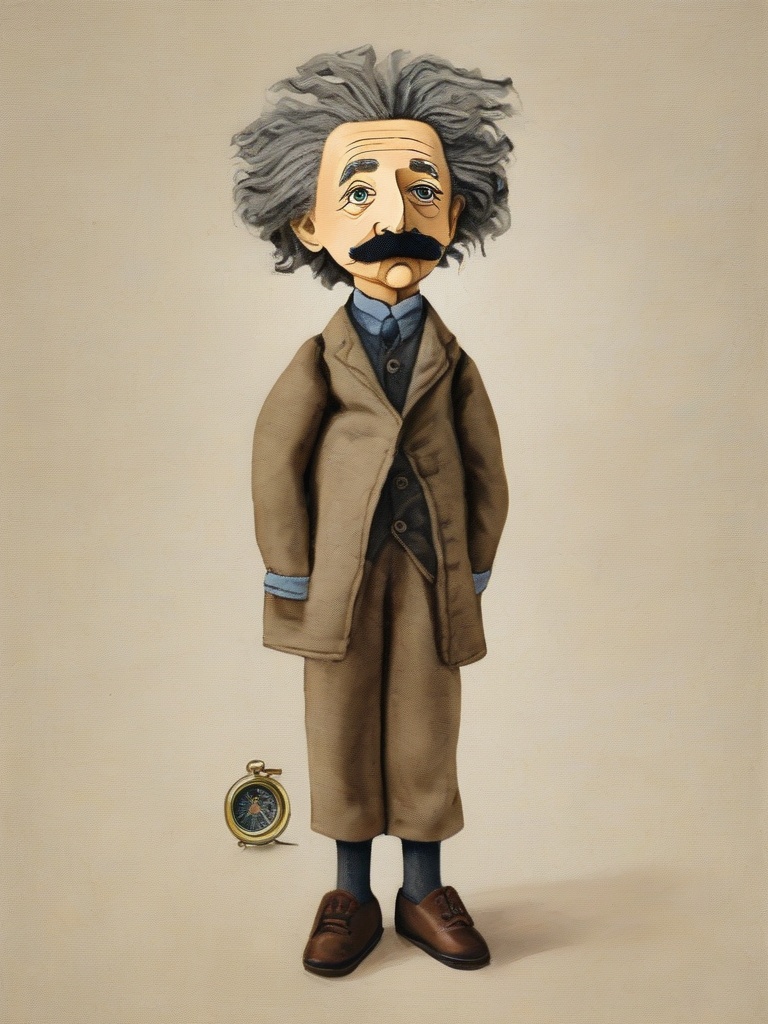
A quiet, dreamy boy in Ulm and Munich, fascinated by a pocket compass and by geometry, more at home with his violin than with school drill.
Answer all three to unlock this stage.
Unlock the previous stage first.
Crafting the doll
Garment: a soft baggy grey wool cardigan over an open-collared cotton shirt (no tie), comfortable trousers; an optional brown Princeton pullover and leather sandals. Hair: a wild halo of grey yarn and a felt moustache — his signature. Signature attribute: a tiny dark chalkboard reading E=mc² in white, plus a small wooden pipe and a miniature violin. Education card: explains E=mc², the 1905 miracle year, and that he warned against — then campaigned against — nuclear weapons. Sizes Classic 32 / Kidogo 18–20 / Shule 28. Part of proceeds → science education for children and refugee scholarships, in the spirit of a man who was himself a refugee.
How this doll is made
Make this doll as a gentle, rumpled thinker — comfortable old clothes, wild hair, and the simple tools of someone who worked with ideas, never glamorised.
- Garments 2
- Accessories 3
- Materials 2
- Techniques 1
Garments
- Baggy grey cardiganA soft, slightly oversized grey wool cardigan over a plain open-collared shirt with no tie — the unfussy everyday look Einstein became known for; knit or felt it loosely.DetailsEN
- Brown Princeton pulloverAn optional worn brown knit pullover and plain trousers for the later Princeton years, signalling the relaxed, absent-minded sage rather than a formal professor.DetailsEN
Accessories
- Wild grey hair & moustacheHis most recognisable feature: a halo of unruly grey hair from loosely teased yarn, plus a small felt moustache — keep it soft and friendly, a homage not a caricature.DetailsEN
- Chalkboard reading E=mc²A tiny dark chalkboard with E=mc² and a few looping equations in white — the single most teachable prop, tying the doll to its science.DetailsEN
- Pipe & violin 'Lina'A small curved wooden pipe and a miniature violin and bow — Einstein loved music and named his violin; add a little notebook of handwritten sums.DetailsEN
Materials
- Muted scholar paletteGreys, soft browns and dark navy with a single warm chalk-white accent for the equations — calm, lived-in colours, nothing bright or new.DetailsEN
- Tiny chalk & light-beam threadA stub of white 'chalk' and a thin golden thread to suggest a beam of light beside a pocket watch — a safe nod to his thought experiments on light and time.DetailsEN
Techniques
- Soft, lived-in finishKeep seams gentle and the whole doll a little rumpled and well-worn, matching his kindly, informal character; a small star-and-equation backdrop card can teach E=mc² and the 1905 miracle year.DetailsEN
Origin & Ethics
How we know this
On honesty: extremely well documented (Nobel records, the Collected Papers of Albert Einstein, museum archives, his own letters). Homage, not likeness — the Hebrew University estate actively guards Einstein's image, so the doll deliberately stylises rather than copies his face. We also keep the hard part visible: he was a pacifist who signed the 1939 atomic-bomb warning letter and later called it a mistake — knowledge with a conscience, not a flawless hero.
Committee: the Albert Einstein Archives (Hebrew University of Jerusalem, which holds his estate and likeness rights); the Einstein Papers Project at Caltech; the Institute for Advanced Study, Princeton; physics historians. 5-step protocol; the estate guards his image, so this is an educational homage, not a likeness.