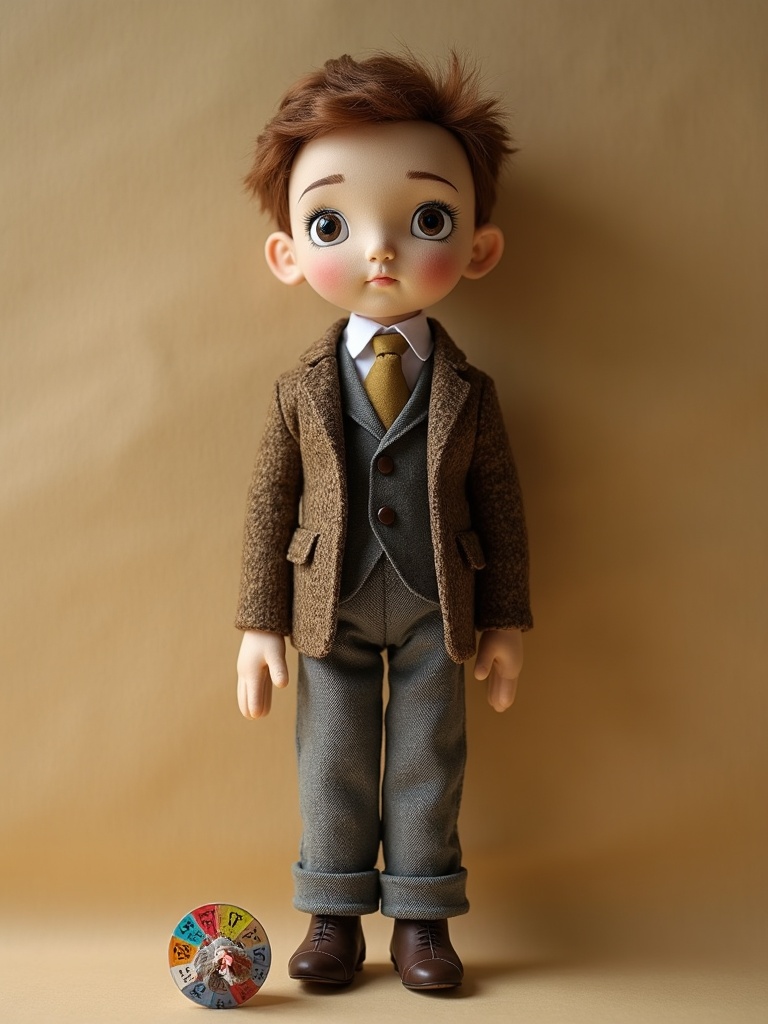
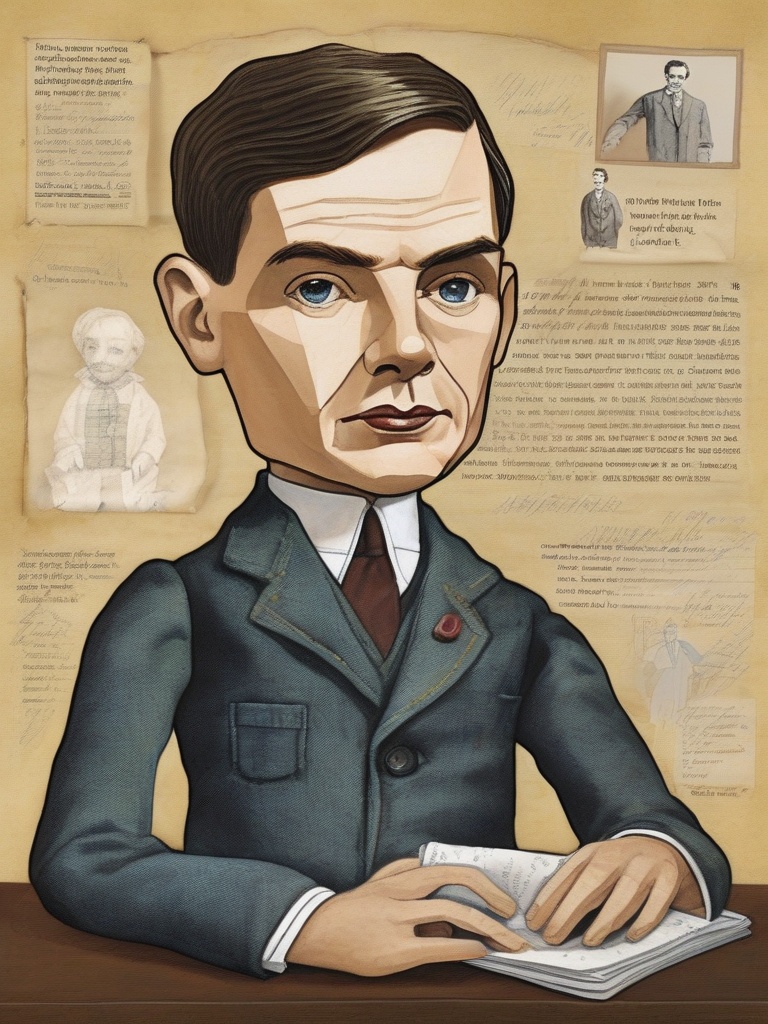
AI design preview — not a photo of the finished handmade doll
Computing & Codebreaking
Alan Turing
A shy English mathematician imagined the computer on paper, helped win a war in secret, and asked whether machines could think — yet was punished for who he was.
- People
- British
- Country
- United Kingdom
- Region
- British Isles
- Era
- 1912–1954
- Theme
- Computing & Codebreaking
Make your own
Design your Alan Turing
Pick a garment, a hairstyle and a scene, enter the PIN and generate a fresh image of Alan Turing with AI.
⚖ AI homage concept — not a likeness of the real person.
Each image is generated live with fal.ai.
Generated images
AI design preview — not a photo of the finished handmade doll
No images generated yet — be the first.
Tradition & Origin
A shy English mathematician imagined the computer on paper, helped win a war in secret, and asked whether machines could think — yet was punished for who he was.
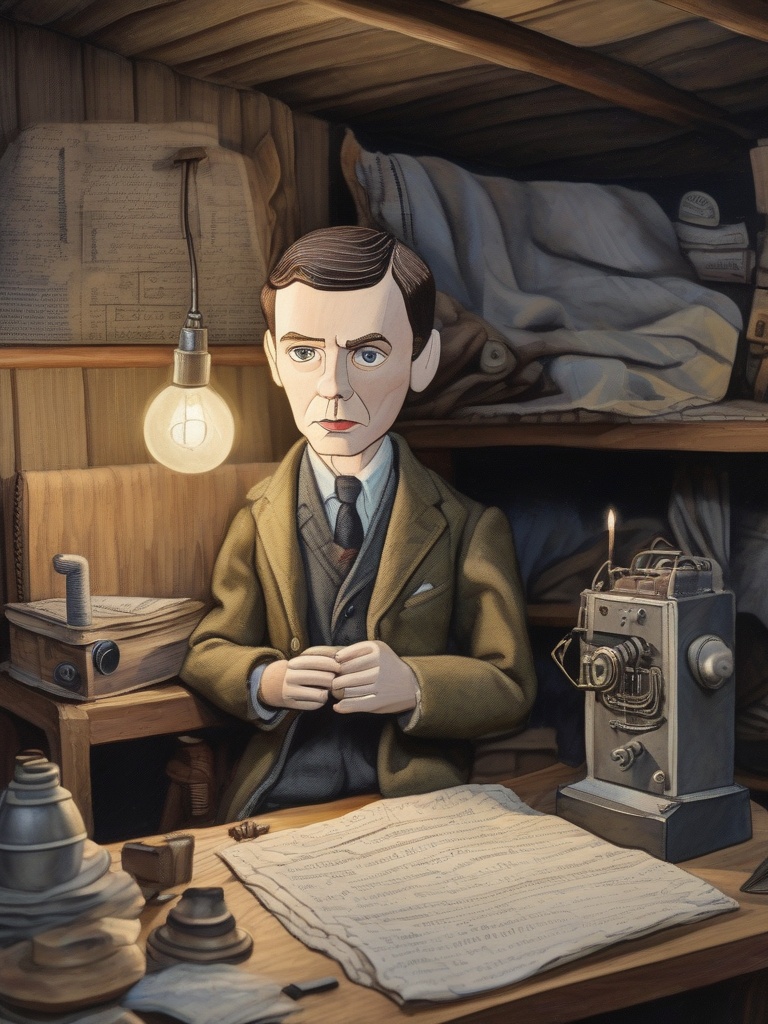
1952 conviction → 2009 apology → 2013 royal pardon → 2017 law for others → 2021 £50 note. A long road back to honour.
DetailsENAlan Turing was born in London in 1912 and studied at King's College, Cambridge. In 1936, aged just 24, he answered a deep question in mathematics by inventing an imaginary device — a machine that reads and writes symbols on a tape according to simple rules. He proved that one 'universal' version of this machine could imitate any other. That single idea is the theoretical heart of every computer ever built.
When war came in 1939 he joined Britain's secret codebreaking centre at Bletchley Park. The German military sent orders using the Enigma machine, which scrambled each message in billions of ways. Turing led Hut 8 against the toughest version — naval Enigma — and designed the Bombe, a clattering machine of spinning code-wheels that searched out the day's settings. Reading the enemy's signals is widely credited with shortening the war and saving many lives.
After the war Turing helped design real computers and, in 1950, asked the question that opened the field of artificial intelligence: can a machine think? In 1952 he even used maths to explain the spots, stripes and spirals of nature. But that same year he was convicted under a law that made being gay a crime, and was forced to undergo harmful 'treatment'. He died in 1954, only 41. Long afterwards Britain apologised, pardoned him, passed a law pardoning thousands of others, and placed his face on the £50 note.
Timeline
- 1912born 23 June in Maida Vale, London
- 1936writes “On Computable Numbers” — the universal Turing machine
- 1939–45breaks naval Enigma at Bletchley Park; designs the Bombe
- 1950“Computing Machinery and Intelligence” proposes the Turing test
- 1952 / 1954convicted under an unjust law; dies in 1954, aged 41
- 2013 / 2021royal pardon; later honoured on the £50 note
Did you know?
- Turing was a world-class long-distance runner — he ran a marathon in about 2 hours 46 minutes and was good enough to be considered for the 1948 Olympics.DetailsEN
- The £50 note hides his birth date, 23 June 1912, written in binary code on a strip of ticker-tape — a quiet tribute to the man who thought in ones and zeros.DetailsEN
- Bletchley Park's secret was kept for decades; only long after the war did the world learn how much Turing and his colleagues had done.DetailsEN
Sometimes the quiet, gentle person no one notices turns out to be the one who changes the world.
Values & Capabilities
Capabilities
◆◆◆◆◆ shows how central a gift is — five diamonds mark a signature strength, fewer mark a supporting one.
In 1936, before any computer existed, he imagined a single machine that could follow any set of instructions — the idea behind every computer and phone we use today.
At Bletchley Park he led the team that broke the German naval Enigma cipher, designing the electro-mechanical Bombe machine that read enemy messages.
His 1950 paper asked whether a machine could think, and proposed a famous test — the start of artificial intelligence as a real question.
In 1952 he used mathematics to explain how a leopard gets its spots and a flower its shape — founding the study of patterns in living things.
Convicted in 1952 simply for being gay, he died in 1954; decades later a country said sorry, pardoned him, and put his face on its money.
Development
1 of 3 stages unlocked
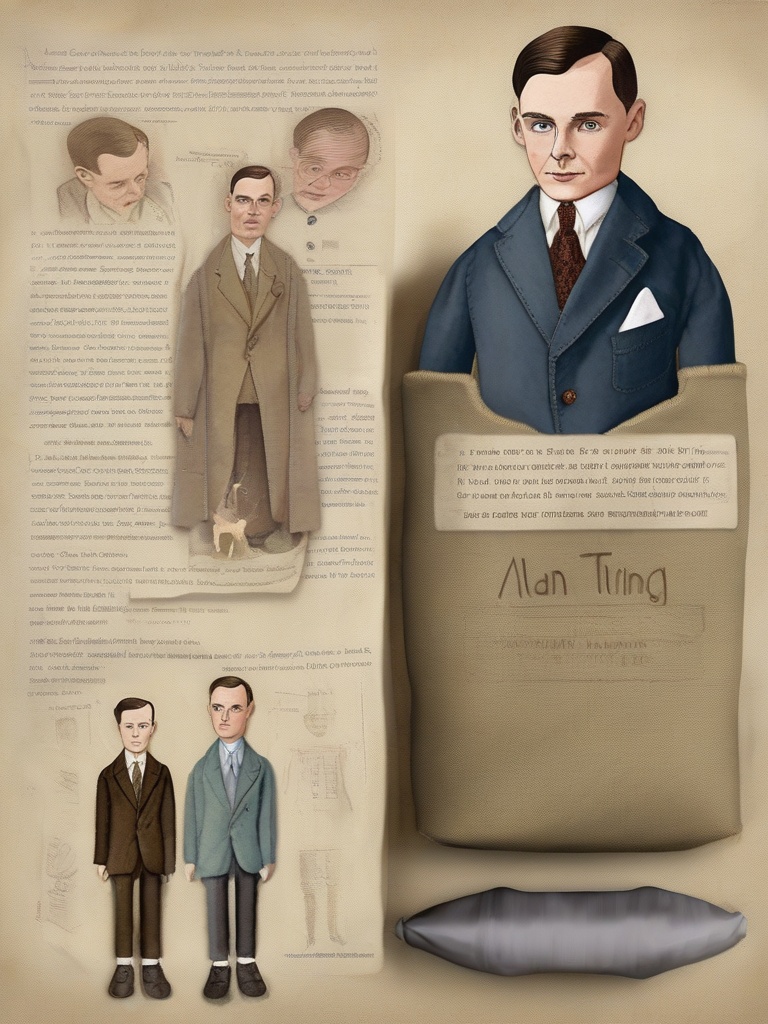
A shy, brilliant schoolboy fascinated by numbers, science and how things work, often happiest puzzling things out alone.
Answer all three to unlock this stage.
Unlock the previous stage first.
Crafting the doll
Garment: brown herringbone tweed jacket, soft-collar cotton shirt, woollen tie, grey flannel trousers; optional knitted Fair-Isle pullover. Signature attribute: a small felt-and-wood model Bombe with coloured code-wheel drums, plus a tiny strip of binary ticker-tape. Education card: explains the Turing machine, breaking Enigma, the Turing test, and how an unjust law was later put right. Sizes Classic 32 / Kidogo 18–20 / Shule 28. Part of proceeds → computing-education and LGBTQ+ equality charities.
How this doll is made
Made to honour a 1940s English thinker: soft tweed wool, a codebreaker's machine, and the dignity his own country once denied him.
- Garments 2
- Accessories 3
- Materials 1
- Techniques 2
Garments
- 1940s herringbone tweed jacketUse a brown wool herringbone tweed for the jacket — the everyday cloth of a 1940s English academic. Cut it a little soft and unfussy, the way Turing was often described: brilliant but unconcerned with appearances.DetailsEN
- Soft-collar shirt and loose tiePair the jacket with a soft-collared cotton shirt and a slightly loose woollen tie. A knitted Fair-Isle pullover is a good period alternative for the cold codebreaking huts.DetailsEN
Accessories
- Model of the British BombeThe signature prop: a small felt-and-wood model of the Bombe, with rows of coloured rotating code-wheel drums on the front. Turing specified this machine to find Enigma's daily settings; its drawings even appear on the £50 note.DetailsEN
- Binary ticker-tapeAdd a tiny strip of paper 'ticker-tape' printed with 0s and 1s — echoing the £50 note, which writes Turing's birthday in binary. A perfect teaching hook for how computers store everything as ones and zeros.DetailsEN
- Runner's kit (alternate look)An optional white singlet, dark shorts and canvas shoes honour the little-known fact that Turing was a near-Olympic-class marathon runner who ran to clear his mind.DetailsEN
Materials
- Wool and natural fibresKeep to natural fibres throughout — wool tweed, cotton shirt, woollen knit — true to 1940s Britain and warm in tone, so the doll feels of its time.DetailsEN
Techniques
- A gentle, thoughtful faceEmbroider a calm, slightly shy expression — Turing was remembered as quiet and unassuming. The doll should read as a kind thinker, not a stern hero.DetailsEN
- Equation notebook detailHand-stitch or print a tiny notebook page with neat equations and a 0-1 strip, nodding to his 1936 and 1950 papers that founded computing and AI.DetailsEN
Origin & Ethics
How we know this
On honesty: very well documented (his 1936 and 1950 papers, Bletchley Park records, his 1952 trial, the 2009 apology, 2013 royal pardon, 2017 law and 2021 £50 note). Homage, not likeness; the doll stylises Turing as a gentle thinker, and tells his persecution and death plainly but age-appropriately — as an injustice that was later named and put right.
Committee: Bletchley Park Trust and The National Museum of Computing; The Alan Turing Institute; historians of computing; LGBTQ+ heritage advisers — to keep both the science and the human-rights story accurate and respectful.