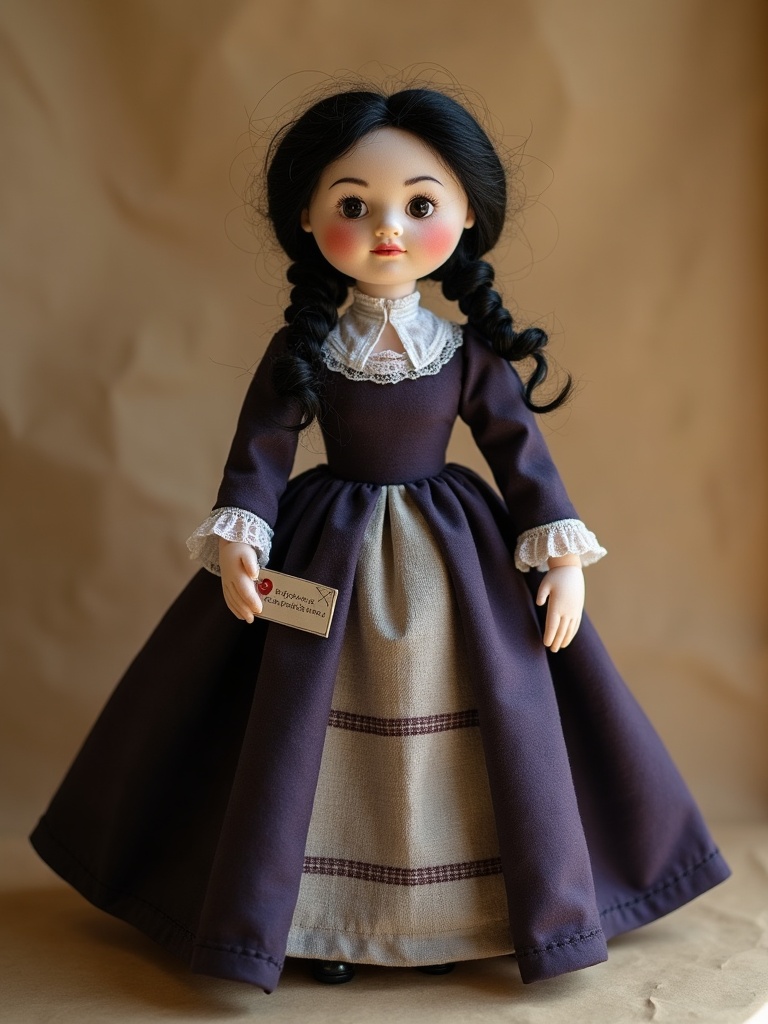
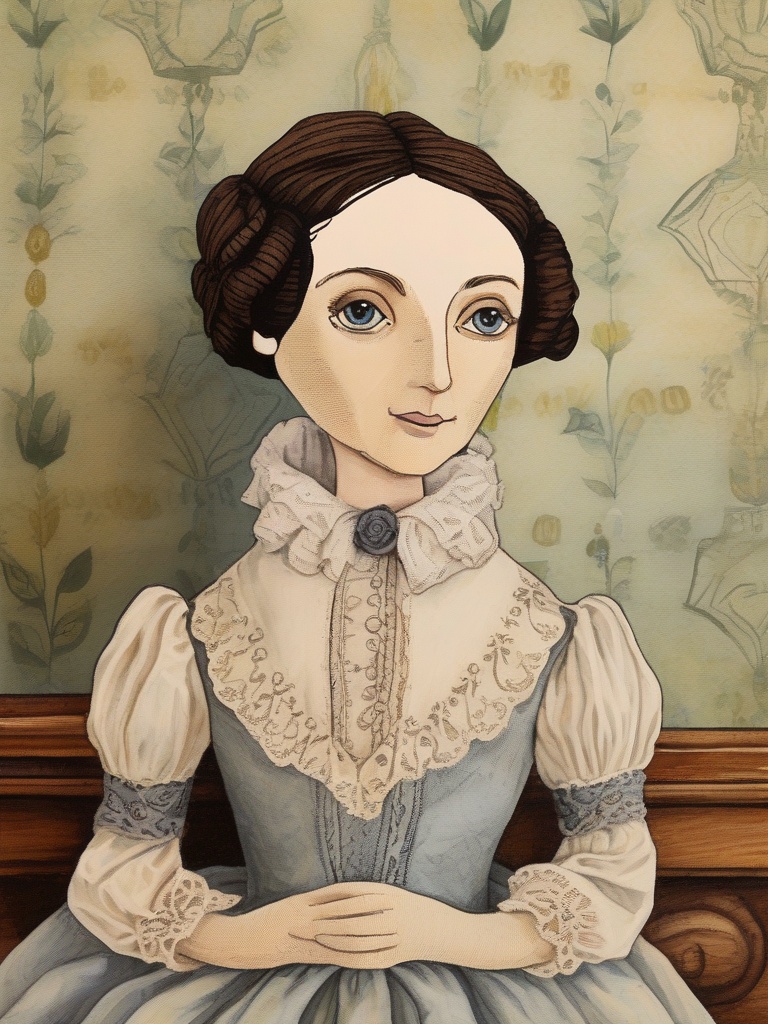
AI design preview — not a photo of the finished handmade doll
Computing & Imagination
Ada Lovelace
A poet's daughter, taught mathematics to tame her imagination, instead used it to glimpse the computer a century early.
- People
- British
- Country
- United Kingdom
- Region
- British Isles
- Era
- 1815–1852
- Theme
- Computing & Imagination
Make your own
Design your Ada Lovelace
Pick a garment, a hairstyle and a scene, enter the PIN and generate a fresh image of Ada Lovelace with AI.
⚖ AI homage concept — not a likeness of the real person.
Each image is generated live with fal.ai.
Generated images
AI design preview — not a photo of the finished handmade doll
No images generated yet — be the first.
Tradition & Origin
A poet's daughter, taught mathematics to tame her imagination, instead used it to glimpse the computer a century early.
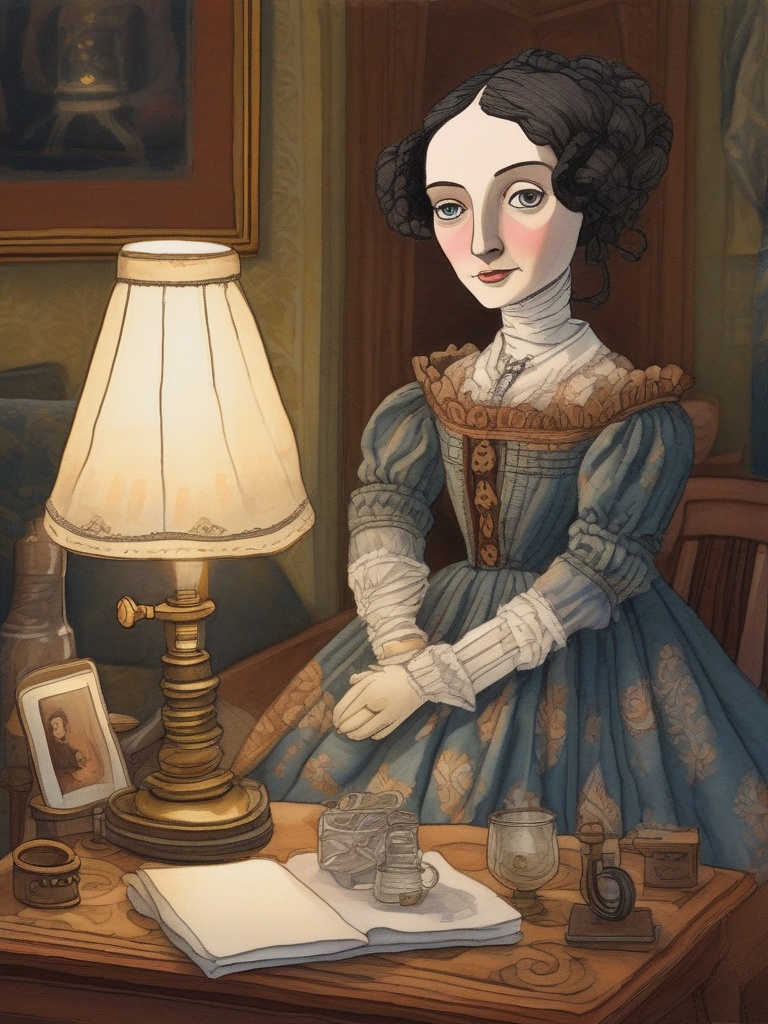
Born 1815, met the engine in 1833, published the first program in 1843 — yet the computer she wrote for was not built for a century.
DetailsENAugusta Ada Byron was born in 1815, the only legitimate child of the poet Lord Byron and Annabella Milbanke, who separated weeks later. Ada never knew her father. Her mother, fearing she might inherit his wild 'poetical' nature, had her tutored intensively in mathematics and logic — a rare education for a girl of the period.
At seventeen Ada met Charles Babbage, who was designing a vast mechanical computer he called the Analytical Engine. It was never built in his lifetime, but Ada understood it more deeply than almost anyone. In 1843 she translated a French article describing the engine and appended seven notes of her own that ran longer than the article itself.
In the final note, Note G, she set out an algorithm to compute the Bernoulli numbers, complete with a table of operations — what we now read as the first published computer program. But her boldest insight was that the engine need not be limited to numbers: if relationships among things could be expressed as operations, the machine might manipulate music or other symbols. She had imagined general-purpose computing before a single program had ever run.
Timeline
- 1815born 10 Dec in London, daughter of Lord Byron
- 1833meets Charles Babbage and his calculating engine
- 1835marries William King, later Earl of Lovelace
- 1843publishes her Notes incl. Note G — the first program
- 1852dies 27 Nov, aged 36
- 1980 / 2009the 'Ada' language named for her; Ada Lovelace Day begins
Did you know?
- Did you know? Ada is honoured every second Tuesday of October — Ada Lovelace Day — celebrating women in science and technology.DetailsEN
- Did you know? A modern programming language used in aircraft and trains is named 'Ada' in her honour.DetailsEN
- Did you know? Ada saw that a machine could one day 'compose elaborate and scientific pieces of music' — imagining computer-made art before computers existed.DetailsEN
If a poet's daughter could imagine code before computers existed, what could your imagination build that the world hasn't seen yet?
Values & Capabilities
Capabilities
◆◆◆◆◆ shows how central a gift is — five diamonds mark a signature strength, fewer mark a supporting one.
In her 1843 Note G she wrote a step-by-step algorithm to make a machine compute the Bernoulli numbers — widely regarded as the first published computer program.
She saw that the engine could work on any symbols, not just figures — that it might one day compose music. No one else grasped this in her century.
Daughter of the poet Lord Byron and a mathematician mother, she fused imagination with rigour and called her own way of thinking 'poetical science'.
She compared the Analytical Engine to a loom: it 'weaves algebraic patterns just as the Jacquard loom weaves flowers and leaves'.
She warned the machine 'has no pretensions whatever to originate anything' — it does only what we know how to order it to do.
Development
1 of 3 stages unlocked
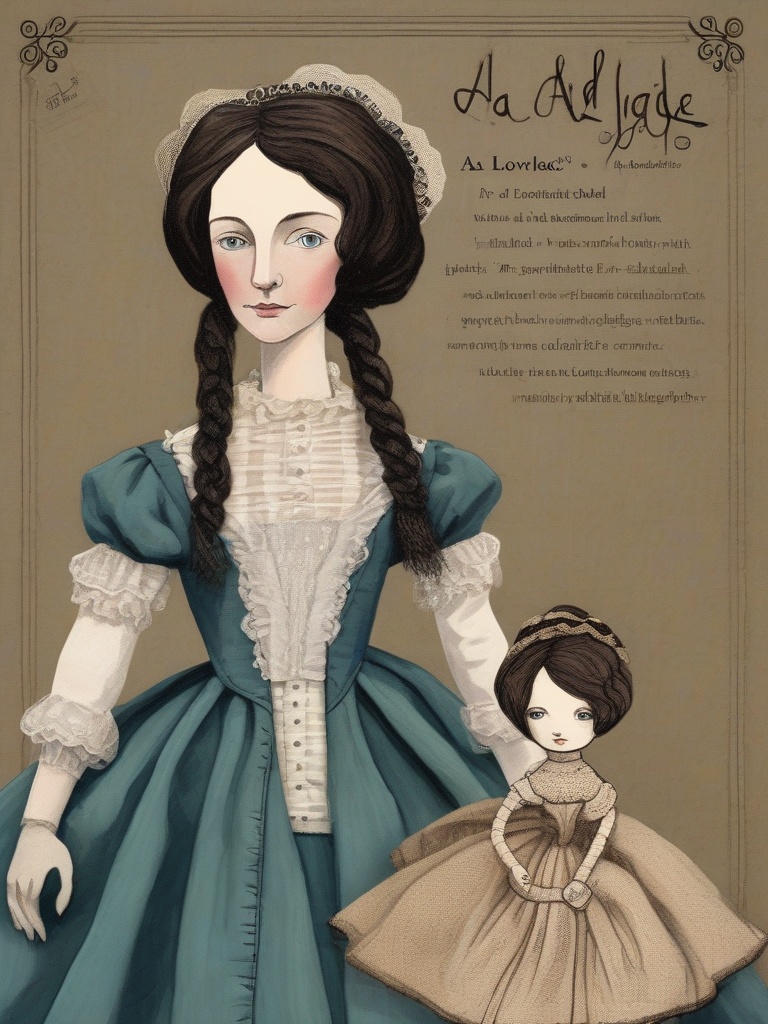
Young Ada in England, tutored in mathematics by her mother's wish — fascinated equally by numbers and by flight, sketching plans for a steam-powered flying machine.
Answer all three to unlock this stage.
Unlock the previous stage first.
Crafting the doll
Garment: deep violet-and-grey silk/cotton 1840s day gown with a fitted bodice, lace collar and full skirt; a small cameo brooch (felt). Signature attribute: a tiny fabric punched card with neat rows of holes — the loom-to-computer motif — plus a folded Note G diagram. Education card: explains what an algorithm is and that a poet's daughter wrote the first program for a machine that was never built. Sizes Classic 32 / Kidogo 18–20 / Shule 28. Part of proceeds → girls-in-STEM / coding-education programmes.
How this doll is made
Make this doll as a thoughtful early-Victorian woman of science — period-correct dress, with the punched card and engine motifs that tie weaving to computing.
- Garments 2
- Accessories 3
- Materials 1
- Techniques 2
Garments
- 1840s day gownA fitted bodice with a pointed waist, dropped (sloping) shoulder seams and a full gathered skirt in violet-grey silk or cotton — the silhouette of the early Victorian period when Ada wrote her Notes.DetailsEN
- Lace collar & cuffsA small white lace or crochet collar at the neck with matching cuffs — a respectable, refined Victorian finish that reads as a lady of the 1840s.DetailsEN
Accessories
- Cameo broochA tiny oval cameo brooch at the throat, cut from felt or a painted bead — a typical piece of Victorian jewellery for a portrait-style figure.DetailsEN
- Centre-parted ringletsDark hair parted in the centre and gathered into ringlets at the sides — the hairstyle seen in her best-known 1840s portrait. Use embroidery thread or fine wool.DetailsEN
- Fabric punched cardA small stiff card of cloth pierced with neat rows of holes — the Jacquard loom card that inspired Babbage's input system and Ada's loom metaphor. The signature attribute of this doll.DetailsEN
Materials
- Brass engine cogA small brass or gold-felt cogwheel to represent the Analytical Engine's machinery — Babbage's design used wheels and columns of geared discs.DetailsEN
Techniques
- Note G mini-diagramA folded paper or printed-fabric scrap showing a grid of V-subscript variables in columns — a nod to the table layout of her Bernoulli-number program in Note G.DetailsEN
- Quill & ledgerA fine quill pen and a small open ledger of figures stitched or printed onto card — symbols of the translation and the forty-one pages of notes she wrote by hand.DetailsEN
Origin & Ethics
How we know this
On honesty: very well documented (her published Notes of 1843, surviving letters, the Babbage archive). Homage, not likeness — the doll stylises an 1840s portrait. We note the honest caveat that Babbage had written earlier, unpublished sample programs; Ada's Note G is celebrated as the first *published* program, and her unique leap was seeing the machine could go beyond numbers.
Committee: the Bodleian Libraries (Oxford) and Science Museum (London) Lovelace/Babbage curators; history-of-computing scholars; Ada Lovelace Day organisers. 5-step protocol as standard; homage not likeness; respect documented record over legend.